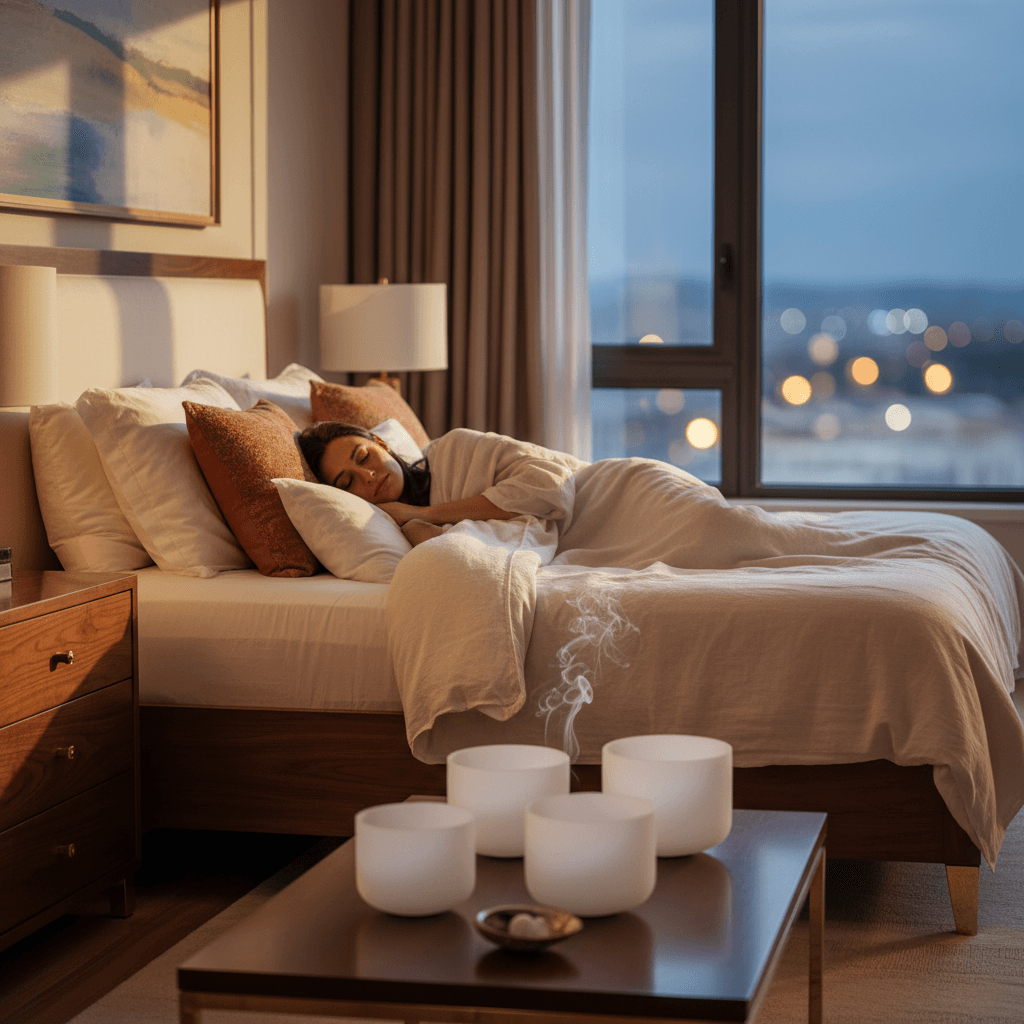
Unraveling Sleep Debt: The Science of Recovery and Optimal Wellness

Key Insights
Explore the hidden costs of sleep debt, its impact on cognitive function, and how dedicated recovery strategies, including holistic wellness practices, are essential for restoring optimal health. Discover Soul Art's unique approach in Dubai with Larissa Steinbach.
The Invisible Burden: Understanding Sleep Debt and Its True Cost
Imagine trying to run a marathon on a leaky fuel tank. Each day, you add a little fuel, but a significant portion constantly drains away, leaving you perpetually under-resourced. This analogy perfectly encapsulates the insidious nature of sleep debt – a cumulative deficit that silently erodes our physical and mental well-being, often without us fully realizing its profound impact. Many people mistakenly believe a long weekend lie-in can erase weeks of insufficient rest. However, scientific research paints a far more complex picture.
This article, brought to you by Soul Art, Dubai's premier sound wellness studio founded by Larissa Steinbach, delves into the fascinating science behind sleep debt and its recovery. We will explore how chronic sleep restriction impairs cognitive function, disrupts our delicate circadian rhythms, and makes us increasingly vulnerable to further sleep loss. You’ll learn why true recovery is not a quick fix, and how embracing a holistic approach may support your journey back to optimal vitality.
Understanding the mechanisms of sleep debt is not just about feeling less tired; it’s about reclaiming your mental sharpness, emotional resilience, and overall quality of life. Join us as we uncover the scientific truths that empower you to prioritize restorative rest.
The Science Explained: Unpacking Sleep Debt and Its Physiological Ramifications
The concept of sleep debt, or sleep deficit, refers to the difference between the amount of sleep an individual needs and the amount they actually get. It's a fundamental principle of sleep science, often encapsulated in the idea of "Process S." This internal system meticulously tabulates how long someone has been awake and how much activity they have carried out, manifesting as an increasing pressure to sleep.
The Cumulative Cost of Chronic Sleep Restriction
When we consistently fall short on sleep, this debt accumulates, exacting a significant toll on our neurobehavioral functions. Research highlights that chronic sleep restriction leads to a progressive degradation of performance and cognitive abilities. Early scientific evidence, dating back to Nathaniel Kleitman's work in the 1930s, established a daily pattern in cognitive performance, showing that even well-rested individuals experience fluctuations. However, insufficient sleep severely compounds these normal variations.
Studies by Van Dongen et al. (2003) demonstrate the dose-response effects of chronic sleep restriction, revealing that the cumulative cost of additional wakefulness profoundly impacts the brain. Sleep deprivation negatively impairs mood, reduces the ability to focus, and compromises higher-level cognitive functions such as problem-solving, decision-making, and creativity. This decline in mental performance can lead to increased errors at the workplace, decreased productivity, and even preventable accidents, as highlighted by Harvard Medical School’s sleep research.
The Myth of Instant Recovery: Why Weekends Aren't Enough
A common misconception is that a few extra hours of sleep on a weekend can fully erase accumulated sleep debt. Unfortunately, this is rarely the case. While napping and sleeping in on weekends may help ease immediate symptoms like fatigue or daytime sleepiness, research indicates they are often not enough to adequately recover from prolonged sleep restriction. The accumulating effects of sleep loss constitute a debt that takes considerably longer to repay than it took to incur.
For instance, studies have shown that it can take up to four days to recover from just one hour of lost sleep. To completely eliminate significant sleep debt, it can take up to nine days of consistent, adequate rest. A comprehensive study published in PLOS ONE examining the recovery process after a prolonged period of restricted sleep found that participants displayed worse cognitive performance during sleep restriction, followed by a gradual yet incomplete recovery in the subsequent phase of extended sleep. This suggests that simply providing an opportunity for more sleep does not instantly reverse the damage.
The Vulnerability of Disrupted Circadian Rhythms
Furthermore, prior sleep-wake history plays a crucial role in future vulnerability. Preliminary evidence suggests that even after eight to twelve hours of recovery sleep, individuals with a history of recent chronic sleep loss may be more susceptible to the effects of re-exposure to sleep restriction. They might exhibit nearly double the deterioration in performance on vigilance tasks compared to those without prior chronic debt. This indicates that recovery is not just about hours, but about restoring the body to its baseline, a process that becomes harder with repeated disruption.
Irregularity in the timing of sleep and wakefulness, often seen in shift work schedules or through inconsistent weekend catch-up sleep, can impede circadian adaptation. The circadian rhythm, our internal biological clock, regulates crucial bodily functions, including sleep-wake cycles. When this rhythm is disrupted, it impairs cognitive performance and overall well-being. Excessive Rest Day Catch-up Sleep (RDCS), defined as two or more hours of additional sleep on non-work days, has been linked to circadian disruption and, concerningly, an increased risk of depression, even if it provides some incomplete compensation for accumulated sleep debt. This underscores the delicate balance required for optimal sleep health.
How It Works in Practice: The Ripple Effect of Sleep Debt in Daily Life
The scientific insights into sleep debt translate directly into tangible, often debilitating, experiences in our daily lives. We are not just talking about feeling a bit groggy; we are discussing a profound impact on performance, safety, and emotional well-being. This pervasive influence often manifests subtly, making it difficult to pinpoint sleep debt as the root cause of various challenges.
When sleep debt accumulates, the immediate, most noticeable symptom is often excessive daytime sleepiness. This isn't just a fleeting yawn; it's a persistent urge to sleep that interferes with alertness and performance in crucial moments. Task accuracy diminishes, reaction times slow, and the capacity for sustained attention plummets. In high-stakes professions like healthcare, transportation, or protective services, the consequences can be disastrous, leading to costly and preventable accidents.
Beyond acute fatigue, sleep debt creates a state of reduced resilience. The body's natural goal of sleep is to dissipate this debt through complex molecular mechanisms, returning our systems to a baseline of optimal functioning. When this goal is unmet, the brain operates under a continuous handicap. Individuals may find themselves more irritable, less patient, and prone to mood swings. The ability to regulate emotions is significantly impaired, often leading to increased stress and anxiety levels.
Consider the subtle erosion of judgment and decision-making skills. When chronically sleep-deprived, people may struggle with complex problem-solving, exhibit reduced creativity, and find it harder to learn new information. This impacts not only professional productivity but also personal relationships and overall quality of life. The brain’s executive functions, critical for planning and self-control, are particularly vulnerable to sleep loss, making it harder to maintain healthy habits or manage daily stressors effectively.
The challenge of modern life, with its demanding work schedules, increasing digital stimulation, and often irregular routines, exacerbates the issue. Shift workers, for example, consistently face disrupted circadian rhythms, making true recovery a monumental task. Even those with regular schedules can fall into patterns of "sleep restriction" during the week, hoping to "catch up" on weekends. However, as we’ve learned, this approach often disrupts circadian alignment, potentially doing more harm than good in the long run by making individuals more vulnerable to subsequent sleep loss.
True recovery from sleep debt isn't merely about adding hours to your sleep. It's about restoring a physiological balance, allowing the body to return to its optimal baseline, and rebuilding resilience. This process goes beyond conventional sleep solutions and often requires a holistic, supportive environment to truly facilitate the body's intrinsic healing and restorative capabilities.
The Soul Art Approach: Harmonizing Mind and Body for Deep Restoration
At Soul Art, Dubai, founder Larissa Steinbach understands that addressing sleep debt requires a deeply holistic and scientifically-informed approach. We recognize that true restoration extends beyond simply getting more hours of sleep; it involves recalibrating the nervous system, harmonizing internal rhythms, and creating an environment conducive to profound cellular repair. Our unique method integrates the ancient wisdom of sound with contemporary understanding of neurobiology, offering a powerful pathway to support the body’s recovery from chronic sleep loss.
Larissa Steinbach’s vision for Soul Art is to provide a sanctuary where the demands of the outside world dissolve, allowing the body and mind to enter states of deep relaxation essential for recovery. We employ specific sound frequencies, delivered through a carefully curated selection of instruments such as Himalayan singing bowls, crystal gongs, and chimes. These instruments are chosen for their ability to generate resonant vibrations that may help guide the brainwave activity from a stressed, waking state (beta waves) towards more relaxed states (alpha and theta waves), which are crucial for natural sleep induction and deep rest.
Our sound wellness sessions are designed to facilitate a shift in the autonomic nervous system. Chronic sleep debt often keeps the body in a state of sympathetic dominance – the "fight or flight" response – even when at rest. The gentle, immersive soundscapes at Soul Art encourage the activation of the parasympathetic nervous system, initiating the "rest and digest" response. This physiological shift is vital for supporting the body’s natural ability to repair, regenerate, and ultimately, dissipate sleep pressure more effectively.
Larissa's approach at Soul Art acknowledges that while sound wellness does not directly "repay" accumulated sleep debt in terms of hours, it acts as a powerful complementary practice. It may support the quality of the sleep one does get, enhancing its restorative potential. By reducing the underlying physiological and psychological stress that often exacerbates sleep debt, our sessions help to create optimal conditions for the body to heal. Many people report an enhanced sense of calm, improved mental clarity, and a deeper, more refreshing sleep experience following regular sessions.
Through this unique fusion of art and science, Larissa Steinbach and the Soul Art team offer a profound journey into self-care. It’s an invitation to experience deep relaxation that may support the body’s innate capacity for recovery, helping you become more resilient to the challenges of modern life and less vulnerable to the adverse effects of chronic sleep loss.
Your Next Steps: Reclaiming Your Rest and Resilience
Understanding the science of sleep debt is the first step towards reclaiming your well-being. The journey to optimal recovery is ongoing, but integrating intentional practices can make a significant difference. Here are actionable steps you can implement starting today to support your body's natural restorative processes and mitigate the effects of sleep debt:
- Prioritize Consistent Sleep Schedules: Aim for a regular bedtime and wake-up time, even on weekends. This helps to reinforce your body's natural circadian rhythm, which is crucial for efficient sleep and recovery. Avoid excessive catch-up sleep, as it can disrupt this delicate balance.
- Create a Relaxing Bedtime Routine: Signal to your body that it’s time to wind down. This could include dimming lights, taking a warm bath, reading a physical book, or practicing gentle stretches. Avoid screens and stimulating activities at least an hour before bed.
- Optimize Your Sleep Environment: Ensure your bedroom is dark, quiet, and cool. Block out light, use earplugs if necessary, and keep the temperature between 18-22 degrees Celsius (65-72 degrees Fahrenheit) for optimal sleep.
- Integrate Stress Management Techniques: Chronic stress exacerbates sleep issues. Incorporate practices like meditation, deep breathing exercises, or gentle movement into your daily routine. These can help calm your nervous system and prepare your body for rest.
- Explore Complementary Wellness Practices: Consider sound wellness sessions at Soul Art, Dubai. The immersive soundscapes and targeted frequencies may support nervous system regulation, reduce stress, and enhance the quality of your sleep, providing a powerful complement to your recovery efforts.
By consciously adopting these practices, you empower your body to more effectively manage and recover from sleep debt, leading to improved cognitive function, enhanced mood, and greater overall vitality. Ready to discover deeper states of relaxation and support your sleep recovery journey?
In Summary: Investing in Your Rest, Investing in Yourself
Sleep debt is a silent yet powerful force, steadily eroding our cognitive abilities, emotional balance, and physical health. Scientific research clearly demonstrates that true recovery takes time and consistent effort, often much more than a simple weekend lie-in can provide. Chronic sleep restriction not only impairs performance and focus but also makes us more vulnerable to further sleep loss and circadian disruption.
Prioritizing a consistent sleep schedule, optimizing your sleep environment, and integrating effective stress management are essential foundations for recovery. Holistic wellness practices, such as those offered by Larissa Steinbach at Soul Art, Dubai, provide a complementary and powerful pathway to support your nervous system's ability to achieve deep restorative states. By harmonizing mind and body through sound, Soul Art helps create an optimal internal environment, enhancing the quality of your rest and bolstering your resilience against the demands of modern life. Invest in your sleep, and you invest in every aspect of your well-being.
Bookings Coming Soon
Soul Art is still in preparation. Session details and booking will be published here after launch.
Coming Soon
Wellness Disclaimer: This article is for educational and informational purposes only. It does not constitute medical advice, diagnosis, or treatment. Soul Art Dubai provides non-medical wellness experiences focused on relaxation, stress management, and general wellbeing. Sound wellness is a complementary practice and should not replace professional medical care.
Related Articles
Fan Noise and Sleep: Unmasking the Science Behind White Noise Machines for Deeper Rest
Polyphasic Sleep & Sound Healing: Navigating Restorative Rhythms
REM Rebound: Mastering the Art of Recovering Lost Dream Sleep