Fan Noise and Sleep: Unmasking the Science Behind White Noise Machines for Deeper Rest
Key Insights
Explore white noise, pink noise, and their impact on sleep. Learn how Soul Art, founded by Larissa Steinbach, guides intentional sound for wellness.
Have you ever drifted off to sleep with the gentle hum of a fan, an air conditioner, or a dedicated sound machine? For many, these continuous ambient sounds have become an indispensable part of their nightly ritual, a perceived guardian against the intrusive noises of the modern world. The belief is that these sounds, often broadly categorized as "white noise," pave the way for a more peaceful and uninterrupted night's rest.
Yet, a closer look at scientific research reveals a more nuanced and fascinating story about how these sonic companions truly interact with our delicate sleep architecture. While some studies suggest benefits, particularly in masking disruptive sounds, emerging evidence also prompts us to consider the potential for these very noises to subtly alter our sleep stages. Understanding this complexity is key to optimizing our sleep environment.
At Soul Art, Dubai's premier sound wellness studio, we believe in an informed approach to sound for well-being. Guided by the insights of our founder, Larissa Steinbach, we explore the intricate relationship between sound and the human nervous system, helping you discover the most supportive auditory landscape for your deepest rest and restoration. This article will delve into the science of fan noise and sound machines, separating widespread assumptions from evidence-backed understanding, and offering a path to truly intentional sleep wellness.
The Science Explained: Unpacking Noise Colors and Sleep Dynamics
The concept of using continuous sound to aid sleep is rooted in psychoacoustics – the study of how humans perceive sound. Our auditory system remains active even during sleep, meaning sudden shifts in sound can easily trigger awakenings. Sound machines, including common household devices like fans or air conditioning units, aim to create a consistent acoustic environment that may support uninterrupted sleep.
Decoding the Spectrum of Noise: White, Pink, and Broadband
The term "white noise" is frequently used as a blanket description for any continuous, static-like sound, but the scientific definition is much more precise. Understanding the differences between "colors" of noise is crucial to appreciating their distinct effects on sleep.
White Noise
White noise is characterized by having equal intensity across all frequencies within the range of human hearing, approximately 20 Hz to 20,000 Hz. It is often perceived as a "hissing" sound. Think of the static on an old television set or a detuned radio.
Pink Noise
Pink noise, a type of broadband noise, differs from white noise in its energy distribution. Its intensity decreases by 1/f at each frequency, meaning the lower frequencies are proportionally more intense than the higher ones. This gives pink noise a deeper, "softer" character, often compared to natural sounds like steady rainfall, ocean waves, or wind rustling through trees. Many common household devices, such as fans and air conditioning systems, typically produce sounds closer to pink noise or broadband noise than true white noise.
Broadband Noise
Broadband noise is a more general term for any sound that spans a wide range of frequencies. Both white and pink noise fall under this category. It essentially means the sound is not limited to a narrow band of frequencies, but rather spreads across a broad spectrum.
The Mechanisms: Masking and Arousal Threshold
One of the primary theories behind why continuous noise might support sleep is known as "masking." Masking is a psychoacoustic process where the presence of one sound (the masking sound) raises the threshold for hearing another sound (the disturbing sound).
By providing a constant, low-level sound, white noise or similar broadband sounds can effectively "cover up" sudden, disruptive noises from the environment, such as a train whistle, traffic, noisy neighbors, or even the subtle creaks and groans of a house. This helps to raise your "arousal threshold," meaning you may be less likely to wake up in response to these external stimuli. For individuals experiencing environmental sleep problems, this masking effect can be a valuable tool for promoting sleep continuity.
Furthermore, some theories suggest that the consistent sound itself may possess sleep-promoting or wake-reducing properties, gently lulling the brain into a state conducive to sleep. Limited evidence indicates that broadband sounds like rain may be as effective as lullabies in facilitating sleep in children, potentially by decreasing heart rate and respiratory rate.
Research Findings: A Mixed but Evolving Picture
The scientific community has explored the effects of white noise on various populations, yielding a complex array of results. Early studies and anecdotal reports have suggested several potential benefits:
- Infants: A study of 20 newborns found that infants were more likely to fall asleep within five minutes when exposed to white noise. White noise has also been associated with reducing crying in infants.
- College Students: A 2008 study indicated that white noise could be helpful for college students, a group often prone to irregular sleep patterns and noisy environments.
- Critically Ill Patients: A 2005 study found that white noise may reduce sleep disruptions for intensive-care unit (ICU) patients, where the environment is often filled with medical alarms and activity.
- Specific Conditions: Preliminary studies suggest that white noise may offer support for individuals with acute stress disorder, post-traumatic stress disorder, or even attention-deficit/hyperactivity disorder (ADHD). Shift workers, who often struggle to sleep during the day, have also reported using white noise to improve the quality and quantity of their daytime rest.
However, recent and more rigorous analyses have introduced important considerations, prompting a more cautious and nuanced perspective. A systematic review published in Sleep Medicine Reviews found that white noise had little beneficial effect on sleep in some contexts, highlighting the heterogeneity of research methods and inconsistent findings across studies.
"The primary reason people use [sound machines] is masking ― or drowning out other sounds that intrude into our bedroom ― but what we found is that broadband sounds could also disrupt our sleep itself." — Mathias Basner, MD, PhD.
Crucially, emerging research, such as a study led by Mathias Basner, MD, PhD, professor of Sleep and Chronobiology in Psychiatry, suggests that continuous broadband noise, particularly pink noise, might disrupt restorative sleep stages. His team monitored healthy adults in a controlled sleep laboratory and found:
- Reduced REM Sleep: Exposure to pink noise alone was linked to a nearly 19-minute reduction in REM sleep. REM sleep is vital for memory consolidation, emotional regulation, and brain development.
- Impact on Deep Sleep and Wakefulness: When pink noise was combined with aircraft noise, participants experienced significantly shorter deep sleep (N3) and REM sleep, alongside an additional 15 minutes of wakefulness during the night. This highlights that "noise is noise," and loud, continuous sound, regardless of its "color," can be detrimental.
- Efficacy of Earplugs: Interestingly, simply wearing earplugs was largely effective in preventing the reduction in deep sleep caused by aircraft noise, suggesting that direct sound blocking can be highly beneficial.
These findings suggest that while continuous noise can mask disturbances, it also has the potential to influence our natural sleep architecture. The implications are particularly significant for children, whose developing brains spend a greater proportion of time in REM sleep. The volume and duration of exposure appear to be critical factors, with recommendations to keep sound machine volumes low and consider using them only for sleep onset rather than all night.
This complex body of evidence underscores the need for a personalized and informed approach to using sound for sleep wellness. It's not simply about adding any noise, but about thoughtfully curating an acoustic environment that truly supports the intricate processes of restful sleep.
How It Works in Practice: The Sensory Experience of Sound for Sleep
Beyond the scientific definitions, the practical application of sound for sleep centers on the subjective experience and its ability to create a consistent, calming backdrop. When chosen and used mindfully, the right sound environment can transform a chaotic night into one of serene repose.
Clients often describe the sensation of using a sound machine as creating a "sound blanket" – a gentle, omnipresent auditory layer that cocoons them from the unpredictable world outside. This consistent presence provides a sense of security and predictability, helping the mind to settle and release the day's accumulated tensions. The brain, instead of constantly scanning for new, potentially disruptive sounds, can instead focus on the soothing rhythm of the ambient noise.
For instance, the gentle, deeper hum of pink noise, often described as similar to a steady rain or distant ocean waves, can evoke feelings of natural calm. This resonates deeply within our primal connection to nature's rhythms, which have historically signaled safety and tranquility. The consistency of these sounds helps to create a stable acoustic field, reducing the jarring effect of sudden noises that might otherwise trigger the body's natural "fight or flight" response, even during sleep.
The real-world efficacy for many users lies in its ability to establish a powerful sleep cue. When a particular sound is consistently associated with winding down and preparing for bed, it can become a trigger for the brain and body to transition into a state of relaxation. This Pavlovian response can be incredibly beneficial for individuals struggling with sleep onset, helping them to consciously signal to their bodies that it's time to rest. The ritual of turning on the sound machine as part of a nightly routine can become a comforting and effective prelude to sleep.
However, the key lies in intentionality and moderation. A sound machine or fan should not be perceived as a louder competitor to external noises, but rather a subtle, consistent presence. If the sound is too loud, it may become another source of auditory stress, potentially interfering with the very sleep architecture it intends to support, as suggested by research on REM sleep disruption. The goal is not to overwhelm the senses but to provide a gentle, unwavering auditory foundation upon which true rest can be built.
Ultimately, the practical application of sound for sleep is a deeply personal journey. What one person finds soothing, another might find distracting. It involves tuning into one's own body and mind, experimenting with different "colors" of noise, varying volumes, and understanding the unique acoustic landscape of one's own sleep environment. This exploration is at the heart of conscious wellness practices, encouraging self-awareness and thoughtful adaptation.
The Soul Art Approach: Intentional Sound for Holistic Well-being
At Soul Art, we understand that true rest extends far beyond merely masking external disturbances. Our approach, meticulously curated by our founder, Larissa Steinbach, transcends the conventional use of simple white noise machines, delving into the profound power of intentional sound to nurture the nervous system and cultivate states of deep restoration. We embrace a holistic perspective, viewing sound not just as an auditory input, but as a vibrational experience that can profoundly influence our physiological and psychological landscapes.
Larissa Steinbach's vision for Soul Art is to create immersive sound wellness experiences that go beyond passive listening. We believe that the quality, frequency, and intention behind the sound are paramount. Instead of relying on potentially disruptive continuous static, we focus on crafting sonic environments designed to support the body's natural rhythms and encourage a return to balance. This means carefully considering the subtle interplay of frequencies and their potential effects on brainwave activity, heart rate variability, and overall nervous system regulation.
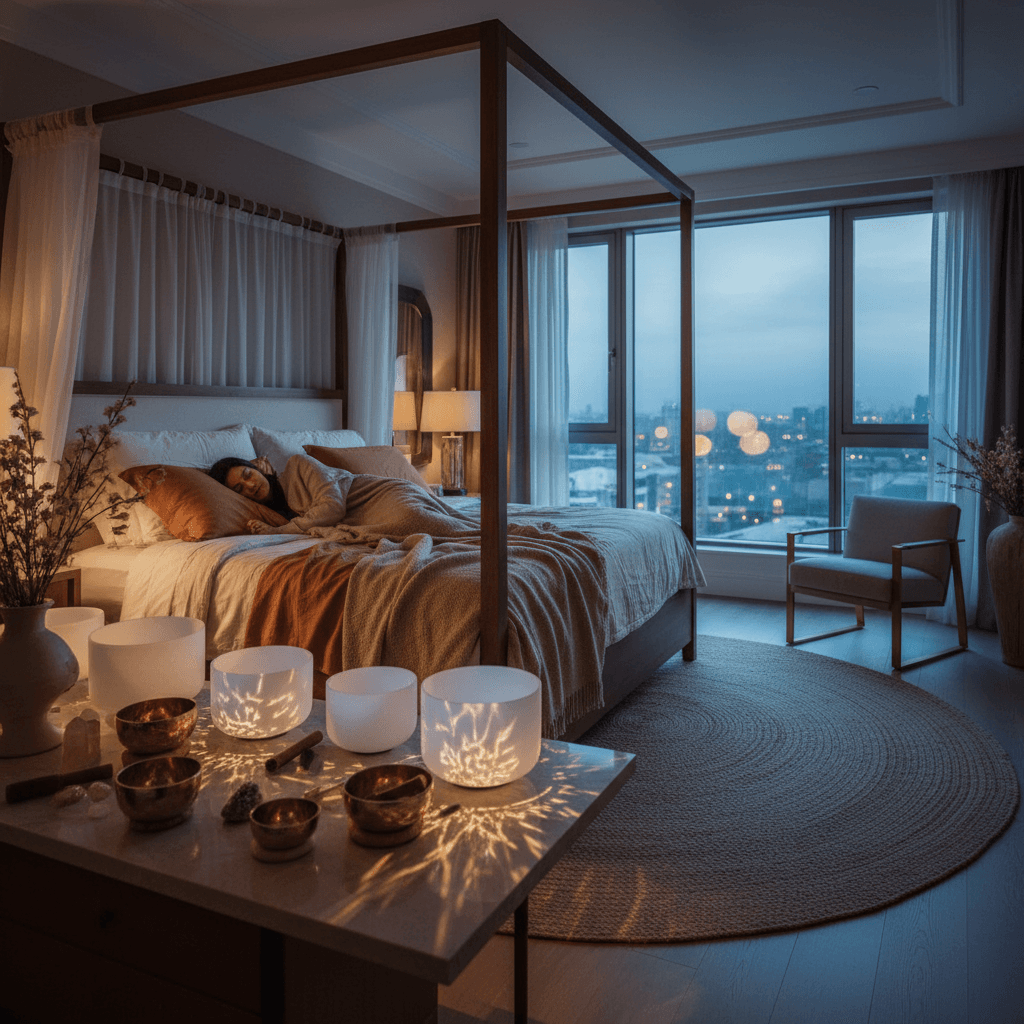
What makes the Soul Art method unique is its dedication to integrating scientifically-informed principles with ancient wisdom and artistic expression. Our sessions often incorporate a diverse array of instruments, such as crystal singing bowls, gongs, chimes, and other resonance tools. These are chosen not just for their aesthetic beauty, but for their specific vibrational properties, which may facilitate profound states of relaxation and meditative calm. The goal is to create rich, nuanced soundscapes that gently guide the mind and body towards a state of coherence and tranquility, rather than simply "drowning out" unwanted noise.
For sleep support, Soul Art's approach emphasizes sounds that are inherently restorative and non-intrusive. We might explore the therapeutic potential of certain broadband sounds, like very gentle, low-volume "pink noise" elements that mimic natural phenomena such as distant rain or soft ocean waves, but always with an acute awareness of duration and intensity. The focus is on establishing a supportive ambient foundation that does not interfere with the delicate architecture of REM and deep sleep, but rather enhances the conditions for their emergence.
Larissa Steinbach guides clients to understand that the deepest form of sleep wellness comes from tuning into the body's innate capacity for self-regulation. Our practices, whether individual sessions or group experiences, are designed to soothe the sympathetic nervous system and activate the parasympathetic "rest and digest" response. This pre-sleep preparation is a critical step, enabling the body and mind to naturally transition into profound states of rest. Soul Art offers a sophisticated and empathetic journey into the world of sound, empowering individuals to reclaim their peace and rejuvenate their spirit through carefully curated sonic landscapes.
Your Next Steps: Cultivating Your Ideal Sleep Soundscape
Understanding the complex relationship between noise and sleep is the first step toward creating a truly restorative environment. While white noise machines and fans can be helpful tools, an informed and intentional approach is key. Here are some actionable steps you can implement today to optimize your sleep soundscape:
- Experiment with Sound Types and Volume: If you use a continuous noise generator, try experimenting with different "colors" of noise – white, pink, or even natural sounds like gentle rain. Crucially, keep the volume low. The sound should be no louder than a background conversation, ensuring it masks disturbances without becoming a disturbance itself.
- Consider Duration: Rather than playing continuous noise all night, consider using a timer to have the sound play only as you fall asleep. This may help you achieve sleep onset without potentially disrupting crucial REM or deep sleep stages later in the night.
- Prioritize Soundproofing and Earplugs: Before introducing artificial sound, explore ways to minimize external noise directly. High-quality earplugs can be remarkably effective at shielding you from disruptive sounds without adding another sonic layer, as some research suggests. Heavy curtains, draft stoppers, and well-sealed windows can also significantly reduce noise intrusion.
- Observe and Journal Your Sleep: Pay close attention to how different sound environments affect your sleep quality. Do you feel more rested after using a fan, or after a silent night? Journaling your sleep patterns, including sleep onset time, wake-ups, and overall refreshed feeling, can provide valuable insights into what works best for your unique physiology.
- Explore Holistic Sound Wellness Practices: Beyond simple machines, consider how intentional sound practices can prepare your body and mind for sleep. Practices like those offered by Soul Art, which focus on nervous system regulation through curated soundscapes, may support deeper relaxation and a more harmonious transition into sleep.
Remember, the goal is to create an acoustic sanctuary that promotes genuine rest. By being mindful of the sounds in your environment and how they interact with your sleep, you can cultivate a space that truly supports your well-being.
In Summary: Harmonizing Sound for Restful Sleep
The journey into understanding fan noise and sleep reveals a fascinating intersection of convenience, science, and personal well-being. While continuous sounds like white noise and pink noise can be effective at masking environmental disturbances and raising the arousal threshold, emerging research cautions us to be mindful of their potential impact on crucial sleep stages, particularly REM and deep sleep, especially at higher volumes. The efficacy and optimal application of these sounds vary significantly among individuals and populations.
At Soul Art, founded by Larissa Steinbach, we advocate for an intentional, informed approach to sound wellness. We believe in moving beyond mere masking to harness the profound power of carefully curated soundscapes that support the nervous system, foster deep relaxation, and harmonize with your body's natural sleep architecture. By understanding the nuances of different sound frequencies and their effects, you can cultivate a truly restorative sleep environment. Embracing this holistic perspective empowers you to unlock deeper levels of rest and rejuvenation.
Bookings Coming Soon
Soul Art is still in preparation. Session details and booking will be published here after launch.
Coming Soon
Wellness Disclaimer: This article is for educational and informational purposes only. It does not constitute medical advice, diagnosis, or treatment. Soul Art Dubai provides non-medical wellness experiences focused on relaxation, stress management, and general wellbeing. Sound wellness is a complementary practice and should not replace professional medical care.