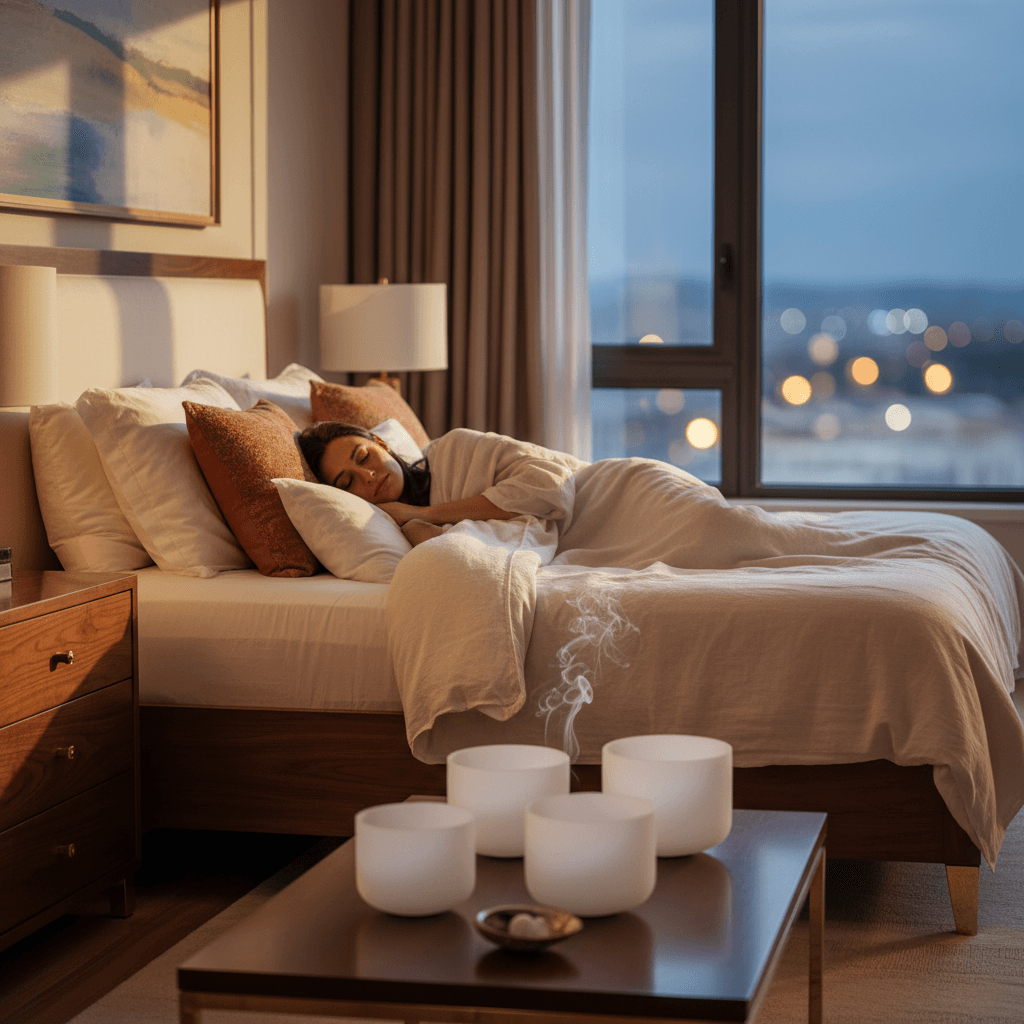
The Symphony of Rest: Temperature, Sound, & Sleep for Optimal Well-being
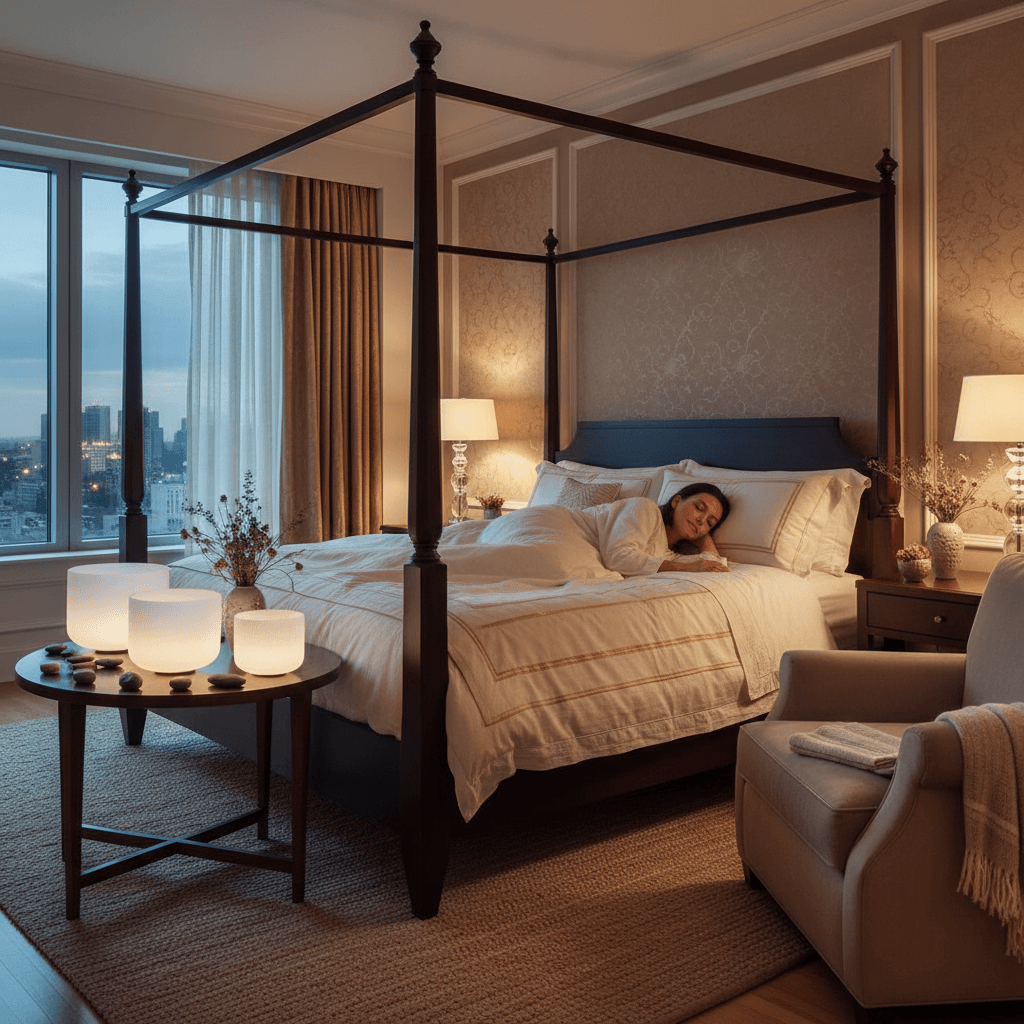
Key Insights
Unlock deeper sleep by understanding the powerful synergy between optimal temperature, soothing sound, and your body's natural rhythms. Discover Soul Art's unique approach.
Imagine a night where every cell in your body exhales in unison, releasing the day's tension and sinking into a profound state of rejuvenation. For many, this dream of truly restorative sleep remains elusive in our fast-paced world. Yet, the secret to unlocking such deep rest may lie in two often-underestimated environmental factors: the temperature of your sleeping space and the sounds that fill it.
At Soul Art, Dubai's premier sound wellness studio founded by Larissa Steinbach, we understand that achieving optimal sleep is not merely about closing your eyes. It’s about creating an exquisite environment that gently guides your body and mind into their natural states of repair and renewal. This involves a delicate balance of conditions that cue your physiology towards tranquil slumber.
This article delves into the intricate science behind the perfect environment for sleep, exploring how ambient temperature and curated soundscapes work in harmony to foster truly restorative rest. We will uncover the physiological mechanisms at play, illustrate practical applications, and reveal how Soul Art harnesses these insights to offer unparalleled pathways to deep well-being. Understanding these elements can be a transformative step towards reclaiming your most valuable asset: quality sleep.
The Science Explained
The quality and duration of our sleep are profoundly influenced by our external environment, with temperature emerging as a particularly dominant factor. Scientific research consistently points to a narrow temperature range as ideal for facilitating the body's natural sleep processes. When this delicate balance is achieved, a cascade of physiological benefits unfolds, leading to more restful and uninterrupted sleep.
The Body's Thermoregulation and Circadian Rhythm
Our bodies possess an intricate internal clock, known as the circadian rhythm, which orchestrates various physiological processes, including our sleep-wake cycle. A crucial component of this rhythm is thermoregulation – the body's ability to maintain its core temperature. As evening approaches, our core body temperature naturally begins to decline, signaling to the brain that it is time to prepare for sleep. This natural cooling process is essential for initiating and maintaining a restorative sleep state.
Research has shown that the optimal temperature for sleep typically falls between 60-67 degrees Fahrenheit (15-19 degrees Celsius). Within this cooler range, the body can more easily facilitate its natural cooling, promoting a faster transition into sleep. Conversely, sleeping in a room that is too warm can disrupt this crucial process, leading to discomfort, restlessness, and fragmented sleep patterns. Even small fluctuations in room temperature can significantly impact sleep architecture and duration.
Furthermore, peripheral vasodilation, particularly in the hands and feet, is a good predictor of sleep initiation. As blood vessels in these extremities expand, heat is dissipated from the core, contributing to the overall cooling necessary for sleep onset. This process often begins up to two hours before the start of the first sleep episode, during the wake phase, directly linking external temperature to our innate biological readiness for rest.
The Melatonin-Temperature Connection
Beyond simple comfort, ambient temperature plays a significant role in the body's hormonal regulation of sleep. Melatonin, often referred to as the "sleep hormone," is a key player in signaling the onset of sleep. Its release is intricately linked to both light exposure and temperature. A study conducted by the University of Kent confirmed that the optimal temperature range of 60-67 degrees Fahrenheit (15-19 degrees Celsius) actively promotes the natural release of melatonin.
When the sleeping environment is cool, it supports the physiological conditions conducive to melatonin production and secretion. This hormonal signal cues the brain that it is time for rest, contributing to a more efficient and restorative sleep cycle. In contrast, an overly warm environment can inhibit this natural release, making it more challenging to fall asleep and maintain deep sleep. Consistency and stability of temperature throughout the night are also critical, as abrupt changes can disrupt the sleep cycle and lead to awakenings.
The Impact on Neurotransmitters and Sleep Stages
The influence of temperature extends deep into the brain's neurochemistry, affecting neurotransmitters vital for sleep and wakefulness. Beyond melatonin, neurotransmitters such as serotonin and norepinephrine play important roles in regulating our sleep cycles. A study conducted at Yale University found that a moderate lowering of ambient temperature contributes to reducing the activity of these specific neurotransmitters. This reduction, in turn, may lead to deeper and higher-quality sleep.
Optimal sleep is characterized by cycles of different sleep stages, including non-REM (NREM) sleep, which includes deep sleep (slow-wave sleep), and REM (rapid eye movement) sleep. Deep sleep is crucial for physical restoration and cellular repair, while REM sleep is essential for cognitive processing, memory consolidation, and emotional regulation. Many studies have demonstrated that sleeping in an environment that is too hot or too cold can disrupt sleep continuity, increase wakefulness, and shorten periods of both REM and deep sleep. This interference with critical sleep stages can significantly compromise cognitive restoration and physical recovery, highlighting the profound impact of temperature on our overall well-being. Maintaining the right temperature helps the body achieve the necessary progression through these vital sleep stages, supporting comprehensive restoration.
How Temperature and Sound Intersect in Practice
Understanding the science of temperature's impact on sleep is the first step; the next is appreciating how this knowledge can be practically applied, particularly when combined with the power of sound. The creation of an optimal sleep environment is a holistic endeavor, one where different sensory inputs coalesce to support physiological processes.
Creating the Ideal Sensory Landscape
The synergy between a comfortably cool temperature and a calming soundscape is remarkable. While temperature optimizes the physiological signals for sleep, sound can profoundly influence the psychological and neurological aspects of rest. The ideal sleep environment is often described as cool, dark, and quiet. However, "quiet" doesn't necessarily mean the absence of all sound; rather, it often implies the absence of disruptive noise. Environmental factors, including noise, should be reduced to below 35 dB for optimal sleep.
This is where intentional sound comes into play. Gentle, consistent sound, such as white noise or specially curated soundscapes, can mask sudden, jarring noises that might otherwise disrupt sleep. Imagine a soothing, low-frequency hum that subtly supports the cooler temperature by deepening the sense of calm and insulation from external disturbances. Sound can also be utilized to induce specific brainwave states associated with relaxation and sleep, such as alpha and theta waves, through rhythmic patterns and specific frequencies. This creates a multi-sensory environment that actively promotes relaxation, allowing the body to settle into the temperature-optimized conditions with greater ease.
"The perfect environment for sleep isn't just about what you remove, but what you thoughtfully introduce. It's about designing a sanctuary where every sensory input guides you towards profound rest."
Beyond Ambient Temperature: Localized Comfort
While maintaining an optimal room temperature is paramount, personalizing thermal comfort can further enhance the sleep experience. Advanced sleep technologies, such as thermoregulated mattresses and pillows, offer localized temperature regulation, adapting to the body’s dynamic needs throughout different sleep stages. This allows for a microclimate of comfort that works in tandem with the ambient room temperature.
When combined with sound wellness practices, these thermal interventions create a deeply integrated experience. Picture lying on a mattress that subtly adjusts its temperature to your body's specific requirements, while the air around you is perfectly cool, and a gentle sound bath washes over you. This creates a cocoon of comfort where the body’s thermoregulatory needs are met with precision, and the mind is lulled into tranquility by harmonious vibrations. This multi-faceted approach ensures that both external and localized temperatures, alongside expertly crafted sound, are all working in concert to usher in the most profound sleep possible.
The Soul Art Approach to Restorative Sleep
At Soul Art, we believe that truly restorative sleep is a cornerstone of overall well-being. Larissa Steinbach, our visionary founder, has meticulously crafted an approach that integrates the scientific understanding of temperature, sound, and the body's natural rhythms into a holistic wellness experience. Our methodology goes beyond superficial relaxation, aiming to reset the nervous system and guide individuals into states of profound rest.
Larissa Steinbach's Vision for Deep Well-being
Larissa Steinbach's philosophy is rooted in the understanding that the modern world often overstimulates our senses and disrupts our natural sleep patterns. She envisioned Soul Art as a sanctuary, a place where individuals can reconnect with their inner calm and recalibrate their systems. Her unique approach emphasizes creating an environment where all elements – from the precise temperature to the carefully selected sound frequencies – work harmoniously to support the body's innate ability to heal and restore itself.
The Soul Art method is not merely about playing soothing music; it is a scientifically informed practice designed to optimize the conditions for deep physiological and mental rest. We understand that while a cool environment facilitates melatonin release and neurotransmitter regulation, the right sound can calm the mind, reduce cortisol levels, and encourage brainwave states conducive to sleep. This synergistic combination is at the core of every experience offered at Soul Art, ensuring a truly transformative journey toward enhanced sleep and overall well-being.
Curated Sound Journeys for Thermal Harmony
Our sound wellness sessions are meticulously designed to complement and enhance the body's natural thermoregulatory processes for sleep. We understand that maintaining a cool, optimal sleep environment is crucial. Within this ideal thermal setting, Soul Art introduces curated sound journeys that utilize specific instruments and frequencies to deepen the relaxation response.
Imagine the gentle reverberations of crystal singing bowls and the profound hum of gongs filling the perfectly temperate space. These instruments produce specific vibrational frequencies that may help to entrain brainwaves, guiding them from alert beta states towards more relaxed alpha and restorative theta waves. This allows the mind to quiet down, reducing mental chatter and stress, which often interferes with sleep initiation even in an optimal temperature. The sound vibrations act as a gentle lullaby for the nervous system, further supporting the physiological cues for sleep that the cooler temperature has already initiated.
The experience at Soul Art is designed to facilitate a state of deep calm, allowing the body's core temperature to naturally decline and melatonin production to be optimized. By bathing clients in frequencies known to promote relaxation within an environment tailored for thermal comfort, Larissa Steinbach and the Soul Art team create a powerful synergy that helps individuals experience truly profound, restorative sleep. It is a holistic approach to wellness, where every detail is considered to help you find your deepest rest.
Your Next Steps Towards Optimal Sleep
Integrating the principles of optimal temperature and harmonious sound into your daily routine can significantly enhance your sleep quality. Small, consistent changes can lead to profound improvements in your overall well-being. Here are some actionable steps you can implement today to cultivate a perfect environment for rest.
- Optimize Your Bedroom Temperature: Aim for the scientifically supported range of 60-67°F (15-19°C). Use air conditioning, fans, or adjust your thermostat to maintain this cool, consistent environment throughout the night.
- Embrace Mindful Soundscapes: Incorporate soothing sounds into your evening routine. This could involve natural soundscapes, binaural beats, or white noise at a low volume to mask disruptive ambient sounds and encourage relaxation.
- Prioritize Darkness: Complement your ideal temperature and sound by ensuring your sleeping environment is as dark as possible. Block out external light to further support melatonin production and regulate your circadian rhythm.
- Establish a Relaxing Pre-Sleep Ritual: Engage in calming activities before bed, such as a warm bath (taken 1-8 hours before sleep to allow for core temperature reduction), gentle stretching, or reading, all within your optimized cool and quiet space.
- Explore Sound Wellness: Consider experiencing professional sound wellness sessions. Soul Art offers expertly guided sound journeys designed to align your mind and body for deep relaxation and restorative sleep, providing a unique complementary approach to enhance your sleep architecture.
In Summary
The quest for truly restorative sleep is a deeply personal yet universally vital endeavor. As we have explored, the intricate dance between optimal ambient temperature and carefully curated sound forms the foundation of a perfectly conducive sleep environment. Scientific evidence consistently highlights that maintaining a cool 60-67°F (15-19°C) facilitates natural thermoregulation, boosts melatonin, and positively influences key neurotransmitters, all crucial for deep, uninterrupted sleep. When combined with intentional soundscapes that calm the nervous system and mask disturbances, this synergy becomes a powerful catalyst for profound rest.
Soul Art, under the guidance of Larissa Steinbach, thoughtfully integrates these scientific principles, offering unique sound wellness experiences designed to harmonize your body's physiology with the serene conditions essential for rejuvenation. By understanding and actively shaping your sleep environment, you may unlock a deeper, more restorative quality of sleep that empowers your health and well-being. We invite you to explore the transformative potential of a perfectly tuned environment for your most important daily ritual: rest.
Bookings Coming Soon
Soul Art is still in preparation. Session details and booking will be published here after launch.
Coming Soon
Wellness Disclaimer: This article is for educational and informational purposes only. It does not constitute medical advice, diagnosis, or treatment. Soul Art Dubai provides non-medical wellness experiences focused on relaxation, stress management, and general wellbeing. Sound wellness is a complementary practice and should not replace professional medical care.
Related Articles
Fan Noise and Sleep: Unmasking the Science Behind White Noise Machines for Deeper Rest
Polyphasic Sleep & Sound Healing: Navigating Restorative Rhythms
REM Rebound: Mastering the Art of Recovering Lost Dream Sleep