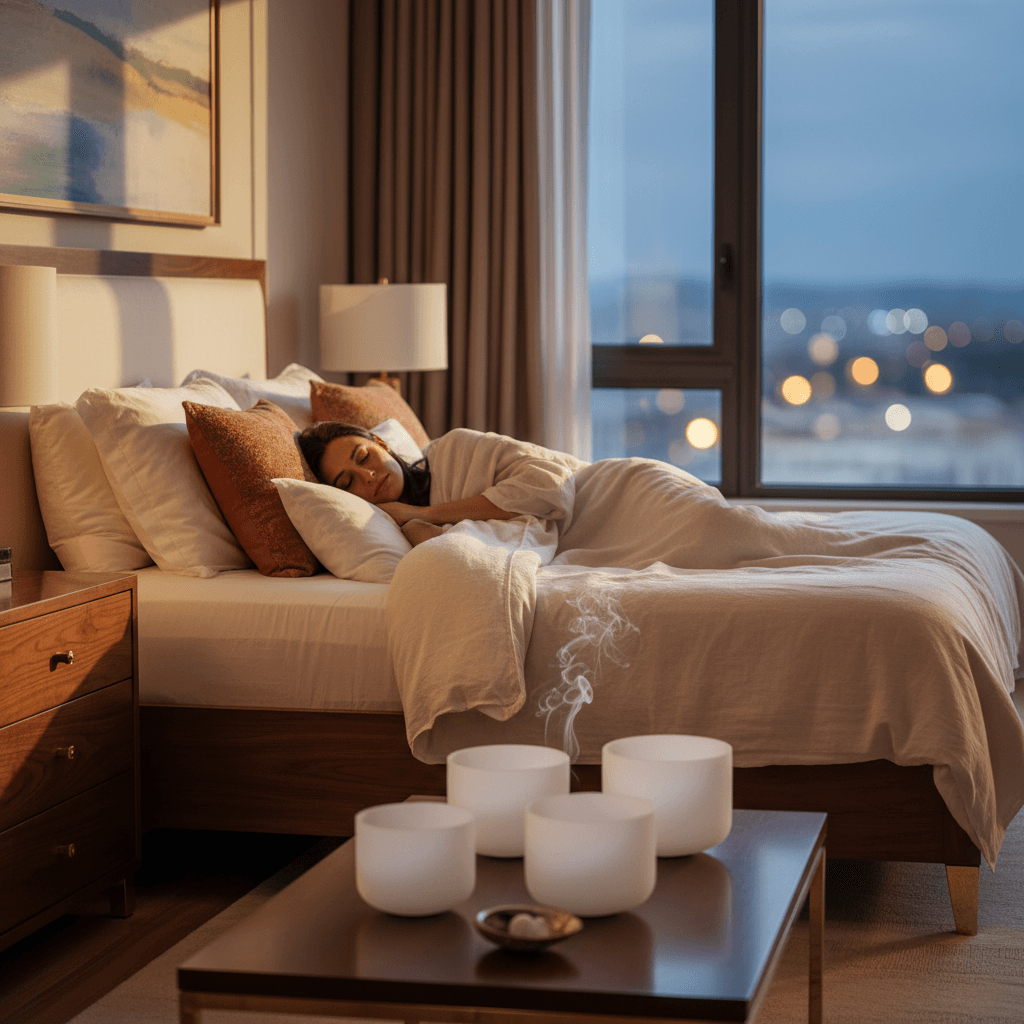
Teenage Sleep: Navigating Biological Shifts for Mental Wellness
Key Insights
Unlock the secrets of teenage sleep patterns, from circadian shifts to mental health links. Discover how Soul Art Dubai, founded by Larissa Steinbach, offers sound wellness to support your teen's wellbeing.
Teenage Sleep: Navigating the Biological Shift for Mental Wellness
Have you ever wondered why your once early-rising child now struggles to wake before noon, yet battles sleep each night? This isn't merely a phase of rebellion; it’s a profound biological transformation. Adolescence heralds a significant shift in sleep patterns, impacting everything from academic performance to emotional resilience.
At Soul Art, Dubai's premier sound wellness studio, we understand these intricate shifts. Founded by Larissa Steinbach, our mission is to illuminate these natural changes and offer complementary tools to support healthy sleep and mental wellbeing during these pivotal years. In this comprehensive guide, we delve into the science behind teenage sleep, explore its widespread implications, and reveal how holistic practices can foster restorative rest.
We will unravel the complex interplay of circadian rhythms and homeostatic sleep pressure, exposing why teens are inherently wired to be "night owls." You'll discover the critical link between sleep deprivation and mental health, along with practical strategies to navigate these challenges. Ultimately, we aim to equip parents and teens with knowledge and resources to embrace better sleep, fostering a foundation for lifelong wellness.
The Intricate Dance of Teenage Sleep Biology
Adolescence is a period of rapid growth and profound change, not just physically and emotionally, but also neurologically. Underlying the seemingly erratic sleep habits of teenagers are significant biological shifts that fundamentally alter their sleep-wake cycles. Understanding these physiological changes is the first step toward effective support.
The Circadian Shift: Becoming a Night Owl
At the heart of teenage sleep patterns lies the circadian rhythm, often referred to as our internal 24-hour biological clock. This rhythm dictates when we feel awake and when we feel sleepy, largely influenced by cycles of light and darkness. During adolescence, this natural clock undergoes a significant developmental change, pushing the timing of sleep later.
Renowned sleep researcher Mary Carskadon, Director of Chronology and Sleep research at the Brown University School of Medicine, has extensively documented this phenomenon. She explains that teens experience a sleep phase delay, meaning their bodies naturally begin to release the sleep-inducing hormone melatonin later in the evening. Instead of preparing for sleep around 9 PM, their brains may not be ready until 11 PM or even later.
This biological shift transforms teens from potential "morning larks" into definitive "night owls." This tendency to delay sleep onset progressively continues until around age 18 to 20, after which individuals may gradually revert to more "morning larkish" tendencies. The implications of this natural delay are far-reaching, directly impacting school performance and overall wellbeing.
Studies, including one published in the Journal of Affective Disorders, underscore that these shifts are not merely behavioral but are hardwired developmental changes. Research also indicates that genes, such as the one for photopigment melanopsin, which affects the eye's sensitivity to light, play a role in regulating these natural clocks. This further reinforces the biological basis of the adolescent sleep phase delay.
Homeostatic Sleep Pressure and Puberty's Influence
Beyond the circadian shift, another critical mechanism governing sleep is homeostatic sleep pressure. This refers to the physiological drive to sleep that builds up the longer we are awake. For younger children and adults, this pressure accumulates relatively quickly, making them feel tired after a typical day.
However, during adolescence, the accumulation of this homeostatic sleep pressure appears to slow down. This biological change permits older adolescents to stay awake longer without feeling overwhelmingly tired, further contributing to their delayed sleep/wake cycles. This slower build-up, coupled with the delayed circadian rhythm, creates a powerful biological impetus for later bedtimes.
The timing of these sleep system changes is also closely linked to pubertal development. Research indicates a strong correlation between the delayed circadian phase and secondary-sex development, suggesting a deep biological connection. This developmental change is not unique to humans; studies have observed a similar delay in circadian phase around the time of puberty in multiple mammalian species, including rhesus macaques, degus, and laboratory rats, highlighting its evolutionary significance.
This evidence strongly suggests that while environmental and social factors undoubtedly play a role, a significant biological component drives adolescent changes in sleep patterns. Teenagers are not just choosing to stay up late; their bodies are genuinely unprepared for earlier sleep.
The Real-World Impact: Sleep Debt and Mental Health
The collision of biological "night owl" tendencies with early societal demands, particularly early school start times, creates a widespread problem: chronic insufficient sleep, also known as sleep debt. A recent poll by the National Sleep Foundation revealed that over 45% of adolescents in the United States obtain inadequate sleep. Other studies show that nearly 77% of high school students miss the recommended amount of sleep on school nights, a significant increase from past years.
This accumulated sleep debt can have serious repercussions for adolescent mental health. Researchers have identified a critical role for sleep in adolescent emotional well-being. Teens and young adults are at a higher risk for depression, and insufficient sleep significantly exacerbates this vulnerability. Studies have found that teens who reported symptoms of depression, bullying, or suicidal thoughts were more likely to sleep less.
While consistently getting eight to ten hours of sleep each night remains the ideal goal for adolescents, researchers recognize this is often unrealistic given academic, social, and extracurricular demands. Interestingly, emerging research suggests that weekend catch-up sleep may offer some protection against the risk of depressive symptoms. As explained by Casement, "It's normal for teens to be night owls, so let them catch up on sleep on weekends if they can't get enough sleep during the week because that's likely to be somewhat protective."
However, even with weekend catch-up, the cumulative effect of sleep loss can be substantial. Studies have shown that daytime sleepiness increases with each night of restricted sleep, impacting alertness and cognitive function during weekdays.
The Early School Start Time Paradox
Perhaps one of the most significant external factors contributing to adolescent sleep deprivation is early school start times. According to sleep research, the teenage brain does not "wake up" and achieve optimal readiness for learning until later in the morning, often closer to 10:00 a.m. Yet, many high school students are already in class by 7:30 or 8:00 a.m.
Mary Carskadon's research vividly illustrates this paradox, noting that for some teens with early school start times, "biological night is 8:30 a.m., when they are in second-period class." Attempting to engage intellectually during this trough of their circadian rhythms presents immense challenges for both students and teachers. Beyond academic performance, increased risk of accidents due to drowsiness, particularly for those who drive to school, is a serious concern.
The positive impact of later school start times has been demonstrated in real-world scenarios. For example, after the Seattle School District delayed its public high school start times by nearly an hour (from 7:50 a.m. to 8:45 a.m.), students' daily median sleep time increased by 34 minutes. This additional sleep was associated with a 4.5 percent increase in grades, highlighting the tangible benefits of aligning school schedules with adolescent biology.
Parents also play a crucial role in mitigating these challenges. Research shows that adolescents with parent-set bedtimes went to bed earlier (an average of 23 minutes) and obtained about 20 minutes more sleep per night than their peers without bedtimes. This seemingly small difference resulted in less fatigue and less trouble staying awake. Furthermore, adolescents whose parents set bedtimes at midnight or later were significantly more likely to experience depression and suicidal ideation compared to those with bedtimes at 10 p.m. or earlier. This underscores that despite their growing independence, adolescents are not too old for supportive parental guidance regarding sleep.
How It Works in Practice: Bridging Biology and Wellbeing
Understanding the science behind teenage sleep reveals that the struggles are not simply behavioral choices; they are deeply rooted in biology. In practice, this means teens often find themselves in a constant battle against their own internal clocks. They feel an undeniable drive to stay awake later, yet societal demands like early school bells force them into a state of chronic sleep deprivation.
The manifestation of this biological shift is clear in daily life. Teens describe feeling groggy and unengaged in early morning classes, often struggling to focus or absorb new information. They may experience increased irritability, mood swings, and difficulty managing stress, all of which are classic symptoms of insufficient sleep. The persistent cycle of staying up late, getting too little sleep, and then attempting to catch up on weekends can create an unstable foundation for their emotional and cognitive development.
This chronic sleep debt can exacerbate existing anxieties or contribute to new ones, making it harder for teens to cope with academic pressures, social dynamics, and the inherent stresses of adolescence. The brain, still undergoing significant maturation, relies heavily on adequate sleep for memory consolidation, emotional regulation, and critical thinking. When sleep is compromised, these vital processes are hindered, potentially impacting long-term development.
"Recognizing that adolescent sleep patterns are a biological reality, not a choice, shifts our approach from blame to understanding and support. This empathy is key to helping teens navigate a world often misaligned with their natural rhythms."
It is in this context that complementary wellness practices, such as sound wellness, offer a profound opportunity. While sound wellness cannot alter the fundamental biological shifts of adolescence, it can significantly support the body and mind in adapting to them. By providing a deeply relaxing and nervous system-regulating experience, sound practices can help teens unwind from daily stresses, quiet an overactive mind, and prepare their bodies for sleep more effectively when the opportunity arises. It's about cultivating an inner environment conducive to rest, even when external factors are challenging.
The Soul Art Approach: Harmonizing Adolescent Sleep
At Soul Art, Larissa Steinbach has crafted a unique approach to wellbeing that respects the inherent biological complexities of the human body, especially during formative years like adolescence. Our philosophy centers on helping individuals regulate their nervous system and achieve states of deep relaxation, which are essential precursors to restorative sleep. For teenagers grappling with their changing sleep architecture, the Soul Art method offers a powerful, non-invasive complementary tool.
Larissa Steinbach understands that forcing sleep is rarely effective. Instead, the Soul Art approach focuses on creating an optimal internal environment where the body's natural inclination towards rest can emerge. This means addressing the underlying stress and overstimulation that often prevent teens from winding down, even when their biological clock is finally signaling readiness for sleep. Our sessions are meticulously designed to gently guide the mind and body into a parasympathetic state, where healing and restoration occur.
What makes the Soul Art method unique is its dedication to the precise application of resonant sound frequencies. We utilize a curated selection of instruments, including authentic Himalayan singing bowls, deeply resonant gongs, and precisely tuned tuning forks. Each instrument is chosen for its specific vibrational qualities, which are known to influence brainwave states and promote profound relaxation. The soothing vibrations and harmonious tones envelop the individual, creating a meditative soundscape that can help quiet the incessant chatter of the adolescent mind.
During a Soul Art session, teens may experience a profound sense of calm as their nervous system down-regulates. This experience may support a reduction in stress hormones, ease muscular tension, and foster a mental stillness that is often elusive in their busy lives. By regularly engaging in such practices, teens may find it easier to transition from an overstimulated state to a peaceful one, making the most of their available sleep window. Soul Art provides a sanctuary where the pressures of school, social life, and digital distractions fade, allowing the body and mind to realign and prepare for truly restorative rest.
Your Next Steps: Cultivating Restorative Sleep
Navigating the biological shifts of teenage sleep requires a multi-faceted approach, combining scientific understanding with practical, supportive strategies. While the ideal of eight to ten hours of sleep nightly is paramount, integrating complementary wellness practices can significantly enhance a teen's ability to achieve quality rest. Here are actionable steps you and your teen can implement today:
- Prioritize Consistency, Even with Weekend Catch-Up: Encourage consistent sleep and wake times during the week, but also allow for some weekend catch-up sleep (e.g., sleeping an extra hour or two) if significant sleep debt has accumulated. Remember, while not ideal, this may be protective for mental health, according to some research.
- Implement Screen Hygiene: The blue light emitted from digital screens, especially close to bedtime, can further suppress melatonin production and delay sleep onset. Establish a "digital curfew" at least one hour before bed, ensuring all screens are removed from the bedroom. This supports the body's natural melatonin release.
- Embrace Natural Light Exposure: Encourage morning sunlight exposure shortly after waking up to help reset the body's internal clock. Similarly, exposure to natural light during the day can reinforce healthy circadian rhythms and may support better sleep at night.
- Cultivate a Calming Bedtime Routine: Just as with younger children, a consistent, relaxing bedtime routine can signal to the body that it's time to wind down. This could include a warm bath, reading a book (not on a screen), gentle stretching, or listening to calming music.
- Explore Complementary Wellness Practices: Consider incorporating practices like sound wellness, mindfulness, or gentle meditation. These techniques can help regulate the nervous system, reduce anxiety, and foster a state of relaxation conducive to sleep. Soul Art, founded by Larissa Steinbach, offers specialized sound wellness sessions designed to support deep rest and mental clarity.
By understanding the unique biological needs of teenagers and implementing these supportive strategies, you can help foster a foundation of better sleep and enhanced mental wellbeing.
Bookings Coming Soon
Soul Art is still in preparation. Session details and booking will be published here after launch.
Coming Soon
In Summary
The journey through adolescence is marked by significant biological shifts, particularly in sleep patterns. Teenagers are hardwired to be "night owls," experiencing a natural delay in their circadian rhythms and a slower accumulation of sleep pressure. This biological reality, often clashing with early school start times and modern lifestyle demands, leads to widespread sleep debt, which has been associated with increased risks of depression and other mental health challenges.
Understanding these profound changes is crucial for parents and teens alike. While achieving ideal sleep can be challenging, implementing strategic sleep hygiene practices and embracing complementary wellness tools can make a significant difference. Soul Art, under the guidance of Larissa Steinbach, provides a unique sanctuary for nervous system regulation and deep relaxation through sound wellness. By supporting the body's innate capacity for rest, we aim to empower teens to navigate these developmental shifts with greater resilience and wellbeing.
Wellness Disclaimer: This article is for educational and informational purposes only. It does not constitute medical advice, diagnosis, or treatment. Soul Art Dubai provides non-medical wellness experiences focused on relaxation, stress management, and general wellbeing. Sound wellness is a complementary practice and should not replace professional medical care.
Related Articles
Fan Noise and Sleep: Unmasking the Science Behind White Noise Machines for Deeper Rest
Polyphasic Sleep & Sound Healing: Navigating Restorative Rhythms
REM Rebound: Mastering the Art of Recovering Lost Dream Sleep