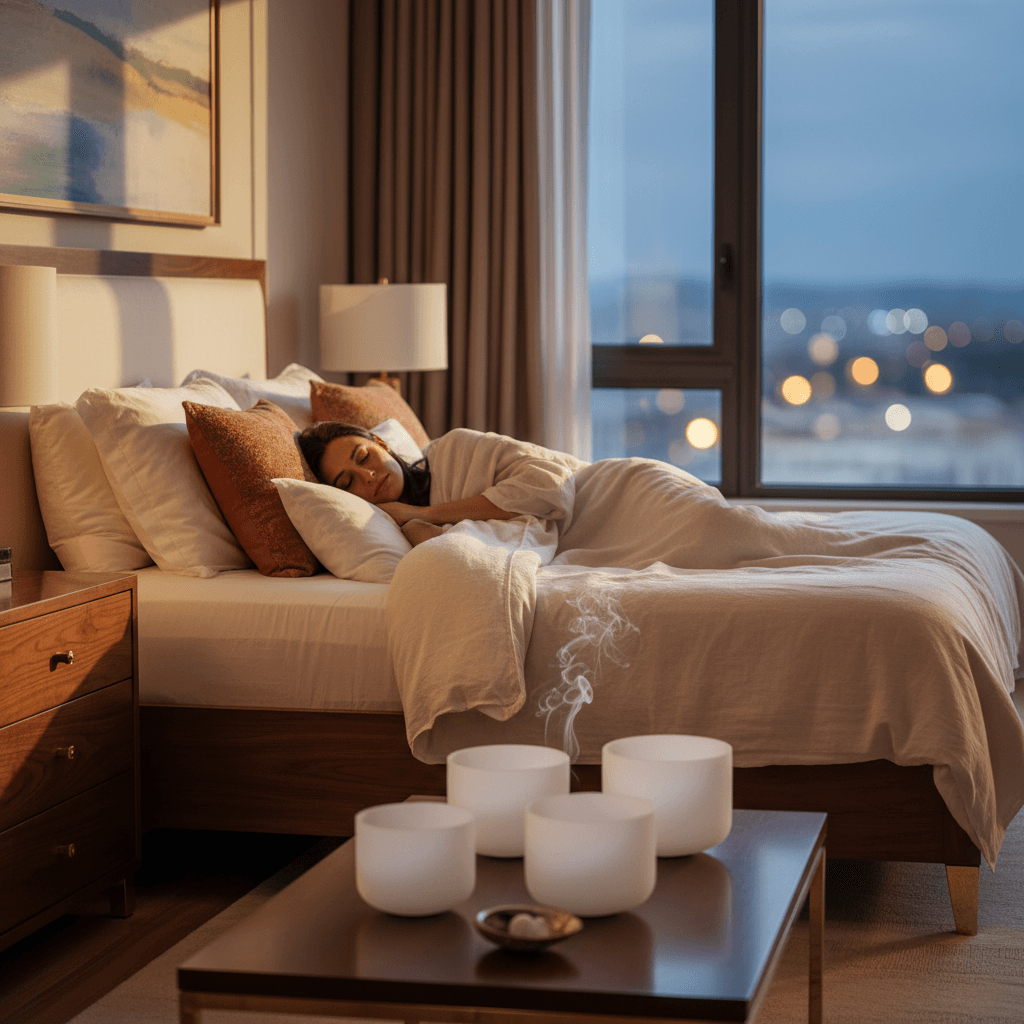
Unlock Cognitive Potential: Optimizing Slow Wave Sleep for Memory
Key Insights
Explore how optimizing slow wave sleep at Soul Art Dubai can enhance memory consolidation, boost cognitive function, and deepen your well-being with Larissa Steinbach's expert guidance.
Have you ever wondered why a good night's sleep can make yesterday's complex information feel clearer and more accessible today? The answer lies deep within the architecture of your sleep cycle, specifically during a critical phase known as Slow Wave Sleep (SWS). This profound stage is far more than just "deep sleep"; it is a sophisticated neural workshop where your brain meticulously processes, files, and consolidates the day's experiences into enduring memories.
At Soul Art, Dubai's premier sound wellness studio, we believe in unlocking your innate potential by harmonizing mind and body. Understanding the science of SWS offers a powerful pathway to enhanced cognitive function, improved learning, and overall well-being. This article will delve into the fascinating neuroscience behind slow wave sleep, explore its pivotal role in memory consolidation, and reveal how holistic practices may support its optimization for a sharper, more vibrant you. Join us as we explore this vital connection.
Unveiling the Neural Symphony of Slow Wave Sleep
Slow Wave Sleep, often referred to as deep sleep, is a profound and restorative stage of non-rapid eye movement (NREM) sleep. It is characterized by the presence of high-amplitude, low-frequency delta waves visible on an electroencephalogram (EEG), signifying a period of intense neural synchronization. During this phase, your breathing and heart rate slow, blood pressure drops, and muscles relax, creating optimal conditions for physical and mental restoration.
Beyond mere rest, SWS is a dynamic period where the brain actively engages in critical biological processes. Tissues regenerate, essential hormones are released, and perhaps most importantly for cognitive function, memory consolidation takes center stage. This intricate process transforms fragile, newly acquired information into stable, long-term memories, profoundly impacting learning and cognitive clarity.
What is Slow Wave Sleep (SWS)?
SWS represents the deepest phase of sleep, where the brain’s electrical activity becomes exceptionally slow and synchronized. If awakened during this stage, individuals often feel groggy and disoriented, highlighting its profound depth. This powerful phase is integral to physical repair and mental recalibration, laying the groundwork for optimal waking function.
Researchers have observed that SWS is vital for tasks ranging from cellular maintenance to complex information processing. It is a period where the brain seemingly "cleans house" and reorganizes, preparing itself for the challenges of a new day. This deep level of rest is not just about feeling refreshed; it is about rebuilding and reinforcing neural pathways.
The Pivotal Role of SWS in Memory Consolidation
A wealth of scientific evidence now supports the hypothesis that sleep, particularly SWS, is critical for memory processing. It plays a dual role: not only does it support the overnight consolidation of new memories, but it also helps restore the hippocampus's next-day encoding capacity, ensuring you are ready to learn more. This makes SWS an indispensable component of effective learning and cognitive performance.
The prevailing hippocampal-neocortical model of memory consolidation posits a sophisticated interaction between these two brain regions during sleep. During wakefulness, new memories are initially stored temporarily in the hippocampus. During SWS, these memories are believed to be gradually transferred for long-term storage in the neocortex, a process that stabilizes them against forgetting. Studies utilizing positron emission tomography have shown that hippocampal areas activated during learning routes in a virtual town were subsequently reactivated during SWS, with a positive correlation between this activity and next-day route-retrieval improvement.
The Orchestration of Brain Oscillations
The magic of SWS for memory consolidation lies in the precise temporal coupling of various brain oscillations. Electroencephalography (EEG) studies have provided critical insights into this neural ballet, revealing the coordinated interplay between slow oscillations, sleep spindles, and hippocampal ripples. These synchronized events facilitate the transfer of memory from the hippocampus to the neocortex, enhancing neuronal reactivation and optimizing long-term memory consolidation.
Slow oscillations, large-scale brain waves characteristic of SWS, provide a critical temporal framework. Within these slow oscillations, brief bursts of brain activity known as sleep spindles emerge, primarily generated in the thalamus and cortex. Hippocampal ripples are high-frequency oscillations originating in the hippocampus, associated with memory reactivation. Research indicates that the precise coordination between maximum spindle amplitude and slow oscillation up-states is associated with significant improvement in declarative memory consolidation, supporting the idea of an optimal condition for synaptic plasticity.
For instance, studies by Mikutta et al. (2019) demonstrated that the strength of slow oscillation-spindle coupling directly correlates with procedural memory consolidation. This intricate coupling orchestrates cross-regional communication, fine-tuning the temporal dynamics necessary for robust memory processing. Furthermore, targeted interventions like transcranial direct current stimulation (tDCS) of frontocortical regions during SWS-rich sleep have shown increased slow-wave activity (less than 3 Hz) and enhanced retention of word pairs, underscoring SWS’s critical role in declarative memory formation.
SWS and Different Memory Types
SWS plays a pivotal role in consolidating both declarative memory and procedural memory. Declarative memories encompass facts, events, and concepts—information you can consciously recall. Procedural memories, on the other hand, relate to skills and habits, such as riding a bike or playing a musical instrument. The coordinated interplay of slow oscillations and spindles during SWS is crucial for strengthening both types.
While SWS is foundational, it’s important to note that memory consolidation is a multifaceted process involving other sleep stages as well. The sequential hypothesis suggests complementary roles for SWS and REM sleep within the same night. SWS is often seen as initiating cortical plasticity for memory consolidation, with the subsequent REM sleep episodes reinforcing these changes. This delicate interdependence ensures a comprehensive and effective transformation of memories.
The Detrimental Impact of SWS Disruption
Modern life often leads to insufficient sleep, with a significant portion of adults and teenagers sleeping less than recommended. This "sleep restriction," typically defined as sleeping between 3 to 6.5 hours, has a significant negative impact on memory formation. Research indicates that restricting sleep impairs both memory encoding (the initial learning phase) and memory consolidation, affecting the brain's ability to store information effectively.
In fact, a systematic review found that restricting sleep can impair memory to a similar degree as not sleeping at all, highlighting the severe cognitive costs of chronic sleep deprivation. Conditions that disrupt sleep architecture, such as Obstructive Sleep Apnea (OSA), further complicate the picture. Studies show that a higher oxygen desaturation index and apnea-hypopnea index are significantly associated with poorer memory consolidation and a lower slow-wave index, reinforcing the critical role of undisturbed SWS. Moreover, the natural aging process can lead to a decrease in slow-wave sleep, which in turn can make processing memories more challenging for older individuals. This underscores the necessity of protecting and optimizing SWS throughout life.
How It Works in Practice
Connecting the complex neuroscience of SWS to our everyday lives reveals profound insights into optimizing cognitive function. Imagine waking up with ideas flowing freely, a sharp recall for yesterday's conversations, and an effortless ability to grasp new concepts. This state of mental clarity and enhanced memory is not merely a pleasant outcome but a direct reflection of a brain that has effectively leveraged its slow wave sleep.
When SWS is optimized, the brain performs its intricate memory consolidation tasks with greater efficiency. This means that the information you absorb during your waking hours—whether it’s a new language, a business strategy, or simply the details of a cherished experience—is more likely to be successfully transferred from temporary to permanent storage. This translates to improved learning capacity, better problem-solving skills, and a stronger foundation for creative thinking.
Many people report that a night of deep, undisturbed sleep leaves them feeling not just physically rested but mentally invigorated and more capable of tackling complex challenges. It's a feeling of mental spaciousness and clarity that allows for greater focus and reduced cognitive fatigue. This is the practical manifestation of a brain that has efficiently processed and organized its information during SWS.
"The true luxury of modern life is not merely access to information, but the capacity to deeply process and retain it, a capacity profoundly shaped by the quality of our sleep."
Beyond memory, the benefits of healthy SWS extend to emotional regulation and stress resilience. A well-rested brain is better equipped to manage emotional responses and navigate stressors, contributing to an overall sense of calm and well-being. This holistic impact underscores that prioritizing deep sleep is an investment in both cognitive excellence and emotional harmony. By creating an environment conducive to deep, restorative sleep, we empower our brains to perform at their peak, fostering a life rich in clarity, learning, and peace.
The Soul Art Approach
At Soul Art, Larissa Steinbach understands that true well-being encompasses more than just physical health; it delves into the depths of mental clarity and emotional serenity. Recognizing the profound impact of slow wave sleep on memory and overall cognitive function, the Soul Art approach offers a unique, complementary pathway to support deeper rest and enhanced brain activity. Our studio creates an immersive environment designed to gently guide your nervous system into a state of profound relaxation, an essential precursor for optimal SWS.
Larissa Steinbach, with her deep expertise in sound wellness, curates experiences that leverage specific frequencies and vibrations. During Soul Art sessions, clients are enveloped in the harmonious sounds produced by exquisite instruments such as crystal singing bowls, Himalayan singing bowls, gongs, and chimes. These carefully selected sounds are not just beautiful; they are chosen for their potential to induce a meditative state, promoting relaxation and stress reduction, which in turn may support the initiation and depth of slow wave sleep.
The sustained, resonant tones and harmonic overtones emitted by these instruments create a deeply calming sonic landscape. Many people report that these soundscapes help quiet the incessant mental chatter, allowing the brain to transition more easily into the slower brainwave states associated with deep relaxation and restorative sleep. While not a medical treatment, our sound wellness practices are a potent self-care tool, helping to lower cortisol levels and activate the parasympathetic nervous system, creating an internal environment conducive to natural sleep processes.
The Soul Art method, guided by Larissa Steinbach, is about cultivating an internal sense of peace and balance. By regularly engaging in these sound journeys, clients may find it easier to achieve the relaxed states necessary for deeper, more restorative sleep, potentially enhancing their natural memory consolidation processes. It is a holistic wellness experience, a quiet luxury that nurtures the mind and body, laying the foundation for improved cognitive vitality and overall systemic harmony.
Your Next Steps
Optimizing your slow wave sleep is a powerful step towards unlocking your full cognitive potential and enhancing your overall well-being. Incorporating simple yet impactful practices into your daily routine can make a significant difference in the quality of your rest and, consequently, your memory. You have the power to influence your brain's ability to consolidate memories effectively.
Here are a few actionable steps you can implement starting today:
- Establish a Consistent Sleep Schedule: Go to bed and wake up at roughly the same time each day, even on weekends. This helps regulate your body’s natural circadian rhythm, making it easier for your brain to transition into deep sleep stages.
- Optimize Your Sleep Environment: Ensure your bedroom is cool, dark, and quiet. Consider using blackout curtains, earplugs, or a white noise machine to minimize disruptions. A comfortable mattress and pillows are also crucial.
- Incorporate Relaxation Techniques: Before bed, engage in calming activities such as reading, gentle stretching, or deep breathing exercises. Sound wellness practices, like those offered at Soul Art, can be profoundly effective in preparing your mind and body for deep rest.
- Limit Stimulants and Heavy Meals Before Bed: Avoid caffeine and alcohol in the late afternoon and evening, as they can interfere with sleep architecture. Similarly, heavy, rich meals close to bedtime can disrupt digestive processes, impacting sleep quality.
- Mindful Evening Routine: Create a sacred pre-sleep ritual that signals to your body it’s time to wind down. This might involve a warm bath, journaling, or listening to soothing music.
Embracing these practices can help foster the conditions necessary for more robust slow wave sleep. If you're ready to explore a deeper dimension of relaxation and support your brain's natural memory processes, we invite you to experience the unique sound journeys at Soul Art.
In Summary
Slow Wave Sleep (SWS) is undeniably a cornerstone of cognitive function, playing a pivotal role in memory consolidation. This deep sleep stage orchestrates a complex dance of brain oscillations—slow waves, spindles, and hippocampal ripples—to transfer and stabilize memories from temporary hippocampal storage to long-term neocortical archives. The quality of our SWS directly impacts our ability to learn, recall, and even problem-solve, making its optimization crucial for mental sharpness and overall vitality.
Disruptions to SWS, whether from sleep restriction or conditions like sleep apnea, can significantly impair memory and cognitive processing. At Soul Art, we recognize the profound link between deep relaxation and restorative sleep. Through our carefully curated sound wellness experiences, Larissa Steinbach guides clients towards states of profound calm that may support the body's natural inclination towards deeper sleep. Elevate your cognitive potential and embrace enhanced well-being by nurturing your slow wave sleep with the harmonious journey offered at Soul Art.
Bookings Coming Soon
Soul Art is still in preparation. Session details and booking will be published here after launch.
Coming Soon
Wellness Disclaimer: This article is for educational and informational purposes only. It does not constitute medical advice, diagnosis, or treatment. Soul Art Dubai provides non-medical wellness experiences focused on relaxation, stress management, and general wellbeing. Sound wellness is a complementary practice and should not replace professional medical care.
Related Articles
Fan Noise and Sleep: Unmasking the Science Behind White Noise Machines for Deeper Rest
Polyphasic Sleep & Sound Healing: Navigating Restorative Rhythms
REM Rebound: Mastering the Art of Recovering Lost Dream Sleep