Sleep Spindles: Decoding the Brain's Nocturnal Intelligence
Key Insights
Uncover how sleep spindles, the brain's rhythmic bursts, process memories and enhance learning overnight. Explore their role in deep rest at Soul Art Dubai with Larissa Steinbach.
Have you ever woken up with a sudden clarity, a problem solved, or a new skill feeling a little more natural? It might feel like magic, but your brain has actually been hard at work all night, orchestrating a sophisticated process of information sorting and consolidation. While we drift through the tranquil stages of sleep, a fascinating phenomenon known as sleep spindles takes center stage, acting as the brain's overnight information processors.
These distinctive bursts of electrical activity are far more than just markers of deep rest; they are critical players in how we learn, remember, and adapt. At Soul Art, we believe that understanding these intricate brain mechanisms can empower us to cultivate deeper, more restorative sleep, unlocking profound benefits for our cognitive function and overall well-being. Join us as we explore the hidden world of sleep spindles and their transformative impact on your waking life.
The Science Explained: Unveiling the Brain's Nocturnal Orchestration
Sleep is not merely a period of inactivity; it's a dynamic state where the brain actively engages in crucial restorative and reorganizational tasks. Among the most vital of these tasks is the processing and consolidation of memories, a function heavily influenced by specific brain rhythms, particularly sleep spindles. These "spiky bursts," as observed on an electroencephalogram (EEG), are central to transforming fleeting daily experiences into enduring knowledge.
What Are Sleep Spindles?
Sleep spindles are transient, waxing and waning oscillatory rhythms, typically occurring in the sigma frequency range (7–14 Hz) and lasting between 0.5 to 3.0 seconds. They are a hallmark of non-REM (NREM) sleep, particularly abundant during Stage 2 sleep, which we enter shortly after falling asleep and where we spend a significant portion of our night. While initially thought to occur only at sleep onset, research shows they are generated throughout NREM sleep, often in association with slow oscillations.
These intriguing brainwaves originate in the thalamus, a critical sensory relay station in the brain. From there, they propagate to the cortex via thalamocortical axons, becoming synchronized through corticothalamic projections. This intricate interplay between the thalamus and the cortex is fundamental to their role in brain function.
Memory Consolidation and Restructuring
For decades, scientists have recognized the link between sleep and improved memory. Recent research, however, has delved deeper, focusing on specific physiological events like sleep spindles. Studies suggest that sleep spindles do more than just stabilize memories; they actively support enduring changes in the organization of memories both within and across different brain regions.
Specifically, fast spindles during overnight sleep appear to promote the restructuring of memory traces. This involves distributing memories between hippocampal-cortical networks and fostering cross-regional communication. This complex process allows for memories to be reorganized and integrated into existing knowledge structures, particularly within the ventromedial prefrontal cortex (vmPFC).
Research highlights specific correlations between fast spindles and enhanced functional connectivity:
- Object-word pairs: Greater anterior hippocampal-vmPFC functional connectivity.
- Scene-word pairs: Greater posterior hippocampal-PMC functional connectivity.
- vmPFC pattern similarity: Increased pattern similarity for object-word pairs, suggesting a reorganization of how these memories are represented in the cortex.
These findings indicate that sleep spindles are instrumental in transforming raw information into durable, accessible knowledge.
The Learning Link: Spindles and Skill Acquisition
The connection between sleep spindles and learning extends beyond mere memory recall; it's deeply embedded in the process of acquiring new skills and information. New research has managed to link these surges of brain activity to specific acts of learning while awake. A study published in Current Biology found that sleep spindles appear prominently in particular brain areas that had been active during learning tasks. Stronger spindles in these areas correlated with better recall after sleep.
"We were able to link, within [each] participant, exactly the brain areas used for learning to spindle activity during sleep," notes University of Oxford cognitive neuroscientist Bernhard Staresina, a senior author on one such pivotal study.
This localized increase in spindle activity has been observed across various learning paradigms:
- Motor Tasks: Increased spindle activity in the contralateral hemisphere after a unilateral finger-tapping task. Similarly, after training on a brain-computer interface (BCI), spindle density increased specifically around the functionally active regions involved in task performance.
- Visuomotor Learning: Localized increases in sleep spindles in brain areas known to be involved in the task.
- Verbal Learning: In word-pair association tasks, increased recall performance was found in individuals with high spindle activity during the intervening night, involving both slow and fast spindles. Spindle density has been shown to correlate linearly with recall performance.
- Cognitive Skills: Studies have linked higher sleep spindle density to improved overnight performance in planning and problem-solving skills, as well as enhancements in working memory.
These findings strongly suggest that sleep spindles play an active role in synaptic plasticity, facilitating the encoding of new learning into long-term memory.
Sensory Gating: Protecting the Processing Hub
Beyond their role in learning and memory, sleep spindles serve another crucial function: sensory gating. The thalamus, the generator of sleep spindles, is also responsible for processing sensory input from the external world. During NREM sleep, spindles appear to target this brain region, effectively suppressing the transmission of external stimuli to the neocortex.
This sensory shutdown creates a quiet, uninterrupted window for the brain to replay and reorganize recently instantiated memories. By minimizing external distractions, sleep spindles facilitate the continuous, undisturbed communication between the hippocampus and the cortex, vital for robust memory consolidation. It's akin to the brain pulling down the shades and putting up a "do not disturb" sign to focus on its most important overnight work.
How It Works in Practice: The Tangible Benefits of Optimal Spindles
While you can't consciously activate sleep spindles, understanding their function allows us to appreciate the profound impact of truly restorative sleep on our daily lives. When your brain effectively leverages these nocturnal rhythms, the benefits extend far beyond simply feeling rested. They manifest in enhanced cognitive function, improved emotional regulation, and a greater sense of mental clarity.
Imagine tackling a complex project at work, then getting a night of deep, undisturbed sleep. The next morning, you might find that solutions appear more readily, or connections you missed before become clear. This isn't just a refreshed perspective; it's the result of your brain's internal reorganization, courtesy of robust sleep spindle activity. These subtle shifts are the practical payoffs of the brain's overnight information processing.
Clients who prioritize deep sleep, whether through mindful practices or sound wellness, often report a clearer mental state and improved ability to learn new information. They may notice their memory for names, facts, or instructions becomes sharper. This improvement isn't merely about recall; it's about the efficiency with which the brain accesses and integrates information. It's the difference between merely remembering a fact and truly understanding its context and implications.
Furthermore, the sensory gating function of sleep spindles contributes to a deeper, more stable sleep experience. This means fewer micro-awakenings caused by ambient noises or slight movements, leading to a more consistent flow through the NREM stages where spindle activity is highest. The practical outcome is waking feeling genuinely refreshed, rather than just less tired. This deep rest allows for enhanced emotional resilience, as the brain has had ample time to process and integrate daily experiences without interruption.
The connection between sleep spindles and learning means that optimizing these brain rhythms can directly support personal growth and development. Whether you're learning a new language, mastering a musical instrument, or simply trying to retain new information from a book or course, quality sleep, rich in spindle activity, may support your brain's ability to commit that information to long-term memory. This empowers you to engage with the world more effectively, with greater mental agility and a deeper capacity for knowledge acquisition.
The Soul Art Approach: Cultivating Optimal Brain States
At Soul Art, founded by Larissa Steinbach, our philosophy centers on creating environments and experiences that support the body's innate healing and restorative capacities. While we cannot directly "activate" sleep spindles, we focus on cultivating states of deep relaxation and nervous system regulation that are highly conducive to the natural, healthy progression of sleep architecture, including robust sleep spindle activity.
Larissa Steinbach's unique method integrates ancient sound wisdom with modern understanding of brain states. We recognize that the brain, when deeply relaxed, is better able to transition through the sleep stages necessary for optimal memory consolidation and learning. Our sound wellness practices are designed to guide participants into these profoundly restful states, creating an optimal internal landscape for the brain's nocturnal work.
Specific instruments, such as Nepalese singing bowls, crystal bowls, and gongs, are carefully chosen for their unique frequencies and resonant qualities. These sounds are not just pleasing to the ear; they are meticulously curated to help entrain brainwaves towards delta and theta states. These brainwave patterns are characteristic of deep, non-REM sleep stages, which precede and accompany the surge of sleep spindle activity.
During a Soul Art sound journey, clients often experience a profound sense of calm, allowing their minds to quiet and their bodies to release tension. This deep relaxation reduces cortisol levels and activates the parasympathetic nervous system, setting the stage for more efficient and restorative sleep later. By preparing the mind and body for optimal rest, we indirectly support the brain's ability to generate healthy sleep spindles and engage in its vital overnight information processing.
The Soul Art method emphasizes holistic well-being, acknowledging that mental clarity, emotional balance, and cognitive function are deeply intertwined with sleep quality. Our guided experiences, led by Larissa Steinbach, provide a sanctuary where the stresses of daily life can dissolve, making way for the natural intelligence of the brain to flourish. This complementary approach supports the body's own ability to create the conditions necessary for healthy sleep, which in turn, may support improved memory, learning, and overall cognitive vitality.
Your Next Steps: Nurturing Your Brain's Nightly Genius
Understanding the critical role of sleep spindles empowers you to be more intentional about your sleep and overall brain health. While these processes happen unconsciously, you can create conditions that support their optimal function. Prioritizing restorative sleep is a profound act of self-care that yields significant returns in your waking life.
Here are a few actionable steps you can take to nurture your brain's nightly genius:
- Establish a Consistent Sleep Schedule: Go to bed and wake up around the same time each day, even on weekends. This regularity helps regulate your circadian rhythm, optimizing your brain's natural sleep-wake cycles and potentially supporting more consistent sleep spindle activity.
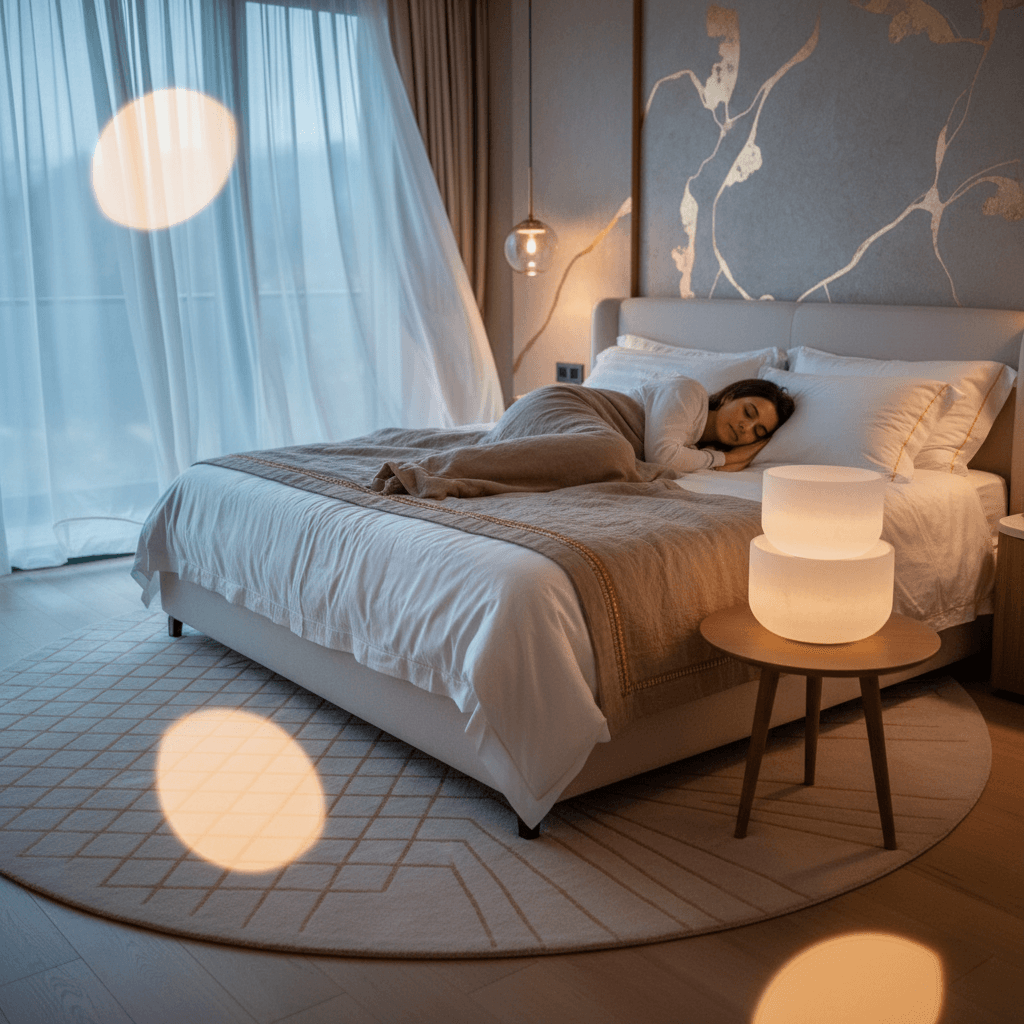
- Optimize Your Sleep Environment: Create a serene, dark, quiet, and cool bedroom. Minimize light exposure (especially blue light from screens) at least an hour before bed to promote melatonin production, which is crucial for sleep onset and quality.
- Incorporate Mindful Relaxation: Engage in calming activities before bed, such as reading, gentle stretching, or deep breathing exercises. These practices can help quiet your mind and ease your body into a state conducive to deep, spindle-rich sleep. Consider integrating a short meditation or sound bath journey into your evening routine.
- Limit Stimulants and Heavy Meals: Avoid caffeine and alcohol, especially in the afternoon and evening, as they can disrupt sleep architecture. Similarly, heavy meals close to bedtime can interfere with digestion and make it harder to fall into deep sleep.
- Explore Sound Wellness: Consider how sound can gently guide your brain into deeper states of relaxation. Sound baths and frequency therapy, like those offered at Soul Art, may support your nervous system in preparing for the kind of profound rest where sleep spindles thrive.
In Summary: The Unseen Architects of Your Mind
Sleep spindles are more than just a scientific curiosity; they are the unseen architects diligently working overnight to refine your memories, solidify your learning, and enhance your cognitive abilities. These rhythmic bursts of brain activity underscore the profound intelligence of your sleeping mind, demonstrating that rest is an active, essential process for growth and well-being. By fostering an environment conducive to deep, restorative sleep, you empower your brain to leverage these vital mechanisms, unlocking sharper memory, clearer thinking, and a greater capacity for learning.
At Soul Art, Larissa Steinbach and our team are dedicated to helping you tap into this innate potential. Our sound wellness experiences offer a unique path to profound relaxation, supporting your journey towards optimal sleep and enhanced cognitive vitality.
Bookings Coming Soon
Soul Art is still in preparation. Session details and booking will be published here after launch.
Coming Soon
Wellness Disclaimer: This article is for educational and informational purposes only. It does not constitute medical advice, diagnosis, or treatment. Soul Art Dubai provides non-medical wellness experiences focused on relaxation, stress management, and general wellbeing. Sound wellness is a complementary practice and should not replace professional medical care.
Related Articles
Fan Noise and Sleep: Unmasking the Science Behind White Noise Machines for Deeper Rest
Polyphasic Sleep & Sound Healing: Navigating Restorative Rhythms
REM Rebound: Mastering the Art of Recovering Lost Dream Sleep