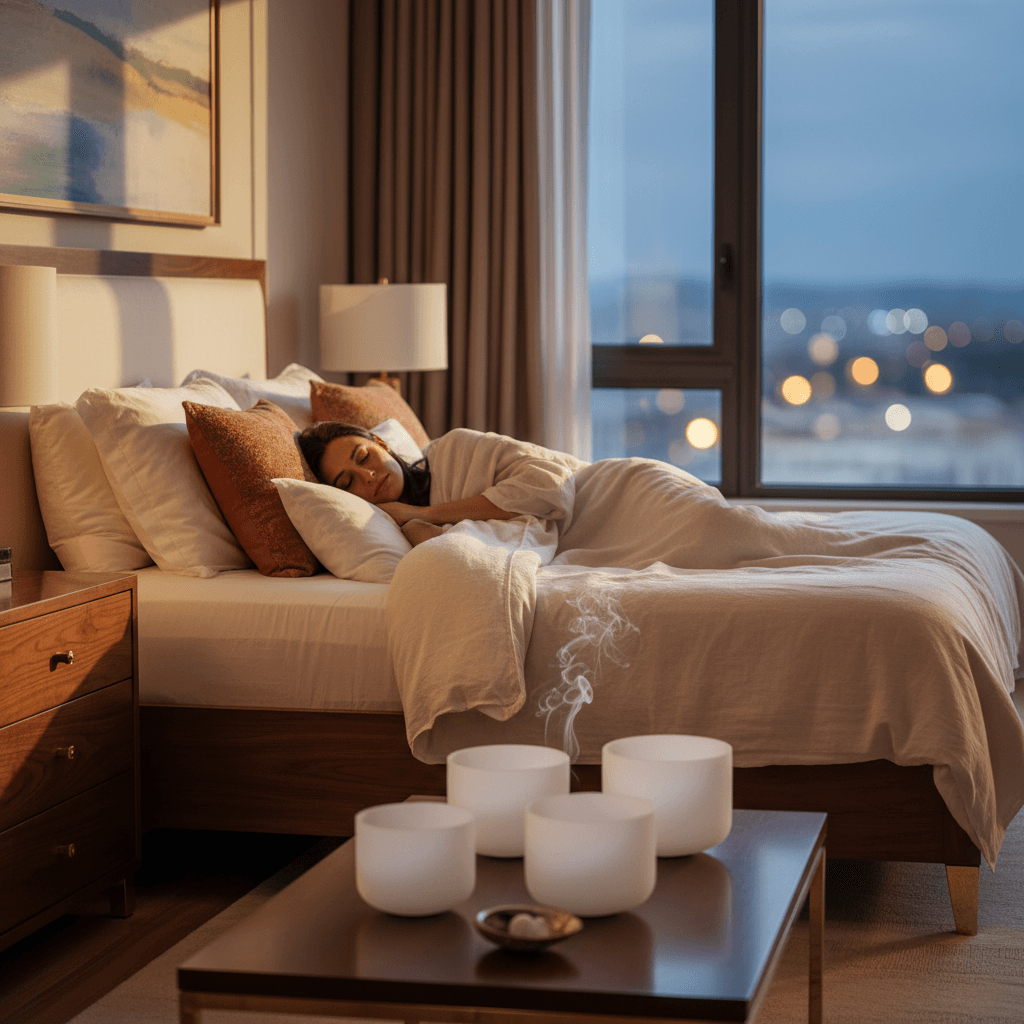
Harmonize Your Mind: Fall Asleep Faster with Sound Wellness
Key Insights
Explore how sound wellness, championed by Soul Art's Larissa Steinbach, helps reduce sleep onset latency and promotes deeper, restorative rest.
The Quiet Revolution: Falling Asleep Faster with Sound Wellness
Imagine lying in bed, your mind racing, the clock ticking, and sleep feeling like an elusive dream. This struggle is known as sleep onset insomnia, and it affects millions, transforming bedtime from a peaceful ritual into a nightly battle. But what if the secret to drifting off faster wasn't found in medication, but in the gentle embrace of sound?
At Soul Art, Dubai’s premier sound wellness studio, we explore the profound potential of sound to guide you into deeper relaxation and more restorative sleep. Pioneered by Larissa Steinbach, our approach is rooted in scientific understanding, offering a sanctuary for those seeking a natural pathway to tranquility. This article delves into the fascinating science behind sound's ability to reduce sleep onset latency, helping you reclaim your nights and revitalize your days.
Join us as we uncover how carefully curated soundscapes can create an optimal environment for your mind and body to transition effortlessly into sleep. Discover the physiological mechanisms at play and practical ways to integrate sound wellness into your life, moving from wakefulness to peaceful slumber with greater ease.
The Science Explained: How Sound Reshapes Your Sleep Cycle
The quest for restful sleep has driven extensive research into non-pharmacological interventions, with sound emerging as a highly promising tool. Scientific studies suggest that specific acoustic environments can significantly influence our ability to fall asleep and the quality of our rest. This isn't just about masking noise; it's about actively guiding the brain and body towards a state conducive to sleep.
Broadband Sound and Reduced Sleep Onset Latency
One of the most compelling findings in sleep research pertains to the administration of broadband sound. A study on healthy subjects experiencing transient insomnia demonstrated that exposure to broadband sound administration significantly reduced the time it took to reach stable Stage N2 sleep—a crucial light sleep stage—by an impressive 38%. For individuals identified as "slower sleepers," those who typically reported higher sleep onset latencies at home, both subjective and objective improvements in sleep were observed.
This suggests that a consistent, enveloping sound environment can create a physiological shift, making it easier for the brain to disengage from wakefulness. The underlying mechanism involves increasing the acoustic arousal threshold. Essentially, this means your brain becomes less sensitive to random environmental noises that might otherwise jolt you awake or prevent you from drifting off. Keywords like filtered white noise, sleep onset latency, and increased arousal threshold highlight the core components of this effect.
Acoustic Stimulation: A Holistic Approach to Sleep
Beyond broadband noise, a broader category known as acoustic stimulation offers significant benefits for managing insomnia symptoms. A comprehensive meta-analysis involving hundreds of patients revealed that acoustic stimulation interventions can effectively improve sleep quality, shorten sleep onset latency, and enhance overall sleep efficiency. This is attributed to several key physiological and neurochemical pathways:
- Autonomic Nervous System Regulation: Acoustic stimulation helps to reduce sympathetic nervous system activity, which is responsible for the "fight or flight" response. This leads to a decrease in heart rate and blood pressure, creating a more relaxed physiological state that is favorable for sleep.
- Neurochemical Pathways: Sound has been observed to influence crucial sleep-regulating hormones. It can decrease cortisol levels, often associated with stress and wakefulness, while promoting the secretion of melatonin, the hormone vital for sleep regulation.
- Alleviating Comorbid Symptoms: Many individuals with sleep challenges also experience anxiety and depression. Acoustic stimulation has been shown to alleviate these comorbid symptoms, indirectly improving sleep quality by fostering a more positive mental state.
Furthermore, studies by Zeller et al. (2024) and Marina Wunderlin et al. (2024) demonstrated that acoustic stimulation can enhance slow-wave sleep (SWS). This deep sleep state is critically important for physical recovery, cellular repair, and memory consolidation. An increase in SWS directly correlates with improved sleep quality and can significantly alleviate insomnia symptoms. Kanzler et al. (2023) reinforced these findings, noting that acoustic stimulation effectively reduces sleep onset latency, increases sleep duration, and decreases nocturnal awakenings, positioning it as a viable, non-pharmacological intervention for sleep challenges.
The Power of Pleasant Sounds and Music
While broadband noise provides a consistent sound backdrop, specific types of "pleasant sounds" and music also play a powerful role in facilitating sleep. Research indicates that sounds reminiscent of natural elements, such as ocean waves, can improve sleep quality and even tend to shorten sleep onset latency, particularly for those who struggle with maintaining sleep.
The effectiveness of music as a sleep aid is widely recognized. Studies have shown that listening to calming music before bed can dramatically reduce the time it takes to fall asleep. For some individuals with insomnia symptoms, sleep onset latency decreased from over twenty minutes to less than fifteen minutes with the regular integration of music into their evening routine. This benefit appears to be cumulative, meaning the more consistently music is incorporated, the greater the reported improvements in sleep quality. Music's ability to improve sleep efficiency, leading to more time spent in actual sleep while in bed, further underscores its value as a complementary approach to better rest.
The Role of Binaural Beats
Another fascinating area of auditory stimulation involves binaural beats. These are auditory illusions perceived when two slightly different frequency pure-tone sine waves, both with frequencies less than 1500 Hz, are presented to a listener dichotically (one tone to each ear). The brain perceives a third tone, the binaural beat, which oscillates at the difference between the two frequencies. Delta binaural beats, specifically associated with brainwave frequencies characteristic of deep sleep, have been shown to reduce sleep onset latency, decrease the frequency of nighttime awakenings, and improve overall sleep quality and post-sleep mood. This non-invasive method works to entrain brainwaves towards states of deep relaxation and sleep, offering a promising alternative for supporting restful nights.
"In the symphony of life, sleep is the most vital movement. When its rhythm is disrupted, the entire composition suffers. Sound wellness helps us find that lost harmony, gently guiding us back to our natural cadence of rest."
How It Works in Practice: The Somatic Experience of Sound for Sleep
Understanding the science behind sound and sleep is one thing; experiencing it is another. In a sound wellness session focused on sleep onset, the intention is to create an auditory environment that profoundly shifts your state of being, preparing your mind and body for restorative rest. This isn't merely background noise; it's an immersive, sensory journey.
Imagine entering a tranquil space, softly lit, where external distractions fade away. As you lie down, perhaps on a comfortable mat or cushion, the journey begins. The practitioner carefully introduces sounds that are not jarring but rather envelop you, creating a sonic cocoon. These might be sustained tones from a large gong, the rich vibrations of Himalayan singing bowls, the gentle chime of koshi bells, or carefully designed broadband soundscapes that mimic natural rhythms.
The initial experience is often one of profound relaxation. The consistent, rhythmic sounds provide a focal point, drawing your attention away from the chatter of your own thoughts. Your brain, typically busy processing myriad inputs, now has a singular, calming stimulus to follow. This process helps to quiet the mind, a crucial step in reducing sleep onset latency. Instead of resisting thoughts, you learn to let them drift, carried away by the waves of sound.
Physiologically, you may notice your breathing naturally deepening and slowing. Your heart rate begins to decrease, a direct result of the autonomic nervous system shifting from sympathetic dominance (stress response) to parasympathetic activation (rest and digest). The vibrations from certain instruments, particularly gongs and singing bowls, can be felt physically, creating a subtle cellular massage that further promotes release and relaxation throughout the body.
This carefully constructed sound environment also acts as an acoustic shield. It masks sudden, disruptive noises from the external world, which could otherwise trigger an arousal and interrupt the delicate process of falling asleep. The consistent sound provides a predictable, non-threatening auditory landscape that allows your brain to relax its guard. This enables a smoother, more continuous transition through the various stages of sleep, leading to an experience of deeper, more integrated rest. Clients often describe feeling "held" or "cradled" by the sound, a sensation that fosters safety and allows for a truly uninhibited surrender to sleep.
The Soul Art Approach: Larissa Steinbach's Philosophy of Harmonious Rest
At Soul Art, Larissa Steinbach has meticulously crafted a unique approach to sound wellness, specifically designed to address sleep onset insomnia and foster holistic well-being. Our methodology is not just about playing sounds; it's about curating an experience that is deeply informed by scientific research, ancient wisdom, and an understanding of the individual's journey towards inner peace. Larissa’s vision is to provide a sanctuary where the sophisticated power of sound meets the delicate art of relaxation.
Our sessions for sleep onset are built upon the principles of broadband sound administration and the therapeutic use of pleasant, naturally resonant frequencies. We often integrate elements that echo the soothing rhythms found in nature, such as the gentle ebb and flow of ocean waves or the soft hum of the breeze. These carefully chosen soundscapes are designed to harmonize with your body's natural rhythms, guiding you effortlessly from a state of wakefulness into a profound sense of calm.
What makes the Soul Art method unique is its blend of intention, instrumentation, and individualized attention. Larissa Steinbach utilizes a diverse array of instruments, each selected for its specific vibrational qualities and ability to promote sleep-conducive brain states:
- Himalayan Singing Bowls: Known for their rich, resonant overtones and gentle vibrations that can deeply penetrate the body, promoting cellular relaxation and grounding.
- Gongs: Large gongs produce expansive, sustained sounds that create a profound sense of immersion, helping to quiet the mind and shift brainwave activity towards theta and delta states, ideal for sleep.
- Chimes and Koshi Bells: These instruments offer delicate, ethereal sounds that encourage subtle relaxation and can gently lead the listener into a dreamlike state.
- Specialized Frequency Generators: We may also incorporate precise, low-frequency tones or binaural beats, tailored to encourage specific brainwave entrainment, such as delta waves which are characteristic of deep sleep.
Larissa's expertise lies in intuitively layering these sounds, creating a seamless, non-invasive auditory blanket that encourages the mind to release its grip on daily anxieties. The sounds are administered in a way that respects the body's natural inclination towards rest, rather than forcing it. This creates an environment where the acoustic arousal threshold is naturally increased, allowing you to become less reactive to ambient sounds and more receptive to the internal cues for sleep.
At Soul Art, we understand that true luxury is found in profound peace and restorative rest. Our sleep-focused sound wellness experiences are a testament to Larissa Steinbach's dedication to harnessing the subtle yet powerful force of sound to elevate your quality of life, session by session. We believe in providing a holistic wellness practice that not only supports faster sleep onset but also cultivates a deeper, more sustainable connection to your inner calm.
Your Next Steps: Integrating Sound for Better Sleep
Embracing sound wellness for improved sleep onset is a gentle yet powerful journey that you can begin today. Integrating these practices into your daily or nightly routine may support your body’s natural ability to relax and transition into sleep more efficiently. Here are some actionable steps you can consider:
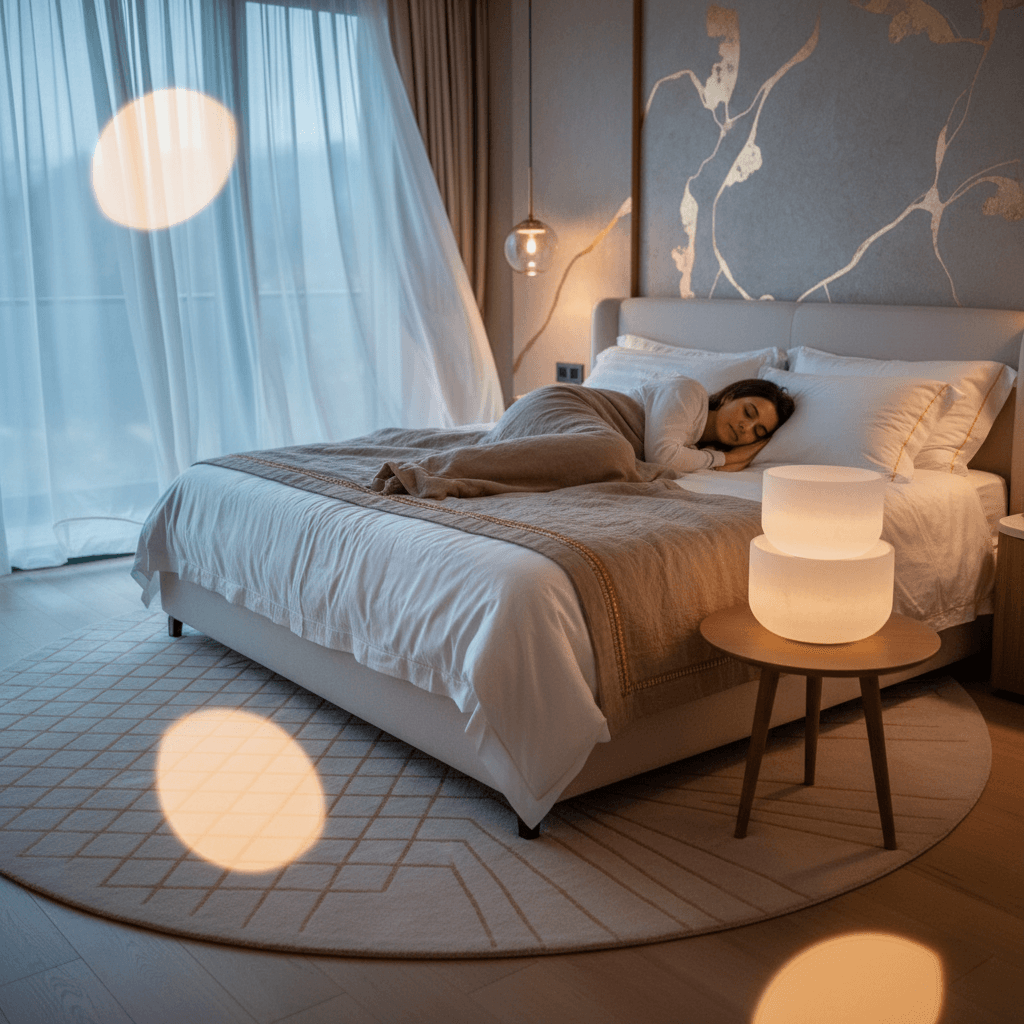
- Create a Sacred Sleep Environment: Design your bedroom as a sanctuary. Minimize light and temperature fluctuations. Consider introducing natural, pleasant sounds at a low volume—perhaps a gentle fan, a white noise machine, or soft ambient music specifically designed for sleep—to establish a consistent acoustic backdrop.
- Mindful Evening Rituals: Incorporate a calming routine before bed. This could include gentle stretching, reading a physical book, or a short meditation. Sound can be a powerful addition here, perhaps listening to a binaural beat track or soothing natural soundscapes for 15-30 minutes as you wind down.
- Consistency is Key: The benefits of sound wellness, much like any self-care practice, are often cumulative. Try to use sound consistently each night, allowing your body and mind to associate these specific auditory cues with the process of falling asleep. This regularity can reinforce positive sleep patterns over time.
- Explore Different Sound Types: Experiment with what resonates most with you. Some people find broadband white noise most effective for masking disruptions, while others prefer the organic rhythms of nature sounds or the structured frequencies of binaural beats. Many people report significant benefits from a diverse range of sound experiences.
- Experience Professional Sound Wellness: For a truly immersive and expertly guided experience, consider visiting a studio specializing in sound wellness. A session with practitioners like Larissa Steinbach at Soul Art can provide a deeper understanding and experience of how professionally curated soundscapes can powerfully impact your sleep onset and overall well-being.
In Summary
The journey to faster, more restorative sleep doesn't have to be a struggle. Scientific research consistently points to the profound potential of sound wellness in reducing sleep onset latency, enhancing deep sleep, and improving overall sleep quality. By regulating the nervous system, influencing key neurochemicals, and creating an optimal acoustic environment, sound offers a gentle yet highly effective complementary approach to achieving peaceful slumber.
Larissa Steinbach's Soul Art studio stands at the forefront of this wellness revolution, offering expertly curated sound experiences designed to guide you into harmonious rest. If you're ready to transform your nights and awaken feeling truly refreshed, we invite you to explore the profound benefits of sound. Discover a natural path to falling asleep faster and embracing the deep rest your body and mind deserve.
Bookings Coming Soon
Soul Art is still in preparation. Session details and booking will be published here after launch.
Coming Soon
Wellness Disclaimer: This article is for educational and informational purposes only. It does not constitute medical advice, diagnosis, or treatment. Soul Art Dubai provides non-medical wellness experiences focused on relaxation, stress management, and general wellbeing. Sound wellness is a complementary practice and should not replace professional medical care.
Related Articles
Fan Noise and Sleep: Unmasking the Science Behind White Noise Machines for Deeper Rest
Polyphasic Sleep & Sound Healing: Navigating Restorative Rhythms
REM Rebound: Mastering the Art of Recovering Lost Dream Sleep