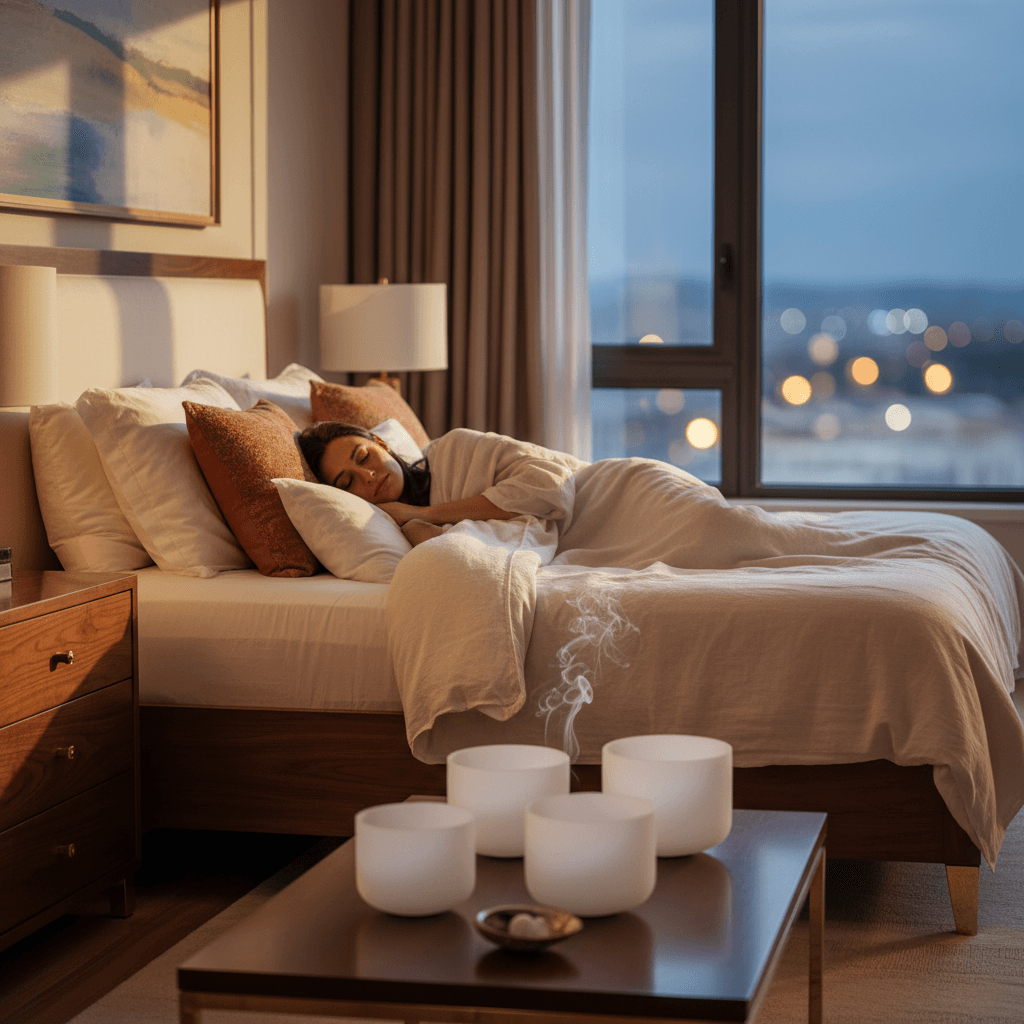
Sleep Cycle Architecture: Optimizing Your Nightly Journey
Key Insights
Unravel the science of sleep architecture with Soul Art Dubai. Discover how NREM and REM stages, consistency, and sound wellness optimize your nightly journey for peak health and cognitive function.
Have you ever wondered what truly happens to your mind and body when you drift into slumber? It’s far more intricate than simply "turning off." Your brain embarks on an amazing journey, orchestrating a complex, cyclical performance essential for every aspect of your wellbeing.
Understanding this nightly performance, known as sleep architecture, empowers us to make informed decisions about our sleep health. It allows us to optimize our rest and unlock the full restorative potential that quality sleep offers. At Soul Art, we delve into this fascinating science to guide you toward truly rejuvenating nights.
Quality sleep is not a luxury; it is a fundamental biological necessity. When we prioritize healthy sleep architecture, we invest in our long-term health, cognitive function, and overall quality of life. This article will explore the science of sleep architecture and how you may optimize your nightly journey.
The Intricate Blueprint of Sleep: Understanding Sleep Architecture
Sleep is a complex, cyclical journey through distinct stages, rather than a linear progression. This structural organization of our nightly rest provides valuable insights into why quality sleep is fundamental to optimal health and cognitive function. Recognizing its complexity is the first step toward enhancing your rest.
The breakdown of a person’s sleep into various cycles and stages is commonly referred to as sleep architecture. If someone undergoes a sleep study, their sleep architecture can be visually represented in a hypnogram, a specialized graph.
The Cyclical Journey: NREM and REM Stages
A complete sleep cycle typically lasts between 90 to 120 minutes. Healthy adults generally experience four to six such cycles during a full night's sleep, as noted by the Cleveland Clinic. Each cycle alternates between Non-Rapid Eye Movement (NREM) and Rapid Eye Movement (REM) sleep.
NREM sleep is composed of three distinct stages, progressively becoming deeper. Stage 1 (N1) is a light sleep, often characterized by drifting in and out of wakefulness. Stage 2 (N2) is a slightly deeper sleep where heart rate and body temperature decrease, and brain activity slows.
Stage 3 (N3), often referred to as deep sleep or slow-wave sleep, is the most restorative phase of NREM. During deep sleep, the body undergoes crucial physical restoration, repairing tissues, growing muscles, and strengthening the immune system. It is during this stage that it is hardest to wake a person.
REM sleep is characterized by rapid eye movements, increased brain activity resembling wakefulness, and temporary muscle paralysis. This stage is vital for cognitive functions such as memory consolidation, learning, emotional regulation, and creative problem-solving. Some research suggests REM sleep improves creativity by priming associative networks, as highlighted in studies from the Proceedings of the National Academy of Sciences.
Both NREM sleep and REM sleep play pivotal roles in a body's function and cannot be overlooked. Understanding their distinct contributions helps us appreciate the holistic nature of our nightly rest. These stages work in concert, each contributing uniquely to our mental and physical restoration.
The Evolution of Sleep: Age-Related Changes
Scientific studies show that sleep architecture changes dramatically across the lifespan. These shifts reflect the varying developmental and physiological needs at different life stages. Adapting sleep practices to these changes may support overall wellbeing.
- Infancy and Childhood: This period shows higher proportions of REM sleep and deep sleep. This is crucial for supporting rapid growth, brain development, and extensive learning during these formative years.
- Adolescence: Adolescents often experience a natural shift in their circadian rhythm, leading to later sleep onset preferences. This biological shift means they naturally feel more awake later in the evening.
- Adulthood: Sleep architecture tends to stabilize in adulthood, with consistent cycling patterns between NREM and REM stages. Maintaining this stability through consistent habits is key for adults.
- Older Adults: As individuals age, there is typically a decreased amount of deep sleep and an increase in sleep fragmentation. Earlier wake times also become more common, influencing overall sleep quality.
The Unseen Architects: Factors Influencing Sleep Quality
Many factors can influence the quality and structure of your sleep stages. Recognizing these influences allows for targeted approaches to sleep optimization. From lifestyle choices to environmental elements, a holistic view is beneficial.
A consistent sleep schedule is paramount, often more important than the mere duration of sleep. Research from the University of Tsukuba in Japan, involving older adults, showed that those with more consistent sleep schedules exhibited stronger thinking skills and higher levels of brain-derived neurotrophic factor (BDNF). BDNF is a protein vital for memory retention and brain plasticity.
Conversely, disrupted rhythms have been linked to the accumulation of amyloid-beta, a toxic protein implicated in Alzheimer’s disease. Interestingly, this research suggests that while sharper thinking skills rose steadily with more consistent sleep, BDNF levels didn’t climb in a straight line, implying that some flexibility in your sleep schedule is acceptable occasionally. The key takeaway, however, remains that sleep regularity influences brain health.
Physical activity also plays a significant role in shaping sleep architecture. Studies, including one published in Nature, indicate that exercise may reduce REM sleep and increase NREM sleep. These changes in sleep architecture have been observed over time within individuals in naturalistic environments, suggesting long-term benefits of consistent physical activity.
Sleep disorders, such as sleep apnea, can significantly disrupt normal sleep architecture. They fragment sleep cycles and prevent individuals from reaching the deeper, more restorative stages of sleep. Addressing these conditions is crucial for restoring healthy sleep patterns.
Furthermore, our exposure to light and dark cycles is fundamental for circadian rhythm entrainment. By effectively managing light exposure, especially blue light in the evenings, we can reinforce our internal body clock. This reinforcement supports more predictable sleep and wake times, enhancing the body's natural sleep-wake cycle.
"Quality sleep is not a luxury but a biological necessity. When we prioritize healthy sleep architecture, we invest in our long-term health, cognitive function, and overall quality of life."
How It Works in Practice
Connecting the scientific understanding of sleep architecture to real-world application reveals profound benefits. For high-performing individuals, the return on investment from optimizing sleep is often measurable and immediate. Clients may experience enhanced mental clarity, improved emotional resilience, and a noticeable boost in creative problem-solving.
Optimal sleep is a powerful performance enhancement tool, far beyond simple rest. It’s a critical biological process that restores brain function, regulates hormones, enhances memory, and sharpens decision-making capabilities. When sleep quality is poor, even the most disciplined executive functions can operate at a fraction of their actual capacity.
Individuals who optimize their sleep architecture may report significant improvements in various domains. For instance, some experience a measurable improvement in cognitive processing speed, along with a reduction in decision-making biases. Emotional resilience can also see a substantial increase, helping individuals navigate daily stressors more effectively.
Anecdotal evidence suggests that creative problem-solving can improve dramatically, and recovery capacity nearly doubles after challenging workdays when sleep is prioritized. These are not isolated stories; they reflect the power of aligning sleep architecture with our biology and lifestyle. The feeling of being truly rested translates into sustained energy, sharpened focus, and a greater sense of overall wellbeing throughout the day.
Many people report feeling a profound sense of lightness and mental spaciousness after several nights of high-quality sleep. The world appears clearer, decisions feel more intuitive, and the body moves with greater ease. This integrated sense of wellness is the tangible outcome of respecting and optimizing your nightly journey through the stages of sleep.
The key to achieving this state often lies not just in the hours spent in bed, but in the consistency of the sleep schedule. Evidence suggests that having a consistent sleep schedule may matter even more for our brain and heart health than the number of hours we sleep. This regularity helps train the brain for predictable patterns, enhancing its ability to achieve deep, restorative sleep.
The Soul Art Approach
At Soul Art, Larissa Steinbach embraces the intricate science of sleep architecture through a unique blend of sound wellness practices. Her approach is rooted in the understanding that creating an optimal internal environment is paramount for encouraging deep, restorative sleep. The "quiet luxury" experience at Soul Art is meticulously crafted to support your body’s natural ability to achieve balanced sleep cycles.
Larissa Steinbach’s methodology at Soul Art focuses on calming the nervous system and guiding the brain into states conducive to deeper sleep. Through expertly facilitated sound baths, she utilizes resonant instruments such as Himalayan singing bowls, crystal bowls, and gongs. These instruments produce specific frequencies and vibrations that may encourage neural entrainment, gently guiding brainwave activity from busy beta states to more relaxed alpha and theta states.
This profound relaxation serves as a complementary approach to traditional sleep hygiene, preparing the mind and body for the crucial NREM and REM stages. The gentle yet powerful vibrations experienced during a Soul Art session may support the down-regulation of the sympathetic nervous system, promoting a shift towards the parasympathetic "rest and digest" state. This shift is essential for faster sleep onset and deeper, more consolidated sleep cycles.
Soul Art’s unique method aims to enhance your body’s natural capacity for neurotransmitter optimization. While not a direct medical intervention, the deep relaxation induced by sound wellness may support the natural balance of calming brain chemicals. This holistic wellness practice provides a serene space for individuals to cultivate the internal peace necessary for restorative rest, without compromising productivity. It’s about unlocking levels of mental clarity, creativity, and resilience that may have felt out of reach.
Larissa customizes each sound experience to help individuals align with their natural rhythms. This focus on deep relaxation and inner harmony aligns with the principles of circadian rhythm entrainment, helping to reinforce your internal clock. By integrating these sound practices, Soul Art offers a sophisticated self-care practice designed to optimize your nightly journey and elevate your overall wellbeing.
Your Next Steps
Optimizing your sleep architecture is an ongoing journey that begins with intentional choices. Implementing a few evidence-based practices can significantly enhance your nightly rest and, by extension, your daily life. Remember, this content is for wellness and relaxation purposes only.
Here are 3-5 actionable steps you can implement today to support your sleep architecture:
- Prioritize Sleep Consistency: Aim to go to bed and wake up at roughly the same time every day, even on weekends. This regularity helps to entrain your circadian rhythm, signaling to your body when it's time to rest and be alert.
- Create a Sanctuary for Sleep: Ensure your bedroom is dark, quiet, and cool. Minimize exposure to screens and stimulating activities at least an hour before bedtime. Consider ambient sound or blackout curtains to enhance your environment.
- Incorporate Relaxation Rituals: Engage in calming activities before sleep, such as gentle stretching, reading a physical book, or a warm bath. These rituals can signal to your body that it's time to wind down.
- Mind Your Light Exposure: Maximize natural light exposure during the day to support your internal clock. In the evenings, dim lights and avoid blue light from electronic devices, which can interfere with melatonin production.
- Explore Sound Wellness: Consider integrating sound baths or guided meditations into your routine. Practices like those offered by Larissa Steinbach at Soul Art may support deep relaxation and prepare your mind and body for restorative sleep.
Soul Art is still in preparation. Session details and booking will be published here after launch. Explore how Soul Art's unique sound wellness experiences may support your journey to optimized sleep.
Bookings Coming Soon
Soul Art is still in preparation. Session details and booking will be published here after launch.
Coming Soon
In Summary
Understanding sleep cycle architecture is key to unlocking the full restorative power of your nightly rest. Our journey through distinct NREM and REM stages is a complex biological necessity, vital for physical restoration, cognitive function, and emotional balance. Factors like sleep consistency, physical activity, and environmental influences profoundly impact this architecture across our lifespan.
By recognizing the importance of each sleep stage and implementing evidence-based practices, we can optimize our sleep and enhance overall wellbeing. Soul Art, founded by Larissa Steinbach, offers a sophisticated, complementary approach through sound wellness. These practices may support deep relaxation and prepare your body and mind for the most rejuvenating sleep possible. Prioritizing healthy sleep architecture is an investment in your long-term health and vitality.
Related Articles
Fan Noise and Sleep: Unmasking the Science Behind White Noise Machines for Deeper Rest
Polyphasic Sleep & Sound Healing: Navigating Restorative Rhythms
REM Rebound: Mastering the Art of Recovering Lost Dream Sleep