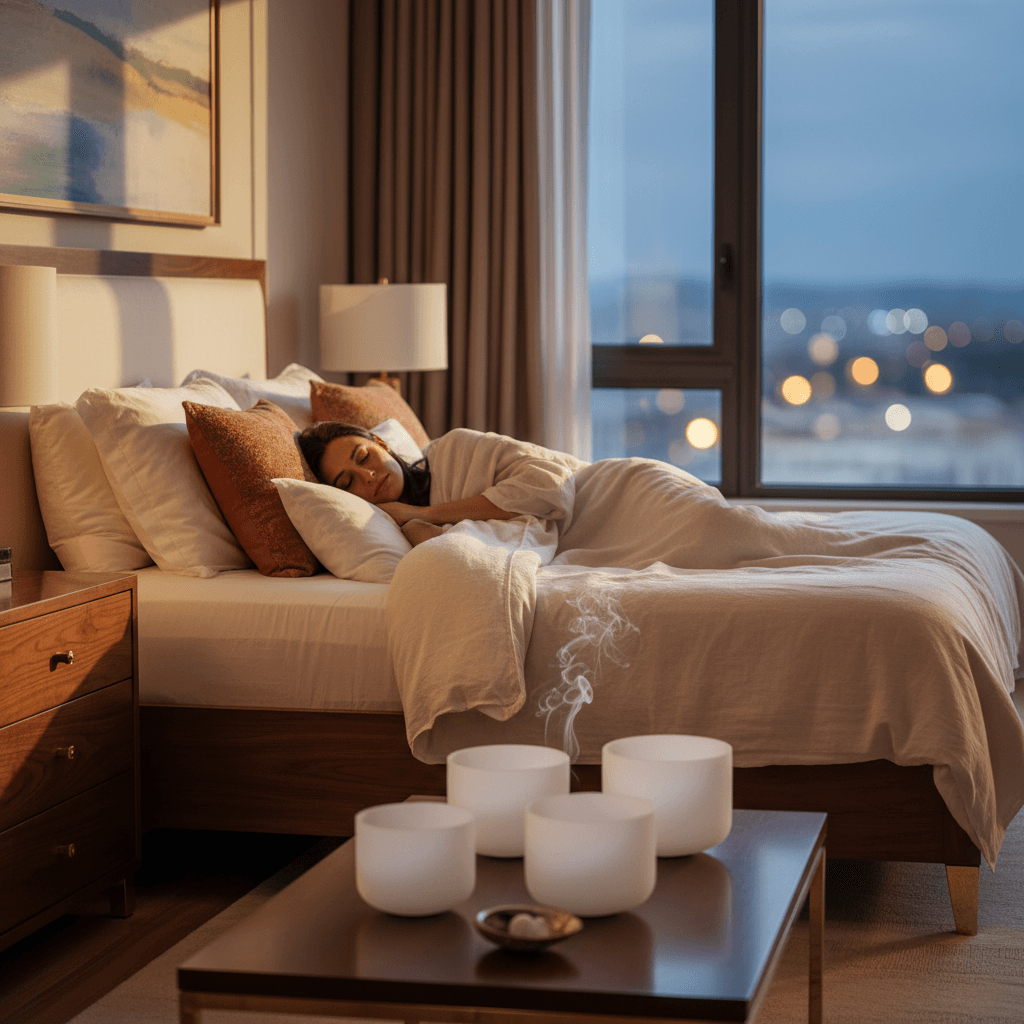
Shift Work Sleep Disorder: Sound Solutions for Night Workers

Key Insights
Explore how sound wellness and practices championed by Larissa Steinbach at Soul Art Dubai can offer calming support for shift workers battling sleep disorder.
Shift Work Sleep Disorder: Sound Solutions for Night Workers
Imagine your internal clock, meticulously tuned to the rhythm of day and night, suddenly forced to operate in reverse. This is the reality for millions of shift workers worldwide, a group whose vital contributions often come at the significant personal cost of disrupted sleep and diminished well-being. More than one in five shift workers may experience Shift Work Sleep Disorder (SWSD), a condition that profoundly impacts daily life and long-term health. For night workers, this prevalence can soar to between 14.1% and 32%, underscoring a pressing need for effective, holistic support.
At Soul Art, Dubai's premier sound wellness studio, founder Larissa Steinbach understands the unique challenges faced by those who keep our world running through the night. This article delves into the science behind SWSD, exploring its pervasive effects and outlining how innovative sound wellness practices offer a complementary path to re-establish harmony and improve rest for night workers. We will navigate the complexities of circadian disruption and discover practical, evidence-informed strategies that may foster deeper sleep and enhanced vitality, even amidst demanding schedules.
The Science Explained: Unraveling Shift Work Sleep Disorder
Shift Work Sleep Disorder (SWSD) is a prevalent and often debilitating condition arising from a mismatch between an individual's internal circadian rhythm and their work schedule. This fundamental disruption to the body's natural sleep-wake cycle can lead to chronic fatigue, impaired cognitive function, and a cascade of adverse health outcomes. Understanding the underlying physiology is crucial to developing effective support strategies.
The Circadian Rhythm Disruption
Our bodies are governed by an intricate internal timing system known as the circadian clock, primarily regulated by light and darkness. This clock dictates when we feel awake, hungry, and, crucially, when we are primed for sleep. For shift workers, especially those on night or rotating shifts, the demands of their job directly conflict with these natural biological cues. Trying to sleep during daylight hours, when the body expects to be active, and remaining alert at night, when it naturally craves rest, creates a persistent state of desynchronization.
Stanford Health Care highlights the inherent difficulty in managing SWSD, emphasizing the challenge of adjusting the internal clock to adapt to nighttime work. While minimizing light exposure after a shift and using blackout shades at home can help, the body's deeply ingrained rhythm is not easily swayed. This constant struggle against natural inclinations contributes significantly to the symptoms of SWSD, making deep, restorative sleep elusive.
Prevalence and Profound Impact
The statistics paint a clear picture of SWSD's widespread nature and severity. Research indicates that more than one in five shift workers grapples with this disorder. Specifically, night workers face a substantial risk, with prevalence rates ranging from 14.1% to 32%, and rotating shift workers also experience high rates, from 8.1% to 26%. An investigation into oil rig workers revealed a similar prevalence rate of 23%, underscoring the broad impact across various industries.
The adverse health consequences of shift work extend far beyond mere tiredness. Relative to non-shift workers, individuals in shift roles experience more significant sleep loss, excessive daytime sleepiness, and chronic insomnia. The medical complications are alarming and diverse, encompassing an increased risk for cardiovascular disease, cerebrovascular events and stroke, obesity, and metabolic disorders. Gastrointestinal complaints, poor sexual health (including reduced fertility and pregnancy issues), and multiple forms of cancer have also been associated with long-term shift work.
From a mental health perspective, shift workers often face heightened psychiatric disease and greater psychosocial distress. This can manifest as depression, anxiety, and alcohol abuse, alongside pervasive work stress spillover and a reduced quality of life. More recent neuroimaging data further suggests altered neurophysiologic function, indicating the profound impact on brain health.
Contributing Factors and Management Challenges
Several factors exacerbate the challenges faced by shift workers. Occupational noise exposure, for instance, has been found to significantly affect insomnia among night-shift production workers. Poor sleep quality or sleep disorders negatively impact health, quality of life, and performance, with night-shift workers being particularly vulnerable. Therefore, reducing workplace noise levels or relocating workers from noisy departments may support better sleep.
The structure of shift schedules also plays a critical role. Irregular or rotating shifts are associated with a particularly high risk for accidents and make sleep problems harder to manage. While the optimal shift duration remains a subject of ongoing research, reducing shift lengths from twelve hours or more to less than ten hours (or nine hours for night shifts) has generally shown benefits for sleep quality. Employers should consider scheduling later start times on successive days when early starts are unavoidable, as delaying start times can increase total sleep duration.
"Managing shift work sleep disorder is inherently difficult. Research is showing that some shift work schedules are better than others, but shift workers do not always have a choice. Improving the sleep of a shift worker with sleep difficulties requires understanding how the circadian clock works and finding pragmatic solutions to help people keep as strong of a circadian rhythm as is feasible under these unnatural work conditions."
Light exposure management is another crucial component. Minimizing exposure to bright light between the end of a night shift and daytime bedtime is essential for promoting sleep. Conversely, properly timed bright light exposure during the night shift can help maintain alertness. Some studies also suggest that taking melatonin supplements at specific times may help prepare the body for sleep, though this does not always translate to improved alertness during work. Planned naps, particularly for emergency department physicians and nurses, have been shown to improve alertness and performance, offering a valuable counter-fatigue strategy. Behavioral therapy specifically tailored for SWSD has also emerged as a promising non-pharmacological approach, demonstrating benefits for both sleep quality and mental health.
How It Works in Practice: The Vibrational Path to Rest
Understanding the science behind Shift Work Sleep Disorder is the first step; the next is exploring how practical, complementary approaches can offer respite and support. Sound wellness, in particular, offers a unique avenue for individuals grappling with circadian rhythm disruption. This practice taps into the body's innate capacity for self-regulation, providing a gentle yet profound pathway to relaxation and a more harmonious state.
When you immerse yourself in a sound wellness session, the experience is deeply sensory. The carefully chosen frequencies and vibrations from instruments like crystal singing bowls, gongs, and chimes interact directly with your nervous system. These soothing sounds encourage your brainwaves to shift from the active, high-frequency beta state, often associated with alertness and stress, to lower-frequency alpha and theta states, which are characteristic of deep relaxation, meditation, and pre-sleep.
This shift in brainwave activity may support the activation of the parasympathetic nervous system, often referred to as the "rest and digest" system. When the parasympathetic system is engaged, the body naturally lowers its heart rate, reduces muscle tension, and slows down breathing. This physiological response is exactly what a shift worker needs to counteract the heightened state of arousal often experienced after a night shift or before attempting daytime sleep. The calming vibrations may also help to quiet the busy mind, reducing rumination and anxiety that can often accompany sleep difficulties.
Clients often report feeling a profound sense of peace and stillness during and after a sound session. The gentle resonance seems to wash over them, easing physical discomfort and mental agitation. For someone whose internal clock is perpetually off-kilter, this dedicated time for deep relaxation can be invaluable. It provides a "reset button," allowing the body and mind to decompress and prepare for sleep, regardless of the external light-dark cycle. This consistent practice may help to create a new, albeit adapted, routine for winding down, fostering a more consistent and restorative sleep experience during non-traditional hours.
The Soul Art Approach: Larissa Steinbach's Harmonious Method
At Soul Art, Larissa Steinbach has cultivated a sanctuary designed to address the profound need for balance and restoration, particularly for those facing the unique challenges of Shift Work Sleep Disorder. Her approach is rooted in a deep understanding of sound as a powerful tool for nervous system regulation and holistic well-being. Larissa’s methodology goes beyond mere relaxation; it's about recalibrating the body's energetic field and guiding the mind towards a state conducive to profound rest.
What makes the Soul Art method unique is its blend of scientific principles and ancient wisdom. Larissa meticulously selects instruments known for their specific vibrational qualities, including precisely tuned crystal singing bowls, resonant gongs, therapeutic chimes, and various tuning forks. Each instrument is utilized with intention, creating a rich tapestry of sound that may help to harmonize brainwave patterns and gently soothe the vagus nerve, a key player in the body's relaxation response. Larissa Steinbach crafts personalized soundscapes, recognizing that each individual's experience of SWSD is unique. She focuses on creating a "sacred sleep space" within the session, helping clients to mentally and physically transition into a state of readiness for sleep, even when the sun is shining outside.
Larissa's expertise allows her to guide clients through sonic journeys that may help to release accumulated stress and tension, a common byproduct of irregular work schedules. The deep, sustained vibrations of the gongs, for instance, are known to encourage a meditative state, promoting mental clarity and emotional release. The pure tones of the crystal singing bowls may resonate with the body's cellular structure, fostering a sense of inner alignment and peace. This complementary approach offers a powerful counter-narrative to the chronic stress and circadian disruption inherent in shift work, providing tools for self-care and resilience. Through Soul Art, Larissa Steinbach is dedicated to empowering night workers to reclaim their rest and enhance their overall quality of life.
Your Next Steps: Cultivating Rest in a 24/7 World
Navigating the demands of shift work while prioritizing your sleep and well-being requires intentional strategies. While sound wellness offers a powerful complementary approach, integrating other mindful practices into your routine can further amplify its benefits. Taking proactive steps to support your body's natural need for rest is paramount.
Here are practical actions you can implement today to better manage the impact of shift work:
- Prioritize a Consistent Sleep Schedule: Even on your days off, try to maintain a sleep-wake schedule that is as consistent as possible. This may involve adjusting your bedtime by small increments to prepare for upcoming shifts, which some studies suggest can be helpful. This consistency sends clearer signals to your internal clock.
- Optimize Your Sleep Environment: Create a dedicated sleep sanctuary, especially for daytime sleep. Invest in blackout curtains or an eye mask to block out all light. Use earplugs or a white noise machine to minimize occupational and environmental noise, as studies show noise exposure significantly impacts sleep quality for night workers. Aim for a cool, quiet, and dark space.
- Strategically Manage Light Exposure: After your night shift, wear sunglasses on your commute home to minimize light exposure, signaling to your body that it's time to wind down. During your shift, consider safe and appropriate bright light exposure to help maintain alertness, if permitted and feasible in your workplace, to support your wakefulness.
- Integrate Mind-Body Practices: Incorporate relaxation techniques like those offered at Soul Art by Larissa Steinbach. Sound baths, meditation, and gentle stretching can help to downregulate your nervous system, reduce stress, and signal to your body that it's time to rest. Even short, consistent practices can make a significant difference.
- Consider Strategic Napping: If your schedule allows, short, planned naps (20-30 minutes) before or during a night shift may help improve alertness and performance, as some research suggests. Ensure these naps do not interfere with your primary sleep window.
By embracing these strategies, you can begin to create a more supportive framework for your sleep. If you're ready to explore a profound path to relaxation and nervous system regulation, we invite you to experience the unique offerings at Soul Art.
In Summary: Reclaiming Rest for the Night Worker
Shift Work Sleep Disorder presents a significant challenge for millions, impacting not only their sleep but also their overall health, mental well-being, and quality of life. The constant battle against the body's natural circadian rhythms can lead to a cascade of medical and psychological complications. Recognizing the unique needs of night workers, Soul Art, under the guidance of Larissa Steinbach, offers a specialized, complementary approach through sound wellness.
Sound healing, with its ability to gently guide the nervous system into states of deep relaxation, provides a vital tool for those seeking respite from the demands of irregular schedules. By fostering an environment conducive to rest, reducing stress, and promoting balanced brainwave activity, Soul Art aims to empower shift workers to cultivate more restorative sleep. This holistic practice may offer a pathway to enhanced well-being, helping individuals navigate their essential roles with greater resilience and vitality. We invite you to discover the transformative potential of sound and embark on a journey toward deeper rest and renewed harmony.
Bookings Coming Soon
Soul Art is still in preparation. Session details and booking will be published here after launch.
Coming Soon
Wellness Disclaimer: This article is for educational and informational purposes only. It does not constitute medical advice, diagnosis, or treatment. Soul Art Dubai provides non-medical wellness experiences focused on relaxation, stress management, and general wellbeing. Sound wellness is a complementary practice and should not replace professional medical care.
Related Articles
Fan Noise and Sleep: Unmasking the Science Behind White Noise Machines for Deeper Rest
Polyphasic Sleep & Sound Healing: Navigating Restorative Rhythms
REM Rebound: Mastering the Art of Recovering Lost Dream Sleep