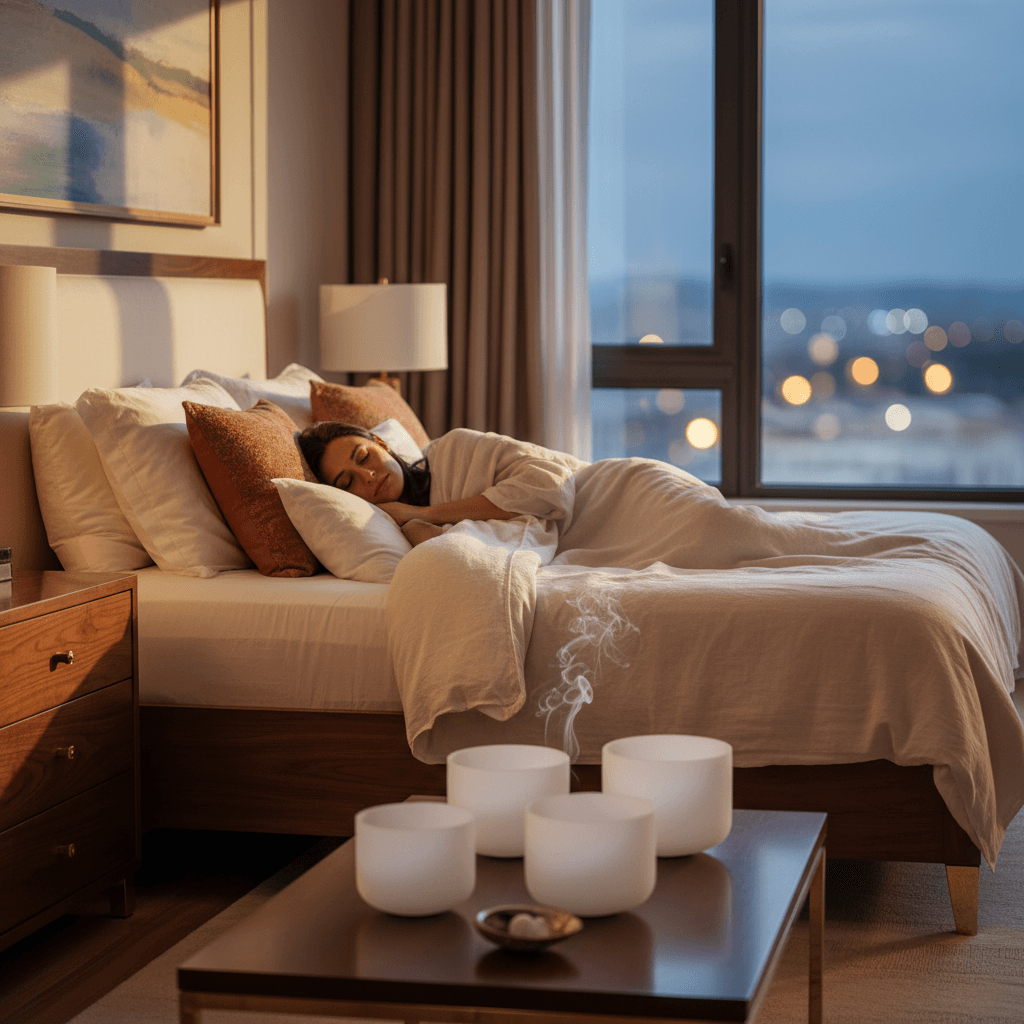
Harmonizing Your Hues: Sound Wellness for Digital Detox & Sleep
Key Insights
Discover how intentional sound practices can counteract screen time's impact on sleep, guiding your evening transition for profound rest and enhanced well-being.
The soft glow of a phone screen is often the last thing we see before closing our eyes, and the first thing we reach for upon waking. This ubiquitous digital presence, while connecting us globally, may be silently eroding the very foundation of our well-being: quality sleep. A staggering 87% of Americans, for example, sleep with their phone in their bedroom, underscoring our deep attachment to these devices.
Yet, recent groundbreaking studies are shedding light on the tangible costs of this habit, linking screen time directly to increased insomnia symptoms and shorter sleep duration. Understanding this profound connection is the first step towards reclaiming your rest. In this article, we delve into the science of how screens disrupt our sleep and explore how the intentional practice of sound wellness, championed by Larissa Steinbach at Soul Art in Dubai, can offer a powerful, serene pathway to better evening transitions and truly restorative sleep.
The Digital Dilemma: How Screens Steal Your Sleep
Our modern lives are inextricably linked to screens, from smartphones and tablets to laptops and televisions. While these devices are indispensable for work, communication, and entertainment, their pervasive presence, especially in the hours leading up to bedtime, has been increasingly associated with significant disruptions to our natural sleep architecture. This isn't just about feeling restless; it's rooted in complex physiological responses that screens trigger.
The Blue Light Effect
One of the primary culprits behind screen-induced sleep disturbances is blue light. Screens emit blue light, which has shorter wavelengths compared to other colors in the visible light spectrum. This particular wavelength is known to stimulate the part of our brain designed to keep us awake.
According to Joanna Cooper, M.D., a neurologist and sleep medicine specialist, bright screens stimulate wakefulness pathways. The timing of sleep and wakefulness is intricately controlled by the brain's clock, which is highly sensitive to light. When blue light enters our eyes, it signals to the brain that it's daytime, actively suppressing the secretion of melatonin. Melatonin, often referred to as the "sleep hormone," is naturally produced by the pineal gland as light dims in the evening, preparing our bodies for rest. Disrupting this crucial hormone surge can significantly delay sleep onset and impact overall sleep quality.
Beyond Light: Cognitive Overload and Displacement
The detrimental effects of screen time extend beyond just blue light exposure. The very act of engaging with digital content can be mentally stimulating, preventing the mind from winding down. Scrolling through social media feeds, responding to emails, or even binge-watching a show keeps our cognitive faculties alert and engaged.
This continuous mental activity is not conducive to the relaxation needed for sleep. Our brains interpret these activities as tasks requiring attention, making it difficult to shift into the calmer, more receptive states necessary for drifting off. The National Sleep Foundation highlights that such engagement keeps our minds running, hindering the vital pre-sleep relaxation phase. Moreover, recent research suggests that screen use often displaces sleep, meaning the time spent on devices after going to bed simply replaces the time we would otherwise spend resting.
Alarming Research: The Quantitative Impact of Screen Time
Recent scientific investigations have provided compelling, quantifiable evidence of screens' negative impact on sleep. These studies underscore that the effects, while seemingly minor on a nightly basis, accumulate significantly over time.
A landmark study published in Frontiers in Psychiatry in March 2025, involving nearly 40,000 university students in Norway, examined various screen activities in bed. The findings were striking:
- Each one-hour increase of screen time after going to bed was associated with a 59% higher chance of experiencing symptoms of insomnia.
- Students also slept an average of 24 minutes less per night for every extra hour of screen use. Over a week, these minutes add up to hours of lost sleep.
- Interestingly, the study found that using social media was not significantly more harmful than other forms of screen use, suggesting that the displacement of sleep and cognitive engagement, rather than the specific activity, was the primary factor.
Another significant study, published in JAMA Network Open in March 2025, investigated screen use in adults across the United States and Puerto Rico. The results reinforced the widespread problem:
- Compared with individuals who avoided screens before bed, those who used them had a 33% higher rate of poor sleep quality.
- Participants slept approximately 50 minutes less each week due to nightly screen use.
- On workdays, nightly screen users slept an average of 7.6 minutes less per night, and on non-workdays, this decreased by about 5 minutes.
While these numbers may appear small individually, the cumulative effect builds night after night. Less sleep translates to lower energy levels, reduced focus, and can contribute to long-term health concerns. Together, these robust studies significantly strengthen the growing body of evidence confirming that screen habits profoundly affect both the quality and quantity of our precious sleep.
How It Works in Practice: Transitioning from Digital to Deep Rest
The scientific evidence clearly paints a picture of screens as a formidable adversary to our sleep. Many individuals experience this struggle daily, caught in a cycle of late-night scrolling, disrupted sleep, and the subsequent fatigue that pervades the next day. The desire for a peaceful evening and restorative night is universal, yet breaking free from the digital tether can feel challenging. This is where the practical application of intentional transitions, particularly through sound, offers a tangible path forward.
Consider the journey your mind and body undertake during a typical evening. After hours of visual input, rapid information processing, and constant interaction with screens, your system is in a state of heightened alertness. Suddenly expecting it to switch off and enter deep sleep is akin to slamming on the brakes of a high-speed vehicle. A smoother, more gradual deceleration is needed.
Sound wellness practices serve as this gentle transition, providing a counter-narrative to the stimulating digital world. Instead of bombarding your senses with bright lights and engaging content, sound therapy introduces a calming auditory landscape. As you consciously step away from screens, your eyes are no longer straining, and your mind is freed from the endless stream of notifications and information. This creates a void, an opportunity for a different kind of sensory input to take over.
Many people report that as they immerse themselves in carefully curated soundscapes, their racing thoughts begin to slow. The brain waves, which were likely in a beta state (alert and engaged) from screen use, gradually shift into alpha waves (relaxed and reflective) and then theta waves (deep relaxation, nearing sleep). This shift is not merely psychological; it's a physiological response that allows the nervous system to downregulate. The gentle vibrations and harmonious tones can also facilitate a release of physical tension, encouraging a sense of profound relaxation throughout the body.
"The true art of evening transition lies in gently guiding the mind away from the digital world's demands towards an inner sanctuary of calm. Sound provides the perfect current for this journey."
This intentional act of replacing the "alertness" promoted by blue light and cognitive overload with the "deep calm" induced by sound begins to re-educate your body and mind. It teaches your system that the evening is a sacred time for winding down, disconnecting, and preparing for the restorative journey of sleep. Through consistent practice, the sensory input from sound can become a powerful cue, signaling to your brain that it is time to quieten, helping you to fall asleep more easily and experience deeper, more continuous rest.
The Soul Art Approach: Larissa Steinbach's Vision for Restorative Sleep
At Soul Art in Dubai, Larissa Steinbach has meticulously crafted a unique approach to sound wellness that directly addresses the challenges of modern living, particularly the impact of screen time on sleep. Her vision is to provide a sanctuary where individuals can intentionally transition from the demands of their digital lives to a state of profound relaxation and inner harmony. The Soul Art method is built on the understanding that true well-being stems from a balanced nervous system and a mindful connection to oneself.
Larissa's expertise lies in curating specific soundscapes designed not just to soothe, but to guide the body's natural processes towards deep rest. What makes the Soul Art method distinctive is its holistic and highly intentional application of sound. It's far more than background music; it's an immersive experience crafted to recalibrate your internal rhythms.
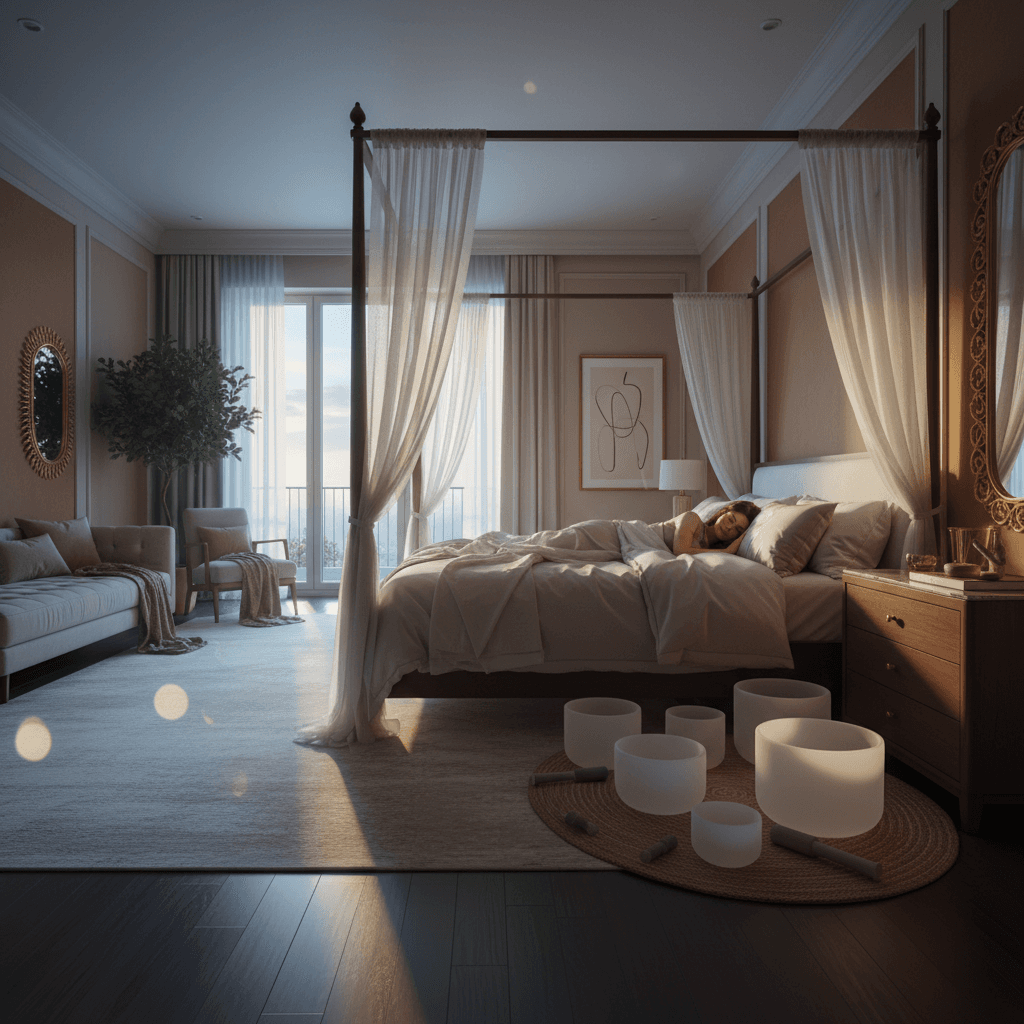
At Soul Art, a variety of sacred instruments are employed, each chosen for its unique vibrational qualities. Guests experience the resonant depths of Himalayan singing bowls, the expansive waves of gongs, the delicate shimmer of chimes, and the precise frequencies of tuning forks. These instruments create rich, layered sound environments that gently coax the brain into lower frequency states, promoting relaxation and facilitating the release of accumulated stress. The carefully selected tones and vibrations are designed to resonate with the body, encouraging cellular relaxation and nervous system regulation.
Larissa personally guides each session, creating a supportive and non-judgmental space where participants feel safe to let go. Whether in a group setting or through personalized sessions, her presence ensures that the journey is both deeply personal and universally beneficial. She focuses on teaching individuals how to harness the power of sound as a self-care practice, offering a tangible alternative to the stimulating effects of screens. Many people report that engaging in these sound journeys helps them to quiet their mental chatter, alleviate anxiety, and prepare their minds and bodies for a restful night.
Some research suggests the therapeutic power of sound in promoting sleep, even in challenging environments. For instance, studies from the Journal of Music Therapy have shown that structured musical interventions, including soft instrumentals and nature-based soundscapes, can positively support children with sleep difficulties. While focused on pediatric settings, this highlights the fundamental capacity of sound to foster relaxation and ease before sleep, a principle Larissa applies to create profound wellness experiences for adults, enabling them to navigate the digital world with greater resilience and achieve more restorative rest.
Your Next Steps: Embracing Sound for Better Sleep Tonight
Recognizing the impact of screen time is the first step; taking action is the next. Incorporating intentional sound practices into your evening routine can create a powerful buffer against digital overstimulation, paving the way for significantly improved sleep quality and duration. Here are practical steps you can implement starting today:
- Establish a Digital Sunset: Commit to a screen-free period before bed. Aim for at least 30-60 minutes, and ideally one to two hours, where all electronic devices are turned off or put away. This crucial window allows your brain to begin its natural melatonin production without interference from blue light.
- Embrace Sound as Your Guide: Replace the urge to scroll with calming audio. Curate a playlist of gentle instrumental music, nature sounds, or guided meditations. Even better, explore sound bath experiences or sound healing sessions that are specifically designed for relaxation and nervous system regulation, like those offered at Soul Art.
- Create a Mindful Wind-Down Routine: Beyond sound, engage in other relaxing, screen-free activities. This could include reading a physical book, taking a warm bath with essential oils, practicing gentle stretching or restorative yoga, or journaling to clear your mind.
- Disable Notifications: To minimize disruptions, ensure all non-essential notifications are turned off on your devices, especially those that might buzz or light up during the night. Consider using "Do Not Disturb" mode for your dedicated sleep hours.
- Explore Professional Sound Wellness: If you struggle to disconnect or find deep relaxation, consider experiencing a guided sound wellness session. Practices like those at Soul Art, led by Larissa Steinbach, offer a structured and deeply immersive environment designed to facilitate profound rest and teach you techniques for sustained well-being.
In Summary
In an age dominated by screens, our precious sleep is increasingly under siege. Recent scientific studies unequivocally link nightly screen use to a higher risk of insomnia symptoms, reduced sleep duration, and diminished sleep quality. The pervasive blue light and cognitive stimulation from our devices disrupt our natural circadian rhythms and prevent the crucial winding-down process necessary for restorative rest.
However, the good news is that we have the power to reclaim our evenings and revitalize our sleep. By intentionally stepping away from screens and embracing the profound power of sound wellness, we can guide our minds and bodies towards deep relaxation. Larissa Steinbach and the dedicated team at Soul Art in Dubai offer a serene haven, providing expertly guided sound experiences that support the nervous system, quiet the mind, and facilitate a harmonious transition to truly restorative sleep. Choose to invest in your sleep, and experience the transformative benefits of balanced well-being.
Bookings Coming Soon
Soul Art is still in preparation. Session details and booking will be published here after launch.
Coming Soon
Wellness Disclaimer: This article is for educational and informational purposes only. It does not constitute medical advice, diagnosis, or treatment. Soul Art Dubai provides non-medical wellness experiences focused on relaxation, stress management, and general wellbeing. Sound wellness is a complementary practice and should not replace professional medical care.
Related Articles
Fan Noise and Sleep: Unmasking the Science Behind White Noise Machines for Deeper Rest
Polyphasic Sleep & Sound Healing: Navigating Restorative Rhythms
REM Rebound: Mastering the Art of Recovering Lost Dream Sleep