Sound Therapy for Perfectionism: Cultivating Peace & Letting Go

Key Insights
Discover how sound therapy at Soul Art Dubai, founded by Larissa Steinbach, offers a holistic path to let go of perfectionism, reduce stress, and enhance well-being.
Is the relentless pursuit of flawlessness holding you captive, preventing you from truly living and experiencing joy? For many in our high-achieving world, perfectionism is an unseen burden, a constant whisper that good enough is never truly enough. This pervasive drive often leads to chronic stress, anxiety, and an inability to fully embrace the present moment.
At Soul Art, Dubai’s premier sound wellness studio, we understand the profound impact this can have on your overall well-being. This article delves into the intricate psychology of perfectionism and illuminates how the ancient yet scientifically-supported practice of sound therapy offers a unique, complementary pathway to cultivate inner peace and the liberating art of letting go. Prepare to explore how harmonious vibrations can guide you towards a more compassionate and accepting relationship with yourself.
Understanding Perfectionism: A Modern Imperative
Perfectionism, once viewed as a solely positive trait, is now widely recognized as a multifaceted construct with significant implications for mental health. It encompasses developing unrealistically high standards and attributing one's self-value to meeting these often unattainable expectations. This can lead to exaggerated self-criticism, persistent doubts about one's actions, and a debilitating fear of making mistakes.
Research indicates a concerning global trend: perfectionism is on the rise, with some studies reporting a 30-year increase in its prevalence, particularly among young adults facing intense societal and academic pressures. This cultural emphasis on flawless performance often reinforces perfectionistic tendencies, both internally through the short-term relief from anxious thoughts, and externally through praise for perceived achievements. However, this reinforcement often masks deeper distress.
The Multifaceted Nature of Perfectionism
Contemporary scientific views distinguish between adaptive and maladaptive perfectionism. While adaptive perfectionism involves striving for high standards and organization, it is the maladaptive aspect – characterized by evaluative concerns, chronic doubts, and fear of mistakes – that significantly correlates with psychological distress. These rigid self-imposed demands can feel like an internal prison, creating a constant state of vigilance and self-scrutiny.
It's estimated that at least one out of three individuals experiences some form of maladaptive perfectionism, highlighting its widespread impact. This construct is considered "transdiagnostic," meaning it is deeply linked to several mental health conditions, including anxiety, depression, and eating disorders. The pressure to be perfect is a ubiquitous global indicator of psychological strain, observed across diverse cultures and age groups.
The Neurological Impact of Unhelpful Perfectionism
The relentless grip of unhelpful perfectionism manifests through a spectrum of distressing symptoms. Individuals frequently report feelings of sadness, anger, guilt, and profound anxiety. Physical symptoms like chronic fatigue, insomnia, and exhaustion are common companions, alongside a pervasive loss of self-confidence. Perfectionism is consistently perceived as aggravating these psychological and physical symptoms, negatively affecting various spheres of life, including relationships, family dynamics, employment, and leisure activities.
These adverse effects often stem from the adoption of maladaptive coping strategies. High control-seeking behaviors, coupled with low self-compassion, limited self-disclosure, denial, avoidance, and inadequate social support seeking, create a cycle of isolation and heightened stress. When individuals with high personal standards face situations beyond their control or characterized by uncertainty, they are more susceptible to experiencing psychological disorders. The constant striving and fear of failure keep the nervous system in a heightened state of alert, making true relaxation elusive.
The Promise of Complementary Approaches: ACT and CBT-P Insights
Recognizing the widespread negative impacts of perfectionism, clinical intervention research in this area is flourishing. Two empirically supported interventions, Cognitive Behavioral Therapy for Perfectionism (CBT-P) and Acceptance and Commitment Therapy (ACT), have shown significant promise in reducing perfectionistic tendencies. CBT-P generally aims to raise an individual's awareness of perfectionism's negative consequences, helping them question rigid value systems and place less emphasis on success and more on experiencing pleasure. It guides individuals in modifying unrealistic beliefs, setting achievable goals, and developing problem-solving skills, crucially encouraging exposure to imperfection and tolerance of uncertainty.
ACT, on the other hand, is a process-based approach focused on enhancing psychological flexibility. This involves the ability to fully contact the present moment – including the thoughts, emotions, and bodily sensations it contains – while pursuing behaviors consistent with one's core values. Both ACT and CBT have demonstrated reductions in perfectionism scores, comparable to in-person psychotherapy trials. These approaches highlight the importance of self-compassion, mindfulness, acceptance of limitations, and letting go of what is beyond control as adaptive strategies. Sound therapy offers a unique, complementary avenue to cultivate these very qualities, creating an internal environment conducive to psychological flexibility and self-acceptance.
The Sonic Sanctuary: How Sound Therapy Addresses Perfectionism
Sound therapy harnesses the power of sound and vibration to create profound shifts within the mind and body. It is a complementary wellness practice that leverages carefully curated frequencies to guide individuals into states of deep relaxation and altered consciousness, offering a gentle yet potent counterpoint to the rigid demands of perfectionism. The body absorbs sound waves not only through auditory perception but also through physical vibrations felt on the skin, enhancing the overall therapeutic experience.
While research on the specific benefits of sound therapy is continuously expanding, accumulating evidence suggests its capacity to significantly support overall well-being. Experts agree that preliminary studies point to several significant health benefits, particularly in areas relevant to the challenges posed by perfectionism. This makes sound wellness an invaluable tool for those seeking to release the grip of unrealistic expectations and embrace a more balanced existence.
Vibrations for Relaxation and Release
One of the most immediate and widely reported benefits of sound therapy, particularly through sound baths, is the induction of a profound state of relaxation. This deep calm directly helps to reduce stress and anxiety – two common companions to perfectionism. By providing the brain with a focused task of listening and sensing, sound therapy helps to quiet incessant thought patterns, including the critical inner voice often fueled by perfectionistic tendencies. This quieting of the mind naturally lowers heart rate and blood pressure, shifting the nervous system from a "fight or flight" response to a more restorative "rest and digest" state.
The physical vibrations emanating from instruments like gongs and singing bowls penetrate deep into the body's tissues. This vibroacoustic stimulation may support tension release and promote physical comfort, creating a holistic sense of ease. For someone perpetually striving, this bodily relaxation is a crucial first step towards mental and emotional release, making it easier to loosen the grip of self-imposed pressure.
Shifting Brainwave States: The Path to Psychological Flexibility
Sound therapy is adept at guiding the brain into altered states of consciousness (ASC). These are natural, everyday occurrences where brainwaves slow down to lower frequencies, often associated with day-dreamy sensations or deep meditation. Such states are essential for the system to rebalance, promoting chemical equilibrium and mental refreshment. In our fast-paced lives, we rarely allow ourselves sufficient time in these restorative states, leading to an accumulation of mental and physical stress.
The precise frequencies used in sound therapy can gently entrain brainwave patterns, moving them from active beta states towards alpha and theta states, which are characteristic of relaxation and introspection. This shift creates an optimal environment for developing psychological flexibility, a core tenet of therapies like ACT. Within these states, individuals can more easily contact the present moment, observe their thoughts without judgment, and detach from the rigid thought patterns and "should" statements that fuel perfectionism. This is where the magic of "letting go" truly begins, as the mind finds space for acceptance and compassion.
Cultivating Self-Compassion and Acceptance
A significant barrier for individuals with maladaptive perfectionism is a pervasive lack of self-compassion. The constant self-criticism and fear of mistakes erode inner kindness, making it difficult to accept imperfections. Sound therapy creates a safe, nurturing space that is inherently non-judgmental, fostering an internal environment where self-compassion can begin to blossom. As the mind relaxes and brainwave states shift, individuals may find it easier to release the internal pressure to perform.
In this receptive state, the focus naturally moves from external validation and success to internal feelings of pleasure and well-being. This redefinition of values aligns perfectly with the aims of CBT-P. By experiencing deep relaxation and a sense of profound acceptance through sound, clients can begin to challenge their unrealistic beliefs and lower their demands on themselves. The practice of "letting go of things beyond their control," a mindfulness strategy, is intrinsically supported by the surrender encouraged during a sound bath, allowing for greater acceptance of body changes and limitations.
"True perfection isn't about flawlessness, but about embracing the beautiful, intricate tapestry of our imperfect existence. Sound therapy opens the door to this profound acceptance."
The Soul Art Signature: Larissa Steinbach's Harmonious Method
At Soul Art, Dubai’s premier sound wellness studio, Larissa Steinbach has meticulously crafted a unique approach to sound wellness that transcends mere relaxation. Her method is deeply rooted in a blend of ancient wisdom and contemporary scientific understanding, designed to guide clients through transformative experiences that foster profound healing and self-discovery. Each session is an invitation to shed the weight of external pressures and reconnect with one's authentic self.
Larissa's philosophy emphasizes creating a sanctuary where individuals can safely explore their inner landscape and release ingrained patterns. She understands that the rigidity associated with perfectionism can even extend to attempts at self-care, making it crucial to offer an experience that gently encourages surrender rather than another "task" to perfect. This empathetic understanding forms the cornerstone of the Soul Art experience, making it a truly welcoming space for those burdened by the relentless pursuit of perfection.
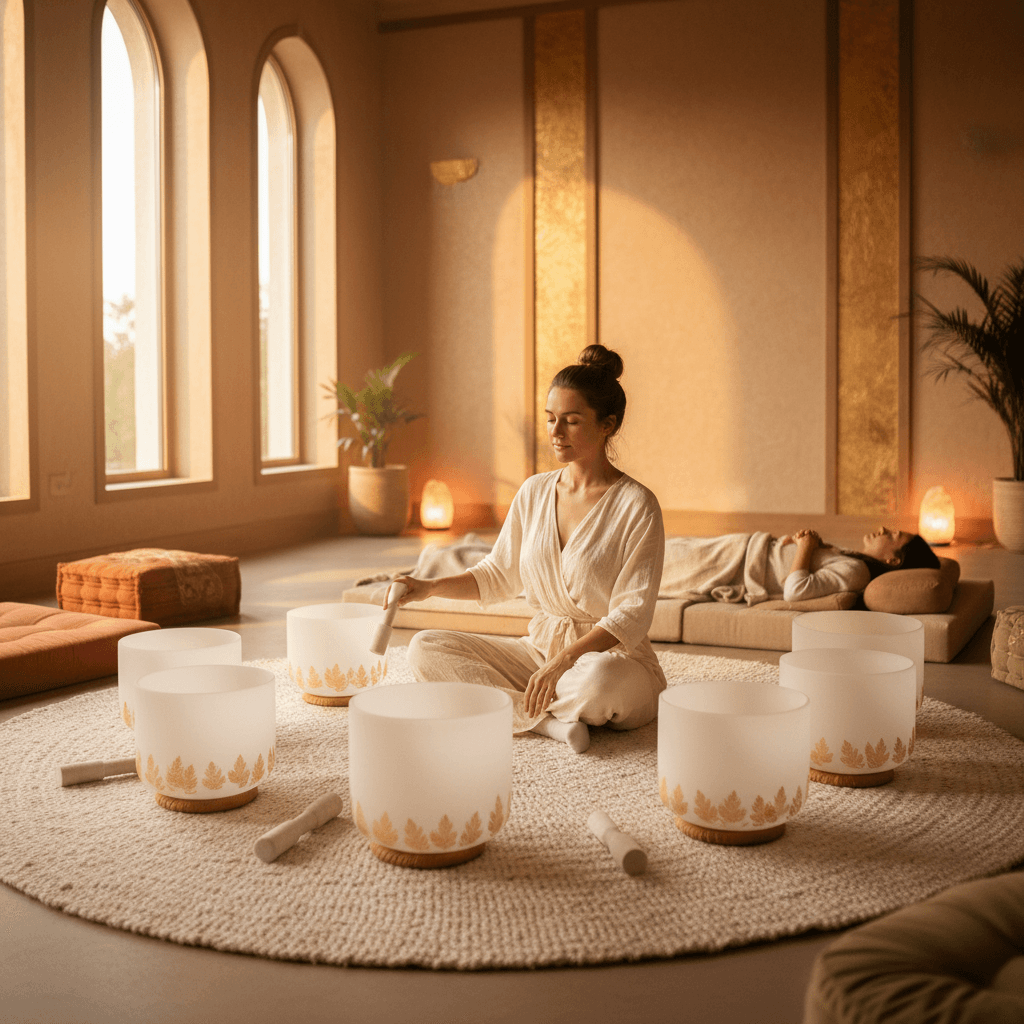
The Soul Art method employs a diverse array of sacred instruments, each carefully selected for its unique vibrational qualities. Crystal singing bowls, with their pure, resonant tones, create a harmonious field that deeply penetrates the body's energetic system. The profound vibrations of gongs elicit primal responses, facilitating release and deep altered states of consciousness. Chimes and tuning forks offer intricate layers of sound, targeting specific frequencies to soothe and rebalance the nervous system.
Larissa Steinbach skillfully orchestrates these instruments, creating immersive soundscapes that resonate with the body's natural frequencies. The intention behind every Soul Art session is clear: to guide clients towards greater self-acceptance, enhance psychological flexibility, and gently reduce the pervasive self-imposed pressure that fuels perfectionism. This holistic approach supports the modification of unrealistic beliefs, encourages the setting of achievable goals, and cultivates a profound sense of inner peace, empowering individuals to embrace their inherent worth beyond the need for flawless performance.
Embracing Imperfection: Practical Steps for Your Journey
Releasing the grip of perfectionism is a journey, not a destination, and it often requires conscious effort and consistent self-compassion. While sound therapy offers a powerful complementary tool, integrating daily practices can significantly enhance your progress. Embracing imperfection means cultivating a kinder, more flexible relationship with yourself and your expectations. These actionable steps, combined with the transformative experiences at Soul Art, can pave your way to lasting freedom.
Remember, the goal is not to eliminate high standards entirely, but to dismantle the maladaptive, self-critical component that causes distress. Begin by acknowledging your perfectionistic tendencies without judgment, and then gently challenge them with these practical strategies.
Actionable Steps for Letting Go:
- Practice Mindful Pauses: Throughout your day, take short breaks to simply observe your breath and sensations without judgment. Even five minutes can help interrupt the cycle of overthinking and self-criticism, fostering present moment awareness.
- Identify and Challenge "Should" Statements: Become aware of phrases like "I should have done that perfectly" or "I must never make mistakes." Consciously reframe these into more compassionate and realistic statements, such as "I did my best, and that is enough" or "Mistakes are opportunities for learning."
- Set Achievable, Imperfect Goals: Intentionally set goals that are "good enough" rather than "perfect." Expose yourself to imperfection by submitting work that isn't absolutely flawless, or by taking on a task with the explicit intention of doing it well, but not perfectly.
- Cultivate Daily Self-Compassion: Treat yourself with the same kindness and understanding you would offer a dear friend. Practice positive self-talk, acknowledge your efforts, and validate your struggles. Self-compassion is a powerful antidote to harsh self-criticism.
- Explore Complementary Wellness Practices: Consider integrating practices like sound therapy into your routine. The deep relaxation and altered states of consciousness induced by sound can help reset your nervous system and create fertile ground for new, more adaptive patterns of thought and behavior.
By consistently applying these steps and exploring the profound benefits of sound wellness, you can gradually loosen perfectionism's hold. Are you ready to embark on a journey of self-acceptance and discover the liberating power of letting go?
Bookings Coming Soon
Soul Art is still in preparation. Session details and booking will be published here after launch.
Coming Soon
Finding Freedom: A Recap of Your Path to Letting Go
Perfectionism, though often masked as a drive for excellence, can impose a heavy burden of stress, anxiety, and self-criticism, profoundly impacting our well-being. It traps us in a cycle of striving and dissatisfaction, leading to physical and emotional exhaustion. Understanding its multifaceted nature, from its origins in high standards to its manifestation as maladaptive coping strategies, is the first step towards liberation.
Sound therapy offers a powerful, complementary pathway to release this grip. Through the immersive experience of harmonious vibrations, it facilitates deep relaxation, shifts brainwave states to foster psychological flexibility, and cultivates vital self-compassion. This practice provides a serene sanctuary, enabling individuals to disengage from rigid thought patterns and embrace acceptance. At Soul Art, Larissa Steinbach's expert guidance and the unique blend of sacred instruments create a transformative environment for letting go. We invite you to experience this profound journey, unlock your inner peace, and step into a life where 'good enough' is truly celebrated.
Wellness Disclaimer: This article is for educational and informational purposes only. It does not constitute medical advice, diagnosis, or treatment. Soul Art Dubai provides non-medical wellness experiences focused on relaxation, stress management, and general wellbeing. Sound wellness is a complementary practice and should not replace professional medical care.