Embrace Peace: Sound for Non-Judgmental Awareness & Acceptance
Key Insights
Discover how sound wellness, guided by Larissa Steinbach at Soul Art Dubai, cultivates non-judgmental awareness and deep self-acceptance for profound emotional well-being.
Have you ever found yourself caught in an internal monologue, dissecting every thought, feeling, or sensation with a critical eye? It’s a common human experience, this relentless stream of judgment that often leaves us feeling stressed, anxious, or fundamentally "not enough." Yet, what if there was a path to observing these internal experiences with profound kindness and curiosity, rather than critique?
This article delves into the transformative power of non-judgmental awareness and acceptance, exploring its scientific underpinnings and how sound wellness acts as a uniquely potent catalyst for its cultivation. We will uncover how embracing a non-evaluative stance can significantly reduce stress and enhance emotional well-being, offering a sanctuary within the self. By understanding and integrating these principles, you can unlock a deeper sense of inner peace and resilience. Join us as we explore how the meticulously curated sound journeys at Soul Art, envisioned by Larissa Steinbach, provide an unparalleled environment for fostering this vital practice.
The Science Explained: Unpacking Non-Judgmental Awareness and Acceptance
The concept of acceptance, particularly non-judgmental awareness, is not merely a philosophical ideal but a scientifically recognized cornerstone of psychological health. For millennia, contemplative traditions have emphasized its importance in navigating life's inevitable challenges, and a growing body of scientific research now substantiates its profound benefits. Studies consistently link acceptance to effective coping with adversity, significant reductions in stress, and improved emotional well-being (Ranzijn and Luszcz, 1999; Roemer and Orsillo, 2002; Hayes et al., 2004a,b; Ford et al., 2018; Zhao et al., 2020; Klussman et al., 2022). Yet, to truly harness its power, we must first understand its multifaceted nature.
Defining Non-Judgmental Awareness
Within the scientific literature, acceptance is understood through various facets, with non-judging standing out as a critical component, particularly within mindfulness practices. As defined by Baer et al. (2008), non-judging means "taking a non-evaluative stance toward thoughts and feelings." This doesn't imply an absence of evaluations appearing in the mind—human cognition naturally categorizes and assesses. Instead, non-judging is the capacity to recognize these evaluations and then consciously release them, understanding that many are unnecessary and unproductive (Kabat-Zinn, 2011).
"Non-judgmental awareness invites you to simply notice what is happening inside and around you with kindness and curiosity. This practice can help you feel more grounded and peaceful in daily life."
It’s about observing your internal landscape—thoughts, emotions, bodily sensations—as they arise, without labeling them as 'good' or 'bad,' 'right' or 'wrong' (Marse, Vocal.media). This gentle, observational approach creates an invaluable space between stimulus and reaction, fostering a sense of inner calm rather than reactivity.
The Pillars of Acceptance: Beyond Just Not Judging
While non-judging is central, acceptance is a broader construct encompassing several key facets. Researchers commonly refer to these interconnected elements:
- Acknowledging: This is the first step, simply recognizing and validating that an experience (a thought, feeling, or sensation) is present. It’s about facing reality as it is, rather than avoiding or denying it.
- Allowing: Beyond mere acknowledgment, allowing involves making space for the experience to exist without attempting to change, suppress, or control it. This doesn't mean condoning or liking the experience, but rather giving it permission to be.
- Non-Judging: As discussed, this facet involves observing experiences without attaching evaluative labels. It's about disengaging from the critical internal narrative.
- Non-Attachment: This refers to the ability to hold experiences lightly, recognizing their transient nature. It’s letting go of clinging to pleasant experiences or pushing away unpleasant ones, understanding that all things are impermanent.
Together, these facets create a comprehensive approach to acceptance that significantly reduces internal conflict and promotes psychological flexibility.
The Impact of Judgment on Well-being
Conversely, the act of judging our internal experiences often perpetuates cycles of distress. When we harshly evaluate our thoughts or emotions, it can intensify stress, amplify negative patterns, and create a sense of being 'stuck' (Marse, Vocal.media). For instance, judging anxiety as "bad" can lead to anxiety about anxiety, creating a vicious feedback loop. This evaluative stance expends significant mental energy, detracting from our capacity to engage with the present moment effectively.
Scientific studies, including those on mindfulness-based interventions, have consistently demonstrated that cultivating a non-judgmental attitude is crucial for breaking free from these cycles. Individuals who practice non-judgmental awareness often report:
- Reduced Stress and Anxiety: By detaching from critical self-talk, the physiological stress response diminishes.
- Improved Emotional Regulation: The space created by non-judgment allows for more thoughtful, rather than reactive, responses to emotional triggers.
- Enhanced Resilience: Accepting challenges as they are, rather than resisting them, builds capacity to bounce back from adversity.
- Greater Clarity and Peace: Less mental energy is consumed by internal conflict, leading to a clearer mind and a more profound sense of inner calm.
Mindfulness-Based Stress Reduction (MBSR) programs, developed by Kabat-Zinn, prominently feature non-judgment as a core element, showing its efficacy in improving various mental and emotional conditions (Allen, Chambers, & Knight, 2006; Grossman, Niemann, Schmidt, & Walach, 2004). The ability to accept experiences without judgment is indeed a powerful tool for holistic well-being.
How It Works in Practice: Sound as a Catalyst for Acceptance
Bridging the gap between the scientific understanding of non-judgmental awareness and its practical application is where sound wellness truly shines. The intentional use of sound provides a unique, accessible pathway to cultivating acceptance, transforming an abstract concept into a tangible, felt experience.
Imagine stepping into a serene space, where the outside world recedes, and the air itself begins to hum with gentle vibrations. For many, the immediate effect of sound wellness is a profound sense of relaxation, a softening of the mind's usual grip. This initial relaxation is crucial, as it creates a fertile ground for non-judgmental awareness to sprout. When the nervous system is soothed, the constant internal commentary often quietens, allowing for a different mode of perception.
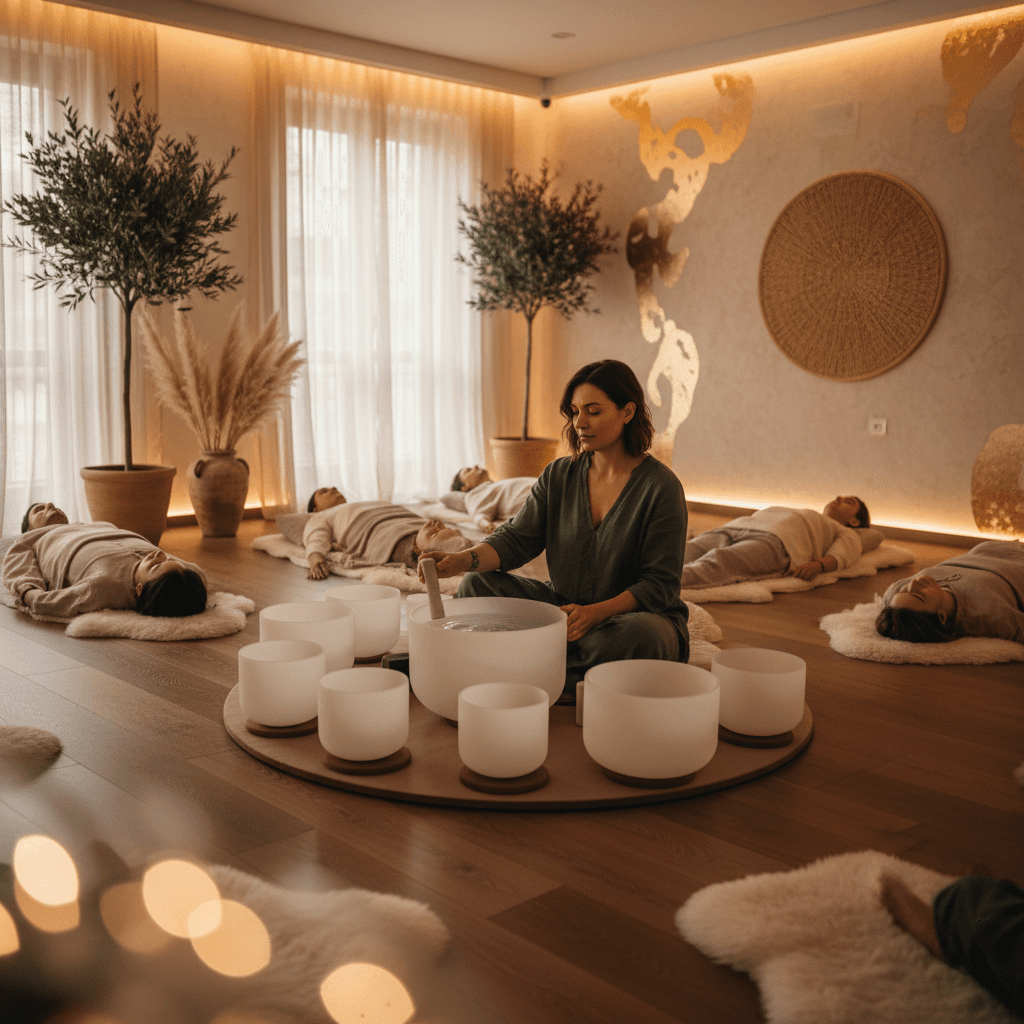
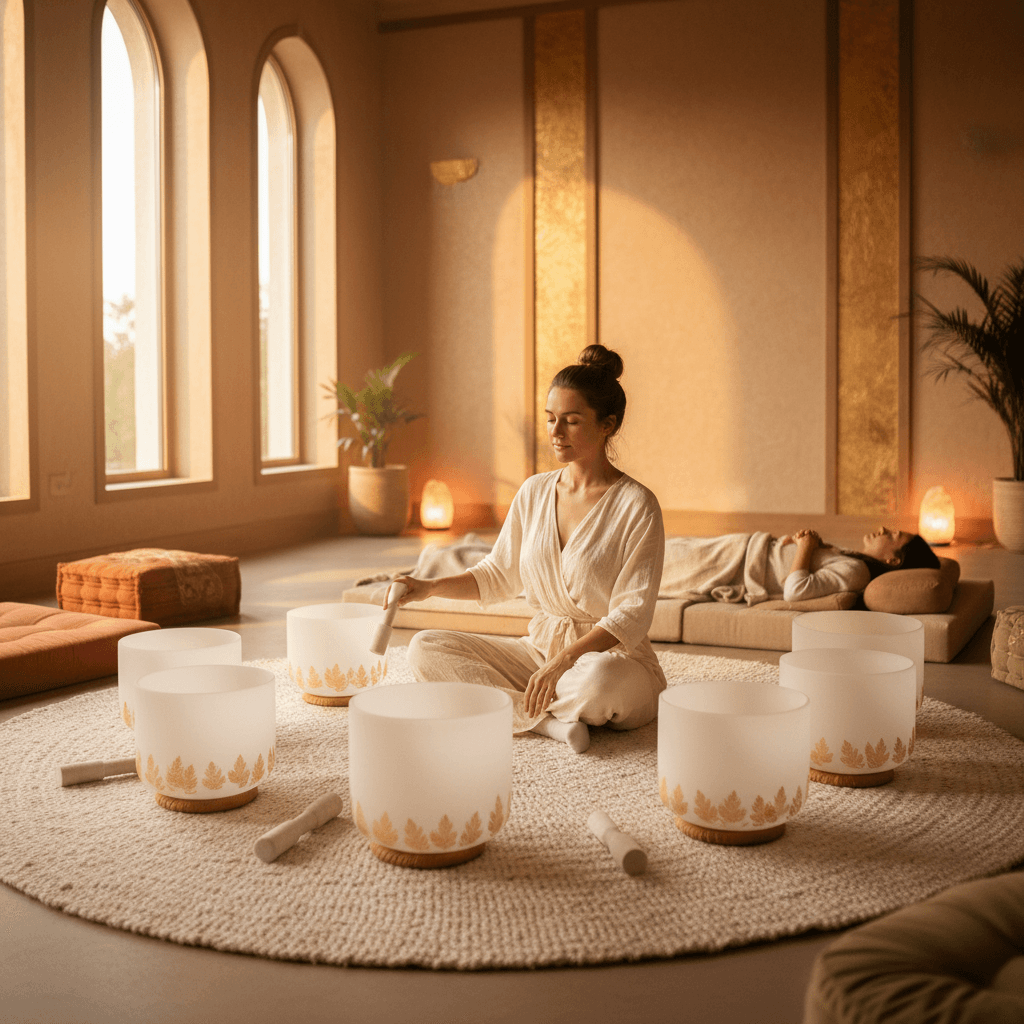
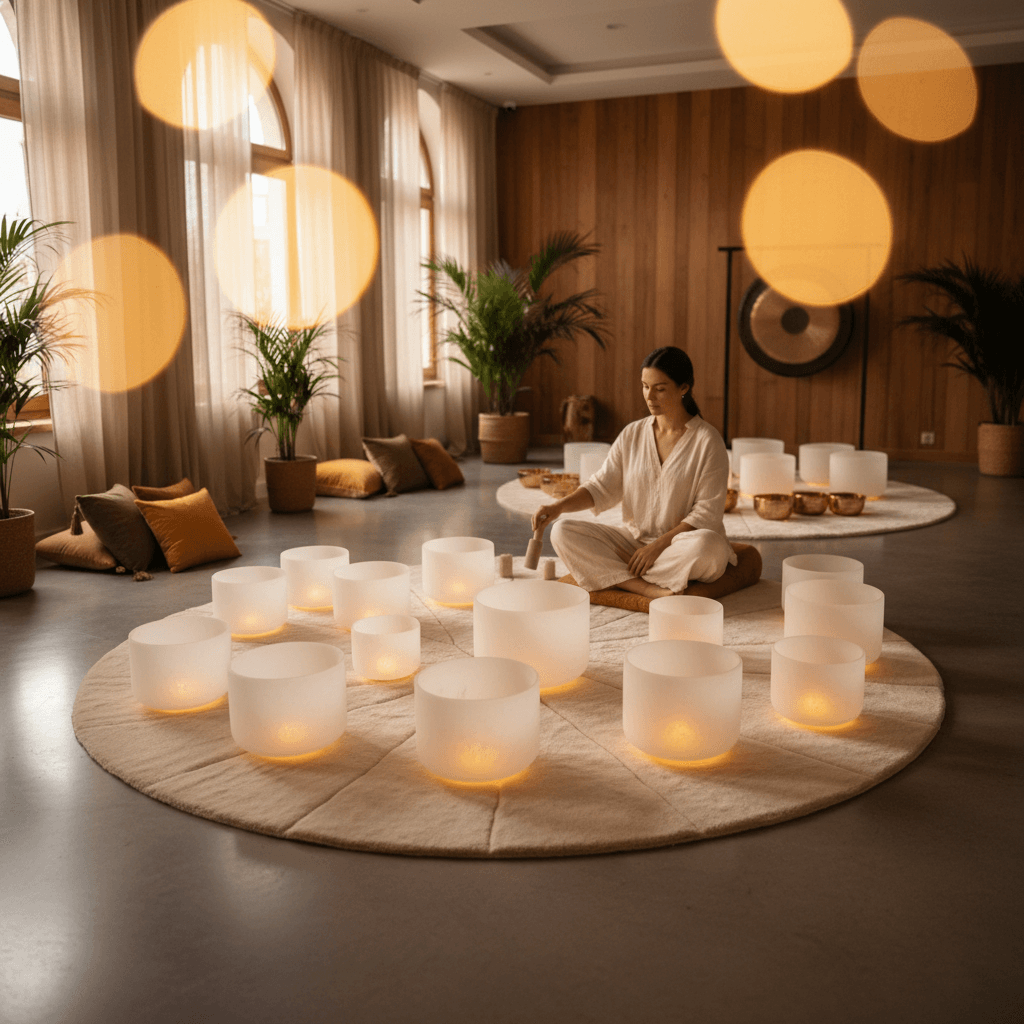
During a sound journey, the client's attention is naturally drawn to the rich, layered tapestry of auditory sensations. The resonant tones of Himalayan singing bowls, the deep thrum of gongs, the delicate shimmer of chimes – these sounds become anchors for present moment awareness. Instead of intellectualizing or trying to analyze the sounds, the invitation is simply to receive them. This receptive state inherently bypasses the judgmental mind, encouraging an "allowing" of what is.
For example, a client might initially experience resistance or discomfort with certain frequencies or vibrations. Their mind might generate thoughts like, "This sound is too loud," or "I don't like this feeling." However, the structured environment and expert guidance encourage them to simply notice these judgments without engaging with them. They learn to observe the fact of the thought or sensation, rather than evaluating its 'goodness' or 'badness' (Miller, Cmillermsw.com). This is where the core of non-judging unfolds: recognizing the evaluation, but choosing to release its hold.
The sustained, intricate soundscapes also offer a dynamic form of "sound enrichment" that helps improve the acceptance of internal "noise"—similar to how background sound enrichment can enhance acceptance of external auditory stimuli (pubmed.ncbi.nlm.nih.gov/32119816/). The complexity and beauty of the sound field gently override the mind's tendency to fixate on singular, judgmental thoughts. The immersive experience encourages the mind to widen its focus, to include and accept all present sensations and thoughts as part of a larger, transient tapestry.
Clients often report a powerful sense of release during and after sound sessions. This release is not about escaping difficult emotions, but rather about accepting them so fully that their intensity dissipates. It's about experiencing the shift from resisting what is to allowing what is, and discovering the inherent peace within that allowance. The consistent, gentle presence of sound acts as a guide, holding space for this profound internal shift, making the abstract practice of acceptance deeply experiential and embodied.
The Soul Art Approach: Larissa Steinbach's Vision for Acceptance
At Soul Art, Dubai's premier sound wellness studio, Larissa Steinbach has meticulously crafted an environment and methodology that uniquely fosters non-judgmental awareness and acceptance. Her vision goes beyond mere relaxation; it's about facilitating profound internal shifts that empower individuals to navigate life with greater grace and resilience. Larissa understands that true well-being stems from a harmonious relationship with oneself, cultivated through mindful presence and unconditional self-acceptance.
What makes the Soul Art method unique is its holistic and intentional design. Larissa Steinbach integrates her deep understanding of contemplative practices, sound physics, and human psychology to create bespoke experiences. Each session is more than just an exposure to beautiful sounds; it's a carefully orchestrated journey designed to guide participants gently into a state of non-evaluative awareness.
Larissa's approach emphasizes the subtle art of listening—not just to the external sounds, but to the internal reverberations they evoke. She guides clients to tune into their bodies and minds, observing any thoughts, feelings, or sensations that arise without judgment. This encouragement to "witness" rather than "evaluate" is central to the Soul Art experience.
Specific instruments and techniques are chosen for their unique vibrational properties and their ability to facilitate different aspects of acceptance:
- Himalayan Singing Bowls: Their ancient, resonant tones create a sustained vibrational field that can deeply relax the nervous system. This deep relaxation naturally reduces mental chatter and allows for a more open, receptive state, making it easier to simply acknowledge what is present.
- Gongs: The powerful, enveloping waves of sound from gongs are particularly effective at disrupting habitual thought patterns. Their expansive frequencies invite a surrender to the present moment, encouraging the "allowing" facet of acceptance by dissolving mental resistance.
- Chimes and Tuning Forks: The delicate, crystalline sounds of chimes and the precise frequencies of tuning forks can bring a heightened sense of focus and clarity. They help to anchor attention, guiding the mind away from judgmental loops and towards a gentle, observing stance.
Through Larissa's expert facilitation, the sonic landscape at Soul Art becomes a supportive container for self-discovery. She helps clients recognize that even uncomfortable internal experiences can be held with compassion and without judgment. By consistently practicing this within the safe and nurturing space of Soul Art, individuals learn to translate this non-judgmental approach into their daily lives, ultimately fostering a profound and lasting sense of self-acceptance and inner peace.
Your Next Steps: Cultivating Acceptance in Daily Life
Integrating non-judgmental awareness and acceptance into your daily routine is a journey, not a destination. While sound wellness offers a powerful accelerated path, there are many simple, actionable steps you can take today to begin cultivating this transformative practice. The key is consistent, gentle effort and a willingness to observe your internal landscape without immediate critique.
Here are a few practical ways to foster a more accepting and non-judgmental approach to yourself and your experiences:
- Practice Mindful Observation: Throughout your day, take short pauses to simply notice what is happening inside you—your thoughts, feelings, and bodily sensations. Do so without trying to change anything or label it as good or bad. Just observe, as if you were a neutral scientist gathering data.
- Fact vs. Opinion Check: When you find yourself judging, ask: "Is this a verifiable fact, or is it an interpretation or opinion?" (Miller, Cmillermsw.com). Distinguishing between the two helps you detach from unhelpful judgments. "I am feeling anxious" is a fact; "I shouldn't be feeling anxious" is a judgment.
- Embrace the "Allowing" Stance: When uncomfortable emotions or thoughts arise, instead of pushing them away, mentally (or even verbally) say, "I allow this feeling to be here." This simple act creates space and often reduces the intensity of the experience.
- Engage with Sound Intentionally: Dedicate time each day to mindful listening. This could be soft music, natural sounds, or even a short guided sound meditation. Focus purely on the auditory experience, noticing any judgments that arise about the sound, and then gently releasing them, returning to pure observation.
- Explore Professional Guidance: Consider booking a sound wellness session at Soul Art. Under the expert guidance of Larissa Steinbach, you will experience firsthand how a meticulously crafted sonic environment can help you effortlessly drop into states of deep acceptance and non-judgmental awareness.
These practices are not about eradicating judgment entirely, but about developing the capacity to recognize evaluations and release their grip, fostering a more compassionate and peaceful relationship with yourself.
Bookings Coming Soon
Soul Art is still in preparation. Session details and booking will be published here after launch.
Coming Soon
In Summary: Embracing Your Whole Self
Non-judgmental awareness and acceptance are powerful tools for cultivating resilience, reducing stress, and enhancing overall emotional well-being. Scientifically supported, these practices invite us to observe our internal experiences—thoughts, feelings, and sensations—without the burden of critique, instead choosing to acknowledge, allow, and release evaluations. This fundamental shift from resistance to acceptance creates profound inner peace and clarity.
Sound wellness offers a unique and highly effective pathway to embodying these principles. The immersive sonic journeys at Soul Art, expertly designed by Larissa Steinbach, provide a nurturing space where the mind naturally settles into a state of non-judgment, fostering a deeper, more compassionate relationship with oneself. By embracing the frequency of acceptance, you unlock the potential for a more peaceful, grounded, and fulfilled life. We invite you to experience this transformation firsthand.
Wellness Disclaimer: This article is for educational and informational purposes only. It does not constitute medical advice, diagnosis, or treatment. Soul Art Dubai provides non-medical wellness experiences focused on relaxation, stress management, and general wellbeing. Sound wellness is a complementary practice and should not replace professional medical care.