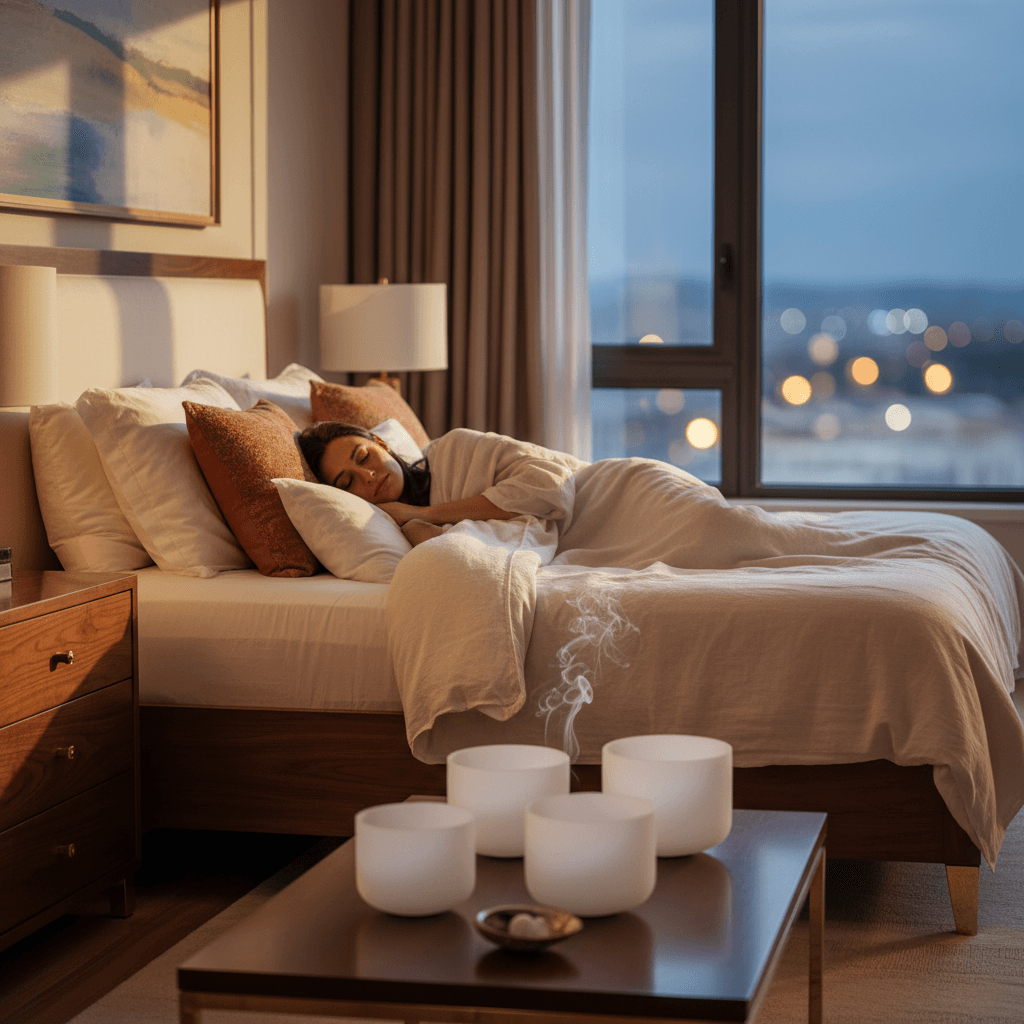
Sound Strategies for Night Awakenings: A Soul Art Guide
Key Insights
Discover scientifically-backed sound strategies from Soul Art Dubai to overcome middle-of-night awakenings and achieve sustained, restorative sleep.
The digital hum of modern life often clashes with our ancient biological rhythms, leading to a pervasive frustration many of us know all too well: the unwelcome middle-of-night awakening. You drift off, expecting a full eight hours, only to find yourself wide awake at 3 AM, mind racing, unable to return to the blissful embrace of sleep. Why does this happen, and perhaps more importantly, can sound offer a pathway back to slumber?
This deep dive into sleep science will unravel the mechanisms behind these nocturnal interruptions and introduce you to the transformative potential of sound. We will explore how targeted acoustic modulation and binaural beats may support sustained sleep, drawing insights from cutting-edge research. You will learn about the unique methodology employed by Larissa Steinbach at Soul Art Dubai, designed to guide your mind and body towards profound rest and uninterrupted sleep maintenance. Understanding these strategies is not just about avoiding waking up; it's about reclaiming your mental clarity, physical vitality, and overall wellbeing.
The Science Explained: Understanding Your Nocturnal Awakenings
Our relationship with sleep is far more intricate than simply "being awake" or "being asleep." Sleep is a complex, dynamic process orchestrated by our brain and body, and understanding its architecture is the first step towards mastering its nuances. Middle-of-night awakenings, while sometimes normal, become problematic when the ability to return to sleep is impaired, leaving us feeling fatigued and frustrated.
The Architecture of Sleep: Why We Wake
Sleep is not a single, monolithic state but rather a progression through distinct stages, broadly categorized into Non-Rapid Eye Movement (NREM) sleep and Rapid Eye Movement (REM) sleep. NREM sleep further divides into light sleep (N1, N2) and deep sleep (N3, also known as slow-wave sleep). We cycle through these stages multiple times a night, with each cycle lasting approximately 90-120 minutes.
Awakenings, often brief and unnoticed, naturally occur at the transitions between these cycles. However, factors such as stress, environmental noise, light exposure, or even the cognitive arousal of checking a clock can disrupt this delicate balance. When these awakenings become prolonged, they can significantly impair overall sleep quality and lead to issues like chronic insomnia. Removing visible clocks from the bedroom, for instance, is a simple yet effective strategy to prevent the mental engagement that often accompanies a nocturnal glance at the time, which can trigger an unwanted cascade of cognitive arousal.
Disruptions to our circadian rhythm, often seen in shift work but increasingly prevalent in modern lifestyles, exacerbate these awakenings. Our internal body clock, which dictates sleep timing and quality, can be thrown off balance by irregular schedules, late-night screen exposure, and lack of consistent light cues. Over time, such disruptions can lead to significant sleep debt, where even mild cumulative sleep loss impairs vigilance and reaction time to a degree comparable to legal intoxication.
Acoustic Modulation: Tuning into Tranquility
The power of sound to influence our sleep has been explored across cultures for millennia, and modern science is beginning to unravel its intricate mechanisms. Studies quite consistently show that acoustic stimulation before sleep may positively act on subjective sleep reports of healthy and sleep-disturbed individuals. This suggests a therapeutic potential that can be drawn from these observations.
While investigations into objective outcomes, particularly in clinical samples, are still somewhat scarce, some evidence is available in healthy subjects. This research indicates that additional influential factors, not yet fully understood, come into play when acoustic interventions are used. For instance, a hypnotic story played while individuals were falling asleep effectively and specifically increased the amount of deep sleep in young and older adults during naps and nocturnal sleep. This story included a metaphor of a fish swimming deeper and deeper into the sea, subtly suggesting the listener to let go and dive profoundly into sleep. It followed a short hypnotherapeutic technique delivered in a slow, calming voice to establish a tranquil, hypnotic state.
However, individual responses vary. In subjects not easily responding to hypnosis, the outcome on sleep was systematically reversed, leading to reductions in slow-wave sleep amounts instead of an increase. This highlights the importance of personalized approaches and understanding individual receptivity to sound. Furthermore, while habituation effects could be expected with increasing duration of exposure to sounds, studies usually show only small habituation effects. The persistent increase in heart rate and body movements reported after two weeks of nocturnal traffic noise exposure, with no signs of habituation for sleep quality, mood, or performance, underscores the significant and lasting impact sound can have on our physiological state. This duality emphasizes that while disruptive sounds can persistently impair sleep, carefully curated sounds may offer sustained benefits.
Binaural Beats: Guiding Brainwave States
Binaural Beat Frequencies (BBFs) represent a novel and promising area of research in sleep maintenance. The use of specialized audio frequencies to affect brainwaves and change the listener's state of consciousness has shown efficacy in various circumstances. BBFs work by presenting two slightly different pure-tone frequencies to each ear. The brain then perceives a third, illusory tone at the difference between these two frequencies, and this perceived frequency can entrain brainwave activity.
Many commercially marketed BBFs for sleep often use a single target frequency (e.g., theta or delta). However, sleep is a complex journey through multiple phases, and a single frequency may not allow for a natural transition through these stages. Researchers are exploring more sophisticated approaches to BBF design. For instance, a four-phase study protocol aims to develop an all-night binaural audio track to induce, sustain, and provide a structured waking experience.
Phase 1 of this research concluded that theta BBF was able to decrease stress to help induce sleep. Phase 2 is designed to assess if a combination of theta and delta BBFs, strategically punctuated with breaks to allow for REM sleep, can help sustain sleep throughout the night. If this combination proves effective, Phase 3 would then incorporate theta, alpha, and beta BBFs at the end of a longer audio track to trigger a structured waking process. If the theta/delta combination does not sync appropriately with unique sleep cycles, Phase 2 may be repeated using theta BBF only, as theta is thought to help participants fall back to sleep if they awaken or have longer sleep latency. This methodical approach aims to construct a customizable all-night audio program with appropriate BBFs and timing to trigger the correct sleep stages for improved sleep efficiency. If this concept is feasible, it could offer a valuable tool for many experiencing sleep disturbances.
"The true art of sleep maintenance lies not in forcing slumber, but in creating a sonic sanctuary where the mind feels safe enough to simply let go and surrender to the natural rhythm of rest."
How It Works in Practice: The Sonic Path to Sustained Sleep
Connecting the scientific understanding of sleep and sound to real-world application is where the magic of sound wellness truly unfolds. At Soul Art, the theoretical underpinnings of acoustic modulation and binaural beats are meticulously woven into a tangible, deeply immersive experience designed to support sleep maintenance. Clients often describe a profound sense of tranquility, a gentle guiding back to equilibrium that addresses the very core of middle-of-night awakenings.
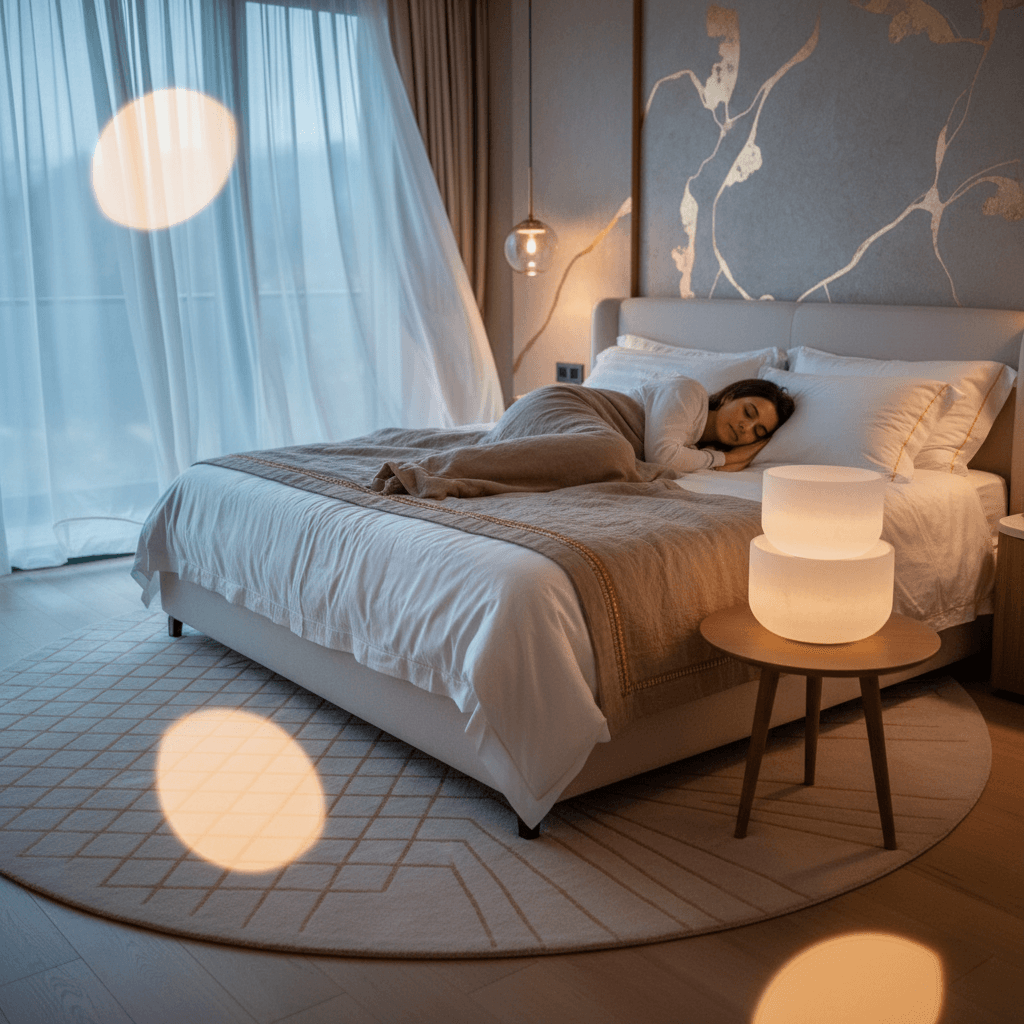
Imagine stepping into a carefully curated environment, where the lighting is soft and subdued, the air is calm, and the outside world gently recedes. This is more than just a quiet room; it’s a sanctuary built for sensory solace. The sounds offered are far from typical background music; they are a sophisticated tapestry of frequencies and tones, specifically chosen and layered to interact with your brain's natural rhythms.
The experience begins with sustained tones and gentle frequencies, forming a consistent sonic environment that helps to quiet the overactive mind. This consistent acoustic input is designed to minimize the impact of internal or external disruptions that might otherwise trigger an awakening. It's like being enveloped in a soft, sound-proof blanket, allowing the nervous system to gradually unwind and deepen into a state of rest.
Sometimes, this sonic journey includes guided visualizations or calming narratives, akin to the "fish swimming deeper" metaphor explored in research. These narratives are spoken in a slow, soothing voice, designed to bypass the analytical mind and engage the subconscious with imagery of peace, release, and deepening relaxation. The words become a gentle current, carrying the listener away from cognitive arousal and towards a profound sense of letting go.
Beneath these layers, subtle binaural beats are often incorporated, meticulously designed to encourage specific brainwave states associated with restorative sleep. These are not jarring or overtly perceptible; rather, they are embedded frequencies that silently nudge your brain towards delta or theta waves, promoting deep relaxation and facilitating the natural progression through sleep stages. The goal is to support the brain in re-entering or maintaining those crucial deep sleep cycles that are so vital for physical and mental restoration.
Clients often report feeling a gentle vibrational resonance throughout their body, a subtle yet powerful sensation that helps to release tension and ground them in the present moment. This physical aspect of sound, combined with the carefully constructed auditory landscape, creates an unparalleled opportunity for the mind to detach from worry and for the body to relax into its innate capacity for self-healing and deep rest. For many, it's an experience of being lovingly cradled back into the arms of sleep, transforming the daunting prospect of a middle-of-night awakening into a fleeting memory.
The Soul Art Approach: Larissa Steinbach's Vision for Restorative Sleep
At Soul Art Dubai, Larissa Steinbach brings a distinctive and deeply personalized approach to sound wellness, particularly in addressing sleep maintenance challenges. Her method is a sophisticated blend of ancient wisdom and contemporary scientific understanding, creating an environment where individuals can truly reconnect with their innate capacity for restorative sleep. This unique synthesis is what sets the Soul Art experience apart.
Larissa's philosophy centers on the understanding that each individual's sleep architecture and response to sound are unique. Therefore, the Soul Art method emphasizes personalization, moving beyond one-size-fits-all solutions. She and her team meticulously craft sound experiences that acknowledge these individual differences, ensuring that the acoustic interventions resonate effectively with each client's specific needs and sensitivities. This might involve adjustments to the specific frequencies used, the duration of exposure, or the integration of different sound elements.
The core of Soul Art's practice revolves around a curated selection of instruments known for their profound vibrational qualities. Crystal singing bowls, renowned for their pure, sustained tones, form a foundational element, creating a harmonious and enveloping sound field. These bowls are often complemented by the deep resonance of gongs, the delicate chime of tuning forks, and other percussive elements, all chosen for their capacity to elicit states of deep relaxation and brainwave entrainment.
What makes the Soul Art method particularly unique is its intentional application of sound to support sustained sleep, directly targeting the disruption of middle-of-night awakenings. Larissa Steinbach designs comprehensive soundscapes that are not merely relaxing but are specifically engineered to guide the mind through the sleep cycles, encouraging the brain to re-enter deep sleep or maintain a tranquil state when an awakening occurs. This is achieved by creating a "sonic cocoon" – a consistent and supportive auditory environment that gently nudges the brain back towards restful patterns.
Furthermore, Soul Art integrates modern understanding of brainwave states, subtly incorporating elements inspired by binaural beat research into its immersive sound experiences. While not always explicitly delivered as binaural beats, the crafted soundscapes are designed with specific frequency relationships to encourage the brain to shift into delta and theta states, which are crucial for deep and uninterrupted sleep. This holistic environment—combining intention, space, and expertly guided sound—provides a powerful tool for individuals seeking to transform their relationship with sleep and find lasting peace through the night.
Your Next Steps: Cultivating a Culture of Rest
Reclaiming your night from middle-of-night awakenings is an achievable goal, and integrating sound strategies can be a powerful ally. While a session at Soul Art offers a deeply immersive and expertly guided experience, there are several practical steps you can take today to begin cultivating a personal culture of rest. These actionable tips, inspired by sound wellness principles and general sleep hygiene, can significantly support your sleep maintenance.
-
Optimize Your Sleep Environment: Create a sanctuary for sleep. Ensure your bedroom is completely dark, quiet, and cool, ideally around 20°C (68°F). Remove visible clocks, as checking the time during nocturnal awakenings increases cognitive arousal and perpetuates clock-watching, worsening insomnia. Using earplugs or a white noise machine can further enhance quietness.
-
Implement a Pre-Sleep Ritual: Establish a consistent routine at least three hours before bedtime. This includes avoiding caffeine for at least six hours, alcohol or cannabis for at least three hours, and intense physical activity for at least three hours. Limit light and screen exposure during this crucial wind-down period to prevent disruption to your natural melatonin production.
-
Practice Mindful Awakening Strategies: If you do wake in the night and find it difficult to return to sleep after 15-20 minutes, leave the bed. Move to a dimly lit, non-stimulating environment. Engage in a quiet, boring activity, such as reading a physical book (not on a screen) or doing a simple word search game, until sleepiness truly returns. Only then should you attempt to go back to bed.
-
Explore Calming Soundscapes at Home: Experiment with high-quality sound recordings designed for sleep. Look for tracks that feature sustained tones, gentle nature sounds, or those incorporating subtle binaural beats specifically targeting theta and delta brainwave states for sleep maintenance. Ensure these are played at a low, non-disruptive volume.
-
Consider Professional Guidance: For a deeper, more tailored approach, explore the personalized sound wellness experiences offered by Larissa Steinbach at Soul Art Dubai. These guided sessions provide a unique opportunity to immerse yourself in expertly crafted soundscapes designed to reset your nervous system and support sustained, restorative sleep, helping you move beyond the cycle of middle-of-night awakenings.
In Summary: Embracing Sound for Deeper Sleep
Middle-of-night awakenings can severely impact our overall wellbeing, but understanding the science behind sleep architecture and harnessing the power of sound offers a promising path to lasting relief. Acoustic modulation and targeted binaural beats are emerging as compelling complementary strategies that may support the brain in achieving and maintaining deeper, more restorative sleep stages. By influencing brainwave states and fostering a tranquil internal environment, sound provides a gentle yet powerful tool to navigate and overcome nocturnal disruptions.
Larissa Steinbach and Soul Art Dubai stand at the forefront of this innovative approach, offering meticulously crafted sound wellness experiences that blend scientific insights with profound intention. Through personalized sessions utilizing crystal singing bowls, gongs, and expertly designed soundscapes, Soul Art guides individuals towards a renewed relationship with sleep. Embrace the transformative potential of sound to quiet your mind, soothe your nervous system, and unlock the profound benefits of sustained, uninterrupted rest.
Bookings Coming Soon
Soul Art is still in preparation. Session details and booking will be published here after launch.
Coming Soon
Wellness Disclaimer: This article is for educational and informational purposes only. It does not constitute medical advice, diagnosis, or treatment. Soul Art Dubai provides non-medical wellness experiences focused on relaxation, stress management, and general wellbeing. Sound wellness is a complementary practice and should not replace professional medical care.
Related Articles
Fan Noise and Sleep: Unmasking the Science Behind White Noise Machines for Deeper Rest
Polyphasic Sleep & Sound Healing: Navigating Restorative Rhythms
REM Rebound: Mastering the Art of Recovering Lost Dream Sleep