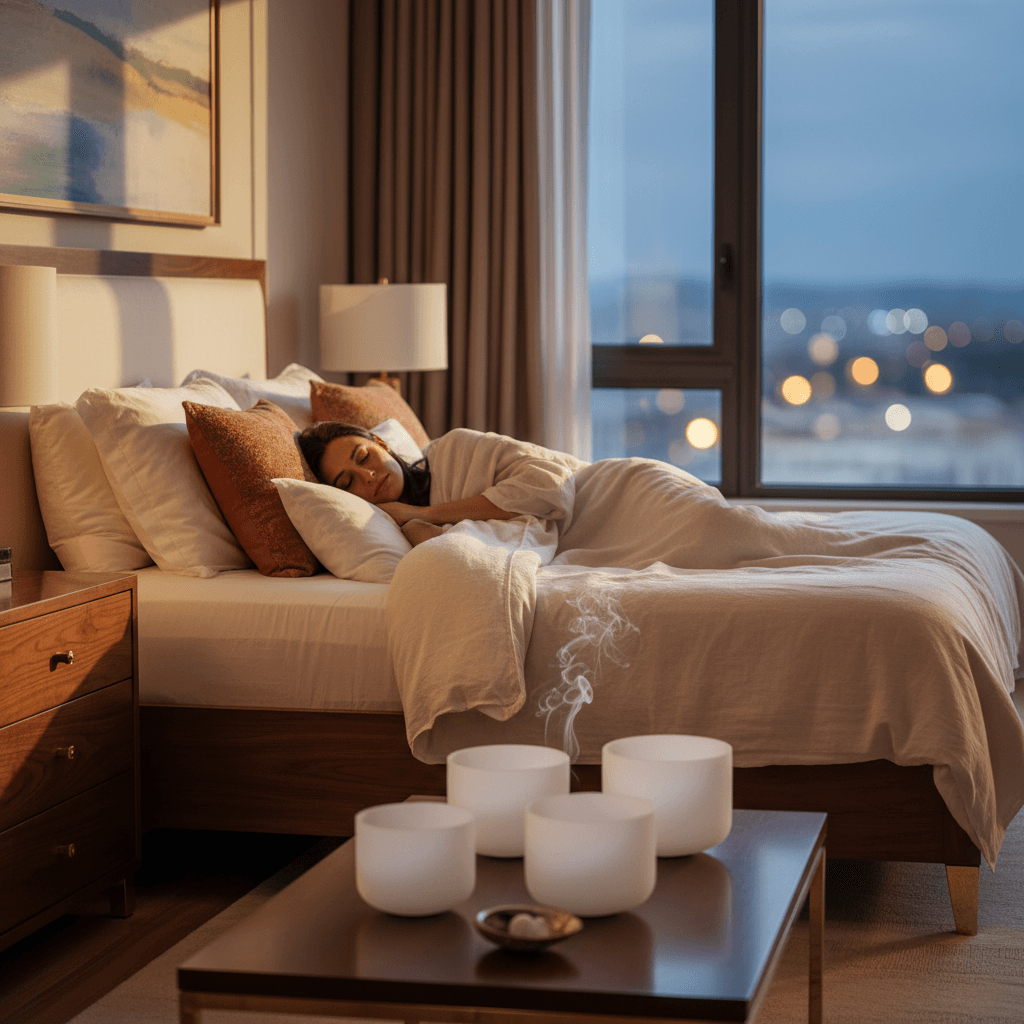
Evening Soundscapes: Boosting Melatonin for Deeper Sleep
Key Insights
Discover how evening sound wellness, guided by Larissa Steinbach at Soul Art Dubai, naturally supports melatonin production for enhanced sleep quality and hormone balance.
Have you ever considered that the sounds around you, or even the lack thereof, could be quietly orchestrating your sleep quality, affecting hormones crucial for your well-being? In our hyper-connected world, the subtle symphony of evening stimuli often dictates how deeply we rest.
This article delves into the fascinating interplay between sound, light, and melatonin production, the master hormone of sleep. We will explore the scientific evidence behind how ambient conditions, particularly sound, influence your body’s natural rhythm. You'll discover how the intentional practice of sound wellness, as curated by Larissa Steinbach at Soul Art Dubai, may help optimize your sleep hormones for a truly restorative experience.
Understanding these mechanisms can empower you to take charge of your sleep environment and unlock profound benefits for your physical and mental health. It’s not just about falling asleep; it's about achieving high-quality, biologically beneficial rest.
The Intricate Dance of Sleep Hormones: Melatonin and Circadian Rhythms
Our bodies are governed by an intricate internal clock, the circadian rhythm, which coordinates nearly all physiological processes over a 24-hour cycle. At the heart of this timing system lies melatonin, a hormone widely recognized as the conductor of our nightly symphony of sleep. Its production is meticulously regulated, primarily by the pineal gland.
Melatonin acts as a direct circadian rhythm driver and a zeitgeber, an environmental cue that synchronizes our internal biological clocks. Levels naturally rise in the evening, peak during the night, and then decline in the early morning, signaling the appropriate time for sleep onset and facilitating wakefulness, respectively. This rhythmic release of melatonin conveys the message of darkness to our central circadian clock, located in the suprachiasmatic nuclei (SCN) of the hypothalamus.
The SCN, our body's central pacemaker, integrates light signals received via specialized retinal neurons, even in individuals who are totally visually blind. This integration allows melatonin to orchestrate the timing and synchronization of various biological rhythms. These include sleep-wake cycles, hormone secretion, and fluctuations in core body temperature, all contributing to our overall temporal order.
Melatonin: The Conductor of Your Nightly Symphony
Melatonin's influence extends beyond mere sleep induction; it activates a suite of "night-state physiological functions" throughout the body. These functions include regulating blood pressure and metabolism, preparing the body for the restorative processes that occur during deep rest. Exogenous melatonin, when administered, has been shown to help entrain, or synchronize, circadian rhythms in individuals with disrupted sleep patterns. This suggests its profound capacity to re-establish the correct phase alignment of the internal clock.
A robust and timely melatonin secretion is therefore paramount for optimal health. It doesn't just help us fall asleep; it ensures our bodies are operating in harmony with their natural, evolutionarily ingrained rhythms. When this delicate balance is disrupted, the consequences can cascade throughout our entire system.
The Disruptive Influence of Modern Noise and Light
In our contemporary world, the sanctity of evening hours, traditionally reserved for winding down, is constantly challenged by pervasive artificial light and environmental noise. These modern stressors are significant zeitgeber disruptors, actively working against our natural melatonin production. Understanding their impact is the first step toward reclaiming restorative sleep.
Research highlights the profound effect of noise on sleep architecture. Even seemingly subtle sound levels can fragment sleep and hinder recovery. Studies indicate that noise peaks of 50.3 dB(A) can cause awakenings, while changes in sleep state occur at 48.5 dB(A), and transient reactions at 47.6 dB(A). Significantly, limiting noise peaks to below 40 dB(A) has been shown to prevent 80% of sleep disturbances and 87% of awakenings, underscoring the critical importance of a quiet environment.
Further laboratory studies reveal that increased sound levels during sleep significantly disturb rest, leading to higher heart rates (HR) even with sound-induced arousals. These findings demonstrate that our physiological systems are highly responsive to acoustic interruptions, even if we are not consciously aware of waking. The continuous physiological stress of fragmented sleep can accumulate, hindering the body's natural restorative processes.
Beyond noise, light is perhaps the primary zeitgeber for circadian regulation. Its intensity, spectrum, and timing directly influence melatonin secretion and phase timing. While morning exposure to bright, blue-enriched light is beneficial for suppressing melatonin and promoting wakefulness, evening light exposure has the opposite, detrimental effect.
Millions of individuals habitually expose themselves to room light in the hours before bedtime, profoundly altering melatonin synthesis. Studies reveal that exposure to room light (less than 200 lux) in the late evening suppresses the onset of melatonin synthesis and shortens the duration of its production. This chronic exposure to evening electrical lighting effectively extends the biological photoperiod and shortens the scotoperiod (period of darkness), which is equivalent to placing modern humans in a continual biological summer.
"The subtle symphony of evening stimuli, from ambient noise to artificial light, profoundly dictates how deeply we rest and how effectively our bodies can produce the crucial sleep hormone, melatonin."
This constant suppression and misalignment of melatonin rhythms due to light at night has implications beyond mere sleepiness. It has been associated with an increased risk of cardiovascular disease, with poor sleep quality shown to heighten this risk. Furthermore, disruptions to melatonin signaling by light at night could contribute to an increased risk for conditions like type 2 diabetes. The cumulative effect of these seemingly small, chronic changes in sleep, melatonin, and circadian phase can present a significant health risk for vulnerable individuals over time.
How It Works in Practice
Recognizing the detrimental effects of modern disruptions, the focus shifts to intentionally cultivating environments that support natural melatonin production. This involves not only minimizing negative stimuli but actively introducing elements that foster deep relaxation and physiological readiness for sleep. When external noise is minimized and disruptive light is dimmed, the body begins to recalibrate its internal clock.
The absence of jarring sounds, particularly those exceeding 40 dB(A) as highlighted by research, creates a foundational quietude crucial for uninterrupted sleep. In this calmer environment, the presence of specific, carefully modulated sounds can then actively guide the brain into deeper, more restorative sleep stages. This is where the profound potential of sound wellness practices truly shines.
Recent studies have shown that rhythmic auditory stimulation can actively drive "slow oscillations" (SOs) in the brain. These SOs are hallmark electrical patterns associated with slow-wave sleep (SWS), often considered the deepest and most restorative stage of non-REM sleep. By promoting these slow oscillations, sound may deepen slow-wave sleep, leading to enhanced physiological recovery.
Deep SWS is not just about feeling rested; it is vitally linked to cognitive functions like memory consolidation and the optimization of the body's immune-supportive hormonal milieu. The type of sounds matters; studies have explored the impact of "pink noises" and "pure sounds" in eliciting beneficial brain responses. These sounds are specifically chosen for their ability to promote neural entrainment without causing arousal.
When the body enters this state of deep relaxation induced by therapeutic sound, the conditions are optimal for melatonin to naturally rise. The sympathetic nervous system, responsible for our 'fight or flight' response, quiets down, allowing the parasympathetic nervous system, which manages 'rest and digest' functions, to take over. This shift is essential for the pineal gland to effectively release melatonin, undisturbed by stress hormones.
Clients often describe an immediate sense of calm and a profound drop into a state of deep peace. The immersive quality of curated soundscapes can create a cocoon-like environment, shielding them from external distractions. This prepares the brain and body not only for a restful session but also for a more restorative night's sleep afterward, aligning with the body's natural circadian rhythm.
The Soul Art Approach
At Soul Art Dubai, Larissa Steinbach intuitively understands the profound impact of environment and sound on human physiology. Her approach is rooted in creating a sanctuary where these scientific principles are meticulously applied to foster optimal well-being. The Soul Art method is not merely about playing sounds; it is an artful orchestration designed to support the body's innate capacity for self-regulation and hormonal balance.
Larissa Steinbach curates bespoke soundscapes, leveraging intentional frequencies and the resonant power of specific instruments. Crystal singing bowls, gongs, chimes, and tuning forks are chosen not just for their beauty, but for their specific vibrational qualities that may encourage mental and physical relaxation. Each session is an invitation to disconnect from the external world and reconnect with one's inner rhythm.
A critical aspect of the Soul Art experience is the creation of an optimal physiological environment. The studio is meticulously designed to minimize disruptive external noise, often staying well below the 40 dB(A) threshold identified by research as essential for preventing sleep disturbances. This ensures that the delicate signals of therapeutic sound can be fully received by the body.
Furthermore, the lighting is carefully dimmed, removing the blue-enriched spectrum that suppresses melatonin. The ambient temperature is also precisely maintained within a comfortable range, typically between 20–25°C, a zone research suggests supports natural melatonin release and reduces nighttime awakenings. This holistic environmental control primes the body for deep relaxation and hormone optimization.
Larissa Steinbach often complements the sound experiences with guided meditation and breathwork techniques. These practices further engage the parasympathetic nervous system, easing mental chatter and encouraging a deeper physiological shift towards rest. The synergy between intentional sound, environmental control, and mindful practices makes the Soul Art method a unique and powerful wellness practice.
This complementary approach provides a profound opportunity for individuals to recalibrate their nervous systems and restore their natural hormonal rhythms. Larissa Steinbach’s dedication ensures that each session at Soul Art is a journey toward enhanced sleep quality, stress management, and a greater sense of overall well-being. It is about offering the body the ideal conditions to naturally produce melatonin, thereby supporting healthier sleep and improved circadian alignment.
Your Next Steps
Embracing the profound connection between your environment, sound, and melatonin production can be a transformative journey towards better sleep and enhanced well-being. You don't have to overhaul your entire life overnight, but conscious, incremental changes can yield significant benefits. By taking control of your evening routine, you empower your body to naturally produce the hormones it needs for restorative rest.
Here are some practical steps you can implement today to support your natural melatonin production and improve your sleep:
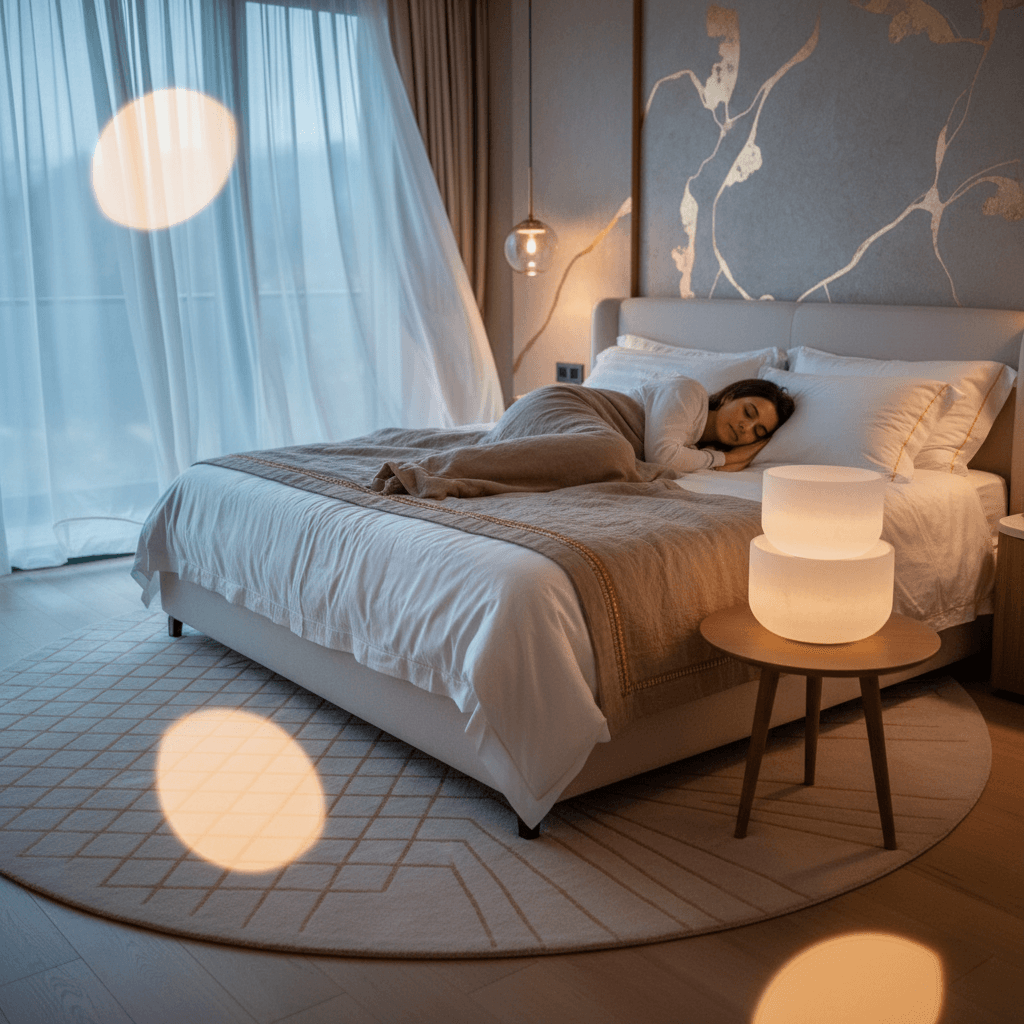
- Cultivate a Sleep Sanctuary: Dim household lights 2-3 hours before bedtime, especially avoiding blue-light emitting screens. Aim to keep your bedroom ambient temperature between 20–25°C, as this range may support melatonin release and reduce awakenings.
- Mindful Soundscaping: Consciously reduce evening noise exposure, ensuring your sleep environment stays below 40 dB(A). Consider incorporating calming sounds like nature soundscapes, gentle instrumental music, or the resonant frequencies of singing bowls into your pre-sleep ritual to encourage relaxation.
- Establish an Evening Wind-Down Ritual: Engage in activities that signal to your body it’s time to rest. This could include reading a physical book, taking a warm bath, or practicing gentle stretches. Consistent routines help reinforce your circadian rhythm.
- Limit Stimulants: Avoid caffeine and heavy meals in the late afternoon and evening. These can interfere with your body's natural ability to wind down and delay the onset of melatonin production.
- Explore Sound Wellness: Consider experiencing a professional sound wellness session. The curated soundscapes and supportive environment provided by experts like Larissa Steinbach at Soul Art Dubai offer a unique opportunity to deeply relax and recalibrate your nervous system, priming your body for optimal melatonin secretion.
Soul Art is still in preparation. Session details and booking will be published here after launch.
Bookings Coming Soon
Soul Art is still in preparation. Session details and booking will be published here after launch.
Coming Soon
In Summary
Melatonin, the body's natural sleep hormone, is a crucial regulator of our circadian rhythms and overall health. In a world saturated with disruptive artificial light and noise, its natural production can be significantly hindered, leading to fragmented sleep and potential health implications. Research consistently shows that a quiet, dark, and temperature-controlled environment is essential for optimizing melatonin release.
Intentional sound wellness practices, such as those championed by Larissa Steinbach at Soul Art Dubai, offer a powerful complementary approach. By providing curated soundscapes that encourage deep relaxation and promoting slow-wave sleep, these sessions may support the body's innate ability to produce melatonin effectively. Embracing these practices can lead to enhanced sleep quality, improved hormonal balance, and a profound sense of well-being. Discover how Soul Art Dubai can help you unlock your body's natural rhythm for truly restorative rest.
Wellness Disclaimer: This article is for educational and informational purposes only. It does not constitute medical advice, diagnosis, or treatment. Soul Art Dubai provides non-medical wellness experiences focused on relaxation, stress management, and general wellbeing. Sound wellness is a complementary practice and should not replace professional medical care.
Related Articles
Fan Noise and Sleep: Unmasking the Science Behind White Noise Machines for Deeper Rest
Polyphasic Sleep & Sound Healing: Navigating Restorative Rhythms
REM Rebound: Mastering the Art of Recovering Lost Dream Sleep