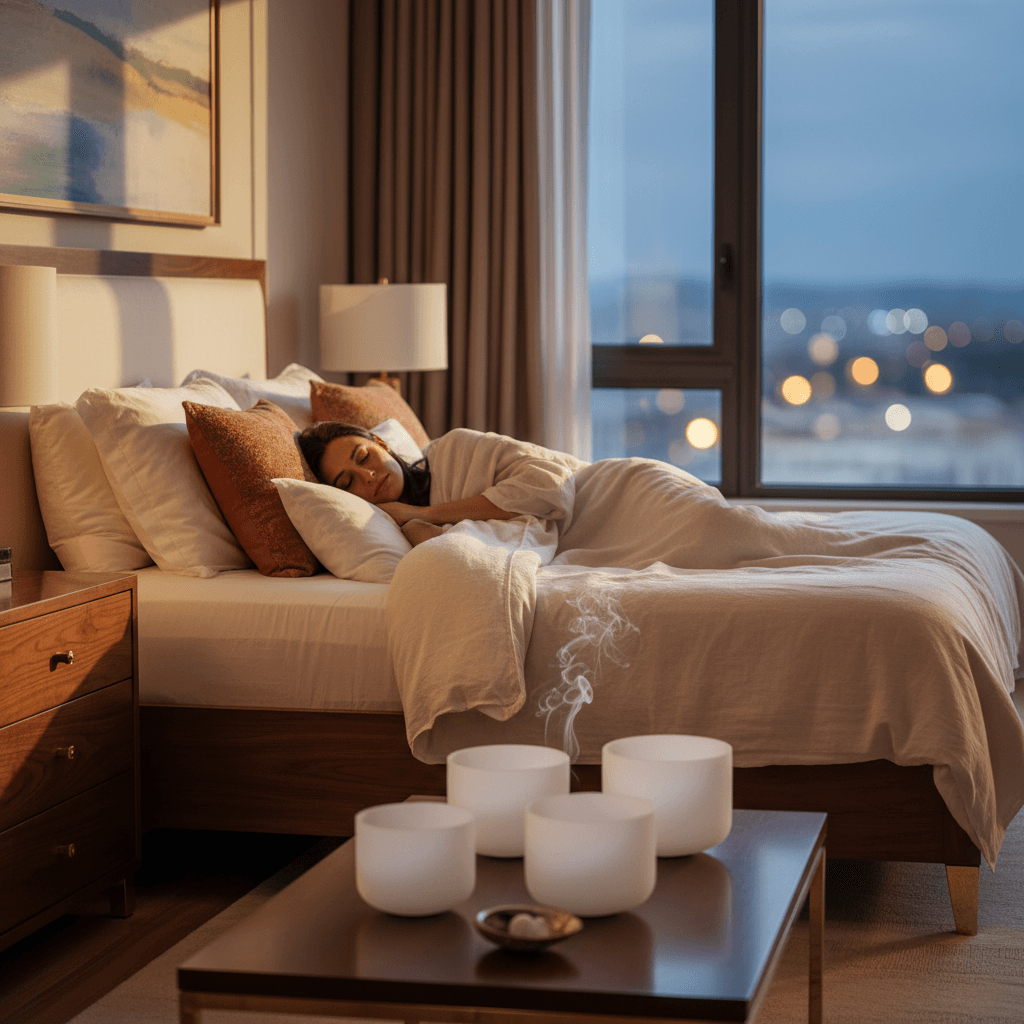
K-Complexes & Sound: Elevating Deep Sleep & Memory Continuity
Key Insights
Discover how K-complexes, vital for deep sleep and memory, can be supported by sound. Learn Soul Art's approach to enhance sleep continuity.
Compelling Introduction
Imagine a world where your sleep isn't just a passive state but an active, intelligent process, constantly working to protect your rest and consolidate your memories. Deep within the architecture of our slumber lies a fascinating brainwave phenomenon known as the K-complex. These powerful, transient electrical events are far more than mere blips on an EEG; they are crucial gatekeepers of sleep continuity and architects of our cognitive function.
At Soul Art, Dubai's premier sound wellness studio founded by Larissa Steinbach, we delve into the intricate relationship between sound and these profound brain activities. This article will unravel the scientific marvel of K-complexes, explore their pivotal role in safeguarding your sleep and sharpening your mind, and reveal how precisely calibrated sound environments may support their beneficial effects. Prepare to discover how intentional sound can elevate your deep sleep and empower your daytime clarity, offering a holistic pathway to enhanced well-being.
The Science Explained
Our sleep is a symphony of complex brain activities, each playing a unique role in our physical and mental restoration. Among these, the K-complex stands out as a particularly intriguing and vital component of Non-Rapid Eye Movement (NREM) sleep, especially during Stage 2 sleep. Understanding these profound brainwaves is key to appreciating the subtle yet powerful impact of targeted sound on our sleep quality and cognitive function.
The K-Complex: Guardians of Sleep Stability
K-complexes are distinctive, high-amplitude, biphasic (negative-positive) waveforms that appear in the electroencephalogram (EEG) during NREM sleep. They are characterized by a sudden, sharp deflection followed by a slower wave, typically lasting for about half a second. These powerful brain events can occur spontaneously or be evoked by external stimuli, such as a subtle sound.
Research consistently points to K-complexes as a primary sleep-protecting mechanism. They act like internal guardians, actively suppressing external stimuli that might otherwise wake us up, thus helping to deepen our sleeping state. This essential function allows the brain to maintain continuous rest, even in the presence of minor disturbances, fostering an environment conducive to deeper restorative processes.
K-Complexes and Memory Consolidation
Beyond their role in sleep protection, K-complexes are also deeply intertwined with memory consolidation, particularly for verbal declarative memory. Recent studies, including those using sophisticated Phase-Targeted Auditory Stimulation (PTAS), have provided compelling evidence for this connection. By carefully timing auditory stimuli to specific phases of slow brain waves during sleep, researchers can evoke K-complex-like responses.
One groundbreaking study highlighted a causal relationship between these evoked K-complex-like responses and a significant improvement in verbal memory performance among healthy adults. This suggests that K-complexes, especially when paired with nested sleep spindles, may orchestrate a crucial "hippocampal-neocortical dialogue," a process vital for transferring new memories from temporary storage to long-term memory. While this specific brain activity may not universally enhance all types of memory or alertness, its targeted positive impact on verbal declarative memory consolidation is a significant finding for cognitive wellness.
Selective Sensory Gating During Sleep
A fascinating aspect of K-complexes is their role in selective sensory processing during sleep. The sleeping brain isn't entirely "off"; it continually evaluates sounds in the environment. K-complexes appear to play a key role in modulating this processing, allowing the brain to discern between relevant and irrelevant stimuli.
For example, studies have shown that when auditory stimuli evoke K-complexes, the brain exhibits larger evoked potentials and more synchronized responses, particularly to unfamiliar or potentially significant sounds. This "sentinel processing mode" enables the brain to engage in vital internal processes while still maintaining a degree of awareness to external information, striking a delicate balance between deep rest and environmental vigilance. This mechanism underscores the brain's innate intelligence in preserving sleep while remaining subtly responsive to its surroundings.
The Synergy with Sleep Spindles
K-complexes often appear in conjunction with sleep spindles, which are bursts of brain activity (around 12-16 Hz) also observed during NREM sleep. This synchronicity is not coincidental. Sleep spindles, when "nested within the up-phase of the underlying slow wave" associated with K-complexes, are thought to be a plausible mechanism through which memory consolidation is enhanced.
This intricate dance between K-complexes and sleep spindles creates a powerful neurophysiological environment for learning and memory. The combined action of these graphoelements helps to reinforce new connections and stabilize neural circuits. Therefore, fostering the healthy occurrence of K-complexes can indirectly support the beneficial effects of sleep spindles on cognitive function, further highlighting their critical role in our overall brain health during sleep.
How It Works in Practice
Translating the intricate science of K-complexes into tangible well-being experiences is at the heart of sound wellness. At Soul Art, we understand that while a quiet environment is generally conducive to sleep, intelligently designed auditory landscapes can paradoxically enhance sleep continuity and cognitive function. This involves leveraging the brain's natural responsiveness to sound to encourage the very brainwave patterns we've discussed.
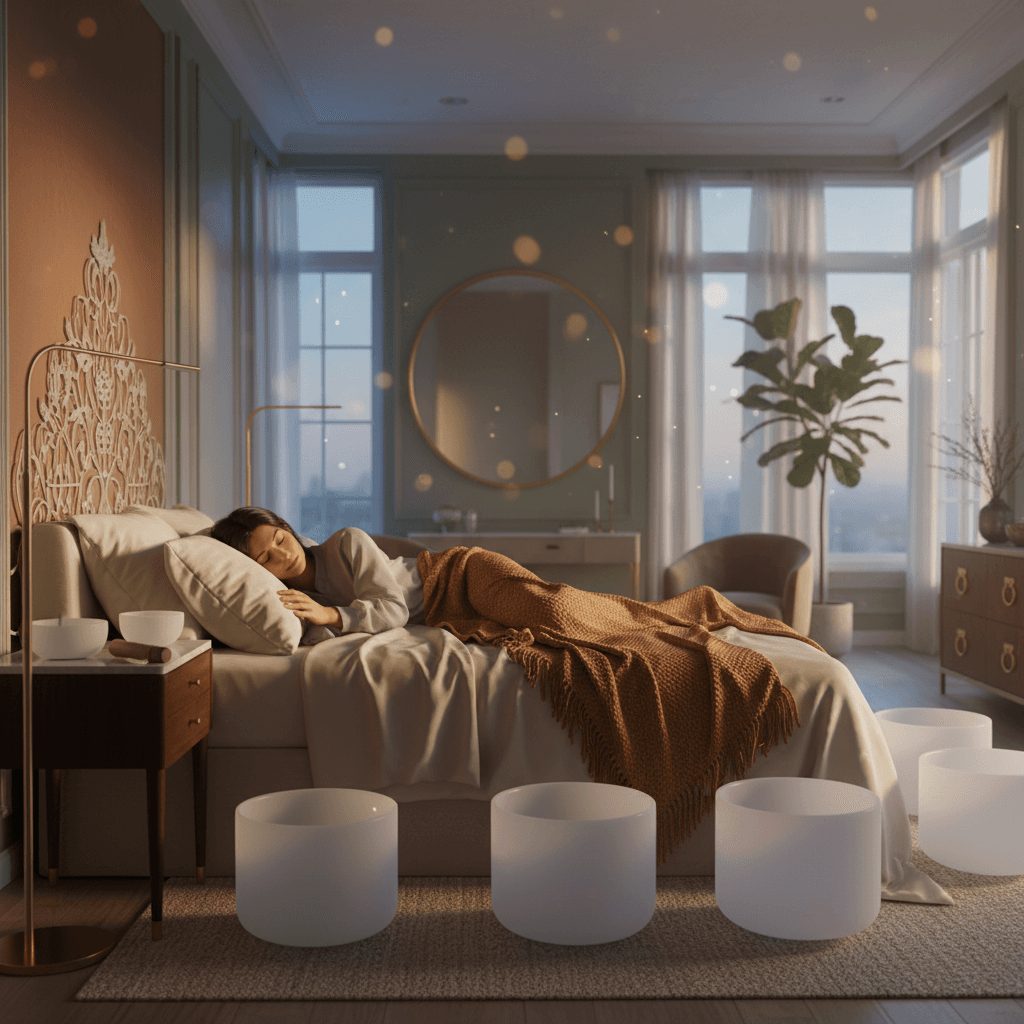
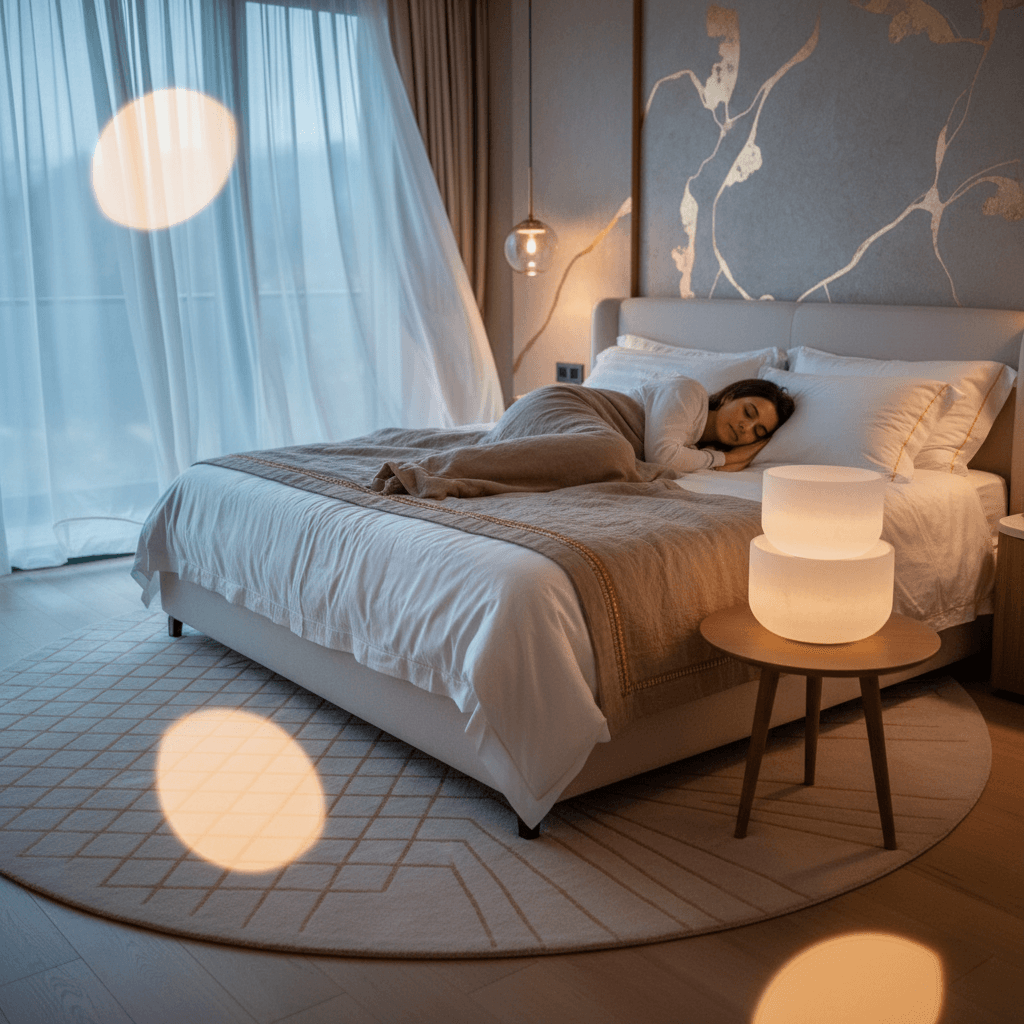
Through the careful application of sound, we aim to facilitate the brain's natural mechanisms for sleep protection and memory consolidation. Imagine lying in a peaceful space, enveloped by gentle, resonant tones that are specifically chosen for their ability to subtly interact with your brain's natural rhythms. These aren't just pleasant sounds; they are potential cues for your brain to produce those vital K-complexes, guiding you into deeper, more stable stages of sleep.
The experience is profoundly immersive. Clients often report a sense of being deeply held and safe, allowing their minds to truly surrender and disengage from external stressors. This intentional sensory gating, potentially mediated by evoked K-complexes, means that while your ears perceive the soothing sounds, your brain is simultaneously activating its sleep-protective mechanisms. It's like having a gentle, internal alarm system that doesn't wake you but rather deepens your rest in response to carefully structured auditory input.
This approach is particularly beneficial in today's bustling urban environments, like Dubai, where complete silence can be a luxury. Instead of trying to block out all noise, we explore how specific sound frequencies and compositions, expertly delivered, can become allies in your quest for restorative sleep. The sounds become a bridge, guiding your brain to a state where it can effectively consolidate memories and fortify sleep stability, contributing to a feeling of profound restfulness and mental clarity upon waking.
The Soul Art Approach
Larissa Steinbach, the visionary founder of Soul Art, has cultivated a unique and sophisticated approach to sound wellness that harmonizes scientific understanding with intuitive artistry. Her method is not about simply playing background music; it is a meticulously crafted experience designed to interact dynamically with your brain's natural sleep architecture, particularly focusing on the subtle evocation of K-complexes.
At Soul Art, every sound session is an intentional journey. Larissa Steinbach carefully selects instruments known for their pure, resonant frequencies, such as Himalayan singing bowls, crystal bowls, gongs, and chimes. These instruments produce complex overtones and sustained vibrations that may create an ideal environment for the brain to transition into the deeper stages of NREM sleep. The specific rhythms and tonal qualities are curated to resonate with the delta and theta brainwave states associated with deep sleep and K-complex activity.
The Soul Art method acknowledges that each individual's sleep patterns and brain responses are unique. Therefore, sessions are designed to be responsive, creating a serene space where the brain feels safe to relax and engage its intrinsic protective and restorative mechanisms. Larissa's expertise lies in understanding how to "present auditory stimuli locked to the ongoing phase of slow waves," much like the advanced PTAS techniques discussed in research. This precise timing, even when not measured by EEG in a studio setting, is an underlying principle guiding the acoustic arrangements.
Ultimately, Soul Art offers a holistic wellness practice that transcends mere relaxation. It's about empowering your body's innate ability to achieve profound rest and cognitive renewal. By creating a sound environment that subtly encourages the presence of K-complexes and sleep spindles, Larissa Steinbach helps clients experience not just better sleep, but a heightened sense of mental clarity, emotional balance, and overall vitality, embodying the essence of "quiet luxury" in wellness.
"The subtle art of sound, when precisely tuned, doesn't just soothe the senses; it speaks directly to the brain's deepest needs for rest and repair, awakening an innate intelligence for well-being."
Your Next Steps
Embracing the potential of K-complexes and sound for better sleep and sharper memory is an accessible journey. Here are some practical steps you can take today to integrate these insights into your wellness routine:
- Cultivate a Restful Environment: Prioritize a dark, cool, and quiet bedroom. Minimize exposure to blue light from screens before bedtime to signal to your brain that it's time to wind down.
- Explore Mindful Soundscapes: Experiment with ambient sounds specifically designed for sleep. Look for tracks that feature consistent, low-frequency tones or nature sounds known to be calming. Be mindful of individual preferences; what works for one person might not for another.
- Establish a Consistent Sleep Schedule: Going to bed and waking up at the same time each day, even on weekends, helps regulate your body's natural circadian rhythm. This consistency can enhance your brain's ability to enter and maintain deep sleep cycles, where K-complexes thrive.
- Consider Professional Guidance: For a truly immersive and expertly guided experience, explore sound wellness sessions. Soul Art, founded by Larissa Steinbach, offers tailored experiences designed to support deep relaxation and optimal brainwave states.
- Practice Mindful Wind-Downs: Incorporate a relaxing ritual before sleep, such as gentle stretching, reading a physical book, or a short meditation. These practices help quiet the mind and prepare your brain for the restorative work of sleep.
Soul Art is still in preparation. Session details and booking will be published here after launch.
Bookings Coming Soon
Soul Art is still in preparation. Session details and booking will be published here after launch.
Coming Soon
In Summary
K-complexes are extraordinary brainwave events, acting as silent guardians of our sleep stability and powerful facilitators of memory consolidation, particularly for verbal declarative memory. These crucial components of NREM sleep selectively gate sensory input, allowing our brains to focus on internal restorative processes while maintaining a subtle awareness of the environment. Scientific research increasingly highlights how precisely targeted auditory stimulation may support the natural evocation of these beneficial brain patterns.
At Soul Art, Larissa Steinbach leverages this understanding, crafting sophisticated sound environments that encourage deep relaxation and optimal sleep architecture. By supporting the brain's natural ability to produce K-complexes, Soul Art aims to enhance sleep continuity, sharpen cognitive function, and foster a profound sense of holistic well-being. Embrace the subtle power of sound to unlock deeper, more restorative sleep and elevate your daily clarity.
Related Articles
Fan Noise and Sleep: Unmasking the Science Behind White Noise Machines for Deeper Rest
Polyphasic Sleep & Sound Healing: Navigating Restorative Rhythms
REM Rebound: Mastering the Art of Recovering Lost Dream Sleep