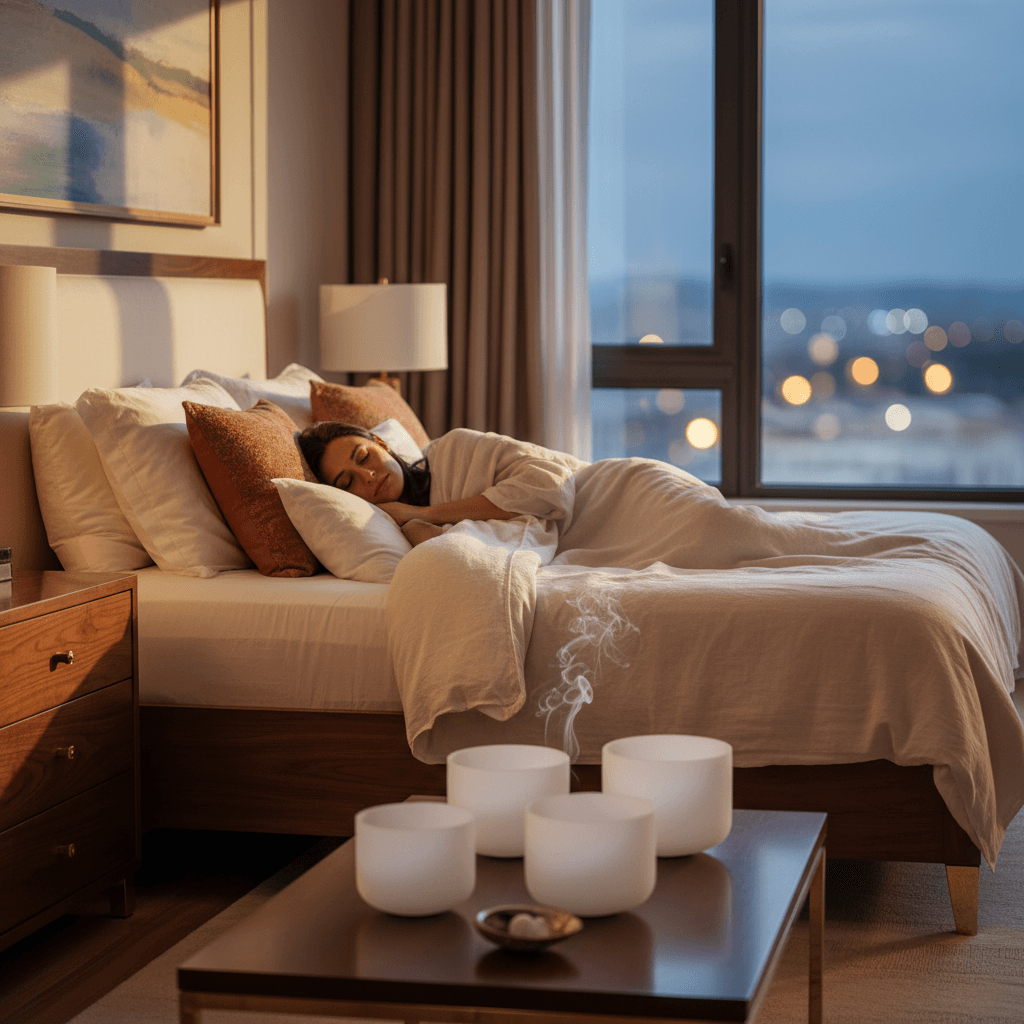
Unlock Dream Recall: Harnessing Theta Frequencies for Deeper Insight

Key Insights
Explore how theta brainwave frequencies can enhance dream recall, deepen emotional processing, and foster self-awareness at Soul Art Dubai with Larissa Steinbach.
Have you ever awakened from a vivid dream, only for its intricate details to dissolve like mist the moment you try to grasp them? The elusive nature of dream recall is a universal experience, often leaving us wondering about the profound messages and insights that may lie just beyond our conscious reach. What if there was a way to gently encourage your mind to retain these nocturnal narratives, bridging the gap between your sleeping and waking worlds?
At Soul Art, Dubai's premier sound wellness studio, we explore the fascinating intersection of neuroscience and holistic well-being. This article delves into the captivating role of theta brainwave frequencies in enhancing dream recall, offering a scientifically grounded perspective on how specific soundscapes may support deeper introspection and emotional understanding. Join Larissa Steinbach and our team as we uncover the secrets within your sleep architecture.
The Intricate Dance of Sleep and Memory
Our nights are far more than mere periods of unconsciousness; they are dynamic landscapes where the brain actively processes, consolidates, and integrates our daily experiences. Sleep, particularly Rapid Eye Movement (REM) sleep, is a critical phase for mental and emotional restoration. Within this complex nocturnal symphony, specific brainwave frequencies play pivotal roles, orchestrating the delicate balance between rest and profound cognitive activity.
Understanding Dream Recall as Memory
Dream recall (DR) upon awakening is increasingly viewed by researchers as a unique form of declarative memory, akin to recollecting specific events or experiences. More precisely, it is often categorized as a special instance of episodic memory, involving the conscious recollection of personal events and their associated contexts. This perspective suggests that the ability to remember our dreams is not just a whimsical occurrence but a measurable cognitive function influenced by specific neural activities.
Polysomnography (PSG) combined with provoked awakenings stands as the gold standard method for studying DR in a controlled scientific setting. Early 21st-century research using EEG activity preceding dream recall began to identify distinctive patterns predictive of dream experience. Convergent findings repeatedly highlight a strong relationship between frontal theta oscillations (5–7 Hz) and successful dream recall, especially when awakening from REM sleep. Furthermore, this frontal theta activity during REM sleep has been shown to predict the retention of recent waking-life events, underscoring its dual role in both internal narrative and external memory consolidation. The medial prefrontal cortex (mPFC), a brain region crucial for executive functions and emotional regulation, appears significantly involved in both dream production and their subsequent recall, with frontal EEG theta power acting as an expression of its oneiric activity.
Theta Frequencies: The Brain's Dream Weaver
Theta waves, operating in the frequency range of 4–8 Hz, are a fascinating and somewhat enigmatic component of our brain activity. They are slower than alpha or gamma waves but faster than delta waves, embodying a unique "twilight state" often experienced fleetingly as we drift into and out of sleep. This dreamlike state is frequently associated with vivid imagery, deep relaxation, and profound meditative tranquility. Many describe theta as the gateway to the subconscious mind, a bridge to our inner world.
Physiological evidence strongly supports a critical role for hippocampal theta activity in the formation of novel memories during wakefulness. Studies involving brain slices have demonstrated that specific electrical pulses induce long-term potentiation (LTP)—a strengthening of synaptic connections crucial for learning—only when delivered at the peak of carbachol-induced theta activity. Conversely, pulses delivered at other phases resulted in long-term depression, illustrating the precise timing and phase-dependence of theta in memory encoding. This intricate dance between theta waves and synaptic plasticity underscores their fundamental role in how our brains create and retain new information, a process directly relevant to remembering dreams.
In human studies, EEG-based research has shown that right prefrontal REM sleep theta (4–7 Hz) power during an afternoon nap significantly predicted superior post-nap recognition of emotionally negative versus neutral images. This suggests a direct link between theta activity during REM sleep and the preferential consolidation of emotionally charged memories. The therapeutic benefits associated with theta states are largely attributed to their ability to activate specific brain areas responsible for regulating mood, memory recall, and cognitive function, ultimately promoting overall well-being through enhanced self-awareness and introspection.
REM Sleep, Emotion, and Memory Consolidation
REM sleep has long been implicated in the consolidation of emotional memories and the processing of affective stimuli. Neuroimaging studies reveal increased neural activation in affective brain networks during REM sleep, pointing to its active role in emotional processing. Research suggests that REM sleep may enhance the consolidation of memories with a negative valence, indicating its importance in how we come to terms with emotionally challenging experiences.
The intricate interplay between brain regions during REM sleep also offers clues to its role in emotional processing. For instance, enhanced activity and synchronization between the hippocampus (HC) and the amygdala (a key emotional processing center) occur at theta frequencies during REM sleep. This synchronized activity at theta frequencies has been directly associated with fear memory retrieval and the retention of fear responses, particularly involving synchronized firing between the basal lateral amygdala (BLA) and the medial prefrontal cortex (mPFC), as well as the BLA and HC. This highlights theta's critical involvement in the brain's complex mechanisms for dealing with trauma and fostering resilience.
Increased electroencephalogram spectral power in the theta frequency range (4–8 Hz) during REM sleep is understood to index this vital emotional memory consolidation activity. While the effect of REM sleep on emotional reactivity can yield mixed results, with some studies showing facilitation and others suggesting exacerbation of arousal, the role of dream mood in this process is compelling. Dreams rated as less negative, for example, have been found to lead to decreased valence ratings to negative stimuli the next morning. This suggests that the quality and content of our dreams, alongside the underlying theta activity, may significantly influence our emotional processing and adaptation, making dream recall a powerful tool for self-understanding and emotional regulation.
"To consciously remember a dream is to bring a piece of the subconscious narrative into the light of awareness, transforming fleeting impressions into valuable insights for personal growth and emotional resilience."
How It Works in Practice
Translating complex neuroscience into tangible well-being practices is at the heart of what we do at Soul Art. The research surrounding theta frequencies and dream recall provides a powerful framework for understanding how sound wellness can serve as a supportive tool. By intentionally guiding the brain into theta states, we create an environment conducive to accessing the deeper recesses of the mind where dreams are formed and processed.
One of the most effective non-invasive methods for encouraging the brain to produce more theta waves is through brainwave entrainment, often facilitated by binaural beats. Studies have shown that listening to binaural beats, particularly those engineered to create a 6 Hz frequency difference (within the theta domain), can effectively induce theta activity in the brain. This gentle auditory stimulation encourages your brainwaves to synchronize with the external frequency, subtly shifting your mental state.
When you experience a sound journey designed to promote theta brainwave activity, you are invited into a state of profound relaxation. Imagine lying comfortably, enveloped in a rich tapestry of sound that resonates through every cell of your body. The carefully composed soundscapes, often incorporating precise frequencies, guide your mind away from the chatter of the waking world. You may feel a sensation of drifting, a lightness as your conscious mind begins to soften its grip, allowing the subconscious to emerge more freely.
Clients often describe entering a "twilight state" during these sessions – a peaceful hypnagogic experience filled with vivid imagery, creative insights, and a profound sense of inner calm. It's during this unique window that the brain may become more receptive to encoding and retaining the nuances of dreams. While not a guarantee, many people report an increased incidence of dream recall and a greater clarity of their dream narratives after engaging in consistent theta-focused sound wellness practices. This practice supports enhanced memory function not just for dreams, but also for emotional processing, offering a holistic benefit to your cognitive and emotional landscape.
The Soul Art Approach
At Soul Art, Larissa Steinbach champions a holistic approach to well-being, deeply rooted in both scientific understanding and ancient wisdom. Our method is meticulously crafted to create an optimal environment for brainwave entrainment, particularly focusing on the therapeutic potential of theta frequencies. We understand that true well-being comes from a harmonious connection between mind, body, and spirit, and sound serves as a powerful conduit for this integration.
What makes the Soul Art method unique is its intentionality and personalized curation. Larissa and her team do not simply play sounds; they craft immersive sound journeys designed to guide you safely and effectively into desired states of consciousness. This involves a profound understanding of acoustics, neurobiology, and the energetic properties of sound. Our sessions are more than just listening; they are an invitation to deeply experience your inner landscape, facilitated by the resonant power of instruments.
We utilize a diverse array of instruments, each selected for its specific tonal qualities and energetic resonance. The ethereal tones of crystal singing bowls, with their pure, sustained vibrations, gently wash over you, encouraging deep relaxation. The profound resonance of gongs creates a full-body experience, often leading to a sense of release and renewal. Delicate chimes and other instruments are strategically integrated to build precise soundscapes that promote specific brainwave states, including the coveted theta frequency. Our expert practitioners, trained in the art and science of sound, orchestrate these elements to create a powerful, transformative experience tailored to support your journey of self-discovery and enhanced dream recall.
By intentionally immersing yourself in these carefully composed sound environments, you are not merely relaxing; you are actively engaging your brain's natural capacity for self-regulation. The Soul Art approach helps to quiet the external noise, allowing you to access the insights and creativity that reside within your subconscious. This complementary approach to wellness empowers you to cultivate a deeper relationship with your dreams, enhancing emotional intelligence and fostering a greater sense of inner harmony.
Your Next Steps
Embracing the potential of enhanced dream recall is a journey of self-discovery that extends beyond our sound wellness studio. Integrating simple yet powerful practices into your daily routine can significantly amplify the benefits of theta frequency sessions. Here are a few actionable steps you can take to cultivate a richer dream life and foster deeper introspection:
- Start a Dream Journal: Keep a notebook and pen by your bedside. Upon waking, before engaging with your day, immediately jot down any fragments, images, or feelings you remember from your dreams. The act of writing helps to solidify the memories.
- Establish a Consistent Sleep Routine: Go to bed and wake up at roughly the same time each day, even on weekends. A regular sleep-wake cycle optimizes your natural sleep architecture, including REM sleep, where most vivid dreaming occurs.
- Create a Calming Bedtime Ritual: Dedicate the hour before sleep to winding down. This might include gentle stretching, reading a physical book, or meditating. Avoid bright screens (phones, tablets, TVs) which can disrupt melatonin production.
- Reduce Evening Stimulants: Limit caffeine and alcohol intake, especially in the hours leading up to bedtime. These substances can interfere with sleep quality and suppress REM sleep, impacting dream recall.
- Explore Sound Wellness: Consider experiencing a theta-focused sound journey at Soul Art. These sessions may support your brain in naturally accessing the frequencies associated with deep relaxation and enhanced dream processing, complementing your at-home practices.
By thoughtfully integrating these practices, you can create a fertile ground for remembering and understanding your dreams more profoundly. This holistic self-care approach can deepen your connection to your subconscious wisdom, offering a unique path to emotional intelligence and personal growth.
In Summary
The elusive yet profound world of dreams holds immense potential for self-understanding and emotional insight. Scientific evidence increasingly points to the critical role of theta brainwave frequencies, particularly during REM sleep, in facilitating dream recall and the consolidation of emotional memories. This intricate neural activity, involving key brain regions like the hippocampus, amygdala, and medial prefrontal cortex, underscores the physiological basis for our nocturnal narratives and their impact on our waking lives.
At Soul Art, Larissa Steinbach and her team harness this scientific understanding through curated sound wellness experiences. By utilizing specific soundscapes and instruments to gently guide the brain into theta states, we offer a complementary approach to deepen your connection with your subconscious. This practice may support enhanced dream recall, fostering greater emotional processing and paving the way for profound self-discovery. We invite you to explore this transformative journey, unlocking the wisdom within your dreams for a more balanced and insightful life.
Bookings Coming Soon
Soul Art is still in preparation. Session details and booking will be published here after launch.
Coming Soon
Wellness Disclaimer: This article is for educational and informational purposes only. It does not constitute medical advice, diagnosis, or treatment. Soul Art Dubai provides non-medical wellness experiences focused on relaxation, stress management, and general wellbeing. Sound wellness is a complementary practice and should not replace professional medical care.
Related Articles
Fan Noise and Sleep: Unmasking the Science Behind White Noise Machines for Deeper Rest
Polyphasic Sleep & Sound Healing: Navigating Restorative Rhythms
REM Rebound: Mastering the Art of Recovering Lost Dream Sleep