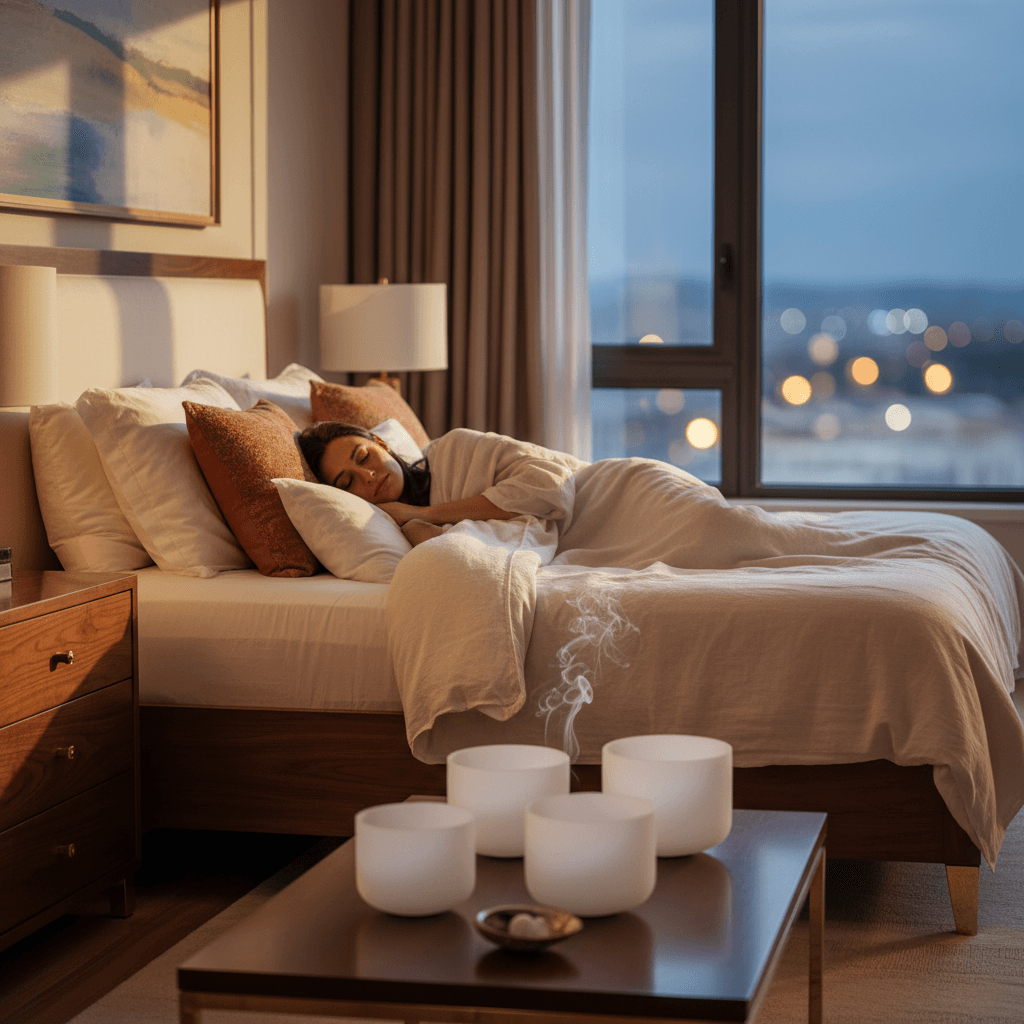
Unlocking the Mind's Canvas: How Dreams Fuel Creativity and Innovation
Key Insights
Discover the scientific link between sleep, dreams, and creativity. Learn how N1 sleep unlocks innovation, and explore Soul Art's unique approach to harnessing dream-fueled insights for enhanced well-being.
Have you ever wondered what the structure of benzene, the initial spark for Google, or even the terrifying genesis of Frankenstein's monster all have in common? Anecdotal reports suggest these iconic breakthroughs in science, technology, and literature were all inspired by the elusive realm of dreams. This profound connection between our sleeping minds and waking innovation is a fascinating frontier in both neuroscience and holistic wellness.
For decades, scientists have speculated about the incredible link between dreaming and surges of creative inspiration. While early theories often pointed to the vivid narratives of REM (Rapid Eye Movement) sleep, exciting new evidence is shifting the spotlight to an earlier, often overlooked, phase of sleep. This "twilight zone" between wakefulness and slumber is now recognized as a potent incubator for novel ideas and insights.
Understanding this vital connection can empower you to tap into an innate wellspring of creativity, problem-solving, and self-discovery. At Soul Art, we believe that nurturing these natural sleep states is a powerful self-care practice, supporting not only your creative output but also your overall mental and emotional wellbeing. Let us delve into the science behind how dreams fuel innovation and explore how you might harness this extraordinary potential.
The Neuroscience of Nocturnal Inspiration
The relationship between sleep, dreams, and creativity is a complex tapestry woven by our unconscious mind. Recent scientific advancements are now providing clearer insights into which specific sleep stages are most conducive to fostering groundbreaking ideas. This evolving understanding challenges long-held beliefs and offers exciting new avenues for enhancing our creative capacities.
Debunking Old Theories: Beyond REM Sleep
For many years, the scientific community primarily linked creative insights and problem-solving to REM sleep. This stage, characterized by vivid dreams and heightened brain activity, was thought to be the brain's workshop for consolidating memories and forming novel associations. Studies, for example, have shown improvements in anagram problem-solving following REM sleep, and semantic priming tasks indicating a hyperassociative state.
These findings suggested that REM sleep facilitated the kind of flexible, divergent thinking often associated with creativity. However, the exact mechanism linking dream content in REM directly to creative performance remained somewhat elusive in experimental settings. While REM undeniably plays a crucial role in cognitive functions, current research is highlighting another powerful, yet often briefer, sleep stage as a significant player in the creative process.
The Creative Sweet Spot: N1 Sleep Onset (Hypnagogia)
A groundbreaking study published in Scientific Reports and further explored by researchers at MIT and Harvard Medical School, has brought a much earlier sleep phase into sharp focus: N1, or sleep onset. This is the liminal state, the "twilight zone," where you are drifting between full wakefulness and deeper sleep, often experiencing fragmented, spontaneous, and sometimes bizarre imagery and sensations. This transient state is also known as hypnagogia.
Remarkably, this research suggests that spending as little as 15 seconds in N1 sleep may significantly enhance a person's ability to achieve creative insight. Participants who entered this state were found to score higher on various measures of creativity compared to those who remained awake for the same duration. The study's implications are profound, suggesting that our earliest forays into sleep are uniquely fertile ground for novel ideas.
Historically, renowned figures like inventor Thomas Edison and surrealist painter Salvador Dali intuitively understood the power of this sleep onset state. Edison famously held a steel ball, allowing it to drop and wake him just as he drifted off, ensuring he captured the fleeting thoughts from his hypnagogic state. Dali, too, employed a similar technique with a key and a plate. These anecdotal accounts now find compelling scientific backing, illustrating how this specific window of consciousness can act as a catalyst for innovation.
The N1 state is believed to be a "creative sweet spot" because the brain begins to make wide-ranging, unconstrained connections between disparate concepts. Unlike the more structured thinking of wakefulness or the deeper processing of later sleep stages, N1 allows for a more free-associative and playful exploration of ideas. This less inhibited neural environment may foster the unique cognitive flexibility necessary for creative breakthroughs, allowing the mind to wander and connect information in novel ways.
Targeted Dream Incubation (TDI): Guiding the Creative Mind
Further enhancing our understanding, recent studies have shown that it's not just being in the N1 sleep state that boosts creativity, but specifically the dreams experienced during this phase. This insight has led to the exploration of "Targeted Dream Incubation" (TDI), a method where individuals are prompted to dream about a specific topic during sleep onset. Researchers have demonstrated that those who received such prompting generated more creative stories and tasks related to the incubated topic.
The findings from MIT and Harvard Medical School suggest that when the brain is gently guided to focus on a particular problem or theme, the dream content generated in N1 can be directly integrated into subsequent creative tasks. Participants who had a higher number of dreams about their prompted topic also exhibited greater creativity and incorporated elements from their dreams into their solutions. This indicates that dream content itself is an active ingredient, not merely a byproduct of the creative N1 state.
Beyond N1, some research also explores the potential for dream incubation in later sleep stages. A study from Northwestern University, for instance, showed it's possible to influence dreams during REM sleep using subtle sound cues, reactivating memories related to unsolved problems. Participants who dreamed about cued puzzles solved them more often the next day. This further supports the broader concept that sleep, and especially dream states, can be actively harnessed for problem-solving.
The underlying neurobiology likely involves the activation of the brain's dopaminergic system during sleep, which is closely linked to creativity, associative thinking, and divergent problem-solving. This fascinating interplay of brain states and directed focus offers compelling evidence that our dreams are far more than just random neural firings; they are a dynamic resource waiting to be consciously engaged for personal and professional growth.
How It Works in Practice
Translating these scientific findings into daily life involves cultivating an intentional approach to your pre-sleep routine and an openness to your dream experiences. This is not about forcing creativity, but rather about creating optimal conditions for your natural inventive capacities to flourish. Many people report that by simply paying attention, they unlock new pathways of thought.
The experience of drifting into N1 sleep, also known as hypnagogia, is uniquely profound. It is a state of deep relaxation where thoughts may become fluid, images appear spontaneously, and novel connections seem to form effortlessly. You might feel a gentle lightness, a sense of detachment from waking concerns, as your mind begins its journey into the unconscious. This is where the magic of creative ideation often begins, a realm where logic softens and imagination takes the lead.
To leverage this state, the practice begins even before your head hits the pillow. Setting a clear intention or focusing on a specific problem you wish to solve can act as a gentle "prompt" for your dreaming mind. This might involve reflecting on a challenge at work, contemplating a creative project, or simply asking a question to your inner self. The goal is to seed your unconscious with a clear direction, preparing it for its nocturnal work.
As you begin to nod off, maintain a curious and open awareness. Pay attention to the fleeting thoughts, images, and sensations that emerge. These early dream fragments, often described as "fleeting, involuntary, spontaneous, perceptual, and bizarre," are the raw material for creative insights. While they may not always make immediate sense, they hold potential clues or novel perspectives that your waking mind might overlook.
Capturing these ephemeral experiences is crucial. Keeping a dream journal by your bedside is an excellent practice. Upon waking, especially from short naps or after first falling asleep, immediately jot down any images, feelings, words, or concepts that come to mind, no matter how nonsensical they may seem. Many people report that the act of writing helps to solidify these fragile memories before they dissipate.
"Our nighttime visions can sometimes make a leap that waking consciousness cannot. They offer a unique lens, often unburdened by the constraints and assumptions of our daily thought patterns."
Integrating these dream-inspired elements into your waking life is the final, powerful step. Reflect on what you’ve recorded. How might these symbols, ideas, or unexpected associations relate to your challenges or creative pursuits? This process of conscious reflection and interpretation can help you bridge the gap between your unconscious wisdom and your conscious actions. It's a holistic wellness practice that fosters a deeper connection with your inner self and naturally enhances your problem-solving abilities.
This approach is not about finding immediate, perfect solutions every time. Instead, it's a complementary self-care practice that trains your mind to be more receptive to novel ideas and unconventional perspectives. By consistently engaging with your dreams, you may develop a richer internal landscape, supporting greater resilience, adaptability, and an enhanced capacity for innovation in all areas of your life.
The Soul Art Approach
At Soul Art, founded by Larissa Steinbach, we understand the profound connection between deep relaxation, altered states of consciousness, and enhanced creativity. Our unique sound wellness experiences are meticulously designed to create an environment where clients can gently transition into states of profound calm, including the highly creative N1 sleep onset phase. We harness the ancient wisdom of sound, combined with contemporary understanding of brainwave states, to facilitate a journey into your inner landscape.
Larissa Steinbach's method at Soul Art is rooted in the belief that true innovation and self-discovery emerge when the nervous system is deeply at rest. Our sessions are not merely about relaxation; they are an invitation to explore the quieter, often unheard, aspects of your mind. We aim to support the natural processes of your brain, making it easier for you to access those states most conducive to creative thinking and insightful dreaming.
Central to the Soul Art experience are our carefully selected instruments, each chosen for its specific energetic and sonic qualities. Clients are enveloped in the rich, resonant vibrations of Himalayan singing bowls, crystal singing bowls, gongs, and chimes. These instruments produce complex overtone series that may gently guide brainwave frequencies from beta (alert wakefulness) to alpha (relaxed wakefulness) and then theta (deep relaxation, often associated with creativity and the hypnagogic state).
Larissa customizes each session, often incorporating guided meditation and breathwork techniques to deepen the client's relaxation and focus. By intentionally slowing down the breath and calming the mind, we help prepare the brain for the unique cognitive activity that occurs during N1 sleep. This targeted approach supports the mind in moving towards that "creative sweet spot" where spontaneous and novel ideas can emerge without the usual constraints of conscious thought.
The unique aspect of the Soul Art method lies in its ability to create a safe, supportive, and serene space – a truly "quiet luxury" experience – where clients can explore their inner world without judgment or expectation. The immersive soundscapes act as a non-invasive form of targeted dream incubation, setting a subtle energetic intention for openness and receptivity. This may help to gently direct the mind towards creative exploration, even if the client does not consciously "prompt" a specific dream topic.
Many people report that after a Soul Art session, they experience not only profound relaxation but also heightened clarity, increased inspiration, and a renewed sense of purpose. Larissa Steinbach designs these experiences as a holistic wellness practice, fostering an environment where clients can naturally tap into their intrinsic creativity and unlock deeper levels of personal insight, allowing their dreams to truly fuel their innovation.
Your Next Steps
Embracing the power of your dreams for creative inspiration is an enriching journey that you can begin today. By integrating mindful practices into your daily and nightly routines, you may cultivate a stronger connection to your inner muse and unlock surprising insights. These simple, actionable steps are designed to be complementary wellness practices, supporting your overall wellbeing and creative flow.
Here are a few practical steps you can implement to start harnessing your dreams for innovation:
- Set a Clear Intention Before Sleep: Before you fall asleep, spend a few minutes quietly reflecting on a specific problem, question, or creative project. Mentally "ask" your dreams for guidance or inspiration on this topic. This gentle intention-setting aligns with the principles of targeted dream incubation, potentially priming your subconscious mind.
- Keep a Dream Journal Handy: Place a notebook and pen right beside your bed. Upon waking, especially after a nap or during the night, immediately jot down any dream fragments, images, feelings, or ideas that come to mind. These early reports, even if fleeting, can be invaluable for later reflection and interpretation, helping you capture those hypnagogic insights.
- Cultivate a Calming Pre-Sleep Routine: Create a serene environment in your bedroom and engage in relaxing activities before bed. This could include gentle stretching, reading a physical book, or listening to soothing music. Reducing screen time and stress before sleep helps to prepare your mind and body for the relaxed states conducive to creative dreaming.
- Experiment with "Creative Naps": Inspired by Edison and Dali, consider taking a short, intentional nap when you feel a creative block or need a new perspective. Aim for a duration that allows you to just enter the N1 sleep onset stage, typically 15-30 minutes, without falling into deep sleep. Set an alarm to ensure you awaken from this fertile state.
- Explore Sound Wellness for Deeper Relaxation: Integrate sound baths or meditation into your self-care routine. The harmonious frequencies produced by instruments like those used at Soul Art may help to guide your brainwaves into the alpha and theta states, fostering profound relaxation and making your mind more receptive to creative insights.
By consistently engaging with these self-care practices, you may discover a powerful, natural pathway to enhanced creativity and problem-solving. These approaches are designed to complement your existing wellness regimen, supporting a more vibrant and inspired life.
Bookings Coming Soon
Soul Art is still in preparation. Session details and booking will be published here after launch.
Coming Soon
In Summary
The scientific evidence increasingly highlights the profound connection between sleep, dreams, and our innate capacity for creativity and innovation. Far from being mere nocturnal fantasies, dreams, especially those experienced during the early N1 sleep onset phase, serve as a potent wellspring of new ideas and problem-solving insights. Techniques like Targeted Dream Incubation demonstrate that we may actively guide this process, transforming our sleep into a powerful tool for personal and professional growth.
By understanding the neuroscience and applying practical strategies, we can all learn to better harness the extraordinary potential of our sleeping minds. Soul Art, under the guidance of Larissa Steinbach, offers a unique path to cultivate these states of deep relaxation and receptivity. Our sound wellness experiences are designed to gently usher you into the optimal brainwave states where innovation is fostered and inner wisdom is revealed. We invite you to explore this fascinating intersection of science and serenity.
Wellness Disclaimer: This article is for educational and informational purposes only. It does not constitute medical advice, diagnosis, or treatment. Soul Art Dubai provides non-medical wellness experiences focused on relaxation, stress management, and general wellbeing. Sound wellness is a complementary practice and should not replace professional medical care.
Related Articles
Fan Noise and Sleep: Unmasking the Science Behind White Noise Machines for Deeper Rest
Polyphasic Sleep & Sound Healing: Navigating Restorative Rhythms
REM Rebound: Mastering the Art of Recovering Lost Dream Sleep