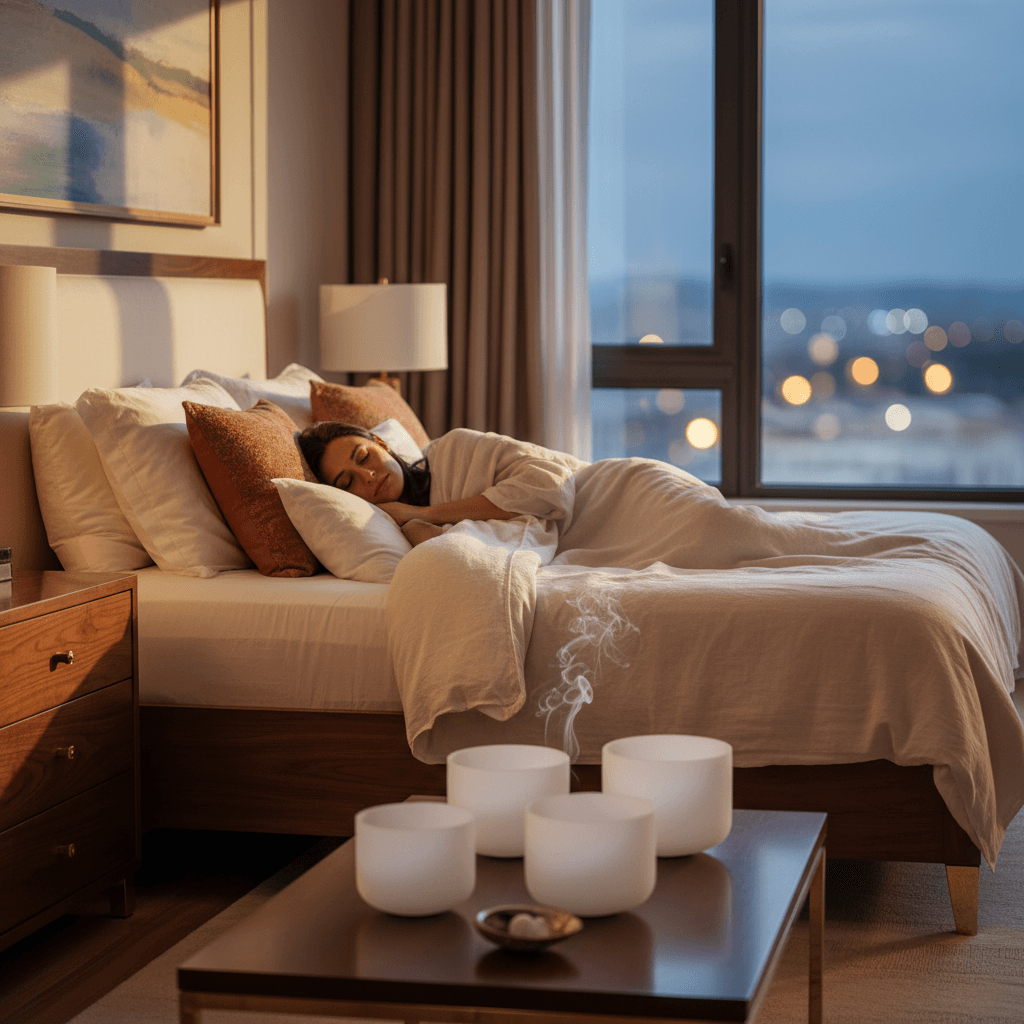
Breaking Chronic Insomnia's Grip with Frequency Medicine

Key Insights
Explore how sound wellness and frequency medicine, championed by Soul Art's Larissa Steinbach, may support breaking the cycle of chronic insomnia, fostering deep sleep and nervous system balance.
Have you ever found yourself staring at the ceiling in the dead of night, clock ticking endlessly, yearning for the elusive embrace of sleep? You are not alone. Chronic insomnia, a pervasive challenge in our modern world, is far more than just a restless night; it’s a persistent battle that can profoundly impact every aspect of an individual's wellbeing.
This deep-seated sleep disorder affects millions globally, often leaving individuals exhausted, distressed, and impaired in their daily functioning. While traditional medical approaches offer solutions, a growing body of research is exploring the profound potential of complementary wellness practices, including the innovative realm of frequency medicine, to help restore balance and invite restorative sleep. At Soul Art Dubai, our founder Larissa Steinbach champions this holistic approach, guiding clients towards breaking the insidious cycle of chronic insomnia and reclaiming their peace through the power of sound.
Join us as we delve into the scientific underpinnings of chronic insomnia, explore the promising avenues of frequency medicine, and discover how Soul Art’s unique methodology may support your journey back to profound, natural sleep. We believe in empowering you with knowledge and tools to nurture your nervous system and cultivate an environment conducive to deep rest.
The Science Explained: Unpacking Chronic Insomnia and Brainwave States
Chronic insomnia is a significant public health concern, characterized by frequent and persistent difficulty initiating or maintaining sleep. This dissatisfaction with sleep persists for at least three months, occurring at least three times per week, despite having adequate opportunity for rest. The American Academy of Sleep Medicine (AASM) and the American Psychiatric Association (APA) both highlight the distress and impairment across various life domains—family, social, vocational, academic—that accompany this challenging condition. Approximately 30% of adults worldwide report experiencing one or more symptoms of insomnia, underscoring its widespread impact.
The ramifications of chronic insomnia extend far beyond mere tiredness. Individuals grappling with this disorder often experience a higher prevalence of other medical problems. Research indicates a correlation with respiratory symptoms, physical disabilities, and depressive symptoms, alongside self-reported poorer health and increased reliance on non-prescription medications. Furthermore, chronic insomnia has been associated with higher rates of heart disease, high blood pressure, neurologic disease, breathing problems, urinary problems, chronic pain, and gastrointestinal issues. This intricate web of interconnected health concerns highlights the urgent need for effective, holistic strategies to support healthy sleep patterns.
Brainwave States and Sleep Architecture
Our brains operate across different electrical frequencies, known as brainwaves, each associated with distinct states of consciousness. Understanding these states is crucial to appreciating how frequency medicine may influence our sleep architecture.
- Delta Waves (0.5-3 Hz): These are the slowest brainwaves, dominant during deep, restorative sleep (non-REM sleep stages 3 and 4). They are associated with healing, regeneration, and deep relaxation.
- Theta Waves (4-7 Hz): Theta waves are characteristic of light sleep, deep meditation, and daydreaming. They represent a state of relaxation and creativity, often a gateway to the subconscious.
- Alpha Waves (8-12 Hz): Predominant during relaxed, wakeful states, such as meditation, introspection, or just before falling asleep. Alpha waves are linked to calmness, mental coordination, and a sense of wellbeing.
- Beta Waves (13-30 Hz): Associated with active thinking, problem-solving, and focused concentration. While necessary for daily functioning, excessive beta activity can contribute to anxiety and difficulty unwinding, which are common culprits in insomnia.
- Gamma Waves (30-100 Hz): The fastest brainwaves, linked to intense focus, higher-level processing, and cognitive functioning, often present during peak performance or problem-solving.
During a healthy sleep cycle, our brains naturally transition through these brainwave states, gradually moving from beta and alpha during wakefulness to theta in light sleep, and finally to delta in deep sleep. Chronic insomnia often disrupts this natural progression, making it difficult to shift into the slower, more restorative brainwave patterns.
Frequency Medicine: Influencing Brainwave Harmony
Frequency medicine, often delivered through sound, aims to gently guide the brain into desired states by introducing specific auditory stimuli. Two notable approaches that have garnered attention in sleep research are 432 Hz music and Binaural Beat Frequencies (BBFs).
Preliminary studies suggest that 432 Hz music has a significant calming effect, evidenced by increased alpha activities. One study, involving young male participants, noted this calming influence, although it did not significantly impact sleep latency in daytime naps. This suggests its primary benefit may lie in fostering a state of relaxation conducive to sleep rather than directly shortening the time it takes to fall asleep in all contexts. Another compelling study involving spinal injury patients compared the effects of their favorite music tuned to 440 Hz (the standard tuning) versus 432 Hz. Those who listened to music at 432 Hz showed a significant improvement in sleep scores compared to the 440 Hz group, further highlighting its potential for promoting restful states.
Binaural Beat Frequencies (BBFs) represent another fascinating avenue within frequency medicine. This novel auditory stimulus involves presenting two slightly different pure-tone frequencies, one to each ear. The brain then perceives a third, "binaural beat" frequency, which is the difference between the two tones. This perceived beat is theorized to synchronize with the brain's own electrical activity, potentially guiding it into specific brainwave states. For instance, if one ear hears 100 Hz and the other hears 104 Hz, the brain perceives a 4 Hz binaural beat, which corresponds to the theta brainwave state.
Early research on BBFs has shown promise in supporting sleep quality. While one study noted a decrease in insomnia in groups using music with BBFs, it also observed a higher beta power the following day in the BBF group. This could indicate increased alertness, suggesting the need for more nuanced application. A key insight from current research is that many BBF applications for sleep often utilize only a single frequency (e.g., theta or delta) throughout the night. However, normal sleep involves a dynamic transition through multiple brainwave phases. For this reason, more studies are needed to evaluate the efficacy of using multiple BBFs, thoughtfully sequenced to mirror the natural progression of a full sleep cycle, potentially incorporating theta, alpha, and delta, with breaks for REM sleep.
The use of specialized audio frequencies to influence brainwaves and shift a listener's state of consciousness has demonstrated efficacy in various circumstances, not just limited to sleep. These complementary approaches work by gently encouraging the nervous system to downregulate from states of hyperarousal (often associated with chronic stress and insomnia) into more relaxed and restorative modes. By fostering an environment where alpha and theta waves can flourish, frequency medicine may support the body's natural ability to unwind, quiet the racing mind, and ultimately, transition into deeper, more rejuvenating sleep.
How It Works in Practice: The Somatic Experience of Sound
Connecting the scientific theory to real-world application, the experience of frequency medicine for sleep support is profoundly holistic and deeply personal. It's an invitation to surrender, to tune into the subtle nuances of sound, and to allow the body and mind to respond to resonant vibrations. When you step into a sound wellness session, particularly one designed to address chronic insomnia, you enter a carefully curated sonic environment.
The session typically begins with an intention to relax and release tension. Participants lie comfortably, often on mats with blankets and cushions, preparing their bodies for stillness. The practitioner then introduces an array of instruments, each carefully selected for its unique vibrational quality and frequency signature. These might include crystal singing bowls, Himalayan singing bowls, gongs, chimes, and other resonant tools. The sounds are not merely listened to; they are felt. The vibrations permeate the body, creating a somatic experience that can be deeply calming.
As the frequencies wash over you, a remarkable shift often begins to occur. The gentle, sustained tones, particularly those associated with frequencies like 432 Hz, are designed to create an environment where the brain can naturally downshift from an active beta state to a more relaxed alpha state. This is the liminal space between wakefulness and sleep, where the mind quiets, thoughts begin to dissipate, and the body’s innate relaxation response is activated. It's a journey into inner tranquility, where the persistent mental chatter that often fuels insomnia begins to fade.
Clients often report a profound sense of peace and release during and after these sessions. The specific sounds and their frequencies are believed to influence the autonomic nervous system, shifting it from a sympathetic (fight-or-flight) dominance to a parasympathetic (rest-and-digest) activation. This physiological shift is critical for preparing the body for sleep, reducing heart rate, slowing breathing, and relaxing muscle tension. The immersive nature of the experience helps to draw awareness away from external distractions and internal anxieties, guiding it towards a deep state of present-moment awareness and physical ease.
"To truly quiet the mind and invite deep sleep, we must first attune to the subtle rhythms of our own being. Sound, at its essence, is a profound pathway to that inner harmony, gently coaxing our systems back into their natural, restorative state."
Over time, with consistent engagement in these sound wellness practices, the body and mind may learn to more readily enter these relaxed states. This cumulative effect is particularly beneficial for those with chronic insomnia, as it helps to re-educate the nervous system, potentially breaking the ingrained patterns of hyperarousal and resistance to sleep. It’s not about forcing sleep, but rather creating the optimal internal landscape where sleep can naturally emerge.
The Soul Art Approach: Larissa Steinbach's Philosophy
At Soul Art Dubai, the philosophy behind breaking the cycle of chronic insomnia with frequency medicine is deeply rooted in a holistic understanding of wellbeing. Our founder, Larissa Steinbach, is a visionary in the field of sound wellness, bringing a unique blend of scientific insight and intuitive understanding to every session. Larissa's approach transcends mere relaxation; it is a meticulously crafted experience designed to re-harmonize the body's intricate systems and cultivate an enduring state of inner peace conducive to restorative sleep.
Larissa Steinbach believes that true healing and profound rest begin with addressing the subtle energetic and physiological imbalances that often contribute to chronic insomnia. Her method at Soul Art focuses on creating a deeply immersive sound landscape that gently guides clients through the various brainwave states necessary for a complete and rejuvenating sleep cycle. This is not a one-size-fits-all solution, but a nuanced application of frequency medicine, carefully considering the individual's needs and current state of being.
What makes the Soul Art method unique is its intentional orchestration of diverse instruments and frequencies. Larissa often incorporates a symphony of resonant tools, including large planetary gongs, tuned crystal singing bowls, Nepalese Himalayan singing bowls, chimes, and other percussive instruments. Each instrument is chosen for its specific vibrational signature, which may influence different energy centers and brainwave patterns. For instance, while certain frequencies may be used to foster alpha wave activity for initial relaxation, others might be introduced to support the transition into deeper theta and delta states.
A core tenet of Larissa's approach is the understanding that the body is an incredible resonator. The vibrations from the instruments are not just heard; they are felt throughout the cellular structure, helping to release muscular tension and energetic blockages. This somatic resonance facilitates a profound unwinding of the nervous system, shifting it away from the chronic fight-or-flight response often associated with insomnia. The soundscapes created at Soul Art are designed to be a sanctuary, a place where the conscious mind can finally rest, allowing the subconscious to process and recalibrate.
Furthermore, Larissa Steinbach emphasizes the importance of consistent practice and self-awareness. Clients are encouraged to integrate elements of mindfulness and gentle self-care into their daily routines, extending the benefits of their sound wellness sessions beyond the studio walls. The Soul Art experience is a journey of rediscovery, empowering individuals to reclaim their innate capacity for deep rest and robust health, guided by the profound wisdom of sound. It's a complementary approach that respects the body's natural intelligence and supports its journey towards equilibrium.
Your Next Steps: Cultivating a Restorative Sleep Sanctuary
Embarking on a journey to break the cycle of chronic insomnia is a commitment to your overall wellbeing. While frequency medicine offers a powerful complementary approach, integrating it with mindful daily practices can amplify its benefits and help you cultivate a lasting restorative sleep sanctuary. It’s about creating an optimal environment—both internal and external—for sleep to flourish.
Here are practical steps you can begin implementing today to support your sleep hygiene and prepare your body and mind for profound rest:
- Establish a Consistent Sleep Schedule: Go to bed and wake up at roughly the same time each day, even on weekends. This helps regulate your body’s natural circadian rhythm, signaling to your system when it’s time to be awake and when it’s time to rest. Consistency is key for recalibrating your internal clock.
- Optimize Your Sleep Environment: Transform your bedroom into a true sanctuary. Ensure it is dark, quiet, and cool. Block out all light, consider earplugs or a white noise machine if needed, and set your thermostat to a comfortable, slightly cooler temperature. These physical cues signal to your body that it is a space solely for rest.
- Mindful Evening Routine: Create a calming ritual in the hour leading up to bedtime. This could include gentle stretching, reading a physical book (avoiding screens), taking a warm bath, or practicing light meditation. Such activities help to downshift your nervous system and mentally prepare for sleep.
- Limit Stimulants and Heavy Meals: Be mindful of caffeine and alcohol intake, especially in the afternoon and evening, as they can significantly disrupt sleep architecture. Similarly, avoid heavy, rich meals close to bedtime, which can burden your digestive system and make it harder to fall asleep comfortably.
- Explore Sound Wellness as a Complementary Practice: Consider integrating frequency medicine into your wellness routine. Many people report that regular sound baths or sessions focused on specific frequencies may support deeper relaxation, reduce stress, and improve overall sleep quality. Soul Art Dubai offers a serene environment led by Larissa Steinbach, where you can explore these transformative experiences. We encourage you to consult with your medical professional regarding any sleep concerns, as sound wellness is a complementary approach that works alongside, not in place of, medical care.
Bookings Coming Soon
Soul Art is still in preparation. Session details and booking will be published here after launch.
Coming Soon
In Summary: Reclaiming Rest and Resilience
Chronic insomnia is a profound challenge, impacting not only our sleep but our entire physical and emotional landscape. It disrupts our natural brainwave cycles and can lead to a host of health concerns, underscoring the critical importance of effective strategies for restorative rest. Frequency medicine, through practices like specific Hz music and binaural beats, offers a fascinating and potent complementary approach to help break this cycle.
By gently guiding the brain towards calming alpha and delta states, sound wellness may support the nervous system in shifting from chronic stress to deep relaxation. At Soul Art, Larissa Steinbach's meticulously crafted sound journeys provide an immersive experience designed to re-harmonize the body and mind, fostering an environment where natural, profound sleep can once again flourish. Embrace the potential of frequency medicine to reclaim your rest, enhance your resilience, and experience the rejuvenating power of true tranquility.
Wellness Disclaimer: This article is for educational and informational purposes only. It does not constitute medical advice, diagnosis, or treatment. Soul Art Dubai provides non-medical wellness experiences focused on relaxation, stress management, and general wellbeing. Sound wellness is a complementary practice and should not replace professional medical care.
Related Articles
Fan Noise and Sleep: Unmasking the Science Behind White Noise Machines for Deeper Rest
Polyphasic Sleep & Sound Healing: Navigating Restorative Rhythms
REM Rebound: Mastering the Art of Recovering Lost Dream Sleep