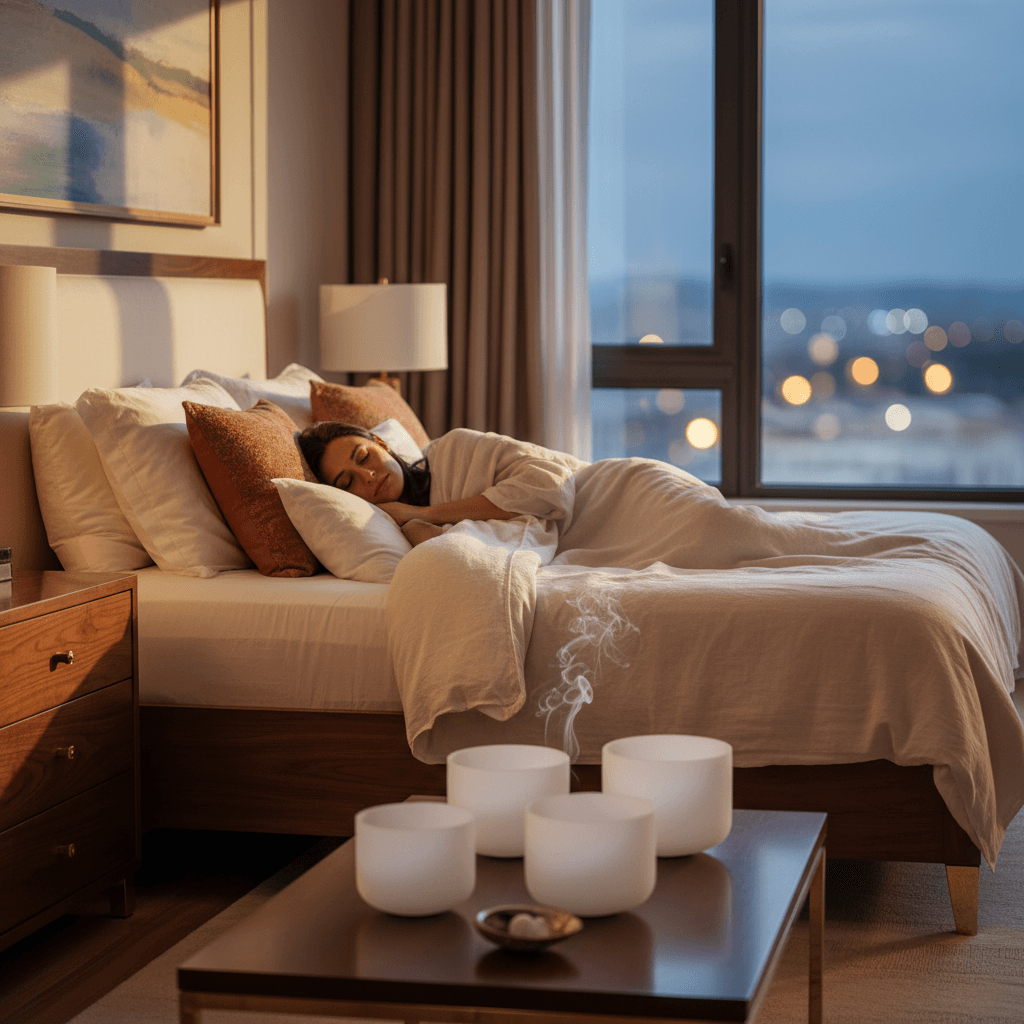
Unlock Deep Sleep: The Science of ASMR for Restful Nights
Key Insights
Dive into the science of ASMR and its sleep-enhancing benefits. Discover how Soul Art, founded by Larissa Steinbach, crafts unique sound experiences for deep rest.
Compelling Introduction
In our fast-paced world, where the demands of daily life often disrupt our internal rhythms, achieving truly restful sleep can feel like an elusive dream. Many of us grapple with restless nights, tossing and turning, unable to quiet our minds. But what if a gentle whisper, a soft tap, or a calming visual could unlock the door to profound tranquility and restorative sleep?
This is the intriguing promise of Autonomous Sensory Meridian Response, or ASMR. Once a niche internet phenomenon, ASMR is now recognized by scientists as a powerful tool for relaxation and sleep induction. It offers a unique pathway to calm, far beyond mere distraction, by engaging our sensory system in a surprisingly profound way.
At Soul Art, Dubai's premier sound wellness studio, we explore and harness these scientifically-backed principles to help you reclaim your sleep and overall well-being. This article delves into the fascinating science behind ASMR, revealing how these subtle sensory experiences can guide you towards deeper, more restorative rest. Prepare to discover a new dimension of self-care for your nocturnal journey.
The Science Explained
Autonomous Sensory Meridian Response (ASMR) is a perceptual phenomenon characterized by a distinct tingling sensation, often described as static-like or effervescent, that typically originates on the scalp and spreads down the back of the neck and spine. These pleasant sensations are triggered by specific audiovisual stimuli, varying widely among individuals but consistently eliciting feelings of relaxation and well-being. The scientific community has been increasingly exploring ASMR as a potential complementary approach to promote sleep and manage stress.
Brainwave Activity and Relaxation
The link between ASMR and sleep quality is significantly rooted in its influence on brainwave activity. Electroencephalography (EEG) studies have provided compelling insights into these effects. Research indicates that ASMR experiences are often associated with an increase in alpha waves, which are characteristic of a relaxed, wakeful state, often preceding sleep (Fredborg et al., 2021). This shift towards an alpha rhythm suggests a reduction in mental chatter and an increased state of calmness, setting the stage for sleep onset.
Further studies have delved deeper into the sleep-inducing effects. Lee et al. (2019) and Vardhan et al. (2020) highlighted that ASMR can significantly improve sleep quality. A personalized sound control system utilizing ASMR and pink noise, determined by brain waves, demonstrated remarkable results. Participants showed an increase of 21% in delta and theta waves during sleep, brainwave patterns exclusively associated with deep, restorative sleep stages (Lee et al., 2019). This physiological evidence underscores ASMR’s potential in facilitating profound rest.
Physiological Responses and Emotional Regulation
Beyond brainwave shifts, ASMR also elicits measurable physiological changes that contribute to relaxation. Poerio et al. (2018) conducted a physiological study, revealing a decrease in heart rate among individuals experiencing ASMR. This reduction in heart rate is a classic indicator of the body transitioning into a state of rest and relaxation, signaling a shift from sympathetic (fight-or-flight) to parasympathetic (rest-and-digest) nervous system dominance. This physiological down-regulation is crucial for preparing the body for sleep.
Interestingly, while heart rate decreases, some studies, including Poerio et al. (2018), have also noted increased skin conductance, an indicator often associated with physiological arousal. This seemingly contradictory finding suggests a complex interplay where ASMR can induce a state of relaxed alertness or a "pleasant excitement" rather than merely sedation. However, other research by Engelbregt et al. (2022) specifically observed reduced heart rate in response to ASMR videos, even in individuals who might not typically experience the tingling sensations, reinforcing its general relaxation effect.
The relaxation effect of ASMR extends to emotional regulation, a critical component for quality sleep. Studies have shown that watching ASMR videos can increase pleasant affect and reduce feelings of stress and anxiety (Barratt & Davis, 2015; Barratt et al., 2017). This positive emotional shift is partly mediated by the activation of the dopamine pathway in the limbic system, a brain area associated with reward and positive mood (Sakurai et al., 2023). By fostering a positive emotional state, ASMR may help to alleviate the psychological barriers that often prevent individuals from falling asleep.
Neuroscientific Foundations of Relaxation
Neuroimaging research has begun to map the brain regions involved in the ASMR response, further elucidating its relaxation mechanisms. Studies have observed increased activity in the medial prefrontal cortex, a region implicated in inducing relaxation (Sakurai et al., 2021). Other areas like the nucleus accumbens, frontal cortex, and insular cortex, all associated with relaxation and emotional processing, also show significant activation during ASMR experiences (Sakurai et al., 2023). This activation pattern suggests a sophisticated neural network working in concert to produce the characteristic feelings of calm and well-being.
Furthermore, research exploring personalized ASMR videos found that visual components significantly amplify the tingling sensations and relaxation effects. This indicates a multisensory integration mechanism where auditory and visual inputs combine to enhance the overall ASMR experience (Honda et al., 2020; Koumura et al., 2021). The ability of ASMR to balance the autonomic nervous system, activating the left and right insular cortices even with sound alone, suggests a robust capacity for modulating our body’s stress responses. These findings collectively demonstrate that ASMR is far more than a fleeting sensation; it is a complex neurophysiological phenomenon with tangible benefits for mental and physical relaxation, providing a scientifically grounded pathway to improved sleep quality.
How It Works in Practice
The practical application of ASMR for sleep and relaxation centers on creating an environment and sensory experience that fosters a profound sense of calm. Many people report using ASMR videos and sounds as a self-soothing technique, incorporating them into their nightly routines. The key lies in the specific types of triggers and how they are perceived by the individual.
In practice, an ASMR experience for relaxation often involves a combination of gentle audio and visual stimuli. Common audio triggers include soft whispering, gentle tapping sounds, crinkling, brushing, and slow, deliberate movements. Visual triggers might involve close-up hand movements, focused attention, or organized actions like folding towels or mixing ingredients. These seemingly mundane sounds and sights are precisely what can induce the signature tingling sensations and a deep state of calm for many individuals.
The subjective experience of ASMR for sleep induction is often described as a journey into a state of intense present moment awareness, coupled with a feeling of profound tranquility. This altered state of consciousness helps to quiet the mind, detaching it from daily worries and anxieties that typically interfere with sleep. The pleasurable tingling sensations, when present, can act as a gentle anchor, drawing attention away from external distractions and inward towards a peaceful internal landscape. Many users find that ASMR acts as a gentle lullaby, easing them into sleep without conscious effort.
The effectiveness of ASMR is highly personal; what triggers one person may not affect another. This bias in personal preferences means that discovering your specific ASMR triggers is a vital step in harnessing its benefits. Some individuals respond best to "personal attention" triggers, where the creator simulates direct, caring interaction. Others might prefer "unintentional" ASMR, where the sounds and visuals are not explicitly created to trigger ASMR but happen to do so. This personalized aspect makes the exploration of ASMR a unique and often rewarding self-discovery journey, leading to a tailored approach for optimal relaxation and sleep.
The Soul Art Approach
At Soul Art, Larissa Steinbach understands that true well-being stems from a holistic approach to mind, body, and spirit. Recognizing the profound impact of sound on our physiological and psychological states, Larissa has meticulously integrated the scientific principles of ASMR into Soul Art’s bespoke sound wellness experiences. The Soul Art approach transcends simple sound exposure, crafting immersive journeys designed to guide clients toward deep relaxation and restorative sleep.
Larissa Steinbach’s methodology is rooted in creating a sanctuary where every sensory input is carefully curated to foster nervous system regulation. While traditional ASMR often relies on digital videos, Soul Art elevates this practice by combining live, organic sound with the foundational elements of ASMR. This involves the masterful use of instruments that produce gentle, resonant frequencies, mimicking and enhancing the effects of classic ASMR triggers. For instance, the soft, sustained tones of crystal singing bowls can create a meditative soundscape that complements the calming effects of whispering or soft tapping.
What makes the Soul Art method truly unique is its emphasis on intentionality and personalization. Understanding that individual preferences for ASMR triggers vary, Larissa Steinbach and her team focus on tailoring the soundscapes to resonate deeply with each client’s unique needs. This might involve incorporating specific frequencies known to promote relaxation, such as those that encourage alpha or theta brainwave states, alongside gentle, rhythmic elements that subtly engage the autonomous sensory meridian response. The goal is not just to provide sound, but to orchestrate an experience that naturally encourages the body and mind to unwind and prepare for deep rest.
Soul Art sessions leverage a diverse palette of instruments, including Himalayan singing bowls, gongs, chimes, and various percussive elements, all played with a delicate touch to evoke ASMR-like sensations. These sessions may also incorporate binaural beats, which, when combined with ASMR stimuli, have been shown to promote feelings of calmness and encourage brain waves to induce sleep (Lee et al., 2019). The synergy of these techniques creates an environment where stress melts away, blood pressure may be reduced, and the mind can gently drift into a state conducive to sleep. It is a complementary practice designed to support the body’s natural repair and restoration processes, aligning perfectly with the importance of sleep for cell division, protein synthesis, and memory consolidation.
"At Soul Art, we believe that true well-being is found in the stillness within. Our approach to ASMR-inspired sound wellness is about guiding you back to that innate tranquility, using the most exquisite and intentional soundscapes to unlock your deepest sense of calm and prepare you for truly restorative sleep." - Larissa Steinbach
Your Next Steps
Embracing ASMR as a tool for improved sleep quality is a journey of personal discovery and intentional practice. Incorporating these principles into your daily routine can yield significant benefits for your overall well-being. Here are some actionable steps you can implement today to explore the power of ASMR.
- Experiment with Triggers: Begin by exploring various ASMR sounds and visual stimuli. Platforms like YouTube host countless ASMR creators, offering a wide array of triggers from whispering and tapping to crinkling and personal attention. Pay attention to what resonates most with you, as personal preference is key to an effective experience.
- Create a Consistent Pre-Sleep Routine: Integrate ASMR into your nightly winding-down ritual. Dedicate 15-30 minutes before bed to listening to your preferred ASMR content in a quiet, dark environment. This consistency can signal to your body and mind that it's time to transition into sleep, enhancing the conditioning effect.
- Focus on High-Quality Sound: Invest in good quality headphones or a comfortable speaker setup. The nuanced nature of ASMR triggers means that clear, immersive audio can significantly enhance the experience, allowing you to fully appreciate the delicate sounds and their calming effects.
- Observe and Journal: Keep a simple journal to note how different ASMR triggers affect you and the quality of your sleep. This can help you refine your choices and identify what truly works best for inducing your relaxation and improving your sleep patterns.
- Explore Professional Sound Wellness: For a deeply immersive and expertly guided experience, consider visiting Soul Art. Larissa Steinbach and her team offer bespoke sound wellness sessions that harness ASMR principles within a holistic framework, providing a unique pathway to profound relaxation and enhanced sleep.
Bookings Coming Soon
Soul Art is still in preparation. Session details and booking will be published here after launch.
Coming Soon
In Summary
The phenomenon of ASMR, with its unique tingling sensations and profound relaxation effects, is increasingly recognized by science as a valuable tool for promoting better sleep. Research demonstrates its ability to shift brainwave patterns towards states of relaxation and deep sleep, reduce heart rate, and activate brain regions associated with positive mood and tranquility. It serves as a powerful complementary approach for managing stress and improving overall sleep quality, especially for those seeking natural, non-pharmacological methods to enhance their rest.
At Soul Art, Larissa Steinbach and her team expertly blend these scientific insights with the art of sound wellness. By crafting personalized, immersive soundscapes that draw on ASMR principles, Soul Art offers a unique sanctuary for nervous system regulation and deep restoration. We invite you to explore this gentle yet potent path to truly restful nights and invigorated days.
Wellness Disclaimer: This article is for educational and informational purposes only. It does not constitute medical advice, diagnosis, or treatment. Soul Art Dubai provides non-medical wellness experiences focused on relaxation, stress management, and general wellbeing. Sound wellness is a complementary practice and should not replace professional medical care.
Related Articles
Fan Noise and Sleep: Unmasking the Science Behind White Noise Machines for Deeper Rest
Polyphasic Sleep & Sound Healing: Navigating Restorative Rhythms
REM Rebound: Mastering the Art of Recovering Lost Dream Sleep