Acute Stress Response: Immediate Sound Interventions for Rapid Relief

Key Insights
Experience immediate relief from acute stress. Discover how sound interventions, backed by science, calm your nervous system and foster well-being with Soul Art Dubai.
Can a mere sound truly shift your entire physiological state in moments, pulling you back from the brink of overwhelm? In our fast-paced world, acute stress is an unavoidable reality, often striking without warning and leaving us feeling rattled, anxious, and disconnected. But what if the most immediate and accessible antidote was already all around us, waiting to be harnessed?
This article delves into the profound, scientifically-backed power of immediate sound interventions as a rapid response to acute stress. We’ll explore the intricate neural and physiological mechanisms at play, revealing how targeted frequencies can swiftly regulate your nervous system. You'll learn why sound wellness, particularly the unique approach at Soul Art Dubai championed by Larissa Steinbach, offers a vital tool for maintaining equilibrium in a demanding environment.
By understanding the science and embracing practical applications, you can transform your relationship with stress, turning moments of tension into opportunities for restoration. Prepare to discover how the subtle yet powerful world of sound can become your personal sanctuary, offering immediate relief and fostering lasting well-being. This knowledge is not just about coping; it's about empowering yourself to thrive, even amidst life's unexpected challenges.
The Science Explained: How Sound Reshapes Your Stress Response
Our bodies are exquisitely tuned instruments, constantly reacting to the environment around us. When confronted with acute stress – a sudden deadline, a jarring noise, or an unexpected conflict – our ancient survival mechanisms spring into action. Understanding this acute stress response is the first step towards effectively managing it with sound.
Understanding the Acute Stress Response
At the core of the acute stress response is the activation of the sympathetic nervous system (SNS), often called the "fight or flight" response. This cascade involves the rapid release of stress hormones like adrenaline and cortisol, preparing the body for immediate action. Physiologically, this translates into increased heart rate, elevated blood pressure, rapid breathing, and heightened muscle tension.
While essential for survival in dangerous situations, prolonged or frequent activation of this response without adequate recovery can be detrimental to long-term health. The goal of sound interventions is to gently guide the body and mind away from this activated state and towards the calming influence of the parasympathetic nervous system (PNS), promoting "rest and digest."
The Auditory Pathway and Brain Regulation
Sound’s journey from our ears to our brain is a fascinating route that directly impacts our emotional and physiological states. When sound waves enter the ear, they are converted into electrical signals that travel along the auditory nerve to various brain regions. Crucially, these signals reach areas involved in emotion, memory, and stress regulation, such as the amygdala, hippocampus, and prefrontal cortex.
The amygdala, in particular, is a key player in processing fear and emotional responses. Calming sounds can help to modulate amygdala activity, reducing the brain's alarm signals. This intricate neural interplay allows sound to bypass conscious thought and directly influence our deepest physiological responses, offering a non-invasive pathway to stress reduction.
Physiological Markers of Stress Reduction
Scientific research provides compelling evidence for sound's impact on physiological markers of stress. A comprehensive scoping review by Saskovets et al. (PMID: 40127440) highlighted that sound interventions, including music and natural sounds, significantly affect the stress response in adults. This review synthesized evidence on physiological responses to sound interventions, measuring stress through indicators like heart rate variability (HRV) and cortisol levels.
- Heart Rate Variability (HRV): HRV measures the variation in time between heartbeats. A higher HRV is generally associated with a healthier, more adaptable nervous system, indicating a good balance between the sympathetic and parasympathetic systems. Calming sounds have been shown to increase HRV, signaling a shift towards parasympathetic dominance and relaxation.
- Cortisol Levels: Cortisol, often called the "stress hormone," is released in response to stress. While one study (PLOS One, 2013) noted that music prior to a stressor might not decrease endocrine response and could even tend to increase it, it importantly found that music listening helped the ANS recover more efficiently from a stressor. This suggests the critical role of sound in aiding the body's recovery after or during a stressful event, supporting the transition back to a balanced state.
- Blood Pressure and Pulse: Other studies referenced in the Frontiers in Psychology article (2022) confirm that vibroacoustic therapy (VAT) may positively affect the autonomous nervous system, pulse, and blood pressure, contributing to an immediate relaxation effect. These measurable changes underscore the tangible impact of sound on acute stress.
Beyond Music: The Power of Diverse Sounds
While music therapy is well-known, the scope of effective sound interventions extends far beyond conventional melodies. The Saskovets et al. review emphasized a conceptual shift in research, moving beyond music-focused frameworks to consider nonmusical acoustic interventions. These include human voices, environmental sounds, and specific frequency vibrations.
- Natural Sounds: The sounds of rippling water, gentle breezes, or birdsong have an inherently calming effect, often transporting us mentally to serene environments. These sounds can activate brain regions associated with positive emotions and reduce perceived stress.
- Expressive Sounds and Tones: Techniques like chanting, vocal toning, or the resonant frequencies produced by instruments like singing bowls and gongs fall into this category. These sounds often induce a meditative state, promoting deep relaxation and mental clarity.
- Low-Frequency Sound Vibration (Vibroacoustic Therapy - VAT): As highlighted by the Frontiers in Psychology article, VAT utilizes specific low-frequency sound vibrations applied directly to the body. This therapy has shown an immediate relaxation effect, influencing the autonomous nervous system and subjective perception of stress. While more randomized controlled trials are needed to fully establish its benefits compared to music listening alone, existing clinical experience and preliminary studies are promising.
Neural Mechanisms and ANS Recovery
The critical insight from the PLOS One study is that even if sound does not always prevent the initial endocrine stress response, it significantly aids in the recovery of the autonomic nervous system (ANS). This means that sound helps the body process and release the physiological residue of stress more efficiently. It facilitates the switch from the sympathetic "on" state to the parasympathetic "off" or "rest and digest" state.
This process involves the vagus nerve, a major component of the PNS, which influences heart rate, digestion, and mood. Certain sound frequencies and rhythmic patterns are thought to stimulate the vagus nerve, fostering a deep sense of calm and promoting the body's natural healing processes. The precise neural mechanisms are still being investigated, but preliminary studies indicate a powerful connection.
How It Works in Practice: Experiencing Immediate Sound Interventions
Connecting the intricate science of sound with its real-world application reveals why these interventions are so potent for acute stress. It's not just about what you hear, but what you feel and how your entire being responds to vibrational frequencies. At Soul Art, we bridge this gap, offering experiences designed for profound and immediate impact.
Immediate Impact: A Rapid Shift in State
Imagine a moment of intense pressure – a sudden wave of anxiety, a racing mind, or physical tension gripping your body. The beauty of immediate sound interventions lies in their capacity for rapid re-calibration. Unlike cognitive strategies that require mental effort, sound can bypass the analytical mind, directly accessing the deeper parts of your brain and nervous system.
"The subtle art of sound wellness lies in its ability to meet us exactly where we are, whether in distress or seeking profound peace, and gently guide us back to our innate state of balance."
Many people report feeling a noticeable shift within minutes of engaging with specific sounds. This can manifest as a slowing heart rate, a deeper breath, a release of muscular tension, or a sudden sense of calm washing over them. It's an immediate, embodied response that can be incredibly empowering during moments of acute stress.
Sensory Engagement: Beyond Auditory Perception
Sound is a physical phenomenon, composed of vibrations. While we typically perceive sound through our ears, these vibrations also interact with our bodies at a cellular level. Low-frequency sounds, particularly those utilized in vibroacoustic therapy, are not just heard; they are felt throughout the entire physical structure. This full-body sensory engagement amplifies the therapeutic effect.
The gentle yet powerful vibrations of a crystal singing bowl placed on the body, for instance, can create a palpable resonance that penetrates deep tissues. This somatic experience helps to release stored tension, promote circulation, and encourage a profound sense of groundedness, directly counteracting the physical manifestations of acute stress. It’s an immersive experience that engages multiple senses for a holistic response.
The Vibrational Aspect: Releasing Tension and Activating Relaxation
The concept of sound as vibration is central to its efficacy in stress reduction. When the body is stressed, muscles often tighten, and energy can feel stuck or constricted. Vibrational sounds, particularly from instruments designed to create rich overtones and sustained resonance, can act like a gentle massage for the internal organs and fascia.
This vibrational massage helps to physically relax the body, allowing for the release of accumulated tension. Simultaneously, these frequencies may influence cellular activity and neural pathways, supporting the transition from a sympathetic (stressed) state to a parasympathetic (relaxed) one. It's a fundamental aspect of how sound aids in returning the body to a state of equilibrium.
Mind-Body Connection: Clearing Mental Fog and Regulating Breath
Acute stress often comes with mental clutter: racing thoughts, difficulty concentrating, and a sense of overwhelm. Sound interventions provide an anchor for the mind, a focal point that can gently draw attention away from stressful rumination. The rhythmic or sustained nature of certain sounds encourages a slower, deeper breathing pattern, which is a powerful physiological cue for relaxation.
As breath deepens and becomes more regulated, oxygen flow to the brain improves, supporting clearer thinking and emotional regulation. This synergy between auditory input, physiological response, and cognitive shift demonstrates how sound works holistically to calm both the mind and the body, effectively clearing mental fog and fostering mental clarity.
Creating a Sanctuary: The Importance of Environment
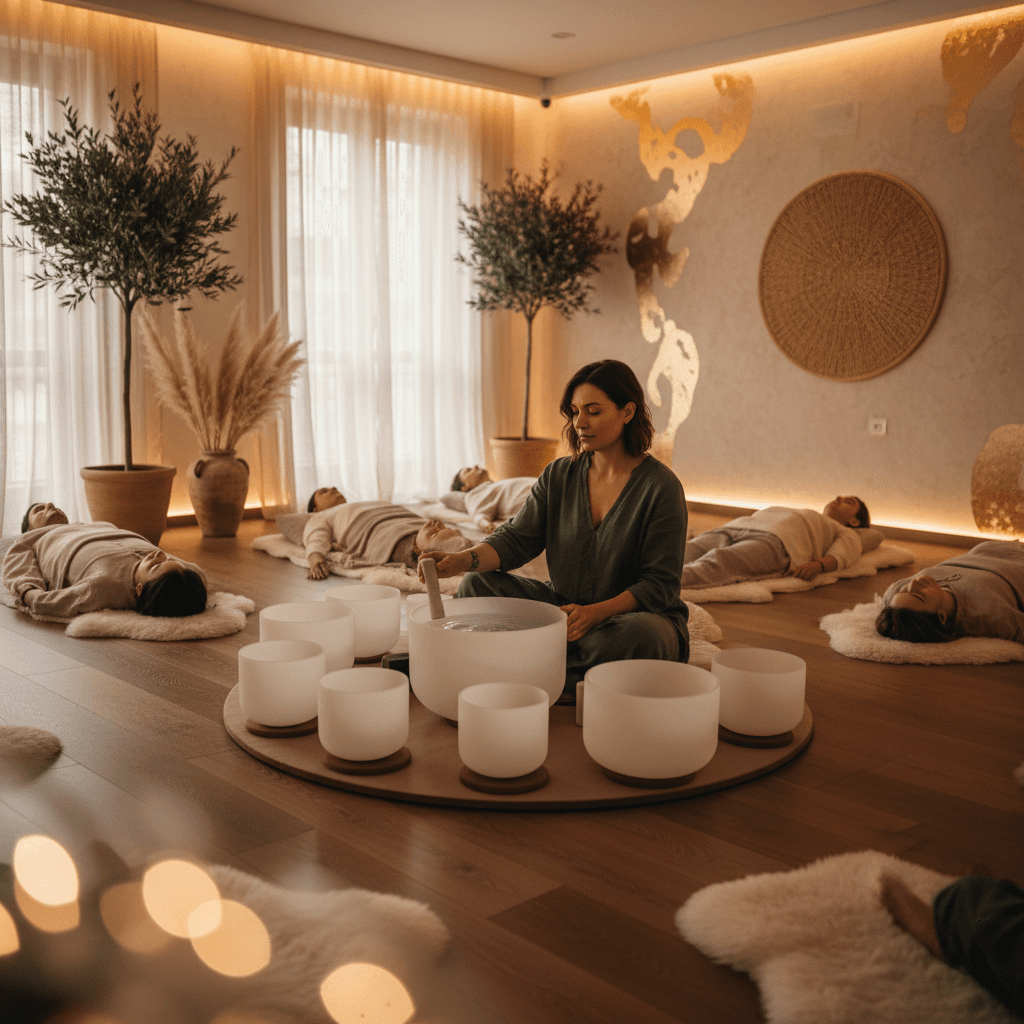
The environment in which sound interventions are experienced plays a crucial role in their effectiveness. A serene, calming space enhances the brain's receptivity to relaxation cues and minimizes external distractions. At Soul Art, careful attention is paid to creating an atmosphere that is conducive to deep rest and healing, amplifying the power of the sound experience.
This includes thoughtful lighting, comfortable setups, and an overall ambiance designed to promote safety and tranquility. Such a sanctuary allows individuals to fully surrender to the sound journey, maximizing its potential to alleviate acute stress and restore inner peace.
The Soul Art Approach: Larissa Steinbach's Vision for Sound Wellness
At Soul Art Dubai, the understanding of sound’s profound impact on well-being is elevated to an art form, guided by the visionary leadership of Larissa Steinbach. Our approach is deeply rooted in scientific understanding, complemented by a profound respect for ancient healing traditions, creating a sanctuary for those seeking refuge from the demands of modern life.
Larissa Steinbach's Philosophy: A Symphony of Holistic Well-being
Larissa Steinbach’s philosophy is centered on the belief that true well-being emerges from harmony within the self – physically, mentally, and spiritually. She views sound not merely as an auditory experience, but as a powerful vibrational medium capable of recalibrating the body's subtle energy systems and nervous responses. Her passion lies in curating personalized experiences that address the unique needs of each individual.
Larissa combines her deep knowledge of psychoacoustics and neurobiology with intuitive understanding, creating a unique methodology that resonates deeply with clients. Her dedication to continuous learning and ethical practice ensures that Soul Art remains at the forefront of sound wellness.
What Makes the Soul Art Method Unique
The Soul Art method distinguishes itself through several key elements:
- Personalized Soundscapes: Recognizing that each individual's stress response and energetic needs are unique, Larissa and her team craft personalized sound journeys. These aren't generic playlists but carefully constructed sequences of frequencies and tones designed to address specific imbalances and promote targeted relaxation. This personalized therapy aligns with the Saskovets et al. review's emphasis on individual listener characteristics.
- Integration of Modalities: Beyond auditory input, Soul Art sessions often integrate gentle vibrations applied directly to the body, such as with tuning forks or singing bowls placed on specific energy centers. This multi-sensory approach maximizes the therapeutic potential, ensuring a holistic release of acute stress.
- Expert Facilitation: The effectiveness of sound interventions is significantly enhanced by skilled facilitation. Larissa Steinbach and her certified practitioners possess a deep understanding of how different sounds impact the nervous system, guiding clients safely and effectively through their relaxation journey. Their expertise allows for subtle adjustments in real-time, ensuring optimal therapeutic benefit.
- Emphasis on Recovery and Regulation: While immediate stress relief is a primary goal, Soul Art also focuses on teaching the nervous system how to recover more efficiently from stress, fostering long-term resilience. This echoes the finding from the PLOS One study regarding music's role in aiding ANS recovery.
Specific Instruments and Techniques Used
Soul Art’s studio houses a carefully curated collection of instruments, each chosen for its unique vibrational qualities and ability to induce specific states of consciousness and relaxation.
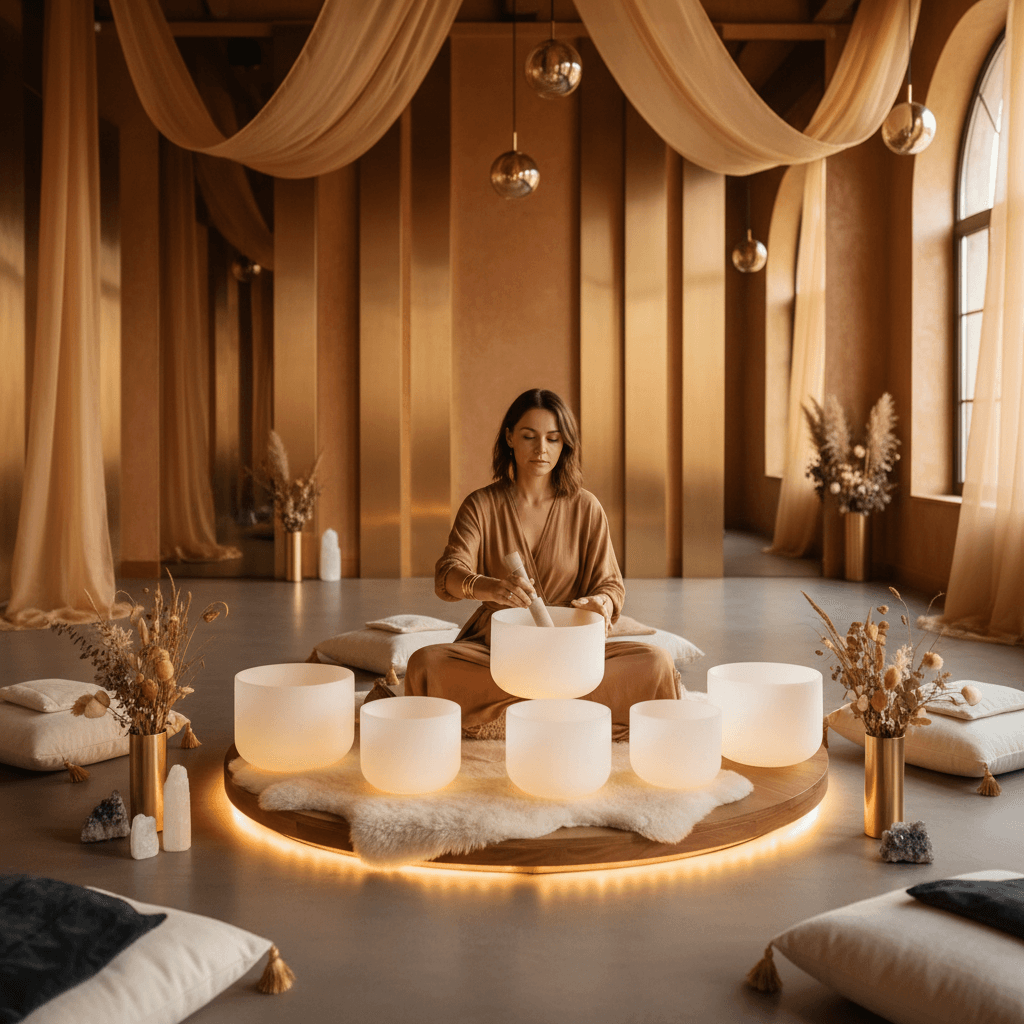
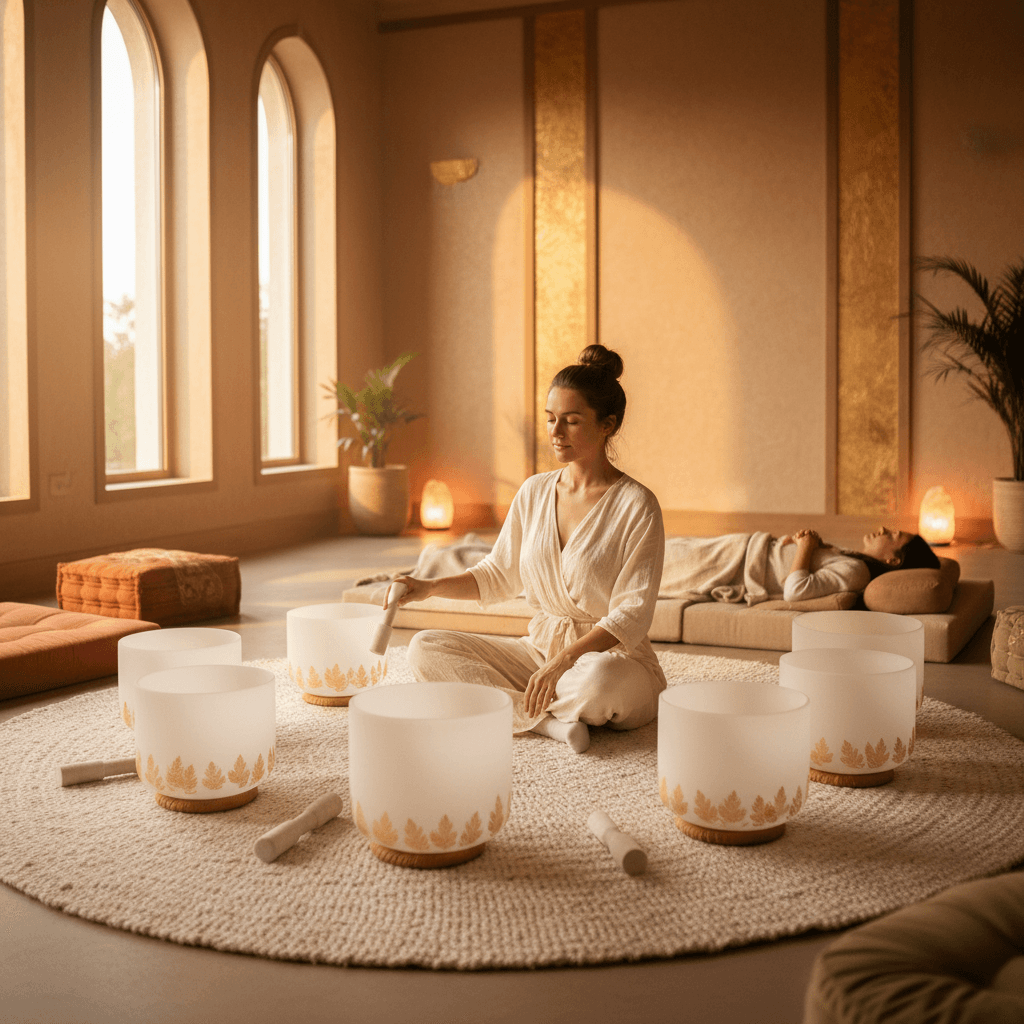
- Himalayan and Crystal Singing Bowls: These ancient instruments produce rich, resonant tones and sustained vibrations that are deeply calming. When played or placed on the body, they can help release physical tension and quiet the mind, facilitating a meditative state ideal for acute stress reduction.
- Gongs: The powerful, immersive sound waves of gongs create a "sound bath" experience that can lead to profound states of relaxation, often described as a journey into deep consciousness. The complex overtones help to clear mental chatter and dissolve blockages.
- Chimes and Tuning Forks: Delicately tuned chimes and precision-calibrated tuning forks are used for targeted energetic work. Tuning forks, in particular, apply specific frequencies directly to acupuncture points or areas of tension, offering localized relief and promoting energetic balance.
- The Human Voice and Toning: The primal power of the human voice, used in toning or gentle vocalizations, can create powerful resonant frequencies within the body. This technique is especially effective for grounding and emotional release, activating self-soothing mechanisms.
By employing these diverse sound tools, Soul Art provides a comprehensive, non-invasive method for stress reduction, addressing the unique interplay of personal, cultural, and environmental contexts highlighted by scientific research. This commitment to a holistic and scientifically informed approach positions Soul Art as Dubai’s premier destination for sound wellness.
Your Next Steps: Integrating Sound for Immediate Stress Relief
Understanding the science is powerful, but applying it to your daily life is where true transformation happens. Here are some actionable steps you can take today to harness the power of sound for immediate relief from acute stress. These are practical tools to complement your holistic wellness journey.
- Cultivate Self-Awareness: Start by noticing the early signs of stress in your body and mind. Is your jaw clenched? Are your thoughts racing? The sooner you recognize these signals, the quicker you can intervene with sound. Being present with your body's cues is the first step towards responsive self-care.
- Create Your Personal Sound Sanctuary: Keep a pair of quality headphones nearby. Curate a playlist of natural sounds (rain, ocean waves), ambient music, or instrumental tracks that genuinely calm you. Even five minutes of intentional listening in a quiet space can help shift your state.
- Explore Expressive Sounds: Consider experimenting with vocal toning or simply humming. The vibrations created within your own body can be incredibly grounding and soothing. This is a simple, accessible way to engage with sound for immediate self-regulation.
- Integrate Mindful Breathing with Sound: As you listen to calming sounds, consciously deepen and slow your breath. Inhale deeply through your nose, hold briefly, and exhale slowly through your mouth. This combination enhances the parasympathetic response, amplifying the relaxation effect.
- Consider a Professional Sound Wellness Session: For a deeper, more tailored experience, explore sessions at a dedicated studio like Soul Art. Expert guidance from practitioners like Larissa Steinbach can introduce you to specific frequencies and techniques that may support profound nervous system regulation.
- Soft Lead to Booking: Ready to experience the transformative power of sound firsthand? Discover how a personalized sound wellness session at Soul Art can provide immediate relief and foster lasting well-being.
In Summary: Your Gateway to Immediate Calm
Acute stress is an inherent part of modern life, but its immediate impact doesn't have to dictate your well-being. As we’ve explored, sound interventions offer a remarkably effective, non-invasive method for rapid stress reduction and nervous system recovery. Scientific research consistently shows how specific frequencies and vibrations can recalibrate our physiology, from regulating heart rate variability to aiding the autonomic nervous system's return to balance.
By engaging the auditory pathway and the body's vibrational sensitivity, sound bypasses cognitive resistance, offering a direct route to calm. The diverse applications, from natural soundscapes to the profound resonance of singing bowls and gongs, provide a rich toolkit for immediate relief. At Soul Art Dubai, Larissa Steinbach and her team expertly harness this power, crafting personalized sound journeys that invite deep relaxation and resilience. Embrace sound as your immediate ally against stress, fostering a profound sense of peace and well-being.
Bookings Coming Soon
Soul Art is still in preparation. Session details and booking will be published here after launch.
Coming Soon