Sound Healing in Hospice: Nurturing Comfort for Life's Final Journey
Key Insights
Explore how scientifically-backed sound healing, offered by Soul Art in Dubai, provides profound comfort, reduces anxiety, and enhances well-being for hospice patients and their families.
Sound Healing in Hospice: Nurturing Comfort for Life's Final Journey
Imagine a profound sense of peace washing over you, easing discomfort and quietening anxious thoughts, purely through the power of sound. For those navigating the delicate journey of end-of-life care, the need for comfort, dignity, and serenity becomes paramount. It is in this tender space that sound healing, a practice deeply rooted in ancient wisdom and increasingly supported by modern science, emerges as a gentle yet potent complementary approach.
At Soul Art, Dubai’s premier sound wellness studio founded by Larissa Steinbach, we understand the delicate nuances of human experience, especially during challenging times. This article delves into how vibrational therapy can offer a unique form of solace, reduce distress, and enhance the quality of life for hospice patients. We will explore the compelling scientific evidence underpinning sound healing's efficacy, its practical application in end-of-life care, and the distinctive approach offered by Soul Art.
The journey towards the end of life, while universally experienced, is intensely personal and often accompanied by a spectrum of emotional and physical challenges. Our aim is to illuminate how sound, delivered with intention and empathy, may support a more peaceful transition, not only for patients but also for their cherished family members and caregivers.
The Harmonious Science Behind Sound Healing
The human body is a marvel of vibrational energy, responding to frequencies in ways that modern science is only beginning to fully comprehend. Sound healing, far from being a mere spiritual practice, engages with our physiological and neurological systems at a fundamental level. Numerous studies now illuminate the measurable impacts of sound and vibration on our well-being, particularly in contexts requiring deep relaxation and comfort, such as hospice care.
Orchestrating Inner Calm: Brainwave Entrainment
One of the most compelling mechanisms of sound healing lies in brainwave entrainment. Our brains operate at different frequencies corresponding to various states of consciousness. Rhythmic auditory stimulation, common in sound healing sessions, may guide these brainwave patterns towards desired states.
For instance, specific tones can encourage:
- Theta (4–7 Hz): Associated with emotional processing, deep relaxation, and meditative states.
- Alpha (8–12 Hz): Linked to calm alertness and flow states, fostering a sense of peaceful awareness.
- Delta (0.5–3 Hz): Crucial for deep, restorative sleep and the body's natural healing processes.
Research published in Frontiers in Human Neuroscience highlights how controlled auditory stimulation can effectively entrain brainwaves, suggesting that sound healing may support a shift towards states conducive to rest, emotional regulation, and comfort. For hospice patients, this can translate into reduced agitation and a greater sense of calm.
Balancing the Body's Symphony: Autonomic Nervous System Regulation
Sound therapy is highly effective in calming the nervous system, helping to shift the body from a "fight-or-flight" (sympathetic) state to a "rest-and-digest" (parasympathetic) mode. This transition is vital for relaxation and healing. Studies utilizing Heart Rate Variability (HRV) have revealed that sound meditation may increase parasympathetic activation.
This activation is often achieved through:
- Vagus nerve stimulation: The vagus nerve plays a crucial role in regulating internal organ functions, including heart rate and digestion. Gentle sound vibrations can stimulate this nerve, promoting a sense of calm.
- Diaphragmatic breathing patterns: As the body relaxes in response to sound, breathing naturally deepens, further engaging the parasympathetic system.
- Reduced sympathetic overactivity: Chronic stress keeps the sympathetic system engaged, leading to increased heart rate and muscle tension. Sound healing may help to quiet this overactivity, fostering profound relaxation.
The Journal of Evidence-Based Complementary & Alternative Medicine featured a 2016 study demonstrating that singing bowl meditation reduced participants' stress markers and improved their sense of well-being, a crucial benefit for those in hospice.
The Biochemistry of Bliss: Hormonal Harmony
The physiological shifts induced by sound healing extend to our internal chemistry. Preliminary studies indicate that sound therapy may influence hormonal levels, directly impacting our mood, stress response, and sense of peace. Stress is often accompanied by elevated levels of cortisol, the hormone associated with inflammation, anxiety, and various diseases.
Sound therapy has been associated with:
- Lowered cortisol levels: By calming the nervous system, instruments like gongs and bowls may activate the parasympathetic nervous system, helping to reduce cortisol. A 2016 study at the University of California demonstrated significantly lower cortisol levels and heart rates in participants after just 20 minutes of singing bowl meditation.
- Increased "feel-good" chemicals: Listening to harmonic sounds may boost levels of serotonin and dopamine, the brain’s natural mood enhancers. This explains why many individuals report feelings of peace or even euphoria after a sound session.
- Endorphin release: Some theories suggest that sound vibrations may stimulate the release of endorphins, which are natural painkillers and mood elevators, offering a gentle form of relief.
These hormonal adjustments may contribute significantly to improved mood, reduced anxiety, and an enhanced sense of comfort for individuals facing challenging health circumstances.
Cellular Resonance and Pain Management
Beyond systemic effects, sound frequencies generate vibrations that travel through the body, interacting with tissues, organs, and cells. The principle of resonance—where one vibration influences another—is central to this aspect of sound healing. This interaction may support the body’s innate healing capacities.
- Cellular Resonance: Vibrations may help to align the body’s cells to a healthier state, promoting cellular harmony. A study published in Nature Communications (2019) found that low-frequency sound vibrations improved the regeneration of damaged tissue and stimulated cellular repair, offering insights into its potential for physical comfort.
- Pain Management: Sound frequencies may influence how the brain perceives pain. Vibrations can also relax tense muscles, improve circulation, and potentially stimulate healing at a cellular level. A 2015 study in Pain Research and Management found that music and sound therapy significantly reduced chronic pain in elderly patients, offering a valuable non-pharmacological adjunct to pain relief.
The analgesic properties of sound healing have led to its consideration in pain management protocols, with anecdotal reports and preliminary studies suggesting that patients receiving sound interventions may require less pain medication and report lower pain scores.
Elevating Emotional Well-being and Mental Clarity
For hospice patients, emotional well-being is as crucial as physical comfort. Feelings of anxiety, depression, and existential distress are common. Music therapy, a close cousin to sound healing, has a well-established track record in palliative and end-of-life care for addressing these emotional needs.
Research has consistently shown:
- Reduction in anxiety and depression: Personalized music interventions significantly improve emotional well-being. A study cited by the American Music Therapy Association pointed to measurable reductions in the perception of pain and stress among patients receiving music therapy.
- Improved quality of life: By fostering comfort and connection, sound may enhance the overall quality of life, offering a sense of normalcy and joy during a difficult time.
- Support for trauma and emotional imbalances: For individuals with trauma or emotional wounds, sound can offer a gentle, non-verbal pathway to process feelings, creating a sense of safety and trust. Frontiers in Human Neuroscience also showed that sound therapy helped patients with chronic anxiety reduce symptoms over a four-week period.
The personal and emotional nature of sound can offer a profound sense of connection and comfort, making it a meaningful component of more complete hospice care.
Experiencing Serenity: Sound Healing in a Hospice Setting
Translating scientific principles into a compassionate, real-world experience is at the heart of effective sound wellness. In a hospice setting, sound healing sessions are carefully tailored to meet the unique needs and sensitivities of each individual, offering a deeply personal and restorative experience. The sterile, sad, and sometimes emotionally devoid environment often associated with medical settings can be transformed into one of comfort and connection through intentional sound.
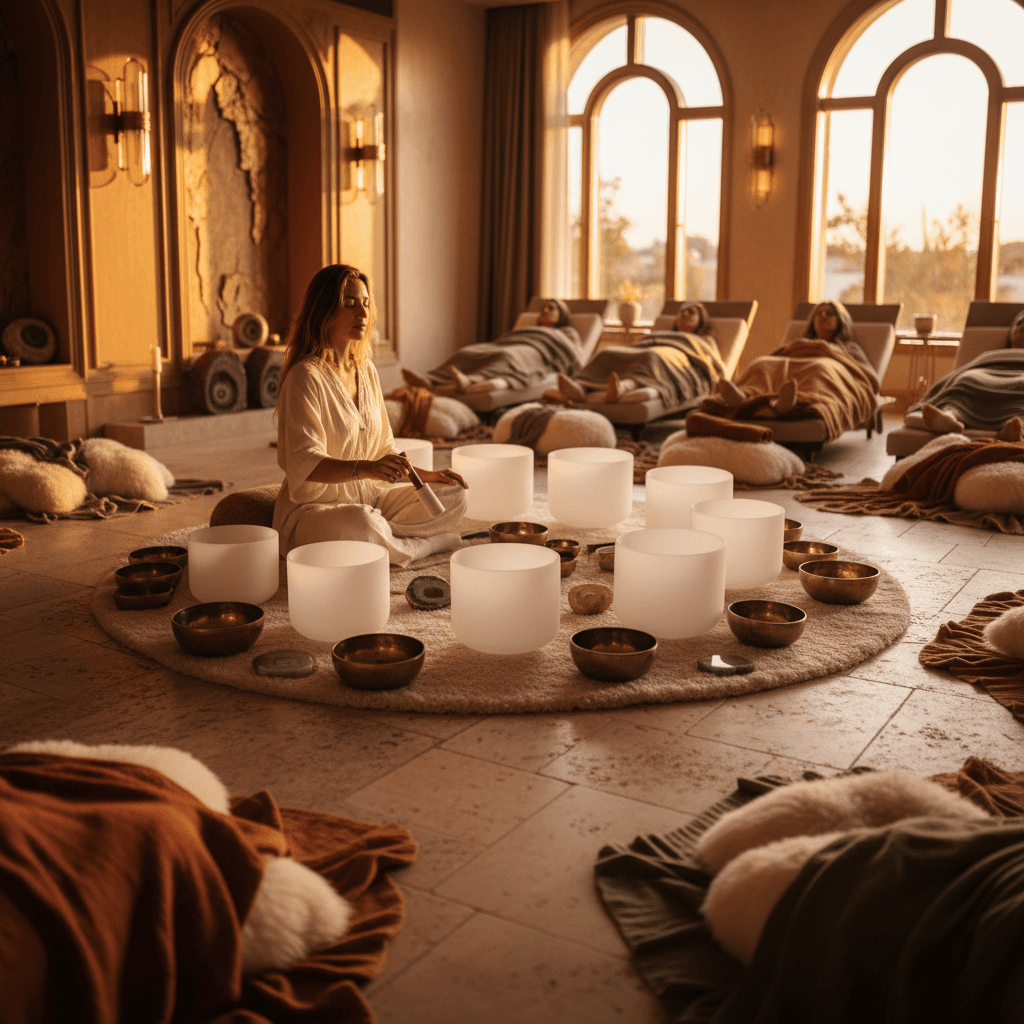
During a session, a trained practitioner creates an auditory landscape using a variety of instruments chosen for their specific frequencies and resonant qualities. These may include:
- Tibetan and crystal singing bowls: Their sustained tones and vibrations resonate deeply within the body.
- Gongs: Capable of producing a wide spectrum of frequencies that can induce profound relaxation.
- Tuning forks: Applied gently to specific points on the body, their precise vibrations can target areas of discomfort.
- Chimes and other harmonic instruments: Used to create delicate, soothing soundscapes.
The experience is often passive, with the patient resting comfortably, perhaps in their bed or a favorite chair. The practitioner moves mindfully around the space, allowing the gentle sounds and vibrations to envelop the individual. The aim is not to "treat" a condition in the medical sense, but to facilitate a state of deep relaxation and ease. Patients often report a sensation of warmth, tingling, or simply a profound quietness that settles both mind and body. The frequencies work to calm the nervous system, potentially reducing physical discomfort and mental agitation.
"In the quiet resonance of sound, we find a sanctuary not just for the ears, but for the very core of our being, offering solace when words often fall short."
What clients often experience is a shift from internal noise—anxiety, pain, fear—to a peaceful awareness of the present moment. The gentle vibrations may support improved sleep patterns, help manage pain perception, and alleviate feelings of loneliness or isolation. This non-invasive approach provides a sense of agency and comfort during a time when control might feel diminished. It can also create a memorable experience for family members present, offering a shared moment of peace and connection. Incorporating music into a hospice care plan is increasingly viewed as a valuable consideration based on these positive outcomes.
The Soul Art Signature: Compassionate Care with Larissa Steinbach
At Soul Art, Larissa Steinbach and her team bring a profound level of empathy, expertise, and personalized care to every sound wellness session. Recognising the unique sensitivities and requirements of individuals in hospice care, Larissa has cultivated an approach that blends ancient vibrational wisdom with a deep understanding of modern well-being principles. The Soul Art method is distinctive in its commitment to creating a safe, nurturing, and profoundly respectful environment for this delicate life stage.
Larissa's philosophy centers on the belief that everyone deserves comfort and peace, especially during life's most vulnerable moments. She meticulously curates each session, selecting specific instruments and frequencies based on the patient's expressed needs, energy, and comfort level. This personalized attention ensures that the experience is not only therapeutically beneficial but also deeply meaningful. For example, a session might focus on grounding frequencies from larger gongs to alleviate anxiety, or gentle, high-frequency chimes to invite lightness and upliftment.
The Soul Art approach emphasizes:
- Personalized Assessment: Understanding individual preferences, pain points, and emotional states to tailor the sound journey.
- Gentle Delivery: Ensuring that sounds and vibrations are delivered with utmost care, never overwhelming, always soothing.
- Atmosphere of Serenity: Creating an environment that fosters trust, safety, and deep relaxation, whether in a dedicated studio or a patient’s familiar space.
- Integrative Perspective: Collaborating, where appropriate, with other care providers to ensure a holistic approach to patient well-being.
Larissa Steinbach’s dedication ensures that Soul Art offers more than just a service; it provides a compassionate hand, guiding individuals through a resonant pathway to inner peace. This unique blend of scientific grounding and heartfelt compassion is what makes Soul Art a beacon of holistic wellness in Dubai and beyond.
Embracing Gentle Comfort: Practical Steps for Well-being
Understanding the profound potential of sound healing in hospice care is the first step. For patients, caregivers, and their support networks, integrating elements of sound wellness into daily life, or seeking professional guidance, can offer significant comfort. Remember, these are complementary approaches to support general well-being, not replacements for medical care.
Here are some practical steps you may consider:
- Open a Dialogue with Care Teams: Discuss the potential benefits of sound wellness with medical professionals and hospice staff. Many institutions are increasingly open to complementary therapies.
- Explore Calming Auditory Environments: Simple measures, like playing soft, instrumental music, nature sounds, or guided meditations, can create a more serene atmosphere in a patient's room.
- Engage with Gentle Vibrations: For those comfortable, gentle humming or chanting can be a self-soothing practice. Even the soft strum of a guitar or the quiet tones of chimes by a loved one can offer comfort.
- Consider Professional Sound Wellness Sessions: For a more structured and profound experience, consider engaging with qualified sound wellness practitioners like those at Soul Art. They possess the expertise to tailor sessions precisely to individual needs.
- Focus on Presence and Connection: Beyond the sounds themselves, the act of shared listening or the presence of a caring practitioner or family member during a sound session can deepen feelings of connection and reduce feelings of isolation.
Embracing sound as a tool for comfort and peace can significantly enhance the quality of life during a very sensitive time. It is a gentle reminder that even in challenging moments, there are pathways to serenity and connection.
In Summary: A Resonant Path to Peace
The journey through end-of-life care is a profound one, demanding compassion, understanding, and comprehensive support. Sound healing, through its scientifically-backed ability to influence brainwaves, regulate the nervous system, balance hormones, alleviate pain, and uplift emotional well-being, offers a powerful complementary approach. It provides a unique form of comfort, reducing anxiety, managing pain perception, and fostering a deep sense of peace for hospice patients and their families.
From the gentle hum of a singing bowl to the deep resonance of a gong, these vibrational therapies create a sanctuary of serenity. Larissa Steinbach and the team at Soul Art are dedicated to providing these deeply personalized and empathetic sound wellness experiences, ensuring dignity and comfort during life's final chapter. As science continues to affirm what ancient wisdom has long known, sound healing emerges as a resonant path to peace, supporting a more harmonious journey.
Bookings Coming Soon
Soul Art is still in preparation. Session details and booking will be published here after launch.
Coming Soon
Wellness Disclaimer: This article is for educational and informational purposes only. It does not constitute medical advice, diagnosis, or treatment. Soul Art Dubai provides non-medical wellness experiences focused on relaxation, stress management, and general wellbeing. Sound wellness is a complementary practice and should not replace professional medical care.
Related Articles
The Role of Sound in Cultural Death Practices
Death Doulas & Sound: Enhancing Peace in End-of-Life Journeys

Sound's Gentle Embrace: Supporting Late Alzheimer's with Sonic Wellness