Navigating Grief: The Science of Funeral Sound Integration
Key Insights
Explore the profound science behind Funeral Sound Integration. Discover how sound wellness can support the grieving process, foster memory, and provide solace during life's most challenging transitions. A Soul Art guide to harmonic healing.
When a loved one passes, what is the sound of their absence? Often, it’s a profound silence that can feel as overwhelming as the grief itself. We try to fill this void with words of comfort and familiar songs, but these gestures, while meaningful, only touch the surface of a deep, physiological and emotional process. What if we could engage with grief on a more fundamental level—through the pure, resonant power of sound itself?
This is the principle behind Funeral Sound Integration, a sophisticated wellness modality that moves beyond conventional funeral music. It leverages the neuroscientific effects of specific frequencies and vibrations to create a supportive container for mourning, remembrance, and emotional processing.
This article explores the compelling science behind how sound can guide us through loss. We will delve into the neurobiology of sonic grieving, understand how it works in practice, and discover how this gentle yet powerful approach can offer solace when words are not enough. It is a journey into the heart of healing, one vibration at a time.
The Sonic Science of Solace: How Sound Supports the Grieving Brain
Grief is not just an emotional state; it is a complex physiological experience that profoundly impacts the brain and nervous system. Funeral Sound Integration uses targeted sonic tools to help regulate these systems, creating a foundation for gentle emotional release and integration.
From Stress to Serenity: Brainwave Entrainment
During periods of acute grief, the brain often operates in a high-frequency beta state (associated with alertness, anxiety, and stress). This state of hyper-arousal makes it difficult to find rest or process complex emotions.
Sound wellness practices utilize a principle called brainwave entrainment, where the brain’s own electrical cycles synchronize with the rhythm of an external stimulus, such as the pulsating tones of a singing bowl. Research from institutions like the University of California demonstrates that sound healing tools can guide the brain from the agitated beta state into calmer frequencies:
- Alpha Waves: Associated with a state of relaxed, creative wakefulness. This shift opens a space for reflection without the intensity of overwhelming anxiety.
- Theta Waves: Linked to deep meditation, dreaming, and memory consolidation. Reaching this state may allow for a more profound connection to memory and a sense of peace.
By gently shifting brainwave patterns, sound integration creates a neurological environment where the mind can safely navigate the complex terrain of loss.
The Hormonal Response to Harmonic Frequencies
Grief triggers the body’s stress response, flooding the system with hormones like cortisol. While essential for short-term survival, chronically high cortisol levels can lead to exhaustion, inflammation, and emotional dysregulation.
Scientific studies consistently show that sound-based wellness can positively influence our hormonal balance. A 2017 study in the Journal of Evidence-Based Integrative Medicine found that sound bath meditations significantly reduced tension, fatigue, and depressed mood. The mechanisms at play include:
- Cortisol Reduction: The resonant frequencies of instruments like gongs and crystal bowls activate the parasympathetic nervous system—our "rest-and-digest" mode. This process naturally lowers cortisol levels, allowing the body to step out of a chronic stress cycle.
- Neurotransmitter Support: Harmonic sounds have been associated with an increase in mood-supporting neurotransmitters like serotonin and dopamine. This can provide moments of emotional relief and quiet euphoria, offering a gentle counterbalance to the weight of sorrow.
Sound, Memory, and Continued Bonds
Music and memory are inextricably linked. Computational analysis of crematorium playlists, as studied by Martin Hoondert, reveals that music with serene and solemn qualities is consistently chosen to facilitate solace. Sound integration takes this concept deeper.
Sound is processed in brain regions like the amygdala and hippocampus, which are central to emotion and memory. Unlike a specific song tied to a specific memory (which can sometimes be painful), pure vibrational tones can evoke the feeling and essence of a memory without the sharp edges of a specific narrative. This allows for what researchers call "continuing bonds"—a way to forge new connections with the deceased through ongoing memory, image, and, in this case, sound engagement.
"In the liminal space of grief, sound becomes a language for what cannot be spoken. It holds the sorrow, honors the memory, and gently guides the heart toward a new state of peace."
This process allows for a more fluid and less confrontational form of remembrance, honoring the past while remaining grounded in the present.
From Theory to Tranquility: The Lived Experience of Sonic Grieving
Understanding the science is one thing, but experiencing its application is another. A Funeral Sound Integration session is a deeply personal journey held within a carefully curated sonic environment. It is far more than a concert or a playlist; it is a meticulously crafted space designed for emotional safety and release.
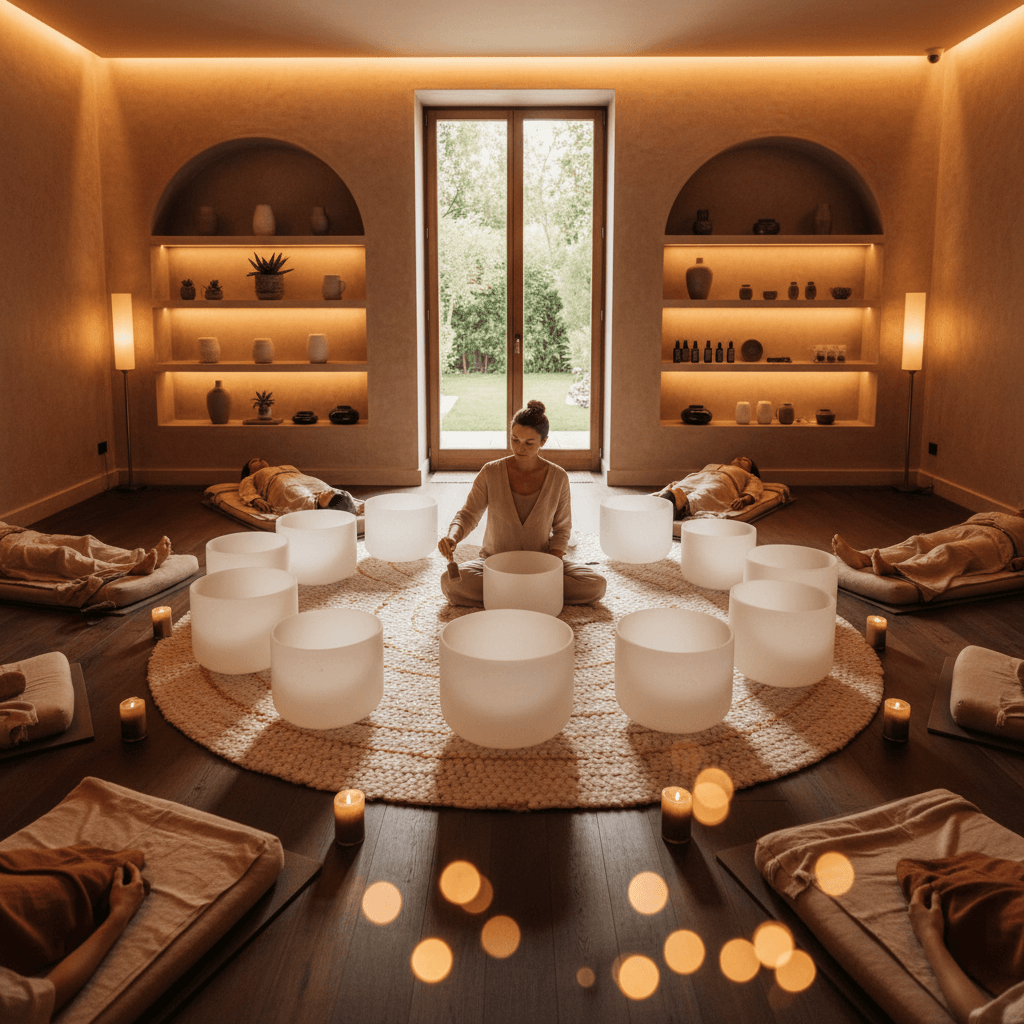
Imagine entering a softly lit room, free from distraction. The air is still, and the atmosphere is one of profound calm and respect. Rather than being asked to speak or share, you are invited to simply be—to lie down, close your eyes, and allow the sounds to wash over you.
The session begins not with a melody, but with a vibration. A low, resonant tone from a large gong may fill the room, its vibrations felt deep within the body. This is vibrational analgesia in practice; research in integrative medicine shows low-frequency vibrations can activate mechanoreceptors in the skin, which may help reduce the perception of both physical and emotional pain. The physical tension held in the shoulders, jaw, and chest begins to soften.
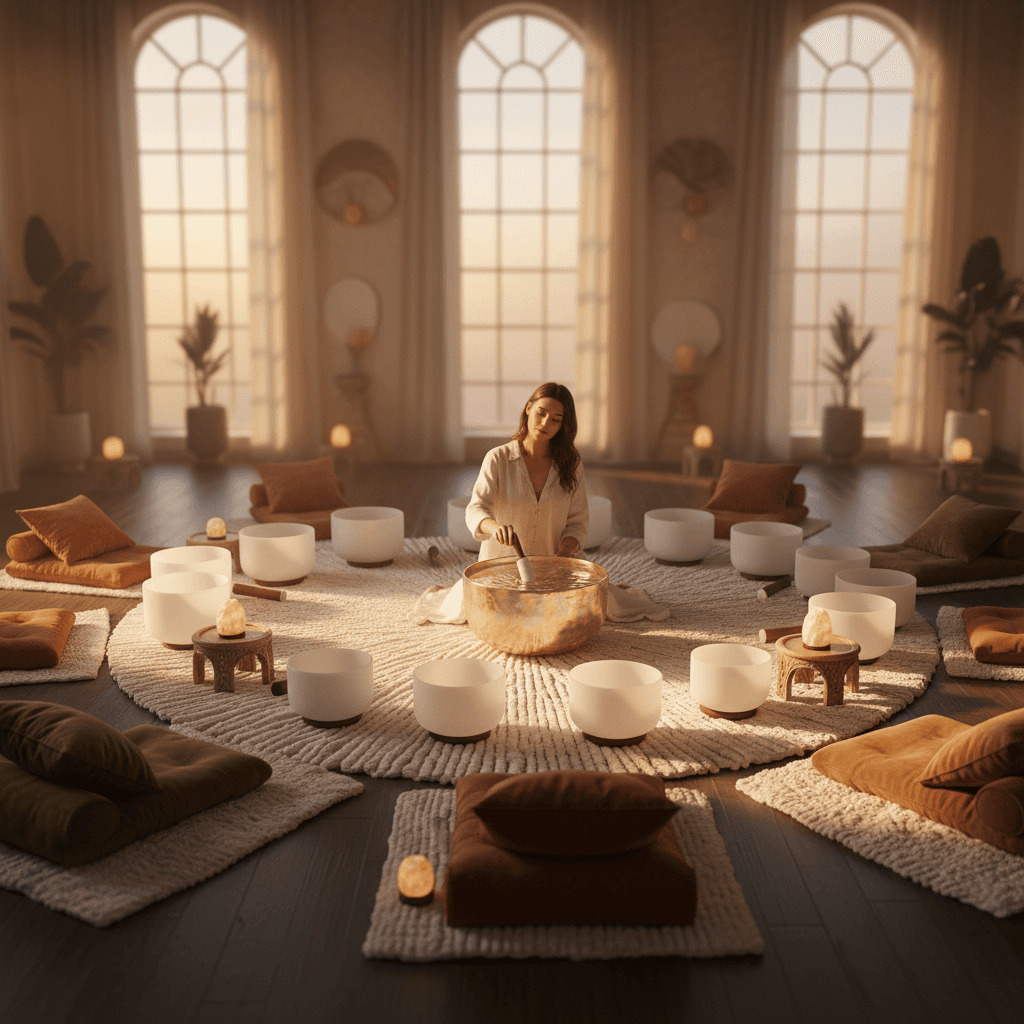
As the session progresses, the soundscape evolves. The pure, clear tones of quartz crystal singing bowls are introduced, each one tuned to a specific frequency that resonates with different parts of the body. These sounds create a sense of spaciousness in the mind, gently untangling the chaotic thoughts that often accompany grief. There is no expectation to feel a certain way; the sounds simply create a "sonic container" where any and all emotions—sadness, anger, peace, or even joy—are welcome to arise and pass without judgment.
This is a form of what some scholars call "posthumous aurality," a sensory and dialogically sonic realm where connection and processing can occur beyond the confines of Western traditions of mourning. It is an experience that honors the body's wisdom, allowing it to process grief on a cellular level, far beyond the reach of language.
The Soul Art Approach: A Bespoke Journey Through Grief
At Soul Art, our approach to Funeral Sound Integration is rooted in a deep understanding of both ancient sound traditions and modern neuroscience. Founded by Larissa Steinbach, our studio provides a unique methodology that prioritizes personalization, intentionality, and profound respect for the individual grieving process.
We recognize that grief is not a monolithic experience. Drawing from research that underscores the importance of collaborative music selection in mourning rituals, we extend this principle to the creation of a bespoke soundscape. Before a session, Larissa often engages in a gentle consultation to understand the nature of the loss and the essence of the person being remembered. This informs the selection of instruments and frequencies, ensuring the experience is both supportive and deeply personal.
Our practice at Soul Art incorporates a specific set of highly resonant instruments chosen for their therapeutic properties:
- Planetary Gongs: These large, powerful instruments produce complex overtones that induce a state of deep meditation and facilitate the release of stored emotional energy.
- 432 Hz Crystal Bowls: Tuned to a frequency often described as the "heartbeat of the planet," these bowls promote a sense of deep calm, emotional balance, and heart-centered coherence.
- Koshi Chimes: With their delicate, ethereal melodies, these chimes are used to gently guide the mind back from a deep meditative state, providing a soft and nurturing transition.
What makes the Soul Art method unique is its focus on legacy integration. The goal is not simply to mourn a loss, but to use sound as a medium to celebrate a life and integrate its enduring meaning into the present. It is a process that honors the past, grounds you in the present, and plants a seed of peace for the future.
Integrating Sound into Your Own Grieving Process
While a professionally guided session offers a profound level of support, you can begin to explore the gentle power of sound in your own space. Grief is a uniquely personal journey, and these small, intentional practices can provide moments of solace and connection.
Here are a few actionable steps you can take today:
- Curate a Legacy Soundscape: Move beyond a simple playlist. In addition to meaningful songs, consider including instrumental pieces, nature sounds, or even recordings of pure frequencies (like Solfeggio tones) that feel calming to you. Listen in a quiet, reflective space with no distractions.
- Practice Mindful Listening: Find a comfortable place to sit, close your eyes, and simply listen to the ambient sounds around you without judgment. The hum of a fan, the distant traffic, the chirp of a bird—this practice of deep listening can anchor you in the present moment and quiet an anxious mind.
- Explore Resonant Tones: There are many high-quality recordings of singing bowls and gongs available online. Put on a pair of headphones, lie down, and notice how different frequencies feel in your body. Pay attention to any physical sensations or emotional shifts.
- Create a Simple Sound Ritual: A ritual can provide structure and comfort during a time of chaos. Light a candle and ring a single chime or a small bell to mark a moment of remembrance. The consistency of this simple act can be incredibly grounding.
For those seeking a more immersive and supportive container for this delicate work, a professionally facilitated sound integration session can provide the safety and expertise needed to navigate deeper emotional currents.
The Enduring Resonance of Sound and Memory
Funeral Sound Integration is a powerful, evidence-informed wellness practice that honors one of life's most challenging transitions. By leveraging principles of brainwave entrainment, hormonal regulation, and parasympathetic nervous system activation, it provides a gentle yet profound pathway for processing grief.
This modality moves beyond the symbolic use of music to create a deeply personal, therapeutic, and vibrational experience. It offers a way to hold sorrow, connect with memory, and release the physical tension of loss in a way that words alone cannot achieve. It is a testament to the fact that even in the quietest moments of absence, sound can create a space for connection, solace, and the slow, steady journey toward peace.
At Soul Art Dubai, founded by Larissa Steinbach, we are honored to hold this sacred space for you. We invite you to explore how sound can support you, offering a path toward gentle integration and enduring resonance.
Bookings Coming Soon
Soul Art is still in preparation. Session details and booking will be published here after launch.
Coming Soon
Related Articles
The Role of Sound in Cultural Death Practices
Death Doulas & Sound: Enhancing Peace in End-of-Life Journeys

Sound's Gentle Embrace: Supporting Late Alzheimer's with Sonic Wellness