The Role of Sound in Cultural Death Practices
Key Insights
Explore the profound role of sound in global death rituals. Discover how chanting, music, and vibration support grief, from ancient traditions to modern sound wellness.
From the haunting echo of a Gregorian chant in a stone monastery to the vibrant, communal singing at a Haitian funeral, humanity has always turned to sound to navigate its most profound transition: death. What if these auditory traditions are more than just cultural expressions of sorrow? What if they represent an ancient, intuitive understanding of neurobiology, providing a powerful tool for processing grief and fostering collective healing?
This exploration delves into the universal language of sound within death practices across the globe. We will uncover the compelling science that explains why these rituals are so effective at supporting the bereaved. By bridging ancient wisdom with contemporary neuroscience, we can better appreciate how specific frequencies and rhythms may help regulate our nervous systems, create psychological safety, and transform the painful journey of loss into a meaningful passage of connection and remembrance. This understanding is not just academic; it holds practical keys to enhancing our own emotional wellbeing.
The Science Explained: Why Sound Supports Grief
When we experience the loss of a loved one, our minds and bodies enter a state of profound distress. The emotional centers of the brain, particularly the amygdala, become highly activated, while the prefrontal cortex, responsible for rational thought and emotional regulation, can become overwhelmed. This physiological response is the essence of grief. Across cultures, sound-based rituals have emerged as a powerful, intuitive method to navigate this challenging internal landscape.
The Neuroscience of Auditory Soothing
The human brain is remarkably attuned to sound. Specific auditory patterns can directly influence our neural activity through a process called brainwave entrainment. During periods of high stress and grief, our brains typically operate in a high-frequency beta state (alert, anxious). The slow, repetitive, and harmonic nature of chants, hymns, and certain instrumental music can gently guide the brain toward calmer alpha (relaxed, reflective) and even theta (meditative, deep rest) states.
Research highlights that practices like the repetitive chanting of mantras or the sustained tones of Gregorian chants produce acoustic effects that calm the nervous system. This is associated with a measurable reduction in heart rate and blood pressure, creating a physiological foundation for emotional processing. It’s not merely a distraction; it's a biological intervention that helps restore a sense of equilibrium when our internal world feels chaotic.
Somatic Resonance and Embodied Release
Grief is not just an emotional or cognitive experience; it is a somatic experience, felt deeply within the body as tension, heartache, or fatigue. Sound offers a unique pathway to address this physical dimension of loss. Low-frequency sounds, such as those produced by gongs or large drums, create physical vibrations that permeate the body.
This vibrational resonance can have a gentle massaging effect on a cellular level, potentially helping to release stored tension in muscles and tissues. It provides a non-verbal language for emotions that are often too immense for words, allowing the body to participate in the grieving process and release pent-up energy without the need for cognitive analysis. This physical release is a crucial step in preventing grief from becoming stagnant or manifesting as chronic physical ailments.
The Psychology of Communal Sound
Perhaps the most significant role of sound in death rituals is its ability to foster community and psychological safety. A study published in a prominent PMC journal notes that death rituals "create a safe place for mourners to express emotion and bring together family and friends in support of the bereaved." Shared auditory experiences—singing, chanting, or listening to music together—create a powerful unifying bond.
Through such engagement, individuals and communities access emotional and spiritual connections that affirm the continuity of life and shared humanity.
This communal resonance synchronizes not only the participants' brainwaves but also their heart rates and breathing. It fosters a profound sense of "we-ness," reminding the bereaved that they are not alone in their sorrow. This collective container legitimizes the expression of grief, countering the isolation that so often accompanies loss and reaffirming the social fabric that supports us through life's greatest challenges.
How It Works in Practice: A Tapestry of Global Traditions
The scientific principles of sound and grief are not abstract theories; they are lived realities woven into the fabric of cultures worldwide. From exuberant celebrations of life to solemn rites of passage, sound provides the essential medium through which communities process loss, honor the deceased, and support the living.
In Haiti, burial rituals beautifully merge Catholic and West African Vodou traditions. Day-long celebrations in remote villages are filled with vibrant singing and dancing, transforming grief into a communal expression of life's energy. This is followed by the "nine-night" tradition, where nightly prayers and visits culminate in the belief that the soul departs on the ninth night—a journey audibly marked by the community's collective voice.
Contrast this with the contemplative quietude of a Japanese Zen garden, where carefully placed rocks serve as focal points for meditation. While not explicitly a death ritual, this practice embodies the principle of finding stillness and presence amidst the impermanence of life, a core aspect of processing loss. The ambient sounds of nature, or the internal sound of silence, become the anchors for awareness.
In the Netherlands, as researched in "Time to Say Goodbye?", the selection of funeral music serves as a deeply personal "lens" into contemporary attitudes towards death. The chosen songs become a form of storytelling, reflecting the unique life of the deceased and providing a customized soundscape for mourners. This highlights a shift toward individualized rituals, yet the fundamental need for music to structure and contain the emotional experience remains constant.
Across many traditions, from East Asia to Latin America, the practice of ancestral veneration uses sound to maintain a connection with those who have passed. Whether through spoken prayers at a home altar during Mexico's Día de los Muertos or chanted family histories, sound bridges the perceived gap between the living and the dead. It transforms loss into an ongoing relationship, affirming that familial bonds endure beyond physical presence.
The Soul Art Approach: Honoring Tradition with Modern Science
At Soul Art, we recognize that while cultural rituals are beautifully diverse, the underlying human need for connection, release, and peace during times of loss is universal. Our founder, Larissa Steinbach, has developed a unique method that integrates the timeless wisdom of these global traditions with the precise application of modern sound science.
We do not replicate specific religious or cultural ceremonies. Instead, we distill their core principles to create a secular, inclusive, and deeply personal experience. Our approach is grounded in creating a sanctuary of sound where individuals can safely explore and process their grief without words. We use a carefully curated selection of instruments, each chosen for its specific resonant properties.
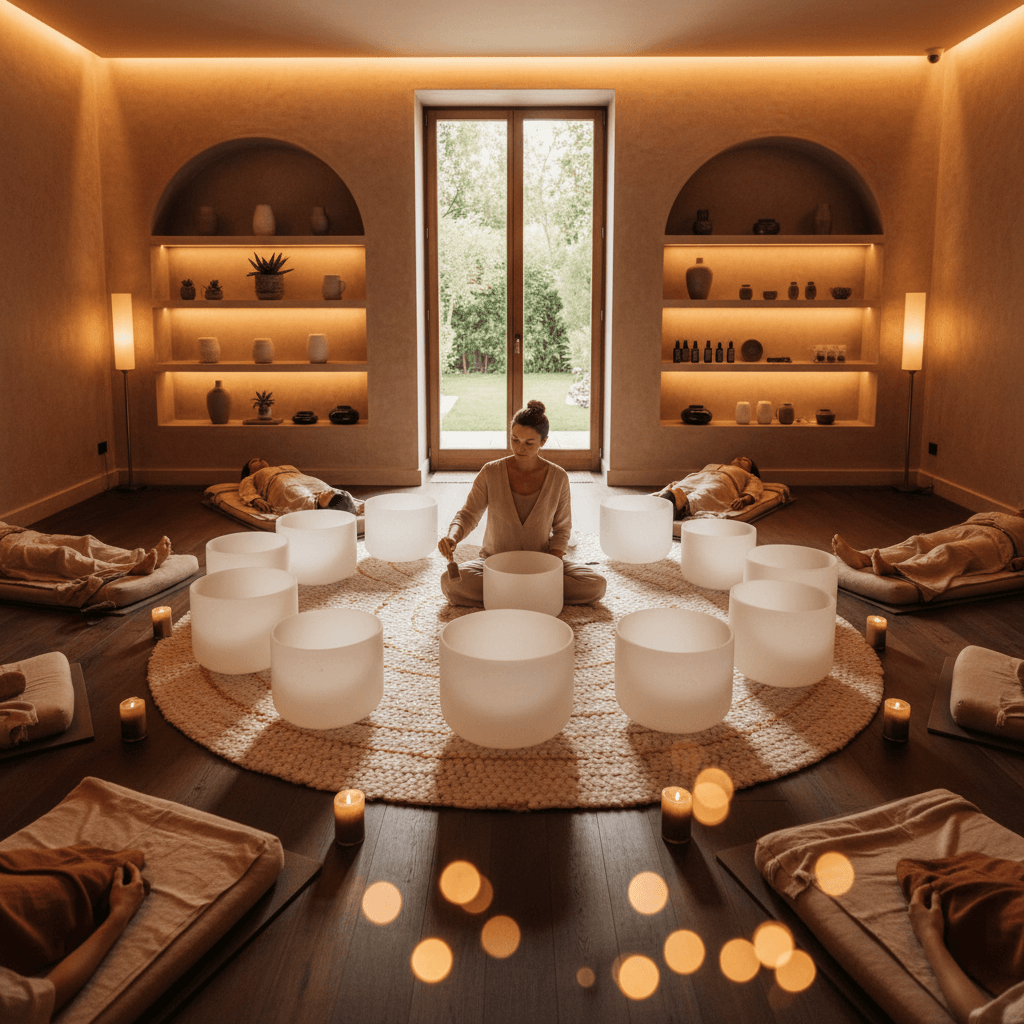
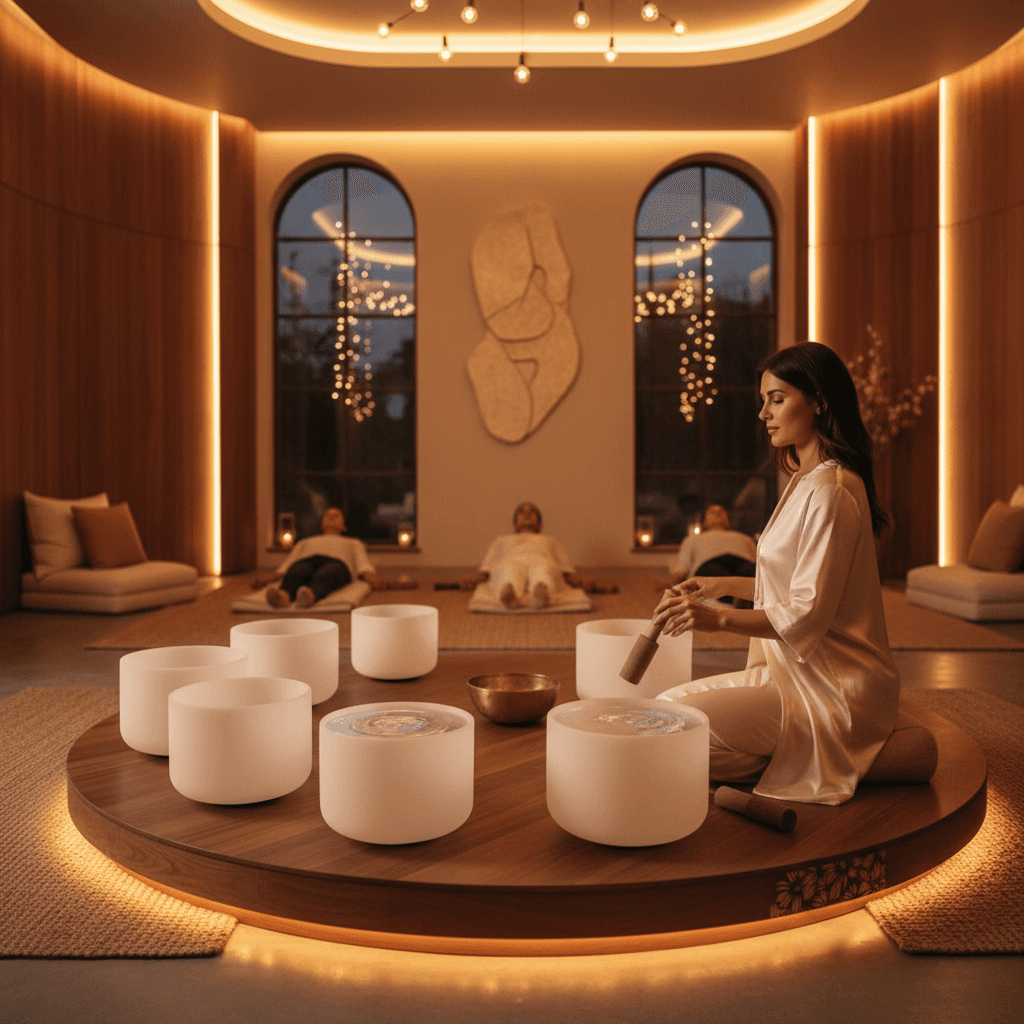
- Himalayan & Crystal Singing Bowls: These instruments produce pure, sustained tones that are ideal for facilitating brainwave entrainment, gently guiding the mind from a state of anxiety to one of deep meditative calm.
- Gongs: The complex overtones and powerful vibrations of the gong create a profound somatic experience, helping to release physical tension and emotional blockages stored in the body.
- The Human Voice: We may incorporate gentle vocal toning, tapping into the most primal and personal instrument. This practice helps ground individuals in their bodies, empowering them to use their own voice as a tool for self-regulation.
The Soul Art method, guided by Larissa Steinbach, is about crafting a personalized soundscape that honors your unique journey. It is a space to remember, to feel, and to begin the process of integration, supported by the gentle yet powerful container of sound.
Your Next Steps: Cultivating Auditory Wellness in Times of Grief
Integrating the supportive power of sound into your life doesn't require a special ceremony. You can begin to explore these principles at home with simple, gentle practices that honor your own pace and needs. These techniques can serve as valuable tools for self-care during difficult times.
- Create a Memorial Playlist: Curate a collection of music that connects you to the memory of your loved one. Include songs that allow for a full spectrum of emotions—from sadness and reflection to joy and gratitude. Allowing yourself to listen and feel without judgment can be a powerful form of release.
- Practice Gentle Vocal Toning: Find a quiet space and take a few deep breaths. On your exhale, produce a gentle, sustained "ahhh" or "ohmm" sound. Focus on the vibration you feel in your chest and throat. This simple act can be incredibly grounding and calming for the nervous system.
- Engage in Deep Listening: Choose a piece of calming instrumental music or a recording of nature sounds (like rain or ocean waves). Close your eyes and dedicate your full attention to the soundscape. Notice the different layers, tones, and rhythms without trying to analyze them. This practice helps quiet the mind and anchors you in the present moment.
- Explore a Guided Sound Meditation: Numerous resources online offer guided sound baths featuring singing bowls or gongs. Setting aside 20-30 minutes to lie down and receive these sounds can be a restorative way to ease emotional and physical tension.
For those seeking a dedicated and professionally held space to delve deeper, a personalized session at a studio like Soul Art can provide a supportive environment tailored to your specific needs.
In Summary: The Enduring Power of Sound
Across millennia and continents, sound has been an indispensable companion to humanity in its encounters with death. It is a universal language that transcends cultural boundaries, offering a pathway to process grief, foster community, and honor life. Modern science now illuminates why these ancient practices are so profoundly effective, validating the intuitive wisdom that has been passed down through generations.
From the neuroscience of brainwave entrainment to the psychology of communal ritual, sound provides a holistic container for the complex journey of bereavement. It calms the body, quiets the mind, and connects us to one another, reminding us that we are not alone. At Soul Art Dubai, we are humbled to continue this timeless tradition, offering a sanctuary where the healing power of sound can support your path toward peace, connection, and remembrance.
Bookings Coming Soon
Soul Art is still in preparation. Session details and booking will be published here after launch.
Coming Soon
Related Articles
Death Doulas & Sound: Enhancing Peace in End-of-Life Journeys
Sound's Gentle Embrace: Supporting Late Alzheimer's with Sonic Wellness

Navigating Grief: The Science of Funeral Sound Integration