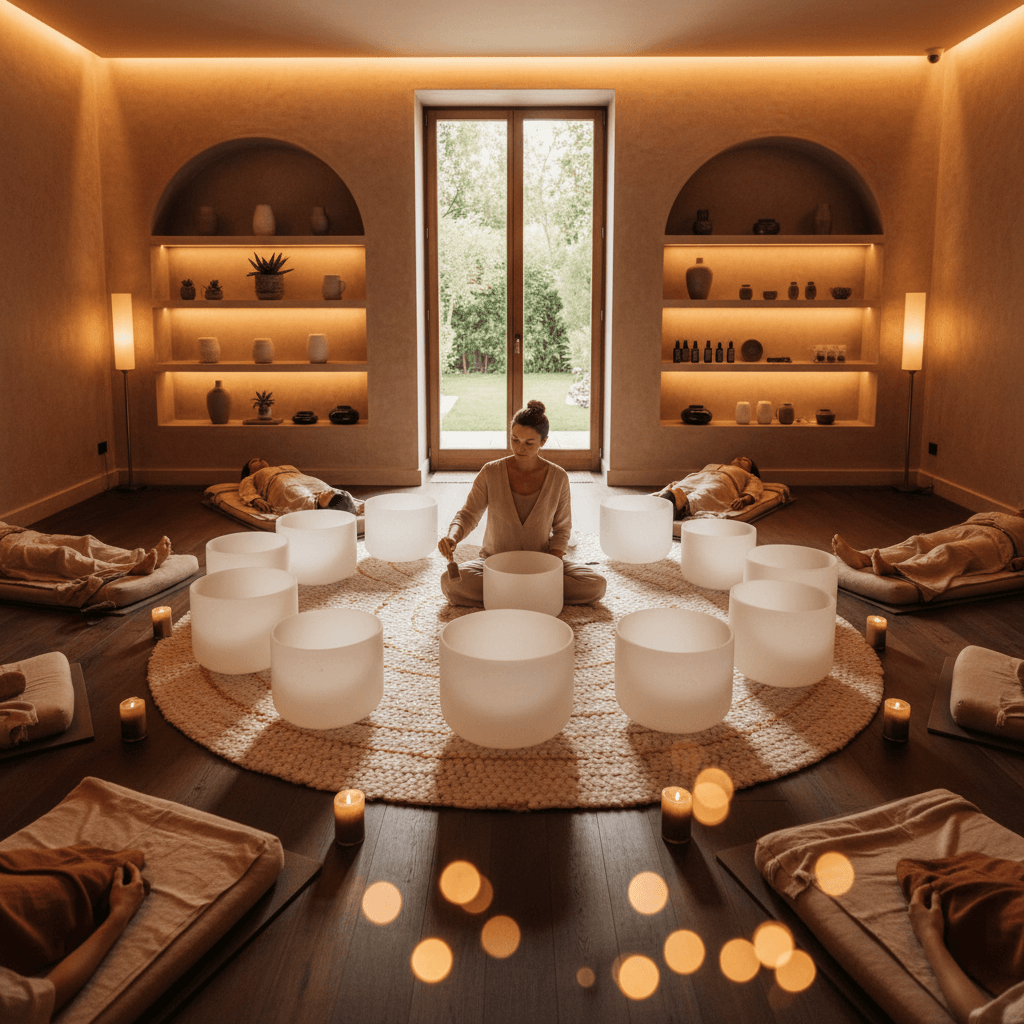
Sound's Gentle Embrace: Supporting Late Alzheimer's with Sonic Wellness

Key Insights
Explore how targeted sound, like 40Hz stimulation, may offer comfort and support cognitive well-being in late-stage Alzheimer's. Discover Soul Art's approach.
The journey through Alzheimer's disease presents profound challenges, particularly in its late stages, affecting not only the individual but also their loved ones and caregivers. As the disease progresses, conventional interventions often reach their limits, leading many to seek complementary approaches that may offer comfort, connection, and a gentle form of engagement. What if the very fabric of sound could offer a pathway to improved well-being, even when words become scarce and memories fade?
Emerging research into 40Hz sensory stimulation presents a compelling prospect, suggesting that specific sound frequencies may support cognitive function and alleviate some symptoms associated with late-onset Alzheimer’s disease. This article delves into the fascinating science behind sound wellness for advanced dementia, exploring how precisely calibrated auditory experiences might foster a deeper sense of peace and potentially even support brain health. We will explore the latest scientific findings, connect theory to practical application, and reveal how Larissa Steinbach and Soul Art Dubai are pioneering these innovative wellness practices.
The Science Explained: Unlocking the Brain's Rhythms
At the heart of our brain's complex operations are brain waves, rhythmic electrical pulses generated by billions of interconnected neurons. These waves, much like an orchestra, synchronize to facilitate various cognitive functions, from memory and learning to sleep and emotional regulation. Among these, gamma waves, typically oscillating at frequencies between 30 and 100 Hz, are crucial for higher-order cognitive processes, including attention, perception, and memory consolidation.
The Gamma Wave Link to Alzheimer's Disease
Research indicates that individuals living with Alzheimer’s disease often exhibit weaker and less synchronized gamma waves compared to healthy brains. This disruption in brain rhythm is believed to contribute to the cognitive decline characteristic of the disease. The core idea behind targeted sensory stimulation is to reintroduce and reinforce these crucial gamma frequencies, thereby attempting to restore some degree of neuronal synchronization.
Pioneering studies from the Massachusetts Institute of Technology (MIT) have ignited significant interest in 40Hz gamma stimulation, particularly using light and sound. In animal models, exposing subjects to 40Hz clicking sounds or flickering lights has been shown to boost the strength and synchronization of these vital brain waves. These preclinical findings have been remarkable, pointing to a range of potential benefits.
Promising Findings from Early Research
Early investigations in animal models have shown that regular 40Hz stimulation may lead to striking neurobiological changes. These include reductions in Alzheimer’s-related brain pathology, such as the infamous amyloid plaques and tau protein tangles, alongside improvements in memory. Specifically, some studies on rodents indicated that neural cleanup systems operate more effectively at a 40Hz frequency, clearing these toxic proteins. New research on non-human primates further bridges this gap, demonstrating that a steady 40Hz hum increased levels of β-amyloid in cerebrospinal fluid, suggesting more effective clearance of toxins.
While human clinical trials are still in relatively early stages, the initial outcomes are encouraging. A long-term follow-up from an MIT early-stage clinical study documented the experiences of five volunteers who continued to receive 40Hz light and sound stimulation for approximately two years. For the three participants with late-onset Alzheimer’s disease, several measures of cognition remained significantly higher than comparable Alzheimer’s patients in national databases. These volunteers also showed increased brain-wave responsiveness to the stimulation and improvement in measures of circadian rhythms, which are often disrupted in AD.
Furthermore, in two late-onset volunteers who provided plasma samples, there were significant declines in phosphorylated tau (p-tau) proteins. One participant showed a 47 percent decrease, and the other a 19.4 percent decrease, on a test recently approved by the U.S. Food and Drug Administration as the first plasma biomarker for diagnosing Alzheimer’s. This finding is particularly significant as p-tau levels are directly linked to the progression of Alzheimer’s pathology.
Beyond Amyloid: Broader Neurological Support
It’s important to note that while animal studies have suggested a potential for amyloid plaque clearance, current human clinical trials have not yet definitively demonstrated this specific outcome. However, the absence of amyloid clearance does not diminish the potential promise of the approach. A comprehensive review of 76 studies, encompassing data from over 2,100 participants, revealed that auditory gamma stimulation consistently influenced brain activity.
While amyloid levels remained unchanged in these human trials, many reported modest improvements or stabilization in a range of outcomes that genuinely matter to individuals experiencing cognitive decline. These included aspects of memory, daily functioning, sleep quality, and even rates of brain atrophy. Another compelling finding from research on Alzheimer's disease mouse models highlighted that acoustic stimulation significantly improved spatial memory and counteracted the negative effects of chronic sleep deprivation on long-term memory. Additionally, acoustic stimulation was found to significantly increase cerebral blood flow (CBF) in crucial brain regions such as the bilateral cortex, hippocampus, and thalamus, counteracting the regional hypoperfusion often seen in AD.
"The harmony between cutting-edge neuroscience and ancient wisdom reveals that sound is not merely heard; it's felt, it resonates, and it has the profound capacity to re-tune the very rhythms of our being, offering solace and support where it's needed most."
These observed effects, occurring across diverse samples, strongly justify continued investigation and the exploration of sound-based interventions as a complementary wellness practice. The "Hope Study," a larger clinical trial currently underway, aims to further test this treatment option and is anticipated to yield results around May 2025.
The Role of Music and Familiar Sounds
Beyond targeted 40Hz stimulation, the broader field of music intervention holds significant therapeutic benefits for individuals with dementia. Music evokes powerful emotions and memories, often remaining intact until the very late stages of disease progression. This remarkable persistence allows music to be a bridge, activating parts of the brain that can help stimulate other areas, potentially improving mood, social engagement, and reducing agitation and anxiety.
Studies have shown that musical intervention can improve the agitation and anxiety of both the patient and their caregiver. Social communication, both verbal and nonverbal, like eye contact, has been observed to improve. For many, music can rekindle a spark of connection, allowing caregivers to "find the person lost to them in the context of music," as noted by experts.
How It Works in Practice: A Gentle, Sensory Experience
Bringing these scientific insights into a practical wellness setting involves creating an experience that is both gentle and deeply engaging. For individuals in the late stages of Alzheimer's, comfort, safety, and sensory accessibility are paramount. Sound wellness sessions are not about complex tasks or demanding cognitive engagement; rather, they are designed to be a soothing, non-invasive sensory journey.
Clients typically experience a quiet, peaceful environment where specific auditory frequencies are introduced through carefully curated soundscapes. This might involve listening to sustained tones, rhythmic pulses, or compositions rich in 40Hz frequencies. The goal is to provide a gentle, consistent stimulation that aims to resonate with and support the brain's natural rhythms. The experience is often passive, allowing the individual to simply relax and receive the sonic input without any pressure to "perform" or respond.
The effects of such sessions may manifest in various ways, focusing on improving overall quality of life and comfort. Many people report a heightened sense of relaxation and calm, which can be particularly beneficial for individuals prone to agitation or anxiety. Improved sleep quality is another frequently observed outcome, as the rhythmic stimulation may help regulate circadian rhythms and promote deeper rest.
Beyond these immediate calming effects, regular exposure to such sound stimulation may gently encourage cognitive engagement. While profound memory recovery is not the primary claim, the goal is to support the brain's baseline functionality, potentially slowing decline or stabilizing aspects of daily functioning. The sensory experience itself can be a powerful anchor, providing a familiar and comforting routine that bypasses verbal communication barriers. The rich textures and vibrations of sound can stimulate parts of the brain that remain responsive, fostering a sense of connection and presence. This approach aligns with a holistic wellness philosophy, recognizing the interconnectedness of mind, body, and spirit, especially in vulnerable stages of life.
The Soul Art Approach: Larissa Steinbach's Vision
At Soul Art, Dubai's premier sound wellness studio, Larissa Steinbach is dedicated to translating scientific insights into accessible, deeply beneficial experiences. Her vision for Soul Art extends beyond traditional relaxation, embracing the potential of sound as a complementary approach to support individuals facing significant health challenges, including those in the late stages of Alzheimer’s.
Larissa's method is built on a foundation of scientific understanding, combined with a profound empathy for each individual's journey. The Soul Art approach to supporting individuals with late Alzheimer's focuses on creating a haven of peace and sensory comfort. This involves carefully curated sound sessions that incorporate the principles of gamma frequency stimulation, particularly focusing on the 40Hz range.
What makes the Soul Art method unique is its holistic, client-centered focus. Understanding the sensitivities and needs of individuals with advanced cognitive decline, Larissa and her team prioritize a gentle, non-overwhelming environment. Sessions are designed to be calming and restorative, emphasizing deep relaxation and fostering a sense of security. Soul Art utilizes specialized instruments and precisely engineered soundscapes to deliver the targeted frequencies. This may include custom-designed speakers, subtle binaural beats, or other sound tools that create an immersive, yet soothing, auditory experience.
The emphasis is always on the individual's comfort and well-being. The sessions are not "medical treatments" but rather wellness practices aimed at enhancing the quality of life, reducing stress, and potentially supporting brain health. Larissa Steinbach believes in empowering caregivers and families by offering a gentle tool that may provide moments of peace and connection, fostering a more harmonious environment for everyone involved. Soul Art's commitment is to provide a sophisticated yet warm space where the power of sound can be explored as a pathway to greater comfort and well-being.
Your Next Steps: Embracing Sonic Wellness
Exploring sound wellness as a complementary approach for late-stage Alzheimer's is a thoughtful step towards enhancing comfort and well-being. If you are a caregiver or family member, consider these actionable steps:
- Consult Healthcare Professionals: Always discuss any complementary wellness practices with the individual's medical team. Sound wellness is intended to support, not replace, medical care.
- Prioritize Comfort and Safety: Ensure that any environment for sound exposure is safe, familiar, and comfortable for the individual. Begin with short durations and observe responses.
- Explore Gentle Soundscapes: Begin with simple, calming soundscapes. Explore options that might include nature sounds, soft music, or ambient tones, in addition to potentially exploring specific frequencies like 40Hz.
- Observe and Document Responses: Pay close attention to changes in mood, agitation, sleep patterns, or any signs of engagement during and after sound sessions. Share these observations with their care team.
- Consider Guided Experiences: For those interested in exploring targeted sound frequencies, seek out reputable wellness studios like Soul Art, which offer carefully designed programs tailored to sensitive needs.
Integrating sound into the daily routine may offer valuable moments of peace and connection. It’s an act of compassionate care that recognizes the enduring human need for sensory comfort and engagement.
Bookings Coming Soon
Soul Art is still in preparation. Session details and booking will be published here after launch.
Coming Soon
In Summary: A New Harmony for Advanced Alzheimer's
The emerging science surrounding 40Hz sensory stimulation offers a hopeful perspective on supporting individuals in the late stages of Alzheimer's disease. While not a cure, this innovative wellness practice, alongside the broader benefits of music, may provide crucial avenues for enhancing comfort, reducing agitation, improving sleep, and gently supporting cognitive functions. Preliminary studies suggest the potential for positive impacts on brain wave synchronization, tau protein levels, and cerebral blood flow.
Soul Art, under the discerning guidance of Larissa Steinbach, stands at the forefront of integrating these scientific principles into compassionate, accessible sound wellness experiences. By offering a sanctuary for relaxation and sensory engagement, Soul Art empowers families and caregivers to explore a complementary approach that may bring moments of peace, connection, and a higher quality of life. The gentle embrace of sound truly holds the potential to re-tune well-being, even in life's most challenging chapters.
Wellness Disclaimer: This article is for educational and informational purposes only. It does not constitute medical advice, diagnosis, or treatment. Soul Art Dubai provides non-medical wellness experiences focused on relaxation, stress management, and general wellbeing. Sound wellness is a complementary practice and should not replace professional medical care.
Related Articles
The Role of Sound in Cultural Death Practices
Death Doulas & Sound: Enhancing Peace in End-of-Life Journeys

Navigating Grief: The Science of Funeral Sound Integration