Post-Death Sound: What Science Says We Hear After Passing
Key Insights
Explore the profound science of hearing at the end of life. Soul Art delves into research on post-death sound, NDEs, and how sound wellness supports life's final transitions.
It’s a question whispered across cultures and generations: What is the last sense to leave the body as we pass from this life? For centuries, anecdotal wisdom has held that hearing is the final tether to the world, a belief now finding remarkable support in the realm of modern neuroscience. This isn't a topic of mere curiosity; it holds profound implications for how we care for loved ones at the end of life and how we, the living, process the complex journey of grief.
This article explores the delicate intersection of science, consciousness, and sound at life's ultimate threshold. We will delve into the electrophysiological evidence of preserved hearing in the unresponsive brain, examine the auditory phenomena reported in near-death experiences, and uncover how this knowledge informs a more compassionate approach to end-of-life care and bereavement. Understanding the persistence of sound can transform our final goodbyes, offering a pathway to connection and peace when it matters most.
The Science Explained: The Brain's Enduring Aural Landscape
While the body may appear still and unresponsive, a growing body of scientific research suggests the brain remains surprisingly attuned to the world of sound. This understanding reframes the moments surrounding death not as an abrupt silence, but as a continuation of sensory processing on a deep, neurological level.
### Hearing at the Threshold: The Unresponsive Brain's Secret
Groundbreaking research has used electroencephalography (EEG) to measure the brain's electrical activity in hospice patients during their final hours. A study published in Scientific Reports provided compelling evidence that the dying brain can still register and process auditory information. Scientists looked for specific brainwave patterns called Event-Related Potentials (ERPs), which are the brain's direct response to a sensory event.
They identified several key responses:
- Mismatch Negativity (MMN): This is a brain response that occurs when a sequence of repetitive sounds is interrupted by a different sound. Think of it as the brain’s automatic “Hey, something changed” signal. Researchers observed MMN responses in some dying patients, suggesting their brains were still differentiating between sounds on a pre-attentive level.
- The P300 Family (P3a and P3b): These brainwaves are associated with more complex processing, like orienting attention (P3a) or conscious detection of a target sound (P3b). While the evidence for conscious processing (P3b) was less consistent, the presence of these signals indicates a level of auditory processing far beyond what was previously thought possible.
Essentially, even when a person is unconscious and close to death, their brain may still hear and register the difference between familiar and unfamiliar tones. It operates on a deeply ingrained, almost automatic level, a testament to how fundamental hearing is to our neurobiology.
### The Surge of Consciousness: Sound in Near-Death Experiences
Separate from the study of passive hearing is the research into Near-Death Experiences (NDEs). Scientists have observed a fascinating phenomenon in the moments after cardiac arrest: a transient, widespread surge of highly synchronized brain activity. This electrical surge, described in a 2013 study on rats and theorized to occur in humans, creates a state of hyper-arousal in the brain just before it ceases to function.
This surge may be the neurological basis for the vivid and often auditory experiences reported by those who have been revived. Many people who have had an NDE report hearing extraordinary sounds:
- Overwhelmingly beautiful or "celestial" music
- A powerful buzzing, rushing, or ringing sound
- The voices of departed loved ones or spiritual figures
Australian artist Saskia Moore interviewed many NDE survivors for her project "Dead Symphony," finding commonalities in their reports of hearing "miniature symphonies" and entirely new sounds. This suggests the brain, in its final moments of heightened activity, may be capable of generating a rich and complex internal soundscape.
"Sound does not end where the ear ends. It reverberates through the body, through memory, and perhaps, through the very fabric of consciousness itself, bridging the known with the great unknown."
How It Works in Practice: From Brainwaves to Bereavement
This scientific understanding has profound, real-world implications, not only for the person who is passing but also for those left behind. It validates the instinct to speak to, read to, or play music for a loved one in their final moments, suggesting these acts of love may indeed be received.
Beyond the bedside, the experience of sound continues to play a critical role in the grieving process through what researchers term After-Death Communications (ADCs). An ADC is a spontaneous experience where a bereaved individual senses the presence of the deceased. While these can be visual or tactile, auditory ADCs are remarkably common. Research from institutions like the University of Virginia's Division of Perceptual Studies shows these are not rare occurrences:
- 30-35% of the general population report having experienced an ADC.
- This number rises to 50-60% among those who are actively mourning.
People report hearing a loved one’s voice call their name, a favorite song playing at a meaningful moment, or other significant sounds associated with the person they lost. Importantly, the research overwhelmingly indicates that these experiences are perceived as positive, comforting, and beneficial to the grieving process. They provide a sense of continued connection and reassurance, helping individuals integrate their loss and find meaning. This phenomenon, which scholars of sound studies call "posthumous aurality," highlights how sound continues to mediate our most important relationships even after physical separation.
The Soul Art Approach: Sound as a Bridge for Transition
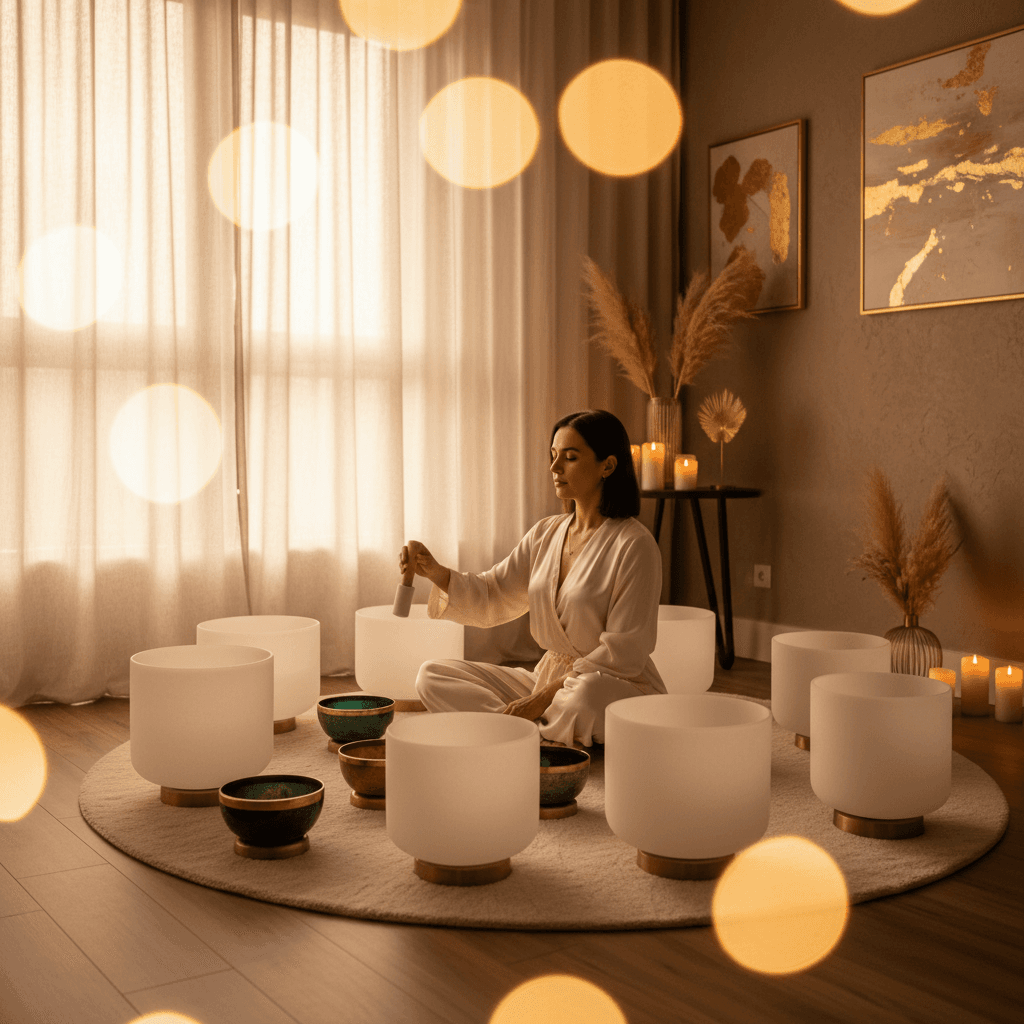
At Soul Art, we deeply respect the science and the sanctity of life's transitions. Our founder, Larissa Steinbach, has developed sound wellness practices that are grounded in this understanding, creating a supportive container for both end-of-life care and bereavement. We recognize that sound is one of the most powerful and gentle tools for navigating these profound experiences.
Our approach is not about treating a condition, but about fostering an environment of deep peace, acceptance, and connection. For individuals in palliative care, we utilize specific frequencies and instruments to promote profound relaxation and ease anxiety. Techniques may include:
- Himalayan Singing Bowls: The pure, resonant tones are placed gently on or around the body, creating vibrations that may help soothe the nervous system.
- Low-Frequency Gongs: The deep, grounding resonance of a Sun or Earth gong can create a sense of stability and calm, anchoring the individual in a state of peace.
- Gentle Chimes and Vocal Toning: Soft, harmonious sounds are used to create a serene auditory environment, honouring the brain’s continued ability to receive and process sound.
For those navigating grief, a sound bath at Soul Art can be a powerful self-care practice. It provides a safe space to process complex emotions without words, allowing the vibrations to help release tension and stress stored in the body. It is a way of using sound to tend to one's own wellbeing while honouring the memory of a loved one.
Your Next Steps: Cultivating Auditory Compassion
Whether you are caring for a loved one at the end of their life or moving through your own journey of grief, you can integrate the power of sound in gentle, meaningful ways. This knowledge empowers you to act with intention and compassion.
Here are a few practical steps you can take today:
- Speak with Love: If you are with someone who is unresponsive, continue to speak to them. Use a calm, reassuring tone. Share memories, read poetry, or simply tell them they are loved. Your voice is a powerful, familiar vibration that their brain may still register.
- Create a Soothing Soundscape: Play gentle, familiar music that the person enjoyed. Avoid jarring sounds or the chaotic noise of a television. The goal is to create a peaceful auditory environment that promotes rest.
- Practice Mindful Listening: For those grieving, take time to listen to the world around you. Notice the sounds of nature, play a favorite piece of music, or simply sit in silence and listen to your own breath. This can be a grounding practice that helps you reconnect with the present moment.
- Consider a Sound Bath for Self-Care: Grieving is emotionally and physically exhausting. A sound wellness session is a non-verbal way to support your nervous system, release stress, and give yourself a moment of profound rest and restoration.
In Summary: The Enduring Resonance of Sound
The journey through life's final moments is profoundly personal, yet science reveals a universal truth: our connection to sound is one of the last to fade. The brain's remarkable ability to hear, even in an unresponsive state, invites us to approach the end of life with greater reverence and presence. From the neurological surge that may accompany NDEs to the comforting auditory experiences of ADCs, sound forms an invisible thread connecting life, death, and memory.
This knowledge transforms our understanding of care, compassion, and grief. It affirms that our words matter, our music matters, and our presence matters until the very end. At Soul Art Dubai, we are honoured to hold space for these sacred transitions, using the timeless power of sound to support peace, facilitate release, and honour the enduring symphony of a life well-lived.
Bookings Coming Soon
Soul Art is still in preparation. Session details and booking will be published here after launch.
Coming Soon
Related Articles
The Role of Sound in Cultural Death Practices
Death Doulas & Sound: Enhancing Peace in End-of-Life Journeys

Sound's Gentle Embrace: Supporting Late Alzheimer's with Sonic Wellness