Healing Parental Loss: Sound Wellness for Adult Children
Key Insights
Explore the profound impact of parental death on adult children and how sound wellness, offered by Soul Art and Larissa Steinbach, may support holistic healing and resilience.
Navigating the Echoes of Loss: Sound for Adult Children After Parental Death
The loss of a parent is a profound life transition, often mistakenly viewed as less impactful for adults than for children. However, research consistently shows that parental death can significantly affect adult children, impacting their psychological, physical, and even relational well-being for years. This enduring grief often goes unacknowledged, leaving many to navigate complex emotional landscapes in silence.
At Soul Art, Dubai's premier sound wellness studio founded by Larissa Steinbach, we understand that true healing begins with acknowledging these deep-seated experiences. We believe in providing gentle yet powerful pathways for processing grief and restoring inner harmony. This article delves into the intricate science behind parental loss in adulthood and explores how the therapeutic frequencies of sound wellness may offer a unique solace, supporting adults in finding peace amidst sorrow.
Here, we will unpack the multifaceted effects of parental bereavement, from its immediate psychological impact to its long-term influence on personal relationships and sense of self. Discover how a complementary approach like sound wellness can become an indispensable tool in your journey towards holistic healing and resilience, guiding you toward emotional regulation and profound relaxation.
The Science Explained: Understanding the Echoes of Parental Loss
The death of a parent, regardless of an adult child's age, is far more than a simple milestone; it is a profound life event with documented psychological and physical repercussions. Over the last two decades, studies have illuminated how adult children are impacted, with evidence linking parental death to challenges in well-being one to five years following the loss. The intricate nature of this grief underscores the need for compassionate and scientifically-informed approaches to support.
Psychological and Physical Impact of Bereavement
Research highlights a clear association between parental death and the psychological and physical well-being of surviving adult children. Studies by Moss & Moss (1983), Umberson & Chen (1994), and Horowitz et al. (1981) have shown various problematic effects. These can range from increased depressive symptoms to greater anxiety, sometimes appearing several years after the loss, as noted by Scharlach & Fredriksen (1993) and Douglas (1990). The prolonged nature of this impact suggests that grief is not a linear process but an intricate journey requiring sustained support.
The physical ramifications can also be significant. Children, particularly younger ones, often report illnesses after a parent's death, with some studies indicating that 61% of children aged six to seventeen experienced health issues. While these studies often focus on younger individuals, the stress response associated with grief can manifest physically in adults too, contributing to chronic stress, fatigue, and other somatic symptoms. This connection highlights the holistic toll that unresolved grief can take on the body and mind.
Impact on Relationships and Self-Perception
Parental death can ripple through other significant relationships in an adult child's life, particularly their marriage. A study by Douglas (1990) of 22 daughters and 18 sons revealed that a substantial percentage reported marital upheaval following a parent's death. Approximately 57% of female adult children and 30% of male adult children experienced marital challenges within three years. Many respondents spoke of their marriage as a continuation or replacement of the past parent-child relationship, indicating a deep emotional reorientation.
The nature of the relationship with the parent prior to death also profoundly influences the mourning process. Popek and Scharlach (1991) found that it's more complex than simply closeness. For instance, daughters who had ambivalent, conflictual, or emotionally distant relationships with their mothers showed an increased likelihood of experiencing delayed reactions to the death, one to five years later. This suggests that unresolved relational dynamics can complicate the grief journey.
Beyond relationships, losing a parent can dramatically shift an adult child's self-perception and sense of mortality. Watching parents age and decline in health can increase concerns about one's own aging, as found by Rakowski, Barber, and Seelbach (1983). Barrett (2003) noted that adults who rated their parents' health more poorly reported older subjective age identities. This profound realization of one's own mortality often accompanies the grief, signaling a significant transition in life's journey. The death of the second parent, in particular, may lead to a shift in an adult's own thinking, moving them up the generational ladder, potentially leading to better relationships with their own children (Kim, 2019).
Gender Differences and Anticipatory Grief
The contours of grief responses can vary significantly by gender, both of the parent and the adult child. Studies suggest that daughters often exhibit more intense grief responses than sons, while men may take longer to process their loss. Clinical psychologist Carla Marie Manly explains that males tend to show emotions less and compartmentalize more, which can prolong the grieving process. Losing a father has been associated with a perceived loss of personal mastery—affecting one's vision, purpose, and self-knowledge. In contrast, losing a mother often elicits a more raw and profound sense of loss, attributed to the nurturing nature of many mother-child relationships.
However, Benders-Hadi notes that complicated bereavement can occur regardless of which parent is lost; it is more often dependent on the unique relationship and bond that existed. The circumstances of death also play a crucial role. Anticipatory grief, where there is time to prepare for a parent's passing, can make coping less stressful. Omojola highlights that not being able to say goodbye, particularly in unexpected deaths common among younger adults, often contributes to feelings of depression and anger, intensifying the grief experience. This emphasizes the nervous system's need for resolution, which sound wellness practices may gently facilitate.
The Brain's Response to Grief and Sound
Grief triggers a complex cascade of neurological responses. The limbic system, particularly the amygdala, becomes highly activated, leading to heightened emotional states such as anxiety, sadness, and even anger. The prefrontal cortex, responsible for executive functions like decision-making and emotional regulation, can become overwhelmed, making it difficult for individuals to concentrate or manage their emotions effectively. This sustained activation of the stress response can lead to imbalances in the nervous system, perpetuating feelings of unease and distress.
Sound wellness practices, by engaging the auditory system, can directly influence brainwave states and the autonomic nervous system. Specific frequencies and harmonic vibrations are associated with shifting brainwave patterns from a state of beta (alert, active) to alpha (relaxed, calm) and even theta (deep relaxation, meditative). This transition can help to calm the amygdala, reduce activity in the stress response pathways, and promote vagal nerve activation. The vagus nerve plays a crucial role in regulating internal organ functions, including heart rate, digestion, and breathing, and its activation can induce a profound sense of physiological relaxation and safety. By encouraging these shifts, sound can provide a gentle yet powerful means to regulate the nervous system, offering a reprieve from the intense emotional and physical sensations of grief and facilitating deeper emotional processing.
How It Works in Practice: Experiencing Sound for Healing Grief
Stepping into a sound wellness session at Soul Art is an invitation to embark on a journey of profound introspection and gentle release. It is a space designed for you to simply be, to allow the therapeutic frequencies to wash over you, and to surrender to the present moment. This practice offers a unique opportunity to address the often-unspoken burdens of parental loss, supporting the nervous system in finding equilibrium.
The Immersive Sound Journey
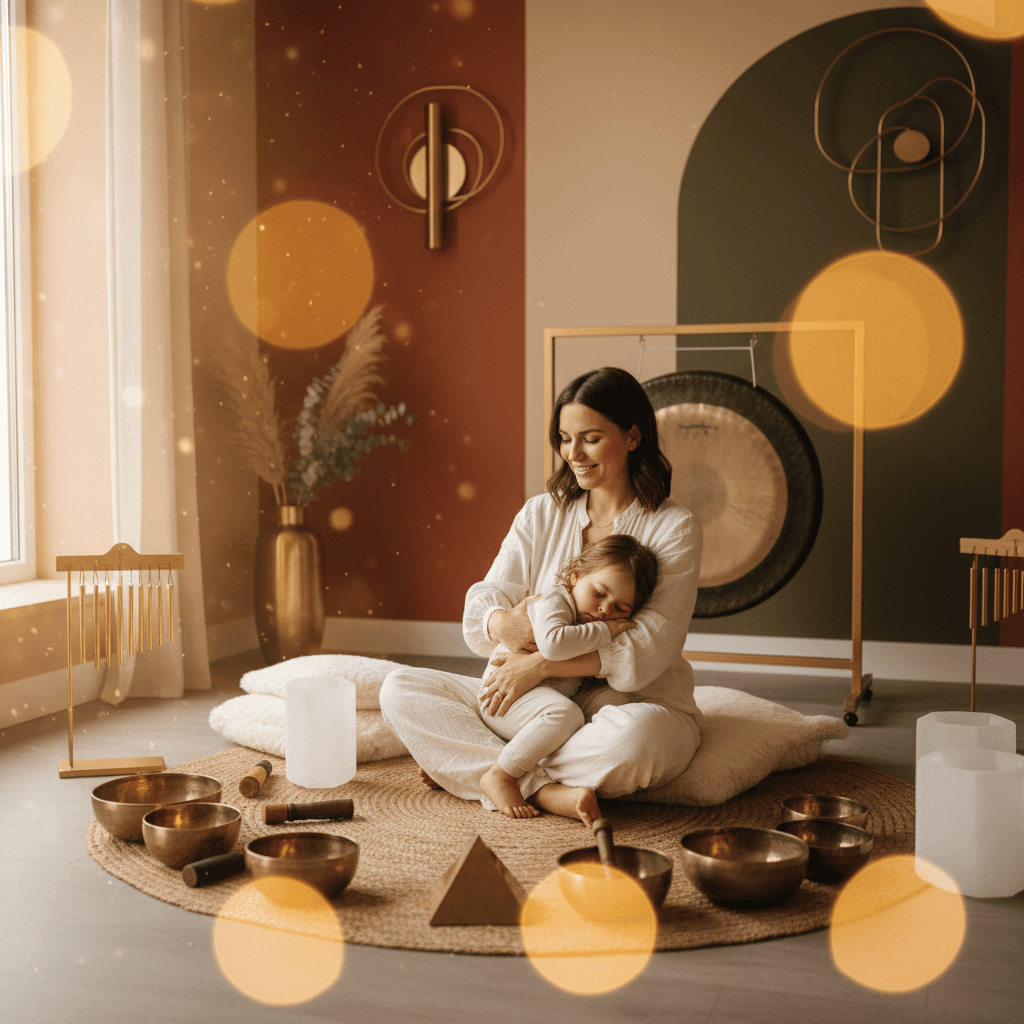
Upon entering the studio, you are enveloped in an atmosphere of tranquility and quiet luxury. The setting itself, thoughtfully curated by Larissa Steinbach, is designed to soothe the senses and prepare you for deep relaxation. As you recline comfortably, the session begins with the resonant tones of various instruments. Crystal singing bowls emit pure, sustained frequencies that penetrate deeply into the body, while the deep, undulating vibrations of gongs create an immersive soundscape. Chimes and other instruments add layers of intricate harmonics, guiding your mind into a meditative state.
Many people report feeling a gentle wave of relaxation sweep over them as the sounds begin. The vibrations are not just heard; they are felt throughout the body, engaging on a cellular level. This tactile experience of sound can be incredibly grounding, drawing your attention away from distressing thoughts and towards the present physical sensation. This process may support the release of stored tension and emotional blockages, creating a sense of lightness and spaciousness within.
Releasing and Rebalancing the Nervous System
In practice, sound wellness provides a powerful conduit for stress reduction and emotional regulation. The specific frequencies used in a Soul Art session are chosen to encourage brainwave states associated with deep relaxation, such as alpha and theta waves. When the brain transitions into these states, the body’s parasympathetic nervous system, responsible for "rest and digest," becomes more active. This counteracts the "fight or flight" response often heightened during periods of grief.
Clients often describe a profound sense of peace and stillness emerging during and after a session. This deep relaxation creates a safe internal environment for emotions related to grief to surface gently and be acknowledged, rather than suppressed. It is not about forcing emotions, but allowing them to flow naturally, supported by the soothing vibrations. Preliminary studies indicate that such practices may help reduce symptoms of anxiety and depression, and many people report improved sleep quality and a greater capacity for emotional resilience in their daily lives.
The practice helps to rebalance the autonomic nervous system, leading to a calmer heart rate, more regulated breathing, and a reduction in muscle tension. This physiological shift is crucial for adults processing parental loss, as chronic stress can exacerbate existing mental and physical health challenges. Through consistent engagement with sound wellness, individuals may develop a stronger sense of inner calm, fostering a gentle pathway towards accepting and integrating their grief, allowing them to move forward with a renewed sense of well-being.
"In the sacred space of sound, the echoes of loss can be gently acknowledged and transformed, not forgotten, but integrated into a tapestry of resilience and peace."
The Soul Art Approach: A Sanctuary for Healing
At Soul Art, Larissa Steinbach has meticulously crafted an approach to sound wellness that transcends mere relaxation, offering a sophisticated and deeply personal journey towards holistic healing, particularly for those navigating complex emotional landscapes like parental grief. Her method is rooted in a profound understanding of both ancient wisdom and contemporary scientific principles, creating a unique sanctuary for transformation.
Larissa Steinbach’s Philosophy and Expertise
Larissa Steinbach, the visionary founder of Soul Art, believes that sound is a fundamental vibration that connects us to our deepest selves and the universal rhythms of life. Her philosophy is centered on creating bespoke experiences that cater to the individual's unique needs, recognizing that grief is a highly personal process. With extensive training and a compassionate spirit, Larissa combines intuitive guidance with expert knowledge of sound frequencies to facilitate powerful shifts in well-being.
Her approach is not about clinical intervention, but about providing a complementary pathway for self-discovery and emotional release. Larissa creates a non-judgmental and supportive environment where individuals feel safe to explore their inner worlds and process their emotions at their own pace. This emphasis on safety and individual pacing is particularly vital when addressing the sensitive nature of parental loss.
Unique Instruments and Techniques
The Soul Art experience is distinguished by the exquisite selection and masterful application of specific instruments. Larissa frequently utilizes a symphonic array of:
- Crystal Singing Bowls: These bowls, tuned to specific energetic centers of the body, produce pure, resonant tones that are believed to align with the body's natural frequencies, promoting cellular harmonization and deep relaxation.
- Gongs: The powerful, all-encompassing vibrations of gongs create an immersive sonic bath that can facilitate a meditative or trance-like state, encouraging the release of deep-seated tensions and emotional blockages.
- Himalayan Singing Bowls: These traditional bowls offer earthy, rich overtones that can ground and center the individual, fostering a sense of stability and peace.
- Chimes and Other Percussion: Delicate chimes and other instruments add ethereal textures to the soundscape, enhancing the meditative experience and inviting gentle mental clarity.
Larissa's skill lies in her ability to intuitively blend these instruments, creating a unique "sound tapestry" that responds to the energy of the room and the needs of the individuals present. She often incorporates her own voice, using gentle chants or toning to deepen the experience and create a profound sense of connection and comfort. This personalized artistry ensures that each session at Soul Art is a truly transformative and deeply restorative experience, moving beyond mere auditory stimulation to facilitate genuine inner work and emotional processing.
Your Next Steps: Embracing Healing and Well-being
Navigating the grief of parental loss is a profoundly personal journey, but it is not one you must walk alone. Integrating supportive practices into your life can significantly enhance your capacity for healing and resilience. Sound wellness offers a gentle, non-invasive avenue for this support, complementing other forms of care.
Here are some practical steps you can consider to nurture your well-being:
- Acknowledge Your Grief: Allow yourself to feel the full spectrum of emotions that arise. There is no right or wrong way to grieve, and acknowledging your feelings is the first step towards processing them.
- Prioritize Self-Care: Focus on fundamental practices that nourish your body and mind. This includes ensuring adequate sleep, maintaining a balanced diet, and engaging in light physical activity. These foundations may support nervous system regulation during stressful times.
- Seek Community and Support: Connect with friends, family, or support groups who understand your experience. Sharing your feelings can be incredibly validating and may help alleviate feelings of isolation. Remember, social bonds can serve as a protective buffer against distress.
- Explore Complementary Practices: Consider holistic wellness approaches like meditation, mindfulness, or sound wellness. These practices may support stress management, emotional processing, and deep relaxation.
- Practice Conscious Breathing: Simple breathing exercises can immediately calm the nervous system. Dedicate a few minutes each day to deep, diaphragmatic breathing to bring a sense of grounding and peace.
Embracing these steps can create a strong foundation for your healing journey. If you are seeking a serene and deeply supportive environment to process your grief and restore your inner balance, Soul Art offers bespoke sound wellness experiences designed with profound care and understanding.
In Summary: A Harmonic Path Through Grief
The death of a parent, even in adulthood, creates profound ripples across psychological, physical, and relational spheres. It is a complex experience that can influence an individual's sense of self, relationships, and perception of their own mortality for years. Recognizing the multifaceted impact of this loss is crucial for fostering genuine healing and well-being.
Sound wellness, as practiced at Soul Art by Larissa Steinbach, offers a unique and complementary approach to navigating this grief. Through carefully curated frequencies and immersive vibrations, it provides a powerful pathway to soothe the nervous system, reduce stress, and facilitate emotional processing. This practice encourages a return to inner calm, supporting individuals in developing resilience and finding a gentle acceptance of their loss.
Soul Art provides a sanctuary where sophisticated wellness meets profound empathy, offering a space for deep relaxation and self-discovery. We invite you to experience the transformative potential of sound, guiding you towards a state of harmony and peace amidst life's challenges.
Bookings Coming Soon
Soul Art is still in preparation. Session details and booking will be published here after launch.
Coming Soon
Wellness Disclaimer: This article is for educational and informational purposes only. It does not constitute medical advice, diagnosis, or treatment. Soul Art Dubai provides non-medical wellness experiences focused on relaxation, stress management, and general wellbeing. Sound wellness is a complementary practice and should not replace professional medical care.
Related Articles
The Role of Sound in Cultural Death Practices
Death Doulas & Sound: Enhancing Peace in End-of-Life Journeys

Sound's Gentle Embrace: Supporting Late Alzheimer's with Sonic Wellness