Hope After Loss: Sound for Future Vision at Soul Art Dubai
Key Insights
Discover how sound wellness at Soul Art Dubai with Larissa Steinbach can help you navigate loss, foster neuroplasticity, and cultivate a hopeful future vision.
The human spirit is an intricate tapestry of resilience and vulnerability, often tested by the profound experience of loss. Whether it's the passing of a loved one, the ending of a significant chapter, or the shattering of a cherished dream, loss leaves an indelible mark, often dimming our perception of the future. Yet, what if our bodies and minds inherently possess a remarkable capacity for renewal, a biological blueprint for adaptation that extends beyond mere physical recovery to encompass our emotional and psychological landscapes?
Scientific advancements are continually unveiling the extraordinary ways our biological systems respond to damage and seek restoration, even in areas previously thought to be immutable. This understanding offers a profound parallel to the human journey through grief: a testament to the potential for cultivating a new "future vision" even after profound setbacks. At Soul Art Dubai, we explore how the ancient practice of sound wellness, guided by founder Larissa Steinbach, can serve as a powerful catalyst in harnessing this innate resilience, helping individuals navigate the aftermath of loss and gently re-envision a path forward.
This article delves into the fascinating science behind our body's capacity for renewal, bridging the gap between physical regeneration and the mental fortitude required to embrace hope. We will explore how targeted sound frequencies can harmonise with your nervous system, fostering an optimal environment for emotional processing and the emergence of a revitalized outlook on life. Join us as we uncover how sound can empower you to transform despair into a quiet, unwavering sense of hope, guiding you toward a future vision that feels both authentic and inspiring.
The Science Explained: The Biology of Hope and Vision
For centuries, the human body's capacity for recovery after significant injury has captivated scientists and philosophers alike. While we may not possess the spectacular regenerative abilities of some amphibians, capable of regrowing entire limbs, recent scientific discoveries are illuminating a more subtle, yet equally profound, form of biological resilience within mammals, including humans. These insights offer a powerful metaphor for our emotional and psychological capacity to heal and forge a new path forward after experiences of loss.
The Brain's Remarkable Plasticity and Sensory Adaptation
Traditionally, neuroscience held a firm belief that neurons, the fundamental building blocks of our nervous system, were largely incapable of regeneration once damaged. This perspective suggested a fixed and somewhat limited capacity for recovery, particularly after traumatic injuries affecting sensory organs like the eyes. However, contemporary research is challenging these long-held assumptions, revealing an astounding underlying adaptability within our biological systems.
A groundbreaking study published in the journal JNeurosci by scientists at Johns Hopkins University in Maryland shed new light on this very phenomenon. Investigating the visual system of mice after injury, the researchers observed that while the damaged neurons themselves did not regrow, the surviving cells exhibited a remarkable increase in branching. This intricate process, known as "sprouting," allowed for the formation of a significantly higher number of new connections within the brain's visual system. Eventually, this compensatory branching restored nearly the same number of connections as were present before the injury. This discovery highlights the inherent biological drive to adapt and reconnect, even in the face of significant cellular damage. It underscores a fundamental principle: when one pathway is compromised, the system actively seeks to create alternative routes and connections.
Further illustrating this profound potential for restoration, other research teams are making significant strides in areas previously deemed impossible. Scientists at Duke-NUS Medical School, the Singapore Eye Research Institute, and the Karolinska Institute in Sweden have achieved promising results in preclinical studies aimed at restoring vision. Their innovative approach involves using stem cells to produce progenitor photoreceptor cells—the crucial light-detecting cells in the eye—and then transplanting these into models of damaged retinas. This technique has yielded significant vision recovery, marking a crucial first step towards potentially reversing cellular degeneration that underlies various forms of visual decline and blindness. Such advancements are not just medical breakthroughs; they are profound testaments to the continuous scientific pursuit of restoring lost functions and rekindling possibilities.
Similarly, the realm of auditory science is witnessing its own revolution in regeneration. Harvard Medical School scientists at Mass Eye and Ear, led by Zheng-Yi Chen, have developed a novel drug-like cocktail of molecules. This cocktail has successfully regenerated hair cells in a mouse model by reprogramming specific genetic pathways within the inner ear. The regeneration of these hair cells, which are essential for hearing and notoriously unable to regenerate in mammals, represents a "holy grail" in the field of hearing loss treatment. These collective scientific efforts in sensory restoration – whether through neuronal sprouting, stem cell transplantation, or cellular reprogramming – paint a vivid picture of the body's latent capacity for intricate self-repair and adaptation. They inspire a broader understanding of how systems, both biological and psychological, can re-establish equilibrium and forge new pathways even after suffering what appears to be irreparable loss.
Sound's Impact on Neuroplasticity and Emotional Regulation
While these scientific studies focus on physical regeneration, their core message—that systems can adapt, create new connections, and find ways to restore function after loss—is powerfully relevant to emotional and psychological healing. This is where the profound influence of sound wellness emerges as a complementary approach. Our brains are not static; they are incredibly dynamic organs capable of constant reorganization and adaptation, a phenomenon known as neuroplasticity. This inherent flexibility means that our brains can form new neural connections and strengthen existing ones in response to new experiences, learning, and environmental stimuli.
Sound, particularly specific frequencies and rhythmic patterns, has a direct and measurable impact on our brainwave states. During periods of deep relaxation induced by sound, the brain often shifts from beta waves (associated with alertness and focused concentration) to alpha waves (relaxed, calm awareness) and even theta waves (deep relaxation, meditation, creativity, and the "twilight state" between wakefulness and sleep). These slower brainwave states are not merely pleasant; they are physiologically beneficial.
When the nervous system shifts into a parasympathetic (rest and digest) state, largely mediated by the vagus nerve, the body's internal resources are redirected from 'fight or flight' responses towards healing and restoration. The vibrations of sound instruments, especially low-frequency sounds, may gently stimulate the vagus nerve, which in turn helps to downregulate the stress response, reduce cortisol levels, and promote a sense of profound calm. This physiological state of deep relaxation creates an optimal environment for neuroplasticity to occur.
In a state of reduced stress and heightened receptivity, the brain is better equipped to process emotions, release ingrained tension, and form new neural pathways. This process may support individuals in moving beyond patterns of grief or despair, allowing for the gentle emergence of new perspectives and a renewed sense of purpose. Sound wellness does not promise to "cure" grief, but it offers a powerful framework for nervous system regulation, creating the necessary inner space for the mind to adapt, integrate experiences of loss, and begin to cultivate a future vision. It's about providing the subtle yet profound energetic and physiological support that empowers your own innate capacity for emotional and psychological "sprouting" and renewal.
How It Works in Practice: Cultivating Inner Vision Through Sound
The scientific insights into our body's incredible capacity for adaptation and regeneration provide a potent backdrop for understanding the practical applications of sound wellness. When we translate the theory of neuroplasticity and nervous system regulation into a tangible experience, we begin to appreciate how sound can be a profound ally in navigating the complex terrain of loss and rediscovering a hopeful future vision. The journey within a sound wellness session is not merely passive listening; it is an active engagement with resonant frequencies that gently guide the mind and body towards a state of profound peace and inner clarity.
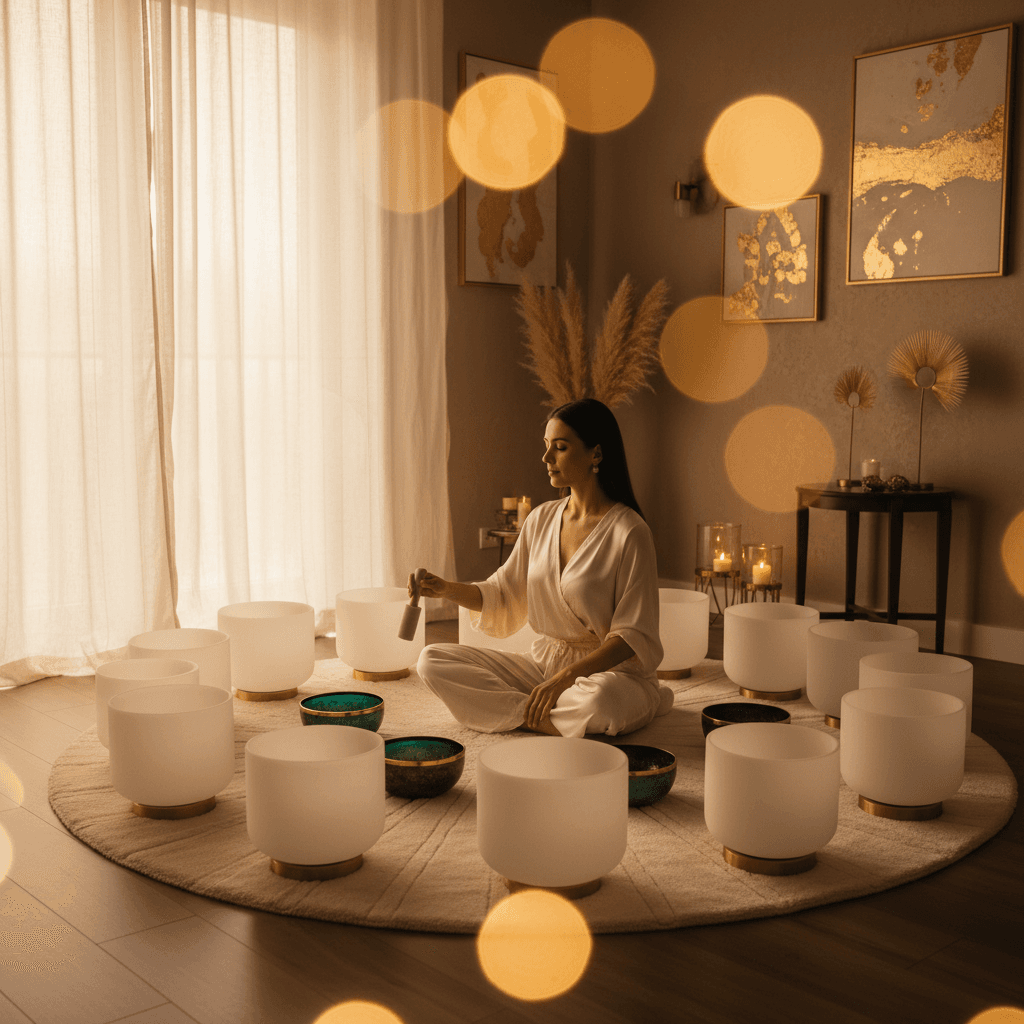
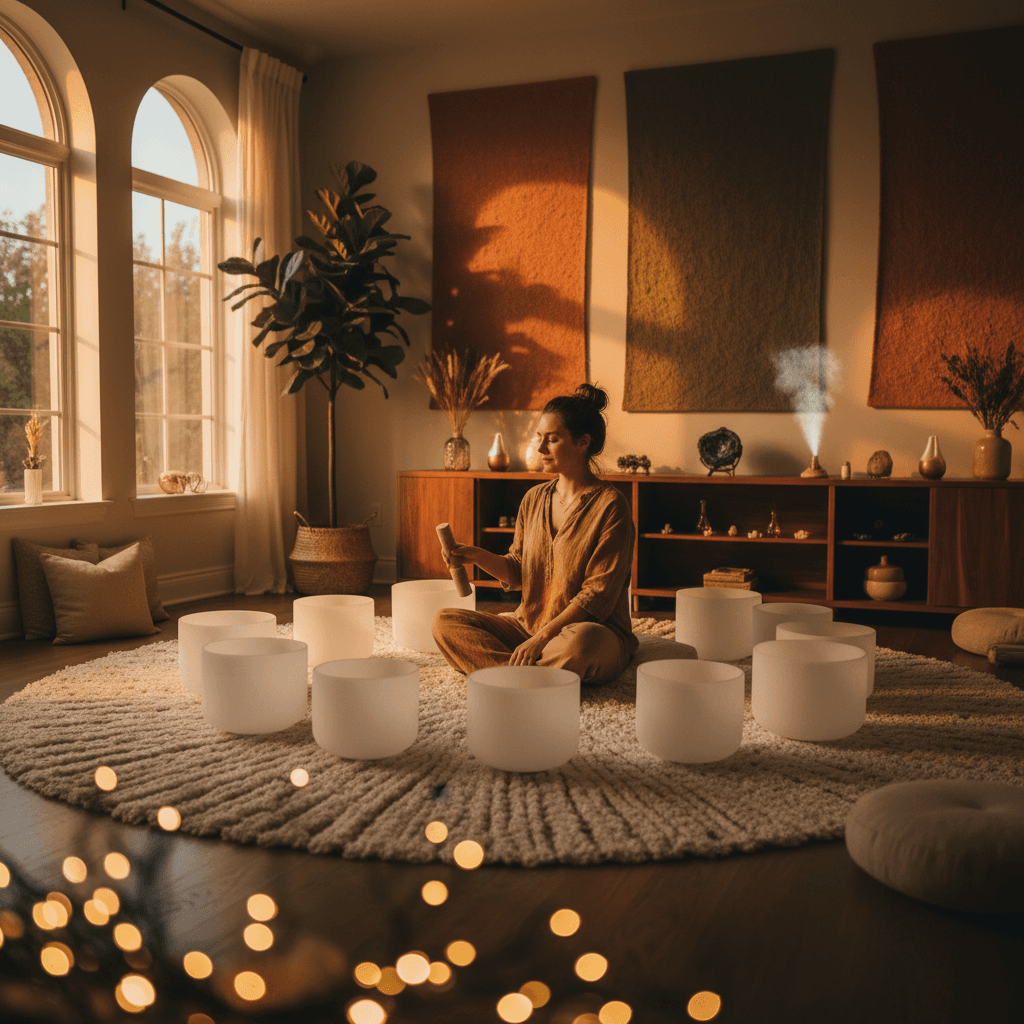
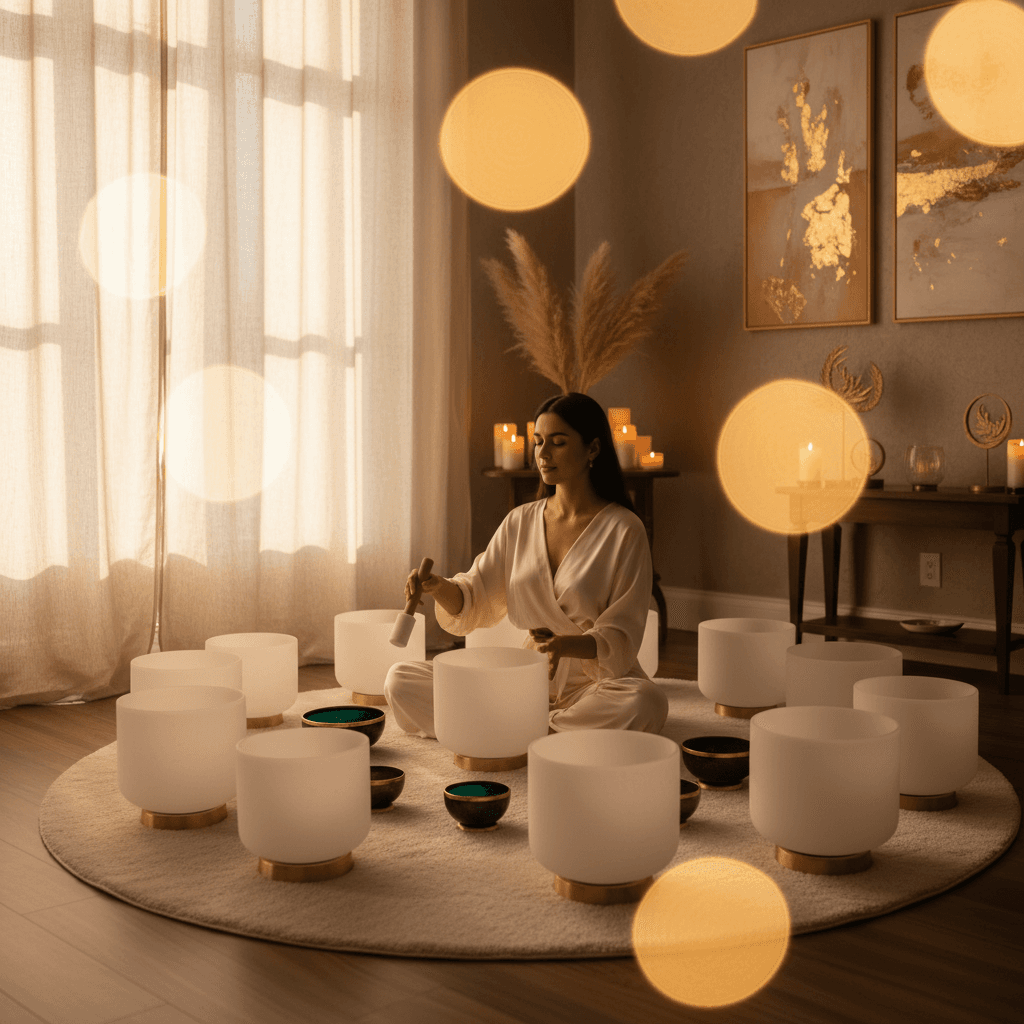
Imagine stepping into a serene space, thoughtfully curated to enhance sensory calm and introspection. As you recline comfortably, the gentle caress of pure, resonant tones begins. These are not merely sounds; they are carefully selected frequencies that interact directly with your energetic and cellular systems. The experience is deeply immersive, encompassing not just your auditory sense but your entire being. Many people report feeling the subtle, yet powerful, vibrations permeating their bodies, creating a sense of being deeply held and supported. This vibrational healing helps to loosen energetic blockages and release accumulated tension, both physical and emotional, often stored deep within the body after periods of stress or grief.
The instruments themselves—from the deep, grounding resonance of gongs to the ethereal, crystalline purity of quartz crystal singing bowls and the precise frequencies of tuning forks—are chosen for their unique ability to evoke specific responses within the nervous system. As the layers of sound wash over you, your mind is invited to quiet its incessant chatter. The often-overwhelming 'noise' of grief, regret, or anxiety begins to recede, creating a mental canvas clear enough for introspection. This quietude is not an escape from difficult emotions, but rather an invitation to observe them without judgment, allowing them to gently dissipate or transform.
"In the stillness cultivated by resonant sound, the mind finds fertile ground not for forgetting, but for reimagining, for perceiving the threads of a new beginning woven into the fabric of loss."
The deep relaxation fostered by sound wellness is crucial. In this state, the analytical mind steps back, and the subconscious becomes more accessible. This allows for a deeper level of emotional processing, where stagnant emotional energy associated with loss can be gently acknowledged and released. This process is profoundly cathartic for many. It's in this expansive, calm state that the concept of "future vision" truly begins to take root. Without the constant pressure of external demands or internal turmoil, individuals often find a renewed capacity for clarity and insight. They may begin to perceive possibilities they couldn't see before, or feel a subtle stirring of inspiration that was previously obscured by the weight of their experience.
The experience fosters an internal environment where new perspectives can emerge organically. It’s not about forcing optimism but about creating the internal conditions where hope, like a resilient sprout, can begin to unfurl. This self-care practice offers a pathway to not just cope with loss but to actively engage with the process of healing and growth, gently guiding the individual towards envisioning a future that, while different from what was lost, holds its own unique beauty and purpose. It is a powerful, non-invasive method for connecting with your inner wisdom, allowing your intuition to guide you towards a revitalized sense of self and direction.
The Soul Art Approach: Larissa Steinbach's Path to Renewal
At Soul Art Dubai, the journey of cultivating hope and a future vision after loss is meticulously crafted and deeply intentional, guided by the expertise and compassionate vision of founder Larissa Steinbach. Recognizing that each individual's experience of loss is unique, Larissa has developed a distinct approach that integrates the scientific understanding of nervous system regulation and neuroplasticity with the profound wisdom of ancient sound healing traditions. Her methodology transcends mere technique, offering a holistic wellness experience that nourishes the mind, body, and spirit.
Larissa Steinbach's philosophy at Soul Art is centered on creating a sacred and nurturing space where individuals feel safe to explore their inner landscapes without judgment. Her approach is characterized by a "quiet luxury" – an understated elegance that prioritizes depth, authenticity, and profound inner work over ostentatious display. Every element of the Soul Art experience, from the serene ambiance of the studio to the selection of instruments and the flow of each session, is thoughtfully designed to facilitate deep relaxation, emotional release, and the gentle reawakening of one's intrinsic capacity for joy and purpose.
What makes the Soul Art method truly unique is Larissa's intuitive ability to attune to the specific needs of her clients. She doesn't just play instruments; she orchestrates bespoke soundscapes that respond to the energetic imprint of the individual. Utilizing a rich array of sacred instruments, including meticulously curated Himalayan singing bowls, powerful gongs, pure crystal singing bowls, and precision-tuned tuning forks, Larissa crafts immersive sonic journeys. Each instrument is chosen for its specific vibrational frequency and its potential to influence brainwave states and bodily resonance.
For instance, the deep, pervasive vibrations of the gongs are often used to facilitate a release of deeply held tension and to guide the mind into a meditative state conducive to emotional processing. The clear, resonant tones of the crystal bowls, on the other hand, are celebrated for their ability to align with the body's energy centers and promote a sense of clarity and expansion. Tuning forks, with their precise frequencies, are sometimes used to target specific areas, potentially supporting cellular harmony and promoting a sense of energetic balance. This carefully orchestrated interplay of sounds creates a complementary approach to healing, one that honors the multifaceted nature of human experience.
Larissa Steinbach firmly believes that sound can act as a bridge to inner wisdom, helping clients gently uncover new perspectives and foster a renewed sense of purpose after navigating the complexities of loss. Her goal is not to impose a "cure," but to empower individuals to tap into their own innate resilience, guiding them through a process of releasing what no longer serves them, recalibrating their energetic systems, and ultimately, envisioning a future imbued with hope and possibility. The Soul Art experience is an invitation to embark on a transformative journey, offering a powerful tool for self-discovery and the gentle cultivation of a revitalized life vision.
Your Next Steps: Embracing a Future of Hope
Navigating the aftermath of loss is a deeply personal journey, yet it’s one where you don't have to walk alone. The insights from science and the wisdom of sound wellness converge to offer tangible pathways for cultivating hope and consciously shaping your future vision. Taking proactive steps can make a profound difference in your emotional and psychological well-being. Here are some actionable steps you can integrate into your daily life, supported by the power of sound wellness.
- Prioritize Consistent Self-Care: Regularly engage in practices that nurture your mind, body, and spirit. This could include gentle movement like yoga or walking, spending time in nature, or simply allowing yourself moments of quiet reflection. Consistent self-care is foundational to rebuilding your energy and resilience.
- Embrace Mindfulness and Meditation: Even short periods of focused breathing or guided meditation can help regulate your nervous system, reduce stress, and create mental space for new thoughts and perspectives. Many apps and online resources offer accessible starting points for these practices.
- Seek Supportive Connections: Connect with friends, family, or support groups who understand and respect your journey. Sharing your experiences can validate your feelings and foster a sense of belonging, reminding you that you are not isolated in your process.
- Engage with Sound Wellness Regularly: Incorporate sound baths, meditative music, or specific healing frequencies into your routine. These practices may support deep relaxation, emotional processing, and the recalibration of your energetic system, opening pathways for new insights and a renewed sense of hope.
- Set Small, Achievable Intentions: Rather than feeling overwhelmed by the idea of a grand "future vision," start with small, realistic goals. These could be daily intentions for well-being, weekly creative pursuits, or monthly social engagements. Each small step forward builds momentum and reinforces a sense of agency.
Allowing yourself the space and support to heal is not a luxury, but a necessity for reclaiming your life after loss. Soul Art Dubai offers a sanctuary where you can explore these transformative practices under expert guidance. If you are ready to gently navigate your path to renewal and begin to shape a hopeful future vision, we invite you to experience the profound benefits of sound wellness with Larissa Steinbach.
In Summary
The journey through loss is one of the most challenging human experiences, yet it is profoundly underscored by our innate capacity for resilience and renewal. As scientific research continues to unveil the body's remarkable ability to adapt and form new connections, even after significant damage, we find a powerful parallel for our emotional and psychological capacity to heal. Sound wellness, through its ability to influence brainwave states and regulate the nervous system, emerges as a potent complementary approach in this healing process.
At Soul Art Dubai, Larissa Steinbach expertly harnesses the therapeutic power of sound to create a nurturing environment where individuals can release stagnant emotions, achieve deep relaxation, and foster optimal conditions for neuroplasticity. This allows for the gentle emergence of new perspectives and a revitalized "future vision." By supporting the body's natural drive for adaptation, Soul Art empowers you to not just cope with loss, but to embrace a renewed sense of purpose and hope. We invite you to experience this transformative journey and discover your path to inner peace and a brighter tomorrow.
Bookings Coming Soon
Soul Art is still in preparation. Session details and booking will be published here after launch.
Coming Soon