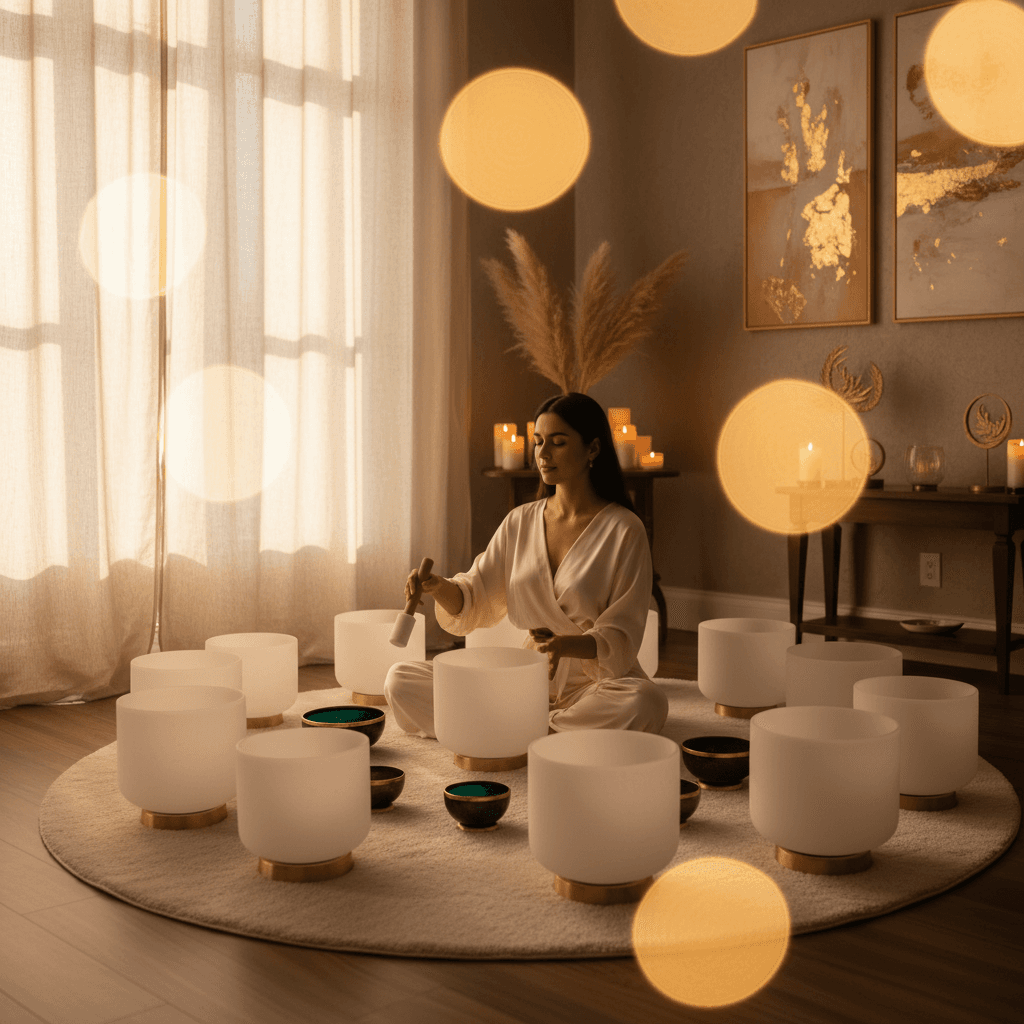
Navigating Uncertain Grief: Sound Wellness for Ambiguous Loss

Key Insights
Explore ambiguous loss and how sound wellness at Soul Art Dubai, with Larissa Steinbach, offers comfort and coping strategies.
Have you ever experienced a profound loss that left you utterly adrift, not knowing how to grieve because there was no clear ending? This deeply unsettling experience has a name: ambiguous loss. Unlike conventional grief, which often follows a defined event like a death, ambiguous loss is characterized by its inherent uncertainty, leaving individuals in an emotional limbo that can persist indefinitely.
At Soul Art, Dubai's premier sound wellness studio, we understand the unique challenges posed by this form of grief. Founded by the visionary Larissa Steinbach, Soul Art offers a compassionate, scientifically-grounded approach to support those navigating the complex landscape of uncertain grief. This article delves into the science behind ambiguous loss and how the power of sound wellness may offer a vital pathway to resilience and emotional solace. We will explore how these complementary practices can help regulate the nervous system and foster inner peace when external circumstances remain painfully unresolved.
The Science Explained: Understanding Ambiguous Loss
Ambiguous loss, a term coined by Dr. Pauline Boss in the 1970s, describes a loss that lacks clarity, leaving no resolution and consequently, no clear path for traditional grieving. This absence of finality can lead to profound psychological and physiological distress, distinguishing it significantly from more conventional forms of grief where death provides a definitive end point. Boss's extensive research highlights how this enduring uncertainty immobilizes the grieving process, trapping individuals in a state of deep, chronic stress that may last a lifetime.
Two Core Types of Ambiguous Loss
Dr. Boss identifies two primary categories of ambiguous loss, both resulting in a deeply disorienting experience for those affected.
-
Physical Absence, Psychological Presence: This occurs when a loved one is physically gone, but their psychological presence remains.
- Examples include missing persons, soldiers declared missing in action, individuals kidnapped or lost to migration crises, or those unaccounted for after natural disasters or terrorist attacks (Boss, 2004; Mazzarelli et al., 2021).
- In these cases, there is no body to bury, no clear confirmation of death, and no traditional ritual to mark the end of life.
- Families are often caught in a "never-ending wait," leading to prolonged and traumatic grief, as observed in studies of relatives of missing persons (PMC, 2020). The discovery of a corpse, while traumatic, can paradoxically allow mourners to finally recognize and process their grief.
-
Physical Presence, Psychological Absence: This involves a loved one being physically present, yet psychologically or emotionally unavailable.
- Common examples include individuals living with dementia, severe mental illness, addiction, or even those undergoing significant identity changes (Blieszner et al., 2007; Haley, WhatsYourGrief, 2023).
- In these situations, the person you knew and loved may no longer be accessible in the same way, creating a "loss within a loss."
- The paradox of seeing a loved one's body while their mind or personality has changed can be intensely confusing and isolating, as individuals grapple with who this person is now and how to relate to them.
The Neurobiological Impact of Unresolved Grief
The brain processes ambiguous losses differently than clear-cut losses. In typical grief, the brain works to reconcile conflicting information: the cognitive knowledge of death versus the deep-seated attachment belief that "this person will always be here for me" (O'Connor, APA, 2023). With ambiguous loss, this conflict is intensified and prolonged because the cognitive clarity of death is absent.
- Chronic Stress Response: The continuous uncertainty inherent in ambiguous loss triggers a sustained activation of the body's stress response system. This prolonged state of fight-or-flight can lead to physical and emotional exhaustion, affecting everything from sleep patterns to immune function (Boss, 2010; Betz & Thorngren, 2006).
- Cognitive Dissonance and Confusion: The lack of concrete information fuels cognitive dissonance, making it challenging for the brain to create a coherent narrative around the loss. This can manifest as persistent confusion, anxiety, and a questioning of one's view of the world as a fair and safe place (Boss, 2004; Boss, 2010).
- Emotional Dysregulation: Without the traditional markers of grief, individuals often struggle with a wide range of intense emotions—hope, despair, anger, guilt, loneliness—that oscillate without resolution. This "emotional vortex" can be overwhelming, leading to symptoms akin to PTSD and chronic depression (Academia.edu, 2015; Nathanson & Rogers, 2020).
- Isolation and Disenfranchised Grief: Society often struggles to acknowledge or validate ambiguous loss, leaving individuals feeling isolated and their grief disenfranchised. This lack of social recognition can exacerbate emotional distress and hinder the development of healthy coping mechanisms (Boss & Carnes, 2012).
Sound wellness practices, while not a medical treatment, offer a complementary approach to address the physiological and psychological fallout of ambiguous loss. By engaging the nervous system and fostering deep relaxation, these practices may provide a much-needed sanctuary for those living with unresolved grief.
How It Works in Practice: Sound for Emotional Support
In the face of ambiguous loss, where external control is non-existent and emotional chaos often reigns, finding internal resources for stability becomes paramount. Sound wellness offers a unique, non-verbal avenue to navigate this profound distress, focusing on regulating the nervous system and creating a safe space for emotional processing. Many people report that the vibrational frequencies of sound instruments provide a tangible anchor when their emotional world feels completely untethered.
The core principle lies in the way sound vibrations interact with the human body and mind. Our bodies are complex resonant systems, and when exposed to specific frequencies, they may shift from a state of sympathetic (fight-or-flight) dominance to parasympathetic (rest-and-digest) activation. This physiological shift is crucial for mitigating the chronic stress associated with ambiguous loss, offering a temporary reprieve from the relentless cycle of anxiety and hypervigilance.
Clients often describe their experience during sound sessions as deeply grounding and profoundly calming. As the resonant tones wash over them, they may feel a gentle release of muscular tension and a softening of mental resistance. This can be particularly impactful for individuals whose grief is "frozen," unable to progress due to the ongoing uncertainty (Boss, 2006). The immersive sound environment provides a contained space where emotions can surface and be acknowledged without the pressure of needing to understand or resolve the external situation.
Moreover, the act of simply being present with the sounds can cultivate a sense of mindfulness, drawing attention away from the "never-ending wait" and into the immediate sensory experience. This presence can offer a vital break from rumination and future-oriented anxieties, fostering a temporary sense of peace and mental clarity. Anecdotal evidence suggests that this focus on the present moment, guided by the soothing sounds, may support individuals in developing greater emotional resilience and self-regulation.
Sound wellness does not promise to "cure" ambiguous loss or provide the missing closure. Instead, it offers a powerful tool to manage the overwhelming emotional and physical symptoms that accompany it. By supporting nervous system regulation and facilitating a deeper connection to one's inner landscape, it empowers individuals to learn to live with the unresolved grief, much as Dr. Boss's work advocates (Boss, 1999). This complementary approach can help restore a sense of agency and inner peace amidst life's most profound uncertainties.
The Soul Art Approach: Larissa Steinbach's Unique Method
At Soul Art, Larissa Steinbach has meticulously crafted a sound wellness methodology specifically designed to address complex emotional states, including the nuanced challenges of ambiguous loss. Her approach is rooted in both scientific understanding of sound's effects on the nervous system and a deep, empathetic connection to the human experience of suffering. Larissa’s philosophy centers on creating a sanctuary where individuals can safely explore their inner world, finding solace and strength through vibrational healing.
What makes the Soul Art method unique is its holistic integration of intention, curated soundscapes, and a highly personalized experience. Larissa understands that ambiguous loss often manifests as deep emotional and physical exhaustion, coupled with intense confusion. She utilizes a carefully selected array of instruments, each chosen for its specific frequency and resonant qualities, to gently guide clients towards a state of profound relaxation and internal coherence.
Specific instruments frequently employed by Larissa include:
- Himalayan Singing Bowls: Known for their rich, sustained tones and powerful vibrations, these bowls are placed on or around the body, allowing their frequencies to permeate tissues and organs. This may support the release of tension and promote cellular relaxation.
- Gongs: The expansive, intricate sounds of gongs create an immersive sonic field, often leading to altered states of consciousness where deep emotional processing can occur. Their vibrations are particularly effective at encouraging mental stillness and reducing mental chatter.
- Crystal Singing Bowls: Tuned to specific chakra frequencies, crystal bowls produce pure, ethereal tones that many people report to be highly uplifting and cleansing. These can be particularly beneficial for balancing energy centers and promoting emotional clarity.
- Koschi Chimes and Rainsticks: Used for their delicate, atmospheric sounds, these instruments help to gently conclude a session, grounding the client back into the present moment with a sense of peace and renewal.
Larissa Steinbach guides each session with a compassionate presence, fostering an environment where individuals feel seen, heard, and supported in their unique journey with ambiguous loss. Her method emphasizes holding space for uncertainty, allowing the sound to be a non-judgmental companion through emotions that may not have clear answers. By facilitating a deeply meditative state, Soul Art's approach may help individuals regulate their emotional responses, build resilience, and discover new ways of coping with the persistent stress of unresolved grief.
"In the stillness created by sound, we often find the courage to sit with our uncertainties, not to resolve them, but to allow ourselves to simply be with what is."
This bespoke approach ensures that each client receives the nuanced care required to address the profound and often isolating nature of ambiguous loss, offering a gentle yet powerful path toward inner harmony.
Your Next Steps: Embracing Support for Uncertain Grief
Living with ambiguous loss is an arduous journey, but you don't have to navigate it alone. While the external circumstances of your grief may remain uncertain, you can empower yourself by seeking support for your internal experience. Integrating complementary wellness practices like sound healing into your routine can offer profound benefits for managing the stress and emotional toll.
Here are some practical steps you can take today to support your well-being:
- Acknowledge Your Grief: Validate your feelings. Recognize that ambiguous loss is a legitimate, profound form of grief, even without closure. Giving your experience a name, as Dr. Boss has done, can be incredibly validating.
- Prioritize Nervous System Regulation: Engage in practices that calm your nervous system. This could include deep breathing exercises, gentle movement, spending time in nature, or exploring sound wellness sessions. Reducing chronic stress is crucial for your physical and emotional health.
- Seek Understanding Communities: Connect with others who understand. Faith communities, support groups, or trusted friends can provide critical emotional and spiritual support during prolonged grief processes (Academia.edu, 2015). Sharing your experience can alleviate feelings of isolation.
- Explore Sound Wellness: Consider booking an introductory session at Soul Art. Our experienced practitioners, under the guidance of Larissa Steinbach, can introduce you to the calming and grounding power of sound, helping you find moments of peace amidst uncertainty.
- Practice Self-Compassion: Be kind to yourself. There is no timeline for ambiguous loss, and your journey is unique. Allow yourself to feel the full spectrum of emotions without judgment, and celebrate small moments of resilience.
Embracing these steps can help you cultivate a stronger internal foundation, enabling you to navigate the complexities of uncertain grief with greater peace and resilience.
In Summary: Finding Resonance in Uncertainty
Ambiguous loss presents a unique and profoundly challenging form of grief, marked by persistent uncertainty and a lack of closure. This unresolved state often leads to chronic stress, emotional dysregulation, and a deep sense of confusion, impacting both mental and physical well-being. Dr. Pauline Boss's groundbreaking work has illuminated this complex human experience, allowing us to acknowledge and validate this form of suffering.
Soul Art, under the compassionate leadership of Larissa Steinbach, offers a powerful complementary approach through sound wellness to support individuals living with uncertain grief. By gently guiding the nervous system towards relaxation and creating a safe space for emotional processing, sound healing may offer a vital pathway to managing stress and fostering resilience. While sound cannot resolve the external ambiguities of loss, it can profoundly support your journey toward inner peace, helping you to learn to live with unresolved grief and cultivate a deeper sense of well-being.
Bookings Coming Soon
Soul Art is still in preparation. Session details and booking will be published here after launch.
Coming Soon
Wellness Disclaimer: This article is for educational and informational purposes only. It does not constitute medical advice, diagnosis, or treatment. Soul Art Dubai provides non-medical wellness experiences focused on relaxation, stress management, and general wellbeing. Sound wellness is a complementary practice and should not replace professional medical care.