Guiding Grieving Children: A Parent's Compass for Resilience with Soul Art
Key Insights
Support your child through loss with expert guidance and holistic wellness. Discover compassionate strategies for resilience and healing at Soul Art Dubai.
Supporting Little Hearts: A Parent's Guide to Navigating Childhood Grief
Did you know that despite their profound emotional experiences, children are often "left to grieve alone" (Duncan, 2020)? This stark reality highlights a critical gap in how we, as a society, approach childhood bereavement. Many well-intentioned caregivers may inadvertently shield children from emotional pain, withholding vital information about loss, which can complicate their grieving process (Wray et al., 2022).
This comprehensive guide, brought to you by Soul Art, Dubai's premier sound wellness studio, delves into the scientifically-backed strategies for supporting grieving children. We will explore the unique facets of childhood grief, provide actionable parenting practices, and introduce how complementary wellness practices like sound healing, championed by Larissa Steinbach, may support emotional resilience. Understanding and acknowledging a child's grief is the first step towards fostering healing, meaning, and long-term well-being for the entire family.
Understanding Childhood Grief: A Scientific Perspective
Grief is a complex, deeply personal journey, and for children, it is uniquely intertwined with their developmental stage. Contemporary research has shifted away from viewing "acceptance and closure" as the sole end goals, instead emphasizing resilience and the development of meaning systems for coping with loss (Henry, 2020). Understanding these dynamics is crucial for providing effective support.
The Unique Landscape of Children's Grief
Children's grief is distinct from adult grief due to their still-developing cognitive and emotional skills. Younger children, for instance, may not fully grasp the permanence of death, leading to repetitive questions or a belief that the deceased person will return (Chen & Panebianco, 2018; Child Mind Institute). Some children might even harbor a misconception that their thoughts or actions somehow caused the death of a loved one (Chen & Panebianco, 2018).
The experience of loss can be profoundly stressful for children (Bergman et al., 2017), compounded by societal misconceptions that often lead to unacknowledged and unsupported grief. Erroneous assumptions, such as believing children do not grieve or that discussing the loss harms them, create environments where children's emotional needs are overlooked (Duncan, 2020). However, tailored interventions can significantly improve bereavement outcomes, particularly when delivered by supportive adults in the child's natural environment (Aoun et al., 2020; Paul & Vaswani, 2020; Wray et al., 2022).
The Power of Parental and Community Support
The effectiveness of a child's bereavement journey is profoundly linked to the well-being and responsive support of the adults in their lives. Research consistently indicates that interventions can improve children’s bereavement outcomes, and that care is most effective when supported by adults who meet youth where they are (Aoun et al., 2020; Paul & Vaswani, 2020; Wray et al., 2022). Parents’ own ability to access support and practice self-care directly models healthy coping mechanisms for their children, reassuring them of their caregivers' presence and energy (Child Mind Institute).
"Positive parenting" practices have been associated with fewer symptoms of maladaptive grief in children (MMHPI). These practices are less about what parents say and more about how they say it, conveying availability and connection. Key positive parenting behaviors include:
- Parental warmth: A general attitude of care and affection.
- Physical affection: Hugging, cuddling, and other comforting touches.
- Smiling: A simple gesture that communicates reassurance.
- Appropriate humor: Lightening the mood when suitable, showing that joy can still exist.
- Engaged listening: Showing genuine interest and enthusiasm when a child shares.
- Enjoying time together: Demonstrating that the parent finds joy in their child's company.
- Maintaining good eye contact: Conveying presence and attention.
These behaviors foster a secure attachment and allow children to feel safe in expressing their complex emotions (MMHPI).
The Physiological Impact of Loss
The death of a loved one, particularly a parent, is a traumatic event that places children at elevated risk for various negative outcomes (PMC article, Haine et al., 2008). Emotionally, children may experience intense symptoms such as sadness, shock, and confusion (Case et al., 2020; Mak, 2013; Tillman & Prozak, 2018). Physiologically, chronic stress can impact the developing nervous system, leading to a heightened state of alert or emotional dysregulation.
Bereaved children are at an elevated risk of poor physical and psychological outcomes throughout the grief process (Levkovich & Elyoseph, 2021; Mak, 2013). This can manifest as:
- Regression: Younger children may revert to earlier behaviors, such as bedwetting or increased clinginess (Stony Brook Medicine).
- Sleep and appetite changes: Difficulty sleeping, nightmares, excessive sleep, or significant shifts in eating habits are common (Stony Brook Medicine).
- School and social difficulties: Concentration issues, declining grades, withdrawal from friends, or disruptive behavior can occur (Stony Brook Medicine).
These symptoms highlight the need for compassionate, informed support that addresses both the emotional and physiological aspects of grief. Wellness practices that support the nervous system can be particularly beneficial in helping children process these difficult experiences.
Nurturing Resilience: Practical Strategies for Parents
Supporting a grieving child requires a multifaceted approach that combines empathy, consistency, and a willingness to engage with difficult emotions. There is no "right" or "wrong" way for a child to grieve, and parents play a pivotal role in creating an environment where healing can unfold naturally (MMHPI).
Open Communication and Validation
One of the most powerful parenting practices is to answer your child’s questions about the death when they are ready and to validate their concerns and emotions (MMHPI). This involves being fully present and listening without judgment. Consider phrases such as:
- "I didn't know you were feeling this way. I'm happy you felt comfortable sharing that with me, and I'm so proud that you did."
- "What you are feeling, thinking, or wondering is normal and okay – grief can be complicated and confusing."
- "We may sometimes grieve in different ways, but we are all in this together."
Being truthful, in an age-appropriate manner, about the circumstances of the death can prevent confusion and foster trust. It is also important to acknowledge that parents may share similar feelings, providing a sense of shared experience.
Maintaining Stability and Routine
During a period of immense upheaval, maintaining normal routines as much as possible provides children with a crucial sense of security (Child Mind Institute; Stony Brook Medicine). Predictability in daily life – mealtimes, homework, bedtime – helps children feel grounded when other parts of their world feel chaotic. Grief takes time, and consistent routines reassure children that life continues, offering a stable framework amidst emotional turmoil.
Creating Meaningful Remembrance
Remembering the person who died is an integral part of grieving and healing. Parents can facilitate this by:
- Sharing memories: Regularly bring up the name of the person who died and share stories or anecdotes. This signals to the child that it is not taboo to talk about them (Child Mind Institute).
- Keeping photos around: Visual reminders can offer comfort and help keep the loved one's memory alive (Child Mind Institute).
- Creating rituals of remembrance: Involve children in activities like creating a memory box, planting a tree, or looking through photo albums. These rituals provide positive ways to honor and remember, helping children feel connected to the deceased (Stony Brook Medicine). Legacy building interventions, combining art-based activities with storytelling, can also help children reflect, express feelings, and access resilience by making meaning of their loss (Boles & Jones, 2021; Cahalan et al., 2022).
Encouraging Expression and Coping
Children may not always have the words to express their grief, making creative outlets invaluable. Suggesting activities like drawing, painting, or writing in a journal can provide a powerful avenue for processing emotions they cannot articulate (Stony Brook Medicine). These activities can promote awareness and understanding of death while encouraging adaptive grief responses (PMC article on Legacy Interventions).
Additionally, physical activity offers a healthy release for pent-up emotions like anger, anxiety, and sadness. Encouraging active play, running, jumping, or sports can provide a natural outlet for the intensity of grief (Stony Brook Medicine).
Recognizing Age-Specific Responses
Understanding developmental stages is key to effective support.
"A child's understanding of death evolves with their age and cognitive abilities. Patience and consistency are paramount, as their expressions of grief may differ significantly from an adult's."
For children aged 2-4, for example, a real understanding of death's permanence is generally lacking (Child Mind Institute). They may ask the same questions repeatedly; patience and consistent, reassuring answers are vital. Their grief responses tend to be brief but intense. As children grow, their expressions of grief will also evolve, requiring ongoing observation and adaptation of support strategies.
The Soul Art Sanctuary: A Holistic Path to Healing
At Soul Art in Dubai, founded by Larissa Steinbach, we understand that grief is not just an emotional experience but also a profound bodily one. Our unique approach to sound wellness serves as a complementary approach to help children and their families navigate the challenging terrain of loss, fostering emotional regulation and resilience. We do not offer medical treatment, but rather a supportive environment for holistic well-being.
Larissa Steinbach applies scientifically-informed principles to create a sanctuary where the body's natural capacity for healing can be gently awakened. The core of the Soul Art method involves using therapeutic sound frequencies to help regulate the nervous system. When a child is grieving, their nervous system may be in a constant state of alert or overwhelm. Gentle sound vibrations may support bringing the body back into a more balanced, relaxed state.
What makes the Soul Art method unique is its focus on creating a safe, nurturing space for non-verbal emotional expression. Many people report that the resonant frequencies of our instruments allow for a profound sense of calm and a gentle release of tension that words alone cannot achieve. It is a quiet, luxurious experience designed to provide solace and emotional grounding.
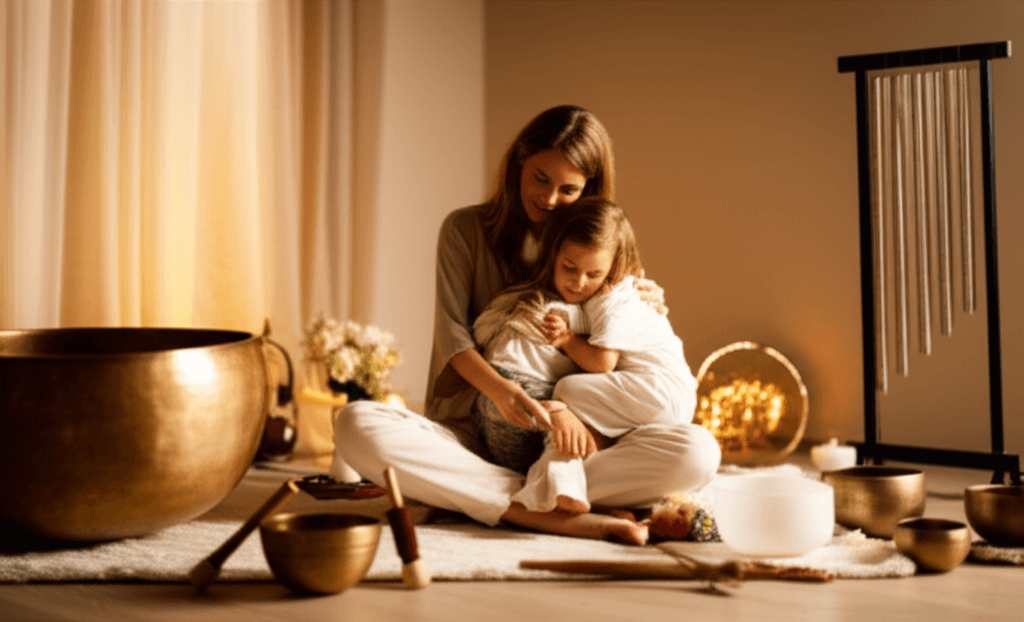
We utilize a variety of specialized instruments, each chosen for its unique vibrational qualities:
- Singing Bowls: Their sustained, rich tones may promote deep relaxation and a sense of internal peace.
- Gongs: The immersive soundscapes created by gongs can facilitate a release of emotional blockages and energetic stagnation.
- Chimes: Their delicate, uplifting sounds can bring a sense of lightness and presence.
- Tuning Forks: Applied to specific points, their precise frequencies may help to rebalance the body's energy pathways.
While not a substitute for professional grief counseling, sound wellness at Soul Art offers a supportive environment that may support children in processing their emotions, reducing anxiety, and improving sleep patterns, which are often disrupted during grief (Stony Brook Medicine). Our sessions aim to cultivate a sense of inner calm, providing a gentle foundation for families to build their coping strategies upon.
Empowering Your Family's Journey: Actionable Support
Supporting a grieving child is an ongoing process that requires patience, self-compassion, and often, external support. Here are some actionable steps you can implement today to empower your family's journey:
- Prioritize Your Own Well-being: As a parent, your capacity to support your child is directly linked to your own emotional and physical health. Seek out friends, family, or professionals for your own comfort and respite. Modeling self-care shows your children healthy coping.
- Foster Open, Honest Communication: Create a safe space where your child feels comfortable asking questions and expressing all their emotions – sadness, anger, confusion, or even relief. Validate their feelings without judgment, reinforcing that there's no "right" or "wrong" way to grieve.
- Establish and Maintain Routines: Predictability provides security. Stick to regular schedules for meals, homework, and bedtime as much as possible to create a sense of stability amidst change.
- Create Meaningful Rituals of Remembrance: Actively involve your child in memorializing their loved one through memory boxes, photo albums, or sharing stories. These practices help keep the loved one's memory alive and provide positive ways to honor their legacy.
- Explore Complementary Wellness Practices: Consider holistic approaches like sound wellness at Soul Art. These sessions, guided by Larissa Steinbach, may offer a gentle way to support nervous system regulation, reduce stress, and promote emotional release in a calm, non-verbal environment.
By implementing these strategies, you can provide a strong foundation for your child to navigate their grief, fostering resilience and supporting their long-term well-being.
Cultivating Hope: A Path Forward with Soul Art
The journey through childhood grief is undoubtedly challenging, yet it also presents an opportunity to cultivate profound resilience and meaning. Understanding the unique developmental aspects of children's grief, coupled with empathetic, consistent support, is paramount. From open communication and validation to maintaining routines and creating rituals of remembrance, every step contributes to a child's healing process.
Remember, you don't have to navigate this path alone. Larissa Steinbach and the team at Soul Art offer a haven for families seeking complementary support for emotional well-being and nervous system regulation. Our sound wellness experiences provide a gentle, non-invasive way to process complex emotions and cultivate inner peace. We invite you to explore how the therapeutic frequencies at Soul Art may support your child, and your family, in finding strength and solace during times of loss.
Bookings Coming Soon
Soul Art is still in preparation. Session details and booking will be published here after launch.
Coming Soon
Wellness Disclaimer: This article is for educational and informational purposes only. It does not constitute medical advice, diagnosis, or treatment. Soul Art Dubai provides non-medical wellness experiences focused on relaxation, stress management, and general wellbeing. Sound wellness is a complementary practice and should not replace professional medical care.