Frozen Shoulder: Sound Support for Enhanced Mobility & Ease
Key Insights
Explore how sound wellness at Soul Art Dubai, founded by Larissa Steinbach, may complement recovery from frozen shoulder by supporting pain management and relaxation, fostering readiness for improved mobility.
Frozen Shoulder: Sound Support for Enhanced Mobility & Ease
Imagine waking up one morning and finding simple tasks like reaching for a cup or brushing your hair are suddenly agonizing, if not impossible. This distressing reality is the experience for many living with frozen shoulder, also known as adhesive capsulitis. Affecting 3-5% of the general population, this painful condition severely restricts shoulder mobility, often lasting for months or even years.
While conventional physical therapy and medical interventions are vital for managing frozen shoulder, the journey can be long and challenging. This article delves into the scientifically recognized impacts of frozen shoulder and explores how a complementary approach like sound wellness, as practiced at Soul Art Dubai by Larissa Steinbach, may offer profound support for pain perception, nervous system regulation, and ultimately, a path toward enhanced mobility. We will uncover how fostering a state of deep relaxation and easing the body's internal landscape can create a more receptive environment for physical recovery and overall well-being.
The Science Explained: Understanding Frozen Shoulder and the Role of Support
Frozen shoulder is a complex and often debilitating condition characterized by pain and progressive loss of both active and passive range of motion (ROM) in the shoulder joint. It primarily affects the capsule surrounding the shoulder joint, causing it to thicken, stiffen, and contract. This process can unfold over three distinct phases: the "freezing" phase (increasing pain and gradual loss of motion), the "frozen" phase (pain may lessen but stiffness remains severe), and the "thawing" phase (gradual return of motion).
The impact on daily life is significant, often leading to sleep disturbances due to night pain, and a profound reduction in quality of life. Understanding the physiological mechanisms at play is crucial for appreciating how various interventions can provide relief.
The Intricate Link Between Pain and Motion
One of the most critical aspects of frozen shoulder is the strong correlation between pain and restricted movement. Research consistently highlights that the range of motion in a frozen shoulder is highly susceptible to both pain and muscle contraction. A study published in ScienceDirect found that ROM in forward flexion, abduction, and external rotation significantly improved after anesthesia, demonstrating that pain and muscle guarding significantly limit movement.
This suggests that interventions aimed at pain relief may be recommended before or during physical therapy to enhance its effectiveness. When pain is reduced, muscle tension often follows, allowing for greater potential for movement and making rehabilitative exercises more tolerable.
Conventional Approaches to Mobility Restoration
Modern medicine and physical therapy offer several evidence-based strategies to manage frozen shoulder. Mobilization techniques, a cornerstone of physiotherapy, are consistently shown to be effective in improving both pain levels and range of motion. Studies by Abdullah Al Shehri et al. and Sharick Shamsi et al. both found that mobilization techniques, such as Maitland Mobilization and Mulligan mobilization, led to better improvements in symptoms compared to other modalities like ultrasound therapy.
These manual therapy interventions involve skilled, passive movements of the shoulder joint performed by a therapist to restore joint mechanics, reduce stiffness, and increase the flexibility of the joint capsule. Abhay Kumar et al. confirmed that adding Maitland mobilization techniques to supervised exercises significantly improved pain relief, ROM, and shoulder function. The collective evidence strongly supports the efficacy of these targeted physical interventions in the rehabilitation process.
The Mind-Body Connection: Stress, Pain, and the Nervous System
Beyond the physical mechanics, the experience of chronic pain, such as that associated with frozen shoulder, profoundly impacts the nervous system. Persistent pain can activate the body's stress response, leading to increased muscle tension, heightened pain sensitivity, and a state of hypervigilance. This creates a vicious cycle where pain leads to stress, which in turn exacerbates pain and limits mobility.
The autonomic nervous system, comprising the sympathetic (fight-or-flight) and parasympathetic (rest-and-digest) branches, plays a key role here. Chronic pain often keeps the sympathetic system engaged, hindering the body's natural ability to relax and heal. This constant state of physiological tension can make it challenging to engage in the gentle movements and exercises necessary for recovery, further entrenching the stiffness.
How Sound Wellness May Offer Complementary Support
This is where the principles of sound wellness can play a valuable, complementary role. Sound, particularly specific frequencies and vibrations, has been associated with facilitating a shift towards parasympathetic dominance. When the body is bathed in resonant sound, the vibrations are believed to travel through the tissues, promoting relaxation at a cellular level.
This deep relaxation may help to reduce the perception of pain by modulating neural pathways involved in pain processing. By helping to calm the nervous system, sound wellness practices may decrease overall muscle tension, which, as studies suggest, directly impacts range of motion. It doesn't treat the underlying physical condition of the frozen shoulder, but rather creates an internal environment more conducive to healing, comfort, and engagement with other prescribed therapies. Many people report that the soothing nature of sound can reduce anxiety and stress, fostering a greater sense of well-being even amidst physical discomfort.
How It Works in Practice: The Sensory Journey to Ease
The theoretical understanding of sound's potential influence on the nervous system translates into a profound, real-world experience during a sound wellness session. It's a journey that engages multiple senses and internal states, designed to gently guide the body and mind into a state of profound relaxation. This experiential aspect is crucial for its supportive role in managing conditions like frozen shoulder.
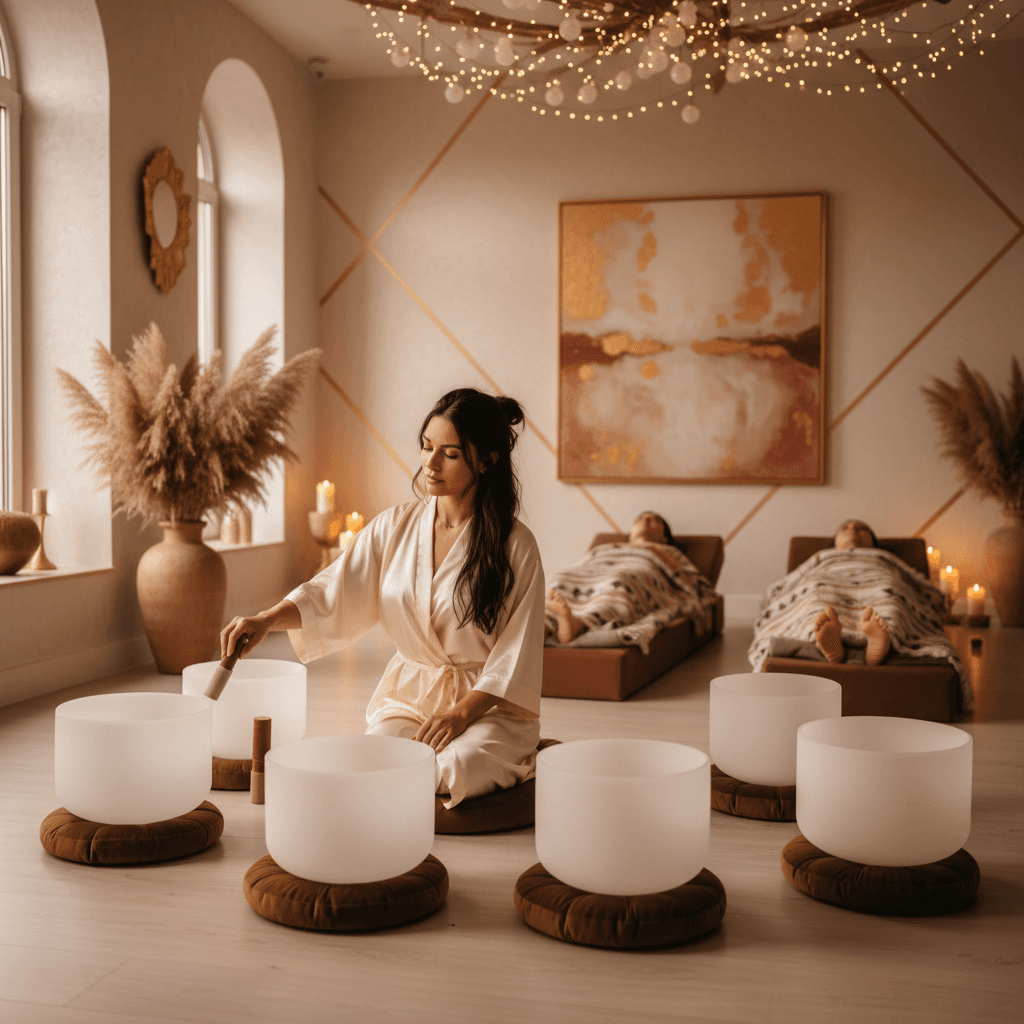
Clients stepping into a sound wellness session are invited to recline comfortably, often on a padded mat, surrounded by a curated selection of instruments. The experience typically begins with gentle guidance, encouraging a focus on breath and a release of external distractions. As the session progresses, the space fills with an intricate tapestry of sound.
The sounds are not merely heard but felt. The resonant vibrations from instruments like crystal singing bowls, Himalayan singing bowls, and gongs travel through the air and into the body, creating a subtle yet palpable cellular massage. These vibrations are believed to stimulate the vagus nerve, a key component of the parasympathetic nervous system, initiating a cascade of physiological responses associated with rest and repair. Clients often describe feeling a deep sense of stillness, a quietening of the racing mind, and a noticeable softening of physical tension.
"The subtle yet profound resonance experienced during a sound session creates an internal environment where the body's natural inclination towards equilibrium can be gently reawakened, making space for release and ease."
Physiologically, this state of deep relaxation is associated with several beneficial changes. Heart rate may decrease, blood pressure can normalize, and muscle tension, particularly around areas of chronic pain, may begin to soften. For individuals struggling with frozen shoulder, this reduction in overall muscle guarding and systemic stress can be particularly valuable. It doesn't directly mobilize the shoulder joint, but by creating a less tense, less pain-focused bodily state, it may enhance the individual's readiness and capacity to engage with gentle movement or physical therapy exercises.
The sensory details of a sound session—the shimmering overtones of a gong, the sustained hum of a singing bowl, the gentle chiming of koshi bells—are meticulously crafted to facilitate this journey. The brain shifts from a beta (alert, active) state to alpha (relaxed, meditative) and even theta (deep relaxation, restorative) brainwave patterns. This shift supports a reduction in the stress hormone cortisol, further contributing to a sense of calm and well-being. By regularly accessing these states of deep relaxation, clients may find an enhanced ability to manage their pain perception, improve sleep quality, and foster a more optimistic outlook on their recovery journey. It's about providing holistic support that extends beyond the physical, nurturing the emotional and mental resilience needed to navigate a challenging physical condition.
The Soul Art Approach: Larissa Steinbach's Unique Philosophy
At Soul Art Dubai, founder Larissa Steinbach has meticulously designed a sound wellness experience that transcends mere relaxation, offering a sophisticated and deeply restorative journey. Her approach is rooted in an understanding of the intricate connection between sound, the nervous system, and overall well-being, specifically tailored to support individuals seeking complementary pathways for physical challenges like frozen shoulder. Larissa's unique philosophy emphasizes curated soundscapes and personalized intention setting.
Larissa Steinbach's method integrates a diverse array of resonant instruments, each chosen for its specific vibrational qualities and the subtle impact it has on the human energy field. Clients at Soul Art experience the profound resonance of ancient Himalayan singing bowls, crafted from seven sacred metals, whose deep, sustained tones are believed to resonate with the body's cellular structure. These are often complemented by pure crystal singing bowls, whose clear, ethereal frequencies are thought to elevate consciousness and foster mental clarity.
The powerful, enveloping waves of gongs are central to the Soul Art experience, known for their capacity to induce deep meditative states and release energetic blockages. Larissa skillfully combines these with the delicate tinkling of chimes and other percussive instruments to create a rich, multi-layered sound bath that is both soothing and invigorating. Every session is more than just a musical performance; it is a carefully orchestrated vibrational journey designed to promote systemic relaxation and recalibration.
What makes the Soul Art method truly unique is Larissa's intuitive ability to attune each session to the individual's needs. While sound wellness is not a medical treatment for frozen shoulder, Larissa Steinbach creates an environment where the body’s innate capacity for self-regulation is gently encouraged. The aim is to help clients reduce the secondary effects of physical discomfort, such as stress, anxiety, and muscle guarding, which can impede recovery and quality of life. By fostering a state of deep calm, clients may find it easier to manage pain perception and approach their physical rehabilitation with greater ease and presence.
Soul Art's tranquil studio in Dubai provides an oasis of "quiet luxury," a sanctuary where clients can surrender to the therapeutic power of sound. Larissa Steinbach ensures that the environment itself contributes to the healing experience, with careful attention to comfort, aesthetics, and a palpable sense of peace. This holistic integration of environment, intention, and precisely applied sound frequencies allows Soul Art to offer a truly distinctive and effective complementary wellness practice for those navigating the complexities of frozen shoulder, supporting them on their journey back to greater comfort and mobility.
Your Next Steps: Integrating Sound Support into Your Wellness Journey
Navigating frozen shoulder requires patience, perseverance, and a holistic approach that supports both your physical and mental well-being. While medical advice and conventional physiotherapy are crucial, incorporating complementary practices can significantly enhance your comfort and readiness for recovery. Here are some actionable steps you can take today:
- Consult Medical Professionals: Always prioritize consulting your doctor or a qualified physiotherapist for an accurate diagnosis and a personalized treatment plan for your frozen shoulder. Sound wellness is a complementary practice and should not replace professional medical care.
- Embrace Gentle Movement & Mobility: Under the guidance of your therapist, consistently engage in prescribed gentle stretches and exercises. Even small, pain-free movements can prevent further stiffness and improve circulation. Sound wellness may help create a more relaxed state, potentially making these movements feel more accessible.
- Prioritize Stress Management: Recognize that chronic pain often exacerbates stress, which in turn can worsen pain and muscle tension. Explore relaxation techniques like mindfulness, meditation, or deep breathing exercises to calm your nervous system. Sound wellness is a powerful tool in this regard, offering a profound pathway to deep relaxation.
- Explore Sound Wellness as a Complement: Consider integrating sound wellness sessions into your routine to support your overall well-being. Many people report that the deep relaxation induced by sound baths helps reduce perceived pain and muscle tension, fostering a calmer mind and body, which can be beneficial alongside your primary treatment.
- Maintain Hydration and Nutrition: Support your body's healing processes by staying well-hydrated and consuming a balanced, anti-inflammatory diet. These foundational elements contribute to overall tissue health and systemic well-being.
By taking a proactive, multifaceted approach that includes professional medical guidance and complementary practices like sound wellness, you empower yourself on the path towards managing frozen shoulder and regaining a greater sense of ease and mobility.
In Summary: Harmonizing Recovery for Frozen Shoulder
Frozen shoulder presents a significant challenge, characterized by persistent pain and debilitating stiffness that can profoundly impact daily life. While robust scientific evidence supports conventional physiotherapy, including mobilization techniques and targeted exercises, as effective in improving pain and range of motion, the journey often benefits from holistic support. The intricate relationship between pain, muscle contraction, and restricted movement highlights the importance of managing discomfort to facilitate effective rehabilitation.
At Soul Art Dubai, Larissa Steinbach's unique sound wellness approach offers a profound complementary pathway. By guiding the body into deep relaxation through resonant frequencies, sound wellness may help calm the nervous system, potentially reducing pain perception and muscle tension. This creates a more receptive internal environment, supporting individuals in their engagement with physical therapy and fostering a greater sense of peace and well-being during a challenging recovery. We invite you to experience the harmonious embrace of sound at Soul Art, where your journey towards greater comfort and mobility is nurtured with care and expertise.
Bookings Coming Soon
Soul Art is still in preparation. Session details and booking will be published here after launch.
Coming Soon
Wellness Disclaimer: This article is for educational and informational purposes only. It does not constitute medical advice, diagnosis, or treatment. Soul Art Dubai provides non-medical wellness experiences focused on relaxation, stress management, and general wellbeing. Sound wellness is a complementary practice and should not replace professional medical care.
Related Articles
Vibration Therapy for Plantar Fasciitis: A Holistic Path to Foot Wellness

Harmonizing Breath: How Sound Wellness May Support Sleep Apnea Management
Harmonic Relief: Clearing Sinus Issues with Sound Vibration at Soul Art