Navigating Grief's First Year: How Sound Supports Milestones

Key Insights
Explore how sound wellness offers profound support during the challenging first year of grief, helping to navigate emotional milestones with greater ease and presence.
The first year after losing a loved one is often described as a landscape of shifting sands, marked by an acute sense of absence and a profound restructuring of one's reality. How does one navigate the tumultuous waves of emotion, the poignant anniversaries, and the quiet moments of longing that define this crucial period? While traditional coping mechanisms are vital, a growing body of evidence suggests that complementary practices like sound wellness may offer a uniquely profound form of support.
At Soul Art, Dubai's premier sound wellness studio, we understand that grief is not a linear journey but a deeply personal process, punctuated by significant emotional and psychological milestones. This article delves into the science behind sound's capacity to soothe the grieving mind and body, exploring how it can provide comfort, regulate emotions, and foster a gentle path towards integration during the challenging first year of loss. We invite you to discover how this ancient yet increasingly researched practice, championed by our founder Larissa Steinbach, may support your journey through grief's initial, formative stages.
The Science Explained: Grief's Impact on Mind and Body
Grief, as Dr. Katherine Shear eloquently states, is "the form that love takes when someone we love dies." This profound emotional experience is far from purely psychological; it fundamentally impacts our physiological and neurological landscape. Understanding these changes provides insight into why external supports, such as sound wellness, may offer significant comfort.
Grief's Physiological Footprint
When we experience a significant loss, our bodies often enter a state of chronic stress. This response activates the sympathetic nervous system, commonly known as the "fight or flight" mechanism. The sustained activation can lead to a cascade of physical symptoms, including disrupted sleep patterns, digestive issues, increased anxiety, and a feeling of perpetual exhaustion. Some research suggests that grief can, in essence, "rewire" the brain, altering neural pathways and affecting cognitive functions such as memory and concentration. This highlights the deep interconnectedness of our emotional and physical states during bereavement.
The perception of time can also become distorted in the wake of loss, with days blurring into weeks and significant events feeling simultaneously distant and acutely present. This phenomenon underscores the profound disorientation many experience. During this period, the body is under immense strain, attempting to process an overwhelming amount of emotional data while grappling with altered neurochemical balances. For those experiencing extended grief and depression, professional medical advice is always recommended to ensure comprehensive care.
The Power of Auditory Memory and Sound Frequencies
Our connection to sound is primal, rooted deep within our memory and emotional processing centers. Research on childhood bereavement, for instance, emphasizes the profound role of sensory memory, particularly auditory memory, in how a child processes a parent's loss. The warmth of a voice, the sound of a laugh, or a particular phrase repeated at bedtime can be encoded and retained in ways that abstract verbal memories often cannot replicate. This principle extends to adults, where specific sounds can trigger powerful memories and emotions, sometimes overwhelming, sometimes comforting.
Sound wellness practices leverage this innate connection by using specific frequencies and vibrations to influence the brain and body. Different sound frequencies can entrain brainwaves, gently guiding the mind from states of heightened activity (beta waves, associated with anxiety) into more relaxed states (alpha and theta waves, associated with meditation and deep relaxation). This process, known as brainwave entrainment, may support the reduction of stress hormones like cortisol and promote the release of beneficial neurotransmitters, such as endorphins, fostering a sense of calm and well-being.
The intuitive use of music during grief is well-documented, with many individuals finding solace and an outlet for emotion through melodies and harmonies. This innate human response to sound forms the bedrock of sound wellness, which intentionally harnesses resonant frequencies to create an environment conducive to emotional processing and nervous system regulation. The vibrations from instruments like gongs and singing bowls travel through the body, potentially helping to release physical tension and promote a state of deep relaxation.
Navigating Grief's Milestones with Sound
The journey through grief is punctuated by various milestones, which are deeply relative to each individual's experience. Initially, one might experience constant crying or persistent depression, making even simple chores seem insurmountable. A significant milestone is the acceptance of the reality that someone is no longer alive, a realization that can take considerable time, especially for those who shared daily interactions. Over time, the intensity may lift, allowing for moments of simple enjoyment without immediate feelings of guilt.
Milestones also include significant dates: holidays, birthdays, anniversaries, and the one-year mark of the loss itself. These periods can be particularly fragile, bringing back vivid memories and intensifying feelings of sadness or longing. Sound wellness may offer a stable, grounding presence during these challenging times. By providing a structured yet gentle space for emotional expression and nervous system regulation, sound practices can help individuals navigate these emotional peaks and troughs with greater resilience.
The intentional use of sound can create an internal anchor, offering a sense of stability when the external world feels chaotic. It may help individuals gently confront difficult emotions, process memories, and ultimately begin to reconstruct their narrative to find purpose and meaning in their loss, aligning with research on meaning-making in bereavement. This complementary approach supports both "loss-oriented coping" (directly confronting and expressing grief) and "resource-oriented coping" (engaging with life and finding new sources of well-being), providing a holistic framework for healing.
How It Works in Practice: The Somatic Experience of Sound
Connecting the scientific understanding of sound's effects to its practical application in grief support reveals a deeply immersive and often transformative experience. Sound wellness sessions offer a unique pathway for individuals to engage with their grief in a non-verbal, somatic manner.
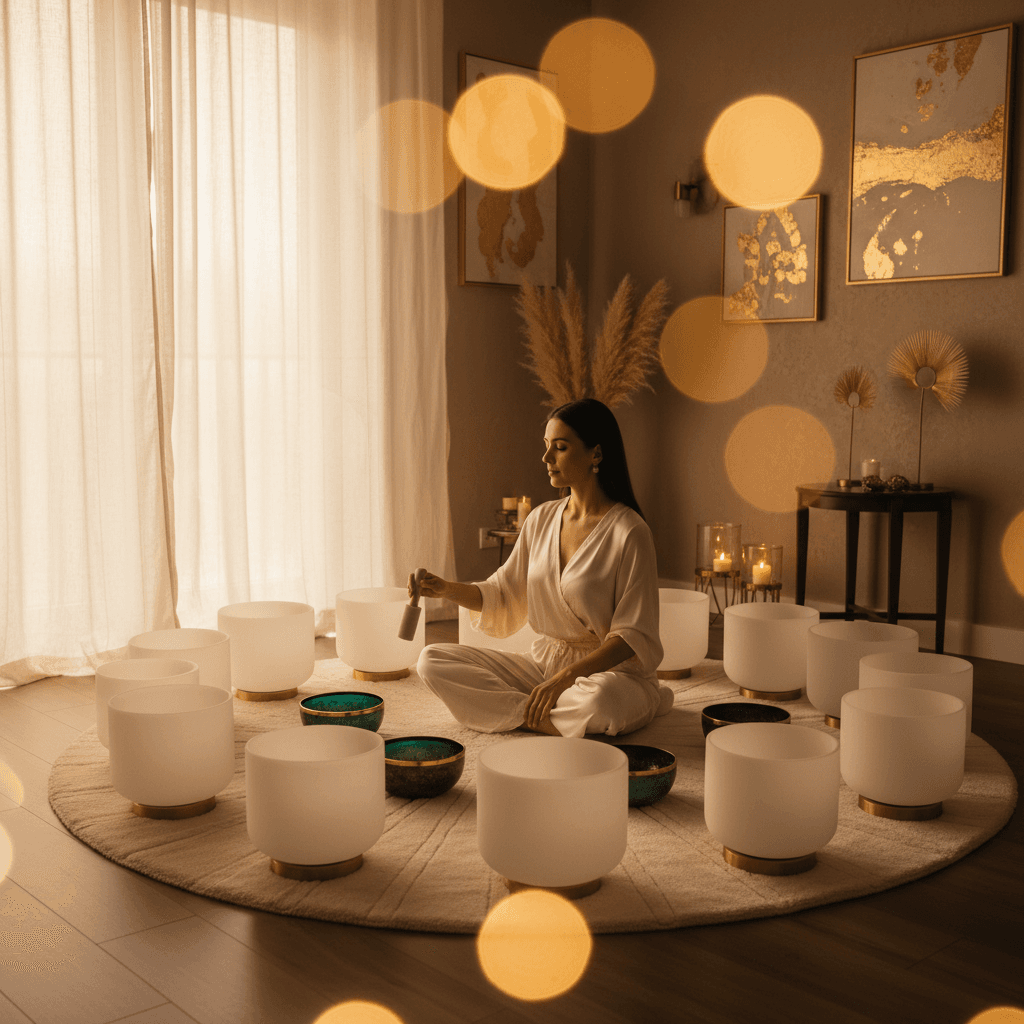
During a sound wellness session, clients typically lie comfortably, often beneath a warm blanket, as the practitioner introduces a symphony of resonant instruments. The experience is not merely auditory; it is profoundly tactile. The deep, penetrating vibrations of gongs, the clear, sustained tones of crystal singing bowls, and the gentle shimmer of chimes wash over and through the body. These vibrations are felt not just heard, creating a full-body sensory immersion that bypasses the intellectual mind and directly addresses the nervous system.
This immersive environment creates a safe container, a sanctuary where emotions can arise and be held without judgment or the need for verbal articulation. Many people report that the sound allows for a release of pent-up emotional tension and physical holding patterns. For someone grieving, who may be exhausted by extraneous conversation or the pressure to "be strong," this non-discursive approach can be incredibly liberating. It provides the "company that grieving persons need," as suggested by bereavement experts, without demanding verbal output.
The consistent, rhythmic frequencies promote a deep state of relaxation, where the brain shifts into alpha or theta wave states. In these states, the body's natural healing mechanisms are believed to be more active. This can manifest as a reduction in anxiety, an improvement in sleep quality, and a profound sense of inner peace, even if momentary. The practice is designed to support both conscious processing and subconscious release, offering a gentle yet powerful means to navigate the raw edges of grief.
"The sound doesn't demand; it simply holds. In that gentle embrace, the unspeakable can begin to find its way through."
By offering this experience, sound wellness serves as a powerful complementary approach, allowing individuals to simply be with their grief, rather than trying to fix or suppress it. It fosters a connection to the present moment, anchoring the individual amidst the tumultuous currents of loss and memory. This gentle attunement to self is a critical component of healthy grief integration, supporting the gradual return to a sense of wholeness over time.
The Soul Art Approach: Larissa Steinbach's Vision
At Soul Art, Larissa Steinbach, our esteemed founder, has cultivated a philosophy that places deep compassion and scientific understanding at the heart of every sound wellness experience. Her approach to supporting individuals through the first year of grief is both nuanced and profoundly empathetic, recognizing the unique and sensitive nature of this journey.
Larissa's method is built upon the premise that sound can create a sacred, vibrational space where vulnerability is honored, and healing is gently invited. She carefully curates sound journeys using a diverse array of resonant instruments, each chosen for its specific energetic properties and ability to elicit particular responses within the body and mind. Her sessions often feature Himalayan singing bowls, known for their grounding frequencies, large gongs that create expansive soundscapes for deep relaxation, and delicate chimes that invite lightness and clarity.
What makes the Soul Art method unique is its intentionality. Larissa does not aim to "cure" grief, as grief is a natural, albeit painful, human process. Instead, she seeks to provide a supportive environment that may support the individual's inherent capacity to process, integrate, and move through their experience. She understands that while the pain of loss may never fully disappear, its relationship to the individual can evolve. Her sessions are crafted to nurture self-compassion, offering a temporary respite from the mind's relentless activity and providing an opportunity for the nervous system to recalibrate.
Larissa Steinbach emphasizes creating a sense of safety and unconditional acceptance, which is paramount for those navigating the raw emotions of early grief. The sound experiences are designed to be a gentle balm, assisting clients in finding moments of peace, processing latent emotions, and ultimately fostering a deeper connection to their inner resilience. The careful layering of sounds and vibrations aims to create a deeply immersive experience that supports both emotional release and profound relaxation, crucial elements for anyone contending with the physical and emotional tolls of grief.
Your Next Steps: Embracing Gentle Self-Care
Navigating the first year of grief is a testament to human resilience, yet it is not a journey meant to be walked alone. While time may help to heal, actively engaging in self-care practices can significantly support your well-being during this intensely challenging period. Consider these actionable steps to gently nurture yourself:
- Prioritize Foundational Well-being: Ensure you are getting adequate sleep, nourishing your body with wholesome foods, and incorporating gentle movement into your routine. Even short walks outdoors, allowing for some sunshine, can positively impact mood and energy levels. These are crucial anchors when everything else feels adrift.
- Lean into Your Support Network: While deep conversations may feel overwhelming, simply being in the company of those who care can be profoundly comforting. Allow friends and family to "just show up" without the pressure of extensive dialogue. Their quiet presence can be a powerful source of strength.
- Acknowledge and Validate Your Milestones: Understand that grief unfolds in its own unique rhythm. It is normal for emotions to fluctuate, for certain dates to feel particularly heavy, and for the return of joy to feel initially unsettling. Be kind to yourself through each of these relative milestones.
- Explore Complementary Wellness Practices: Consider incorporating practices like sound wellness, meditation, or gentle yoga into your routine. These modalities may support nervous system regulation, stress reduction, and provide a dedicated space for emotional processing without the need for verbal expression.
- Seek Professional Guidance When Needed: If feelings of depression or anxiety become overwhelming or persistent, do not hesitate to reach out to your family doctor or a mental health professional. It is a sign of strength to ask for help, and integrated support can make a significant difference.
Embracing these steps can help create a supportive framework for your grief journey, acknowledging its profundity while fostering a path toward greater ease and eventual integration.
In Summary: Sound as a Compass Through Grief
The first year of grief is a deeply transformative and often tumultuous period, marked by significant emotional and psychological milestones that challenge the very fabric of one's existence. Understanding its profound impact on both mind and body underscores the critical need for compassionate and effective support systems. Sound wellness, with its capacity to influence the nervous system, unlock auditory memories, and create a sanctuary for processing, may offer a uniquely gentle yet powerful complementary approach.
Larissa Steinbach and Soul Art stand as a beacon in Dubai, providing meticulously crafted sound experiences designed to support individuals through this arduous journey. By fostering deep relaxation, regulating emotions, and creating a space for quiet reflection, sound wellness may help navigate the delicate milestones of grief with greater presence and resilience. It is an invitation to find solace, process emotions, and gently begin to integrate loss, offering a resonant path towards healing and renewed well-being.
Bookings Coming Soon
Soul Art is still in preparation. Session details and booking will be published here after launch.
Coming Soon
Wellness Disclaimer: This article is for educational and informational purposes only. It does not constitute medical advice, diagnosis, or treatment. Soul Art Dubai provides non-medical wellness experiences focused on relaxation, stress management, and general wellbeing. Sound wellness is a complementary practice and should not replace professional medical care.