Confronting Mortality: Sound Wellness for Existential Anxiety
Key Insights
Explore how sound wellness at Soul Art Dubai, founded by Larissa Steinbach, helps manage existential anxiety and the fear of death, offering calm and meaning.
Have you ever paused to consider the silent, often unacknowledged force that profoundly shapes human behavior and emotions? It’s the fear of death, an intrinsic part of our existence that modern society frequently attempts to erase or compartmentalize. This primal anxiety, known as existential anxiety, can manifest in subtle but pervasive ways, influencing everything from our relationships to our overall sense of well-being.
In a world that increasingly distances us from the natural rhythms of life and death, finding tools to navigate this profound unease is more critical than ever. This article will delve into the scientific underpinnings of death anxiety and explore how the ancient yet innovative practice of sound wellness, championed by Soul Art Dubai founder Larissa Steinbach, may offer a unique pathway to peace and presence. Discover how resonant frequencies can help us confront mortality with greater openness and resilience.
The Science Explained
The human awareness of mortality, a distinguishing trait of our species, gives rise to some of the deepest existential anxieties known to psychological science. This inherent awareness profoundly influences human behavior, emotional regulation, and our search for meaning. Understanding this complex interplay is the first step toward managing it.
Understanding Fear of Death and Existential Anxiety
Death anxiety is broadly defined as the fear and distress associated with the anticipation of death and the dying process itself. Psychologists like Irvin Yalom have extensively documented its pervasive nature, highlighting how this anxiety exerts a significant influence over our lives, often below the surface of conscious thought.
Modern society’s relationship with death has shifted dramatically. As observed by Ariès in 1974, death, once a familiar and omnipresent phenomenon, has become "shameful and forbidden," effectively disappearing from public discourse. This societal distancing, often exacerbated by technology and advanced medical practices, contributes to heightened existential anxiety, as we lack healthy frameworks for processing mortality.
Terror Management Theory (TMT) posits that individuals manage this mortality salience—the awareness of their own eventual demise—through various defensive psychological strategies. These strategies often involve strengthening commitment to cultural belief systems and seeking validation of personal self-worth, which can offer a sense of symbolic immortality and psychological stability. However, these defenses can also lead to avoidance and an inability to authentically confront life's finite nature.
The Impact of Mortality Salience
The idea of our own demise, or mortality salience (MS), can significantly alter our thoughts and behaviors. Studies have shown that even subtle reminders of mortality can trigger increased fear and sadness, subsequently impacting our actions as we instinctively work towards self-preservation. This can manifest in a desire for increased social connection, or paradoxically, increased defensiveness of culturally-upheld values.
This existential anxiety is not merely a philosophical concept; it has been linked to various psychiatric disorders. It can drive, cause, or sustain conditions such as panic disorder, separation anxiety disorder, agoraphobia, specific phobias, social anxiety disorder, and obsessive-compulsive disorder (OCD). The sense of powerlessness and meaninglessness that death anxiety can create often leads to unhelpful coping mechanisms, such as avoidance, further exacerbating distress.
"It does not really matter what we expect from life, but rather what life expects from us." - Viktor Frankl
Existential thinkers like Viktor Frankl suggest that finding meaning in life is paramount to overcoming existential anxiety. His philosophy underscores that while we cannot change the inevitability of death, we can choose our response and find purpose in our finite existence. Epicurus, a philosopher from ancient Greece, offered a different perspective, asserting that death should not be feared, as "when we exist, death is not, and when death is, we no longer exist." This view suggests a peaceful transition where life and death never truly meet, offering a conceptual buffer against immediate fear.
Buffers Against Existential Distress
Thankfully, research points to several internal and external buffers that can help mitigate the impact of death anxiety. These include:
- Close Relationships: Intimate connections and strong social bonds act as significant buffers against distress, playing a major role in dealing with existential anxiety. A sense of safety and belonging can significantly reduce feelings of isolation and vulnerability.
- Self-Esteem and Psychological Security: Bolstering one's sense of worth and achieving psychological security can reduce feelings of invulnerability to threats. This provides a mental shield against the anxiety triggered by mortality awareness.
- Meaning-Making: Actively seeking and finding meaning in one's life, as Frankl suggested, can transform existential dread into a drive for authentic living. This internal compass provides direction and purpose, even in the face of uncertainty.
- Mindfulness and Meditation: These practices have been identified as powerful tools for managing existential distress. Mindfulness encourages experiencing fears with greater openness and resilience, rather than avoidance. Preliminary studies, including those on metastatic cancer patients, have shown mindfulness programs can reduce distress and anxiety while increasing feelings of peace.
The Neuroscience of Sound and Relaxation
This is where the transformative power of sound wellness enters the conversation. Sound, particularly specific frequencies and vibrations, has a profound physiological effect on the human body and mind. It interacts directly with our nervous system, guiding it from states of high alert (sympathetic nervous system activation) towards deep relaxation (parasympathetic nervous system activation).
When the body enters a state of deep relaxation during sound sessions, brainwave patterns often shift from the fast-paced beta waves, associated with conscious thought and alertness, to slower alpha and theta waves. Alpha waves are characteristic of a relaxed, meditative state, while theta waves are associated with deep relaxation, dreaming, and access to subconscious processes. This shift can quiet the "thinking mind," making space for emotional processing and release.
The resonant frequencies produced by instruments like gongs and singing bowls can induce a phenomenon known as vibrational entrainment. This is where the body's cells, tissues, and even brainwaves begin to synchronize with the external vibrations, leading to a harmonious internal state. Physiologically, this can result in:
- Decreased heart rate: The calming effect slows the cardiovascular system.
- Lowered blood pressure: Relaxation helps the body reduce systemic tension.
- Reduced muscle tension: Deep vibrations can release somatic holding patterns.
- Activation of the vagus nerve: This nerve is crucial for the parasympathetic nervous system, promoting a "rest and digest" state.
These physiological changes create an optimal environment for addressing anxiety, including the often-subconscious layers of existential fear. By soothing the nervous system, sound wellness helps to build resilience, allowing individuals to approach difficult thoughts, such as those related to mortality, from a place of greater calm and acceptance.
How It Works in Practice
Bringing the abstract concepts of existential anxiety and neurological responses into a tangible experience, a sound wellness session offers a unique pathway to profound self-discovery. It's a journey not just for the ears, but for the entire being, engaging the body's innate capacity for self-regulation and healing. Clients at Soul Art Dubai often describe a deeply immersive and transformative experience.
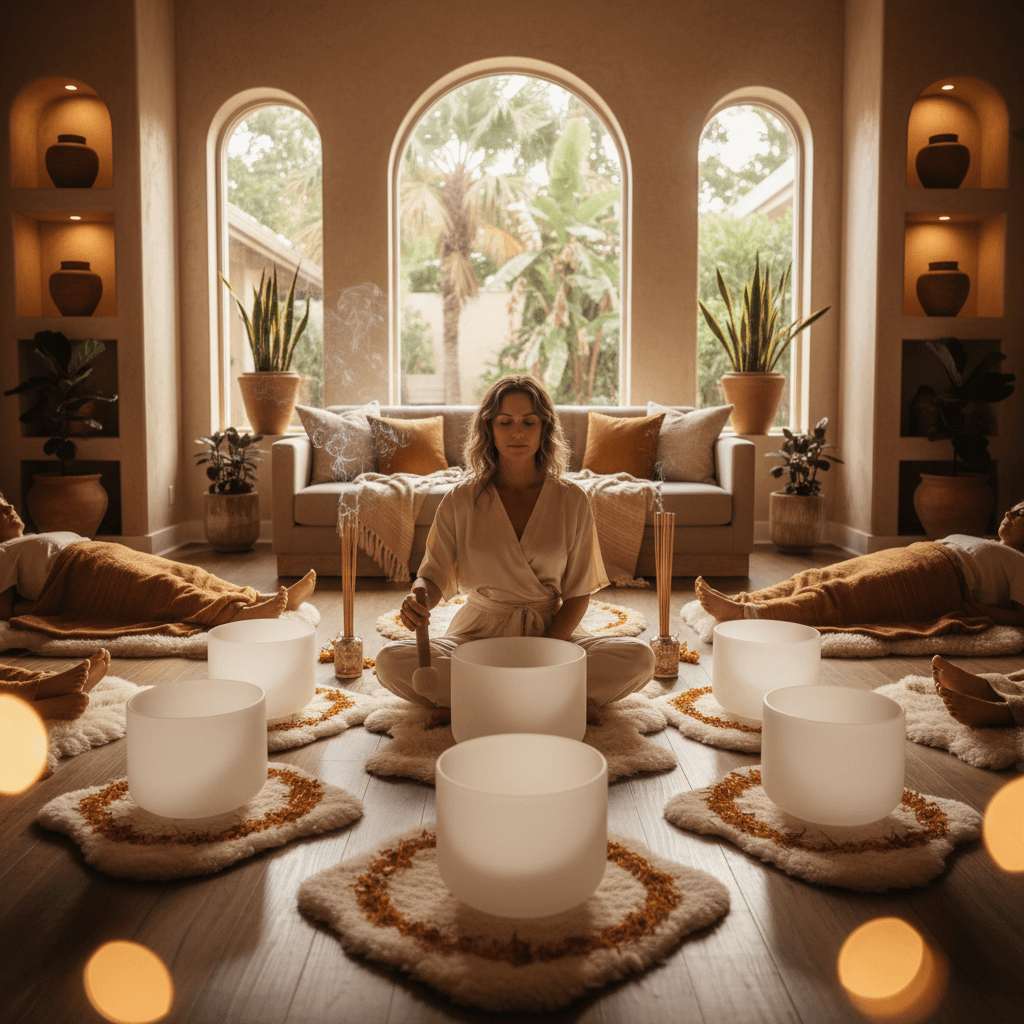
Imagine lying comfortably in a serene space, surrounded by an array of resonant instruments. The session typically begins with gentle, harmonious sounds, inviting you to relax and release external distractions. As the session progresses, the soundscape deepens, with a rich tapestry of frequencies washing over you.
These aren't merely pleasant sounds; they are carefully chosen vibrations that penetrate deep into the body's tissues. You might feel subtle pulsations, a tingling sensation, or a profound sense of weightlessness. This physical engagement helps to anchor you in the present moment, shifting focus away from anxious thoughts about the past or future, including the distant prospect of mortality.
The sustained and enveloping sounds create a safe container for introspection. In this deeply relaxed state, many people report a greater capacity to observe their thoughts and emotions without judgment. It’s an opportunity to acknowledge fears, including the fear of death, from a detached, compassionate perspective, rather than being overwhelmed by them. The practice fosters non-reactivity, a key aspect of mindfulness.
Through this process, the overwhelming nature of existential anxiety may begin to dissipate. The sound helps to quiet the mind's incessant chatter, allowing for clarity and a deeper connection to one's inner self. It encourages a sense of presence, cultivating an appreciation for the moment and the richness of life lived fully. This can be particularly empowering when contemplating the finite nature of existence, shifting the focus from fear to a mindful embrace of life’s preciousness.
The Soul Art Approach
At Soul Art Dubai, Larissa Steinbach has meticulously crafted a unique approach to sound wellness, specifically designed to address the profound layers of existential anxiety. Her philosophy centers on creating a sacred, nurturing space where individuals can safely explore their inner landscapes and reconnect with their inherent sense of peace. Larissa believes that by harmonizing the body and mind through sound, we can cultivate a deeper understanding of ourselves and our place in the universe.
What sets the Soul Art method apart is its holistic and personalized focus. Larissa integrates a deep understanding of the scientific principles of sound with an intuitive, empathetic approach, tailoring sessions to the individual needs of her clients. She understands that confronting existential fears requires a gentle yet powerful catalyst, and sound provides exactly that.
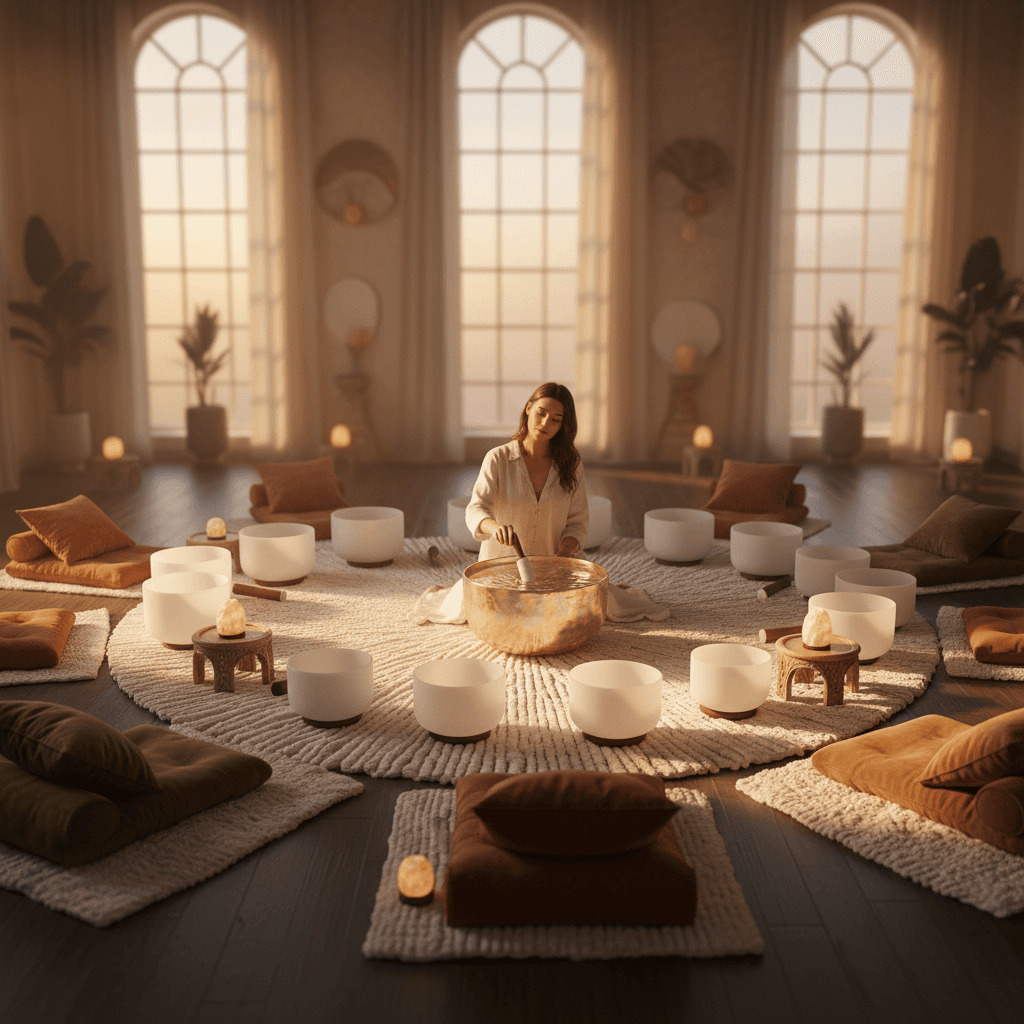
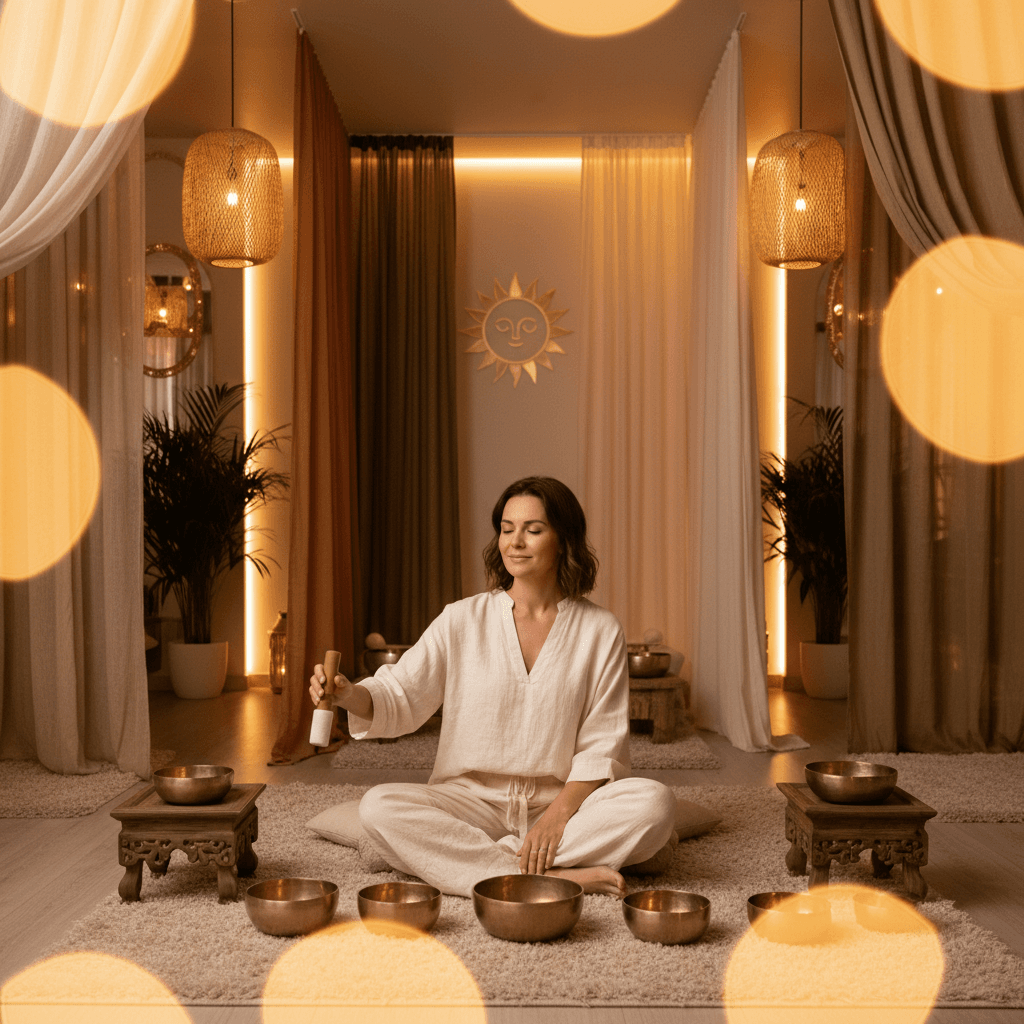
Specific instruments are carefully selected for their unique vibrational qualities. You might experience the deep, resonant vibrations of large gongs, which can create a full-body sonic massage, helping to release deep-seated tension. The pure, crystalline tones of crystal singing bowls are often used to balance energy centers and promote mental clarity. Additionally, Himalayan singing bowls, chimes, and other therapeutic instruments are employed to create a rich, immersive soundscape that encourages profound relaxation and introspection.
Larissa's expertise lies not just in playing the instruments, but in understanding how to weave their frequencies together to guide clients on a journey of self-discovery and emotional release. Her sessions are an invitation to surrender, to trust the vibrations, and to allow the sound to facilitate a profound sense of psychological security and well-being. By fostering this inner security, Soul Art helps individuals build resilience against the often-unseen pressures of existential anxiety, empowering them to live more authentically and meaningfully.
Your Next Steps
Embracing sound wellness as a tool for managing existential anxiety is a proactive step toward a more fulfilling and peaceful life. Here are some actionable steps you can take to integrate these insights into your daily routine and explore the benefits of sound:
- Practice Mindful Presence: Dedicate a few minutes each day to simply be in the present moment. Observe your surroundings, listen to ambient sounds, and pay attention to your breath without judgment. This practice builds resilience against the pull of future-oriented anxieties, including the fear of death.
- Engage with Nature: Spend time outdoors, connecting with the natural world. The vastness and cyclical nature of life in natural environments can offer a comforting perspective on our own mortality, fostering a sense of belonging and continuity.
- Cultivate Meaningful Connections: Nurture your relationships with loved ones. Close relationships provide a powerful buffer against existential distress, offering comfort, support, and a sense of shared humanity.
- Seek Meaning in Your Life: Reflect on what truly gives your life purpose. Whether through creative pursuits, service to others, or personal growth, actively pursuing meaning can transform existential unease into a drive for authentic and impactful living.
- Explore Sound Wellness: Consider experiencing a professional sound wellness session. Soul Art Dubai, founded by Larissa Steinbach, offers expertly guided sessions that can provide a safe and transformative space to relax deeply, release tension, and cultivate a sense of inner peace.
Remember, addressing the fear of death is not about eliminating it entirely, but about developing the capacity to experience existential fears with greater openness, resilience, and acceptance. Sound wellness is a powerful complementary approach that can support you on this profound journey.
In Summary
The fear of death is an intrinsic, often unspoken, aspect of the human condition, profoundly influencing our well-being and contributing to widespread existential anxiety in modern society. Understanding its roots in mortality salience and its links to various psychological distresses is crucial for cultivating a more authentic and peaceful life. While our innate awareness of finitude can be unsettling, research highlights the importance of confronting mortality consciously and building buffers such as meaningful relationships, strong self-esteem, and mindful presence.
Sound wellness, as expertly practiced by Larissa Steinbach at Soul Art Dubai, offers a scientifically grounded and deeply empathetic approach to navigating these profound anxieties. By harnessing resonant frequencies, sound sessions guide the nervous system into deep relaxation, promoting brainwave shifts, reducing physiological stress, and creating a safe space for introspection. This powerful wellness practice empowers individuals to experience existential fears with greater openness, foster inner security, and embrace a life rich with meaning.
Bookings Coming Soon
Soul Art is still in preparation. Session details and booking will be published here after launch.
Coming Soon
Wellness Disclaimer: This article is for educational and informational purposes only. It does not constitute medical advice, diagnosis, or treatment. Soul Art Dubai provides non-medical wellness experiences focused on relaxation, stress management, and general wellbeing. Sound wellness is a complementary practice and should not replace professional medical care.
Related Articles
The Role of Sound in Cultural Death Practices
Death Doulas & Sound: Enhancing Peace in End-of-Life Journeys
Sound's Gentle Embrace: Supporting Late Alzheimer's with Sonic Wellness