Unveiling Comfort: The Science of Faith, Sound, & Well-being
Key Insights
Explore how ancient wisdom, scientific findings, and sound wellness practices intersect to offer profound comfort and resilience, enhancing holistic well-being at Soul Art Dubai.
Could a deeper sense of comfort, often found in religious faith, hold a surprising key to enhanced physical and mental well-being, even extending survival? New research suggests an affirmative answer, revealing a profound connection between our spiritual outlook, community engagement, and our capacity to heal and thrive. This insight is particularly compelling in our modern, often stressful world.
At Soul Art, Dubai's premier sound wellness studio, we explore the intricate ways sound can tap into these deep-seated human needs, offering a complementary pathway to solace and resilience. Join us as we delve into the scientific underpinnings of how faith-like comfort and the power of sound intersect, providing unique benefits for your holistic well-being. This journey will illuminate why embracing such practices may be more vital than ever for finding peace and strength.
The Science Explained
The human need for comfort, meaning, and connection is fundamental, and its impact on our health is increasingly recognized by science. Decades of research have illuminated how these seemingly abstract concepts translate into tangible physiological benefits, particularly when individuals face life's most significant challenges. Understanding this synergy provides a fascinating perspective on holistic wellness.
The Physiological Impact of Belief
A groundbreaking study of 232 elderly patients who underwent open heart surgery, published in the journal Psychosomatic Medicine, revealed a remarkable finding: those who derived strength and comfort from their religious outlook exhibited a survival rate three times higher than those who did not. This powerful association underscores the potent influence of one's belief system on physical recovery. Dr. Thomas Oxman, a psychiatrist who led the study, emphasized that "being able to give meaning to a precarious, life-threatening situation – having faith there is some greater meaning or force at work – is medically helpful."
The body's innate capacity for self-healing is further highlighted by the placebo effect, a phenomenon extensively studied in medical science. As noted by David DeSteno, PhD, this effect accounts for approximately 30% of the therapeutic impact of many medications. Far from being "derogatory," the placebo effect is a testament to the mind's ability to influence physiological processes, demonstrating how belief and expectation can activate the body's intrinsic healing mechanisms. This suggests that a strong internal conviction, whether secular or religious, can indeed promote recovery and well-being.
Within certain spiritual traditions, this connection is deeply ingrained. In Islam, for instance, spiritual health is often linked to possessing a "Sound Heart"—a state of calm, confidence, and optimism derived from strengthening faith and engaging in good deeds. This concept is believed to prevent negative emotions like fear, anxiety, sadness, and disappointment, fostering patience and grace. Researchers suggest that spiritual health, cultivated through belief in God and divine love, creates wisdom, courage, and justice, thereby improving psycho-neuro-immunologic function and overall physical health.
Major research from institutions like the Mayo Clinic and the Harvard Center for Human Flourishing program further corroborates these findings. These studies indicate that individuals who actively engage in the practices of their faith – not merely professing belief – tend to experience lower mortality rates, improved cardiovascular health, and enhanced mental well-being. These consistent results tell scientists that there is something inherently beneficial in these activities that profoundly impacts human health.
The Power of Sonic Rituals and Community
Religious practices often incorporate sensory elements that foster a profound sense of comfort and connection, many of which involve sound. For example, some rituals involve sitting low to the ground, which, according to new neuroscience research, can initially cause mild discomfort in the lower back and knees. This mild onset and offset of discomfort may surprisingly reduce rumination and grief, providing a subtle yet powerful psychological reset.
Group chanting and prayer, as seen in traditions like the Jewish minyan where groups of ten or more recite prayers together, are powerful examples of sonic synchrony. Experimental evidence consistently shows that this kind of synchronized activity enhances feelings of compassion and increases the willingness to help one another. This collective vocalization fosters a deep sense of belonging and shared experience.
Similarly, group singing, whether sacred or secular, has been found to yield significant benefits. Research indicates that group singing can increase levels of oxytocin, a hormone associated with social bonding and connectedness, while simultaneously decreasing cortisol, the primary stress hormone. This biochemical response underscores how communal sonic experiences create an environment conducive to social support and emotional well-being. While belief can amplify the effects of healing rituals, the fundamental benefits of synchronous sound appear to be universal.
Beyond structured rituals, the very "ambient sounds of religious practice" contribute to the overall experience. Scholars exploring "Religious Sounds and the Sounds Around Religion" note that these sonic backdrops, from the quiet hum of a meditation hall to the vibrant chants of a service, blend into the aural landscape, influencing the practices themselves and shaping individuals' perception of their spiritual environment. These pervasive sounds can create a consistent, comforting, and immersive atmosphere that supports reflection and connection.
Moreover, the aspect of community, intrinsically linked to many faith-based activities, is a crucial component of well-being. Studies consistently show that social support groups, such as those found through churchgoing or other communal religious gatherings, offer significant health advantages, much like the benefits observed from religious faith itself. Being "embedded in a web of relationships" actively combats loneliness, a known detriment to human health, and provides a crucial psychological coping mechanism during stressful times. For instance, research on female aid workers highlighted faith and spirituality as vital psychological coping mechanisms, often through the comfort of a social support group.
Faith, Sound, and Mental Resilience
Religious belief can significantly influence how individuals interpret challenging experiences, particularly auditory ones. A study from King's College London comparing mentally healthy Christians and Christian patients found that mentally healthy Christians were able to assimilate the experience of hearing voices with their religious beliefs, resulting in predominantly positive interpretations. In contrast, Christian patients often reported non-religious and negative interpretations, suggesting that a robust religious framework can profoundly influence cognitive processing and emotional response to potentially distressing phenomena. This capacity for positive interpretation highlights faith's role in constructing meaning and resilience.
Beyond interpretation, engagement with religion and spirituality (R/S) frequently serves as a powerful coping mechanism for physical pain and distressing somatic symptoms. Early research on adults with musculoskeletal complaints identified R/S coping as the most common and second most helpful strategy for managing pain. This suggests that turning to faith through prayer or scripture study provides a significant source of solace and endurance when facing physical discomfort.
Furthermore, a growing body of evidence suggests R/S practices may have a positive impact on the immune system. Some studies have noted associations between religious attendance and markers of immune function, such as higher total lymphocyte count, total T-cell count, and helper T-cell count. The importance of religious or spiritual expression has also been linked to significantly higher white blood cell count and cytotoxic T-cell activity. While more research is needed to fully understand these complex interactions, preliminary findings indicate a potential link between spiritual engagement and physiological resilience.
"When faced with the incomprehensible, the human spirit instinctively seeks a narrative, a rhythm, a resonant frequency that transforms chaos into a melody of meaning. This search for connection, often mirrored in both faith and sound, is not merely spiritual solace; it is a fundamental pathway to health and healing."
This integration of belief, community, and sensory experiences—especially sound—paints a compelling picture of how these elements work in concert to bolster our mental, emotional, and even physical health. They provide pathways to meaning, comfort, and a profound sense of belonging that are essential for navigating life's complexities and fostering deep, enduring well-being.
How It Works in Practice
Translating these scientific insights into a tangible wellness experience requires a nuanced approach that honours both the individual's inner world and the universal power of sound. At Soul Art, we bridge the theoretical understanding of faith-like comfort and sonic immersion into a practical, deeply resonant journey designed to nurture your entire being. Our approach focuses on creating an environment where the beneficial mechanisms explored by science can flourish.
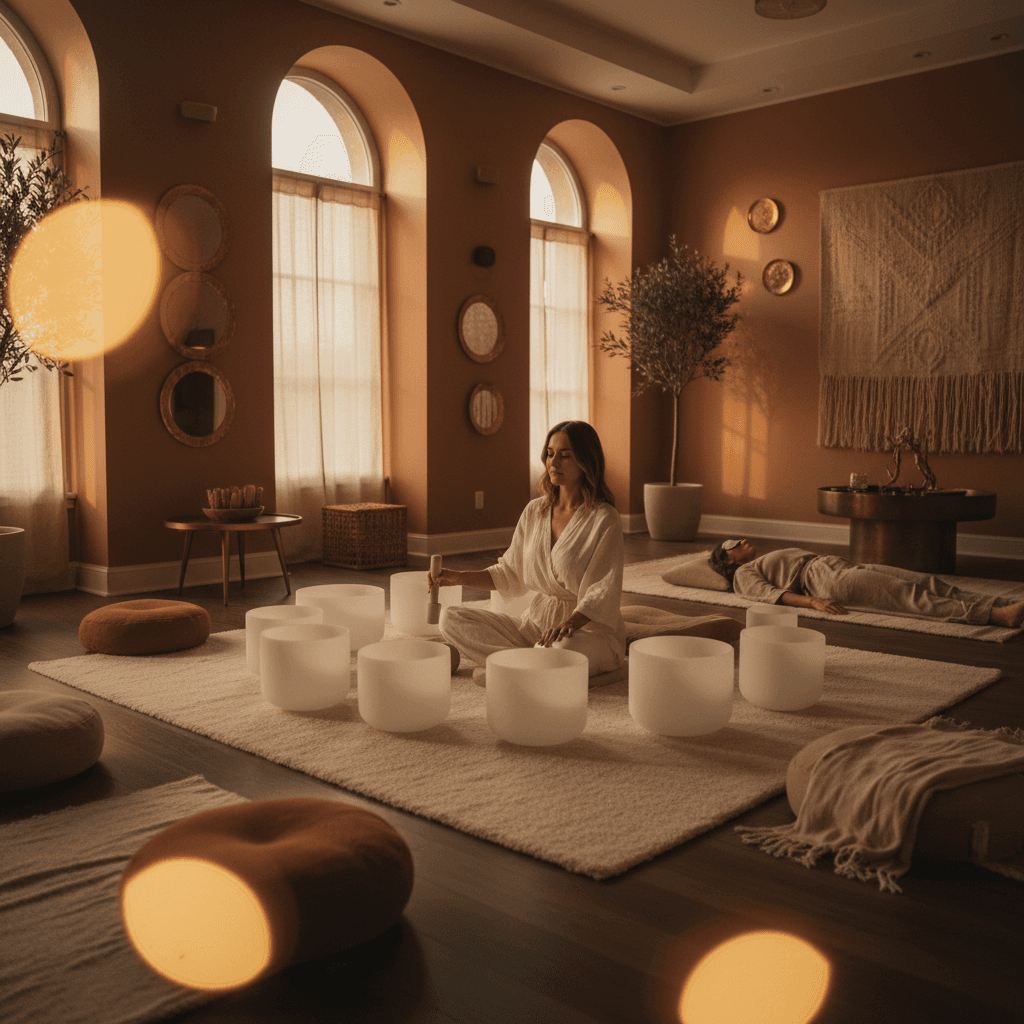
Imagine sinking into a space where every external distraction gently recedes, replaced by an enveloping tapestry of pure, resonant sound. This is not merely listening; it is an experience of being bathed in vibrations that travel through your body, quieting the mind's incessant chatter. The deep, sustained tones produced by our instruments create a profoundly calming effect, akin to the meditative states often achieved through spiritual practices.
These immersive soundscapes can evoke a sense of profound grounding and inner peace, fostering a state where rumination and anxiety naturally diminish. The gentle pulsations and harmonic frequencies act as a non-verbal language, guiding your nervous system towards a state of relaxation and equilibrium. This process mirrors the psychological benefits observed in ritualistic mild discomfort and synchronous chanting, by offering a distinct shift in mental and emotional focus.
Many clients report a feeling of being held or supported, a comforting presence that allows for emotional release and deep introspection. This experience can provide a "meaning-making" opportunity, allowing individuals to process thoughts and emotions from a place of calm and clarity. It’s a space where one can connect with an inner sense of resilience, tapping into the body's inherent capacity for self-regulation and healing, much like the placebo effect highlights our intrinsic ability to mend.
The collective energy within a group sound session further amplifies these effects. While not tied to specific religious doctrines, the shared experience of deep relaxation and sonic immersion fosters a quiet sense of community and connectedness. This gentle communal bond, achieved through shared sensory input, may evoke feelings of compassion and mutual support, mirroring the positive social benefits found in group spiritual activities. It offers a powerful, yet subtle, antidote to loneliness and a pathway to restored inner balance.
The Soul Art Approach
Larissa Steinbach, the visionary founder of Soul Art, recognized the profound potential at the intersection of ancient wisdom and modern scientific understanding. Her unique approach, developed over years of dedicated practice and study, translates the compelling insights into faith-like comfort and sound's physiological effects into a tangible, transformative wellness experience. Soul Art is dedicated to creating a sanctuary where individuals can access deep states of relaxation, healing, and personal insight.
At Soul Art, we don't prescribe religious beliefs, but rather embrace the universal mechanisms that make faith and communal practices so beneficial. Larissa Steinbach designs each session to cultivate a similar environment of profound comfort, meaning-making, and connection, accessible to everyone regardless of their spiritual background. It's about tapping into the innate human capacity for solace and resilience through vibrational therapy.
Our studio is meticulously crafted to be a sacred-like space, where every detail, from the calming aesthetics to the carefully curated acoustics, supports your journey inward. Here, the emphasis is on fostering a deep connection—first, with your own inner landscape, and then, in group settings, with a gentle sense of collective energy. This cultivates the psychological and physiological benefits of community without requiring adherence to specific doctrines.
Larissa utilizes a curated collection of world-class instruments, including Himalayan singing bowls, crystal singing bowls, gongs, chimes, and various percussive elements. Each instrument is chosen for its unique frequency and resonant qualities, meticulously played to create deeply immersive soundscapes. These vibrations are not just heard; they are felt throughout the body, engaging the parasympathetic nervous system and guiding you into states of profound relaxation and meditative calm. The harmonious frequencies work to soothe the nervous system, potentially reducing stress hormones and promoting a sense of peace that is deeply restorative.
What makes the Soul Art method truly unique is Larissa's intuitive guidance and personalized attention. She expertly navigates the sonic journey, allowing each participant to release tension, process emotions, and reconnect with their authentic self in a safe, nurturing environment. The intention is always to offer a complementary path to holistic well-being, supporting stress management, emotional balance, and fostering a profound sense of inner comfort and peace.
Your Next Steps
Embracing the profound connection between comfort, meaning, and sound can be a powerful catalyst for enhancing your daily well-being. Even if structured religious faith isn't part of your path, the underlying mechanisms that promote peace and resilience are universally accessible. Here are a few actionable steps you can integrate into your life today:
- Cultivate Mindful Listening: Dedicate a few minutes each day to simply listen to the sounds around you without judgment. Whether it's ambient nature sounds or intentional music, allowing sound to wash over you can be a powerful meditative practice that helps reduce rumination and encourages presence.
- Engage in Meaningful Community: Seek out groups or activities that foster genuine connection and a sense of belonging. This could be a hobby club, a volunteer organization, or simply making an effort to connect more deeply with friends and family. Social support is a cornerstone of well-being, offering comfort and reducing feelings of isolation.
- Reflect on Personal Sources of Comfort and Meaning: Take time to identify what truly brings you solace and purpose. This could be anything from spending time in nature, engaging in creative pursuits, or quiet contemplation. Nurturing these personal anchors can strengthen your inner resilience.
- Explore Sound Wellness: Experience firsthand how immersive sound can calm your nervous system and promote deep relaxation. Sound baths or vibrational healing sessions offer a unique pathway to accessing states of profound peace and comfort, complementing other self-care practices.
- Practice Intentional Breathing: Simple breathwork techniques can profoundly impact your physiological state. Just a few minutes of deep, slow breathing can activate your parasympathetic nervous system, helping to alleviate stress and cultivate a sense of inner calm.
Are you ready to discover the transformative power of sound and tap into a deeper reservoir of comfort and well-being? Larissa Steinbach and the dedicated team at Soul Art invite you to experience a unique journey of relaxation and restoration.
Bookings Coming Soon
Soul Art is still in preparation. Session details and booking will be published here after launch.
Coming Soon
In Summary
The scientific evidence is compelling: a sense of faith-like comfort, whether derived from religious beliefs, strong community ties, or a personal sense of meaning, profoundly impacts our health and resilience. From improved survival rates in medical patients to enhanced mental well-being and immune function, the benefits are far-reaching. Sound, with its unique ability to foster deep relaxation, reduce rumination, and create a sense of connection, offers a powerful complementary pathway to cultivating these essential elements.
At Soul Art, Larissa Steinbach meticulously crafts sound wellness experiences that harness these universal principles. By creating a sacred-like space and utilizing resonant instruments, we invite you to embark on a journey towards a calmer nervous system, greater emotional balance, and a profound sense of inner peace. Discover how embracing the synergy of comfort and sound can elevate your holistic well-being and provide a vital balm for modern life.
Wellness Disclaimer: This article is for educational and informational purposes only. It does not constitute medical advice, diagnosis, or treatment. Soul Art Dubai provides non-medical wellness experiences focused on relaxation, stress management, and general wellbeing. Sound wellness is a complementary practice and should not replace professional medical care.
Related Articles
The Role of Sound in Cultural Death Practices
Death Doulas & Sound: Enhancing Peace in End-of-Life Journeys
Sound's Gentle Embrace: Supporting Late Alzheimer's with Sonic Wellness