Extended Mourning: How Sound Wellness Supports Complicated Grief
Key Insights
Discover the neuroscience of complicated grief and explore how sound wellness, a complementary practice at Soul Art Dubai, offers profound support for extended mourning.
Navigating the Labyrinth of Extended Mourning: A Path with Sound
Imagine experiencing a profound loss, and months, even years later, the intensity of your grief remains as sharp and debilitating as the day it began. This isn't just "normal" grief; it's a distinct condition recognized by mental health professionals, now known as Prolonged Grief Disorder (PGD), previously referred to as Complicated Grief (CG). It affects approximately one in ten bereaved individuals, trapping them in a cycle of intense yearning and emotional pain that significantly impairs daily life.
For those grappling with this persistent sorrow, the path to healing can feel overwhelmingly complex and isolating. While traditional therapies play a vital role, many are seeking complementary wellness approaches that support emotional processing and nervous system regulation. This article delves into the intricate science behind prolonged grief and explores how the resonant vibrations of sound wellness, a practice championed by Larissa Steinbach at Soul Art Dubai, may offer a unique and profound avenue for support, fostering deep relaxation and emotional solace for extended mourning.
Join us as we uncover how ancient wisdom, infused with modern scientific understanding, can provide a sanctuary for healing within the intricate landscape of a grieving brain. We'll explore the physiological underpinnings of prolonged grief and illuminate how targeted sound experiences may gently guide individuals toward a renewed sense of peace and integration.
The Science Explained: Unpacking Prolonged Grief and Sound's Potential
For nearly a century, psychologists believed that grief, while profoundly impactful, would naturally resolve itself over time, as Freud famously noted. While this holds true for acute grief, modern research clearly shows that a subgroup of individuals experiences grief symptoms that are intensely persistent and debilitating. This is what the Diagnostic and Statistical Manual of Mental Disorders (DSM-5) now classifies as Prolonged Grief Disorder (PGD).
PGD is distinguished from typical grief by its severity, duration, and the significant functional impairment it causes. Individuals with PGD often struggle with intense yearning for the deceased, preoccupation with the loss, and feelings of emptiness or meaninglessness, persisting for more than one year after the loss. This extended mourning is not a sign of weakness but rather a complex neurobiological and psychological state requiring understanding and support.
The Neurobiology of Extended Mourning
The brain’s response to profound loss in PGD is distinct from that observed in typical grief. Brain imaging studies have provided fascinating insights into these differences, highlighting specific neural pathways involved.
Research indicates that individuals experiencing complicated grief show activation of the nucleus accumbens—a brain area associated with reward and motivation—when exposed to cues related to the deceased. This activation is not observed in normal grievers, suggesting a persistent yearning and perhaps a difficulty in disengaging from the lost connection. Furthermore, studies have shown increased amygdala activations during the emotional experience of death-related pictures in individuals with complicated grief, pointing to heightened emotional reactivity and distress.
Psychobiological dysfunction is also a hallmark of PGD. There's evidence linking complicated grief to specific genetic variants, such as an MAO-A variant in patients with major depression. Moreover, studies suggest that higher levels of catecholamines, particularly epinephrine (adrenaline), before treatment, may correlate with higher levels of complicated grief, indicating an activated stress response system.
The intricate relationship between PGD and other stress-related conditions is also noteworthy. There is a high covariance between the diagnosis of prolonged grief disorder and Post-Traumatic Stress Disorder (PTSD). A 2022 study highlighted how symptoms of anxiety disorders (AD), PTSD, Complex PTSD (C-PTSD), and PGD often cluster together quite strongly, suggesting shared underlying mechanisms of dysregulation. Individuals with PGD may also exhibit deficits in specific autobiographical memory functions and in means-end problem-solving, further complicating their ability to adapt to life without the deceased.
"The persistent activation of reward pathways in the brain when confronted with reminders of a lost loved one, even years after the fact, underscores the unique neurobiological challenge of complicated grief."
While more work is needed to fully understand the intricate biology of PGD, these findings provide a scientific basis for understanding why extended mourning is not merely an emotional state but a condition with measurable neurological and physiological correlates. It underscores the necessity of targeted, empathetic interventions that can address these deep-seated patterns.
The Potential of Sound Wellness for Nervous System Regulation
In light of the psychobiological dysfunctions associated with prolonged grief, approaches that focus on nervous system regulation and emotional processing become particularly relevant. Sound wellness, as practiced by Larissa Steinbach at Soul Art, is a complementary modality that may offer significant support in this regard.
Sound, particularly specific frequencies and rhythms, has a profound ability to influence brainwave states. For instance, binaural sounds, created by presenting two slightly different frequency tones to each ear, are known to encourage the brain to produce new "beat" frequencies. These frequencies can guide brainwave activity towards states associated with deep relaxation (alpha and theta waves) or focused attention. By potentially shifting brainwave patterns, sound may help to quiet the overactive stress responses and emotional reactivity observed in PGD.
The physical vibrations produced by instruments like gongs and singing bowls can also be deeply therapeutic. These vibrations penetrate the body, stimulating the vagus nerve, which plays a critical role in the parasympathetic nervous system (our "rest and digest" system). Activation of the vagus nerve can counteract the sympathetic nervous system's "fight or flight" response, which may be chronically activated in individuals with PGD due to sustained stress and emotional distress. This activation may lead to a reduction in heart rate and blood pressure, fostering a sense of calm.
Furthermore, sound wellness sessions create a dedicated space for mindfulness and present-moment awareness. For those caught in the rumination and yearning characteristic of PGD, this can be incredibly grounding. The immersive nature of a sound bath can gently draw attention away from intrusive thoughts and towards the present experience, cultivating a sense of psychological safety and allowing for a gentle processing of difficult emotions. Preliminary studies and anecdotal evidence suggest that such practices can be powerful tools for stress reduction and emotional regulation, supporting overall mental wellbeing.
How It Works in Practice: The Sensory Journey of Sound Wellness
Stepping into a sound wellness session is an invitation to embark on a profound sensory journey, one that connects the mind and body through the power of vibration and resonance. For individuals navigating the complexities of extended mourning, this practice offers a unique kind of support, distinct from traditional talk therapies yet deeply complementary. It's about experiencing, rather than intellectualizing, a path to gentle release and profound relaxation.
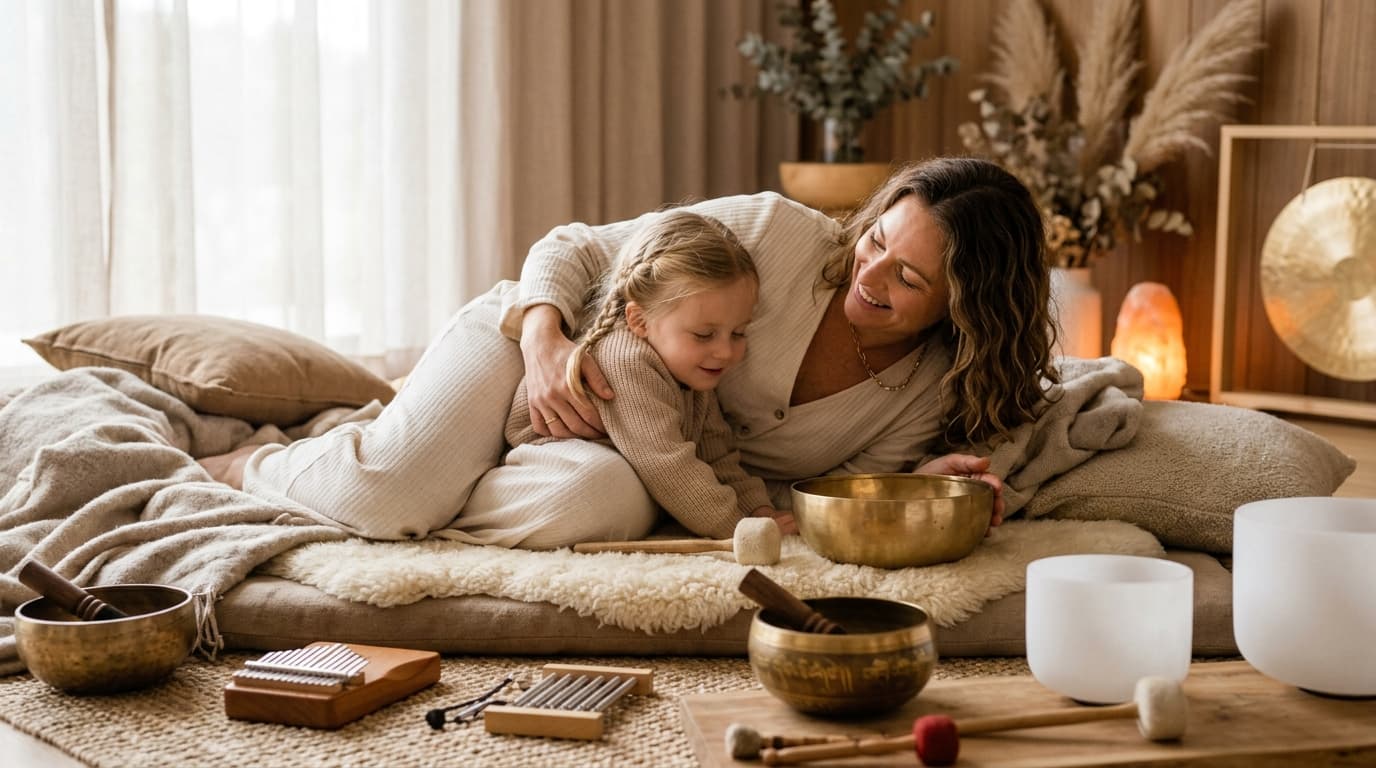
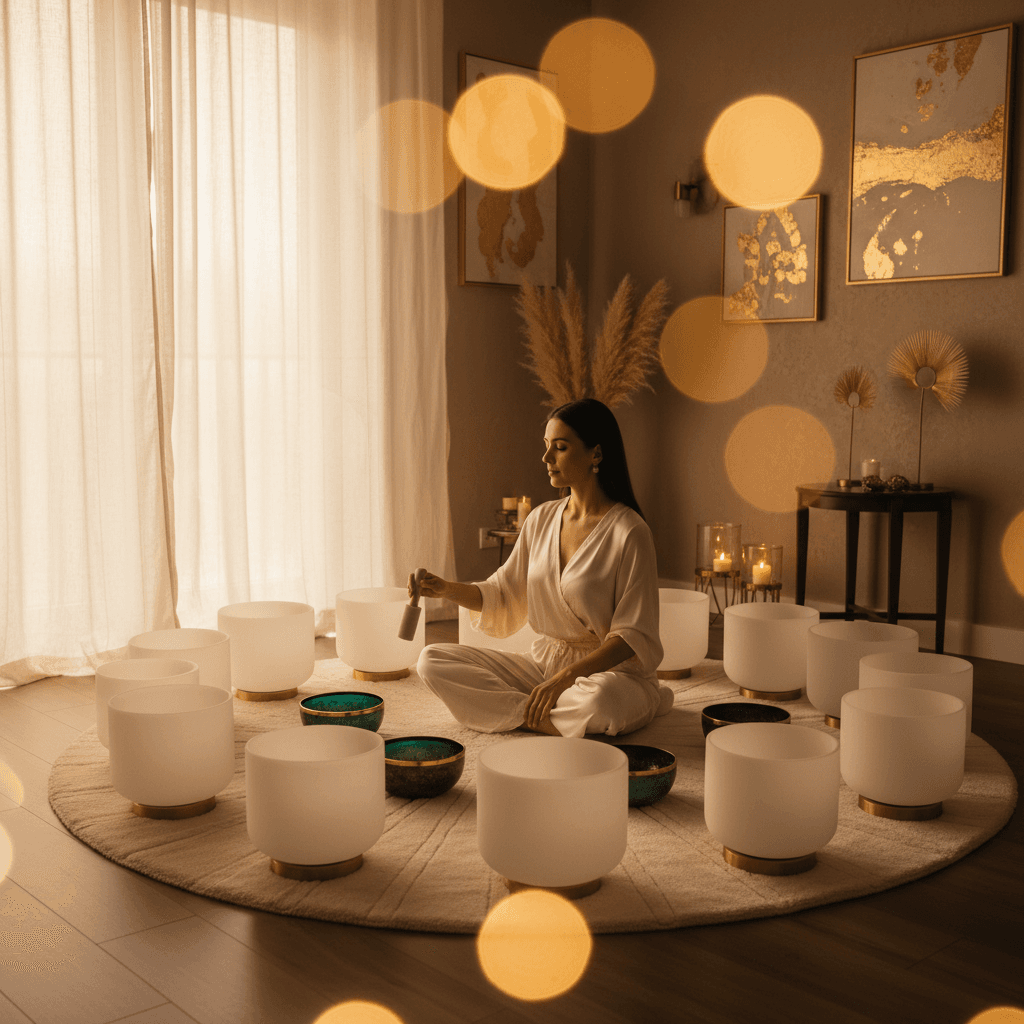
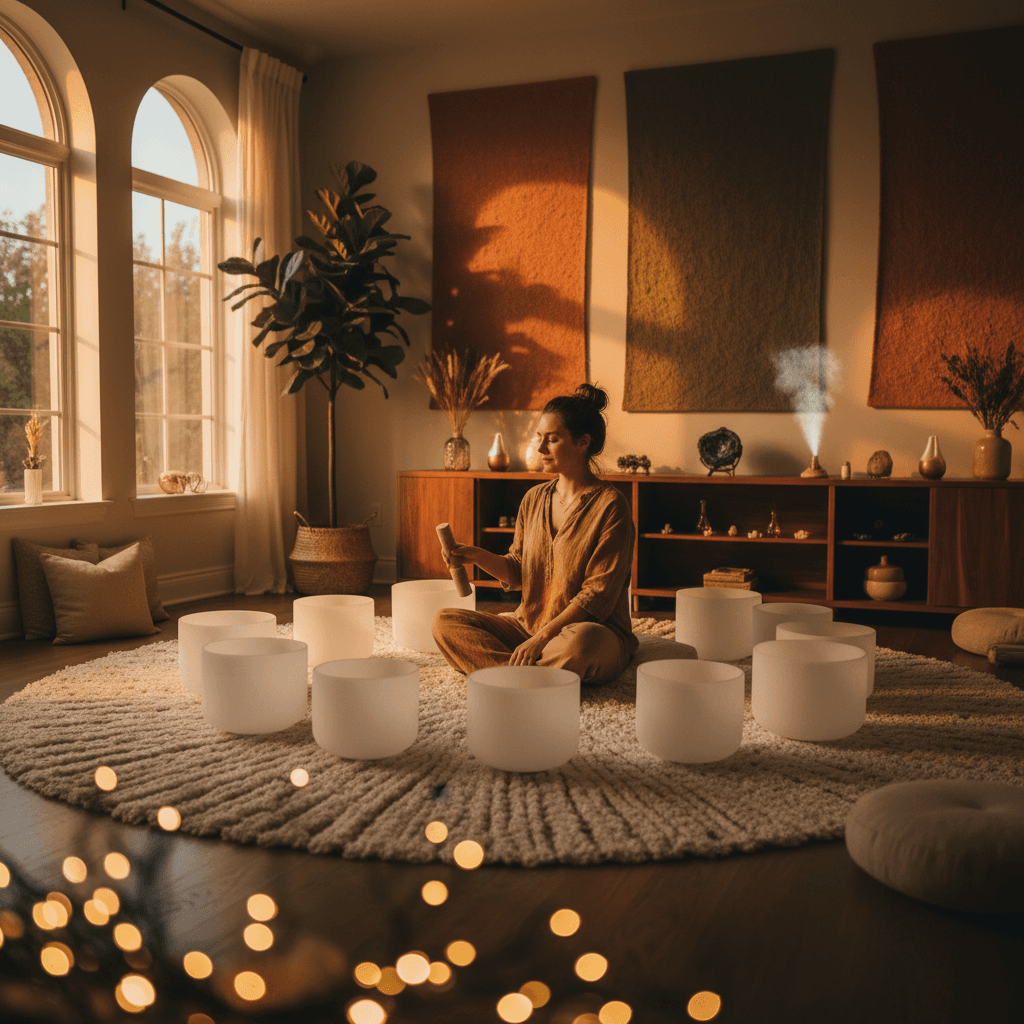
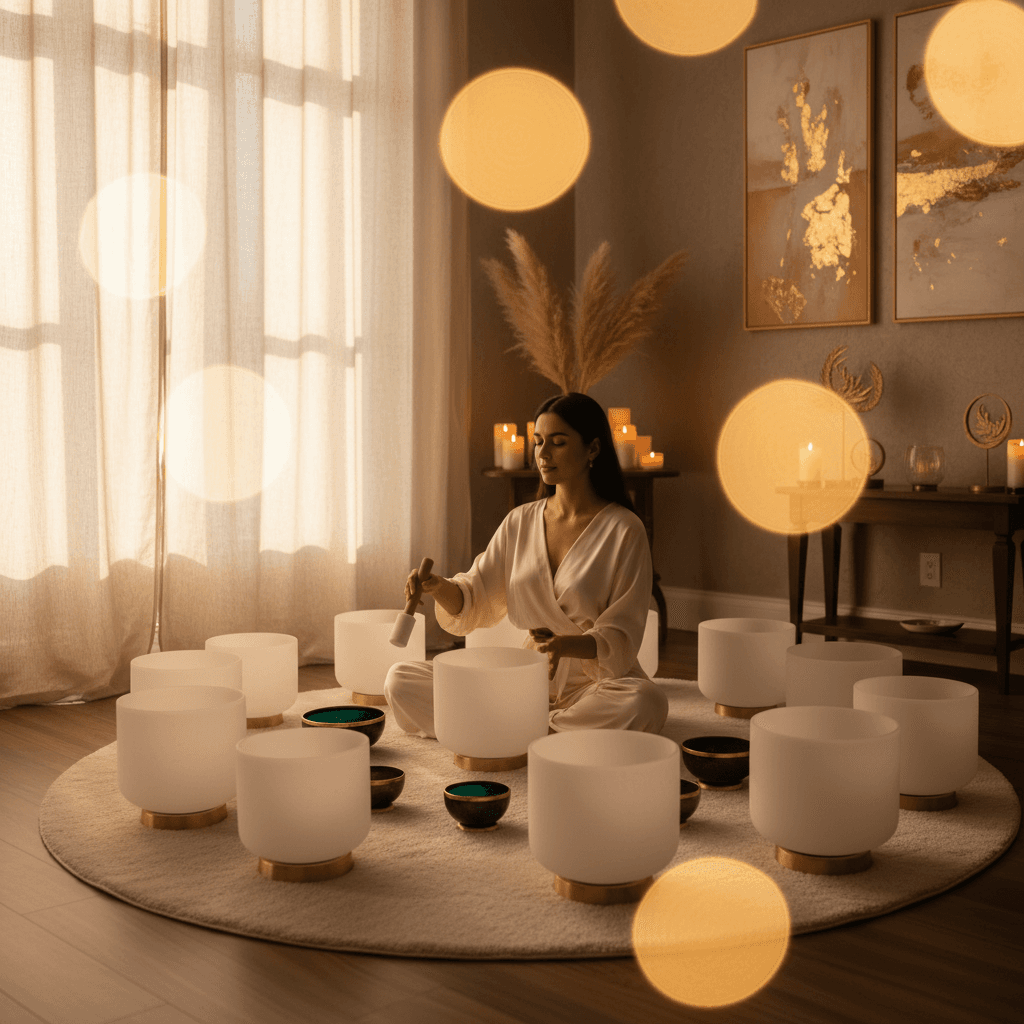
Clients typically lie comfortably, often with eyes closed, allowing themselves to be fully immersed in the sonic landscape. The session begins with the gentle introduction of various instruments: the deep, sustained hum of gongs, the ethereal ringing of crystal singing bowls, the soft chiming of koshi bells, or the rhythmic beat of a shamanic drum. Each sound is carefully chosen and played to create a tapestry of vibrations that envelop the body and permeate the space.
The experience is deeply personal, yet many people report a similar progression. Initially, the mind may be active, grappling with thoughts and feelings associated with grief or daily stressors. However, as the frequencies wash over them, a shift often occurs. The sustained vibrations, felt physically through the body and heard audibly, create an environment conducive to entering deeper states of relaxation. The brain may naturally shift from alert beta waves to more relaxed alpha or meditative theta states, allowing for a gentle release of tension.
These deep states of relaxation may support the body's natural healing mechanisms. The gentle resonance can feel like a soothing balm to an agitated nervous system, helping to downregulate the stress response that often accompanies prolonged grief. It provides a safe, non-verbal space where difficult emotions can surface without being overwhelming, where tears may flow freely, or where a profound sense of stillness can be found. The sound acts as a guide, providing a focal point that allows the mind to quiet and the body to rest deeply.
Clients often describe feeling a sense of being "held" or enveloped by the sound, fostering a feeling of safety that can be crucial for those struggling with isolation or emotional vulnerability. It's a practice that honours the individual's unique grieving process, offering a peaceful sanctuary where one can simply be, without expectation or judgment. Many people report emerging from sessions feeling significantly lighter, more centered, and with a renewed sense of clarity and calm, which can be invaluable when facing the daily challenges of extended mourning.
The Soul Art Approach: Larissa Steinbach's Unique Resonance
At Soul Art Dubai, founder Larissa Steinbach has meticulously crafted a sound wellness experience that is both deeply luxurious and profoundly therapeutic, specifically designed to offer solace and support for those experiencing extended mourning. Her approach is rooted in a philosophy that intertwines scientific understanding with ancient practices, creating a sanctuary where individuals can find respite and foster their innate capacity for resilience. Larissa believes in the power of conscious sound to gently guide the body and mind towards equilibrium.
What sets the Soul Art method apart is its thoughtful curation and personalized attention. Larissa does not simply play instruments; she orchestrates immersive sound journeys tailored to the group's energy or individual needs, particularly for those navigating the intense emotional landscape of prolonged grief. Each session is a carefully composed experience, designed to create a sense of deep safety and allow for emotional release.
Larissa utilizes a diverse array of sacred instruments, each chosen for its unique vibrational quality and ability to evoke specific responses. Her collection includes:
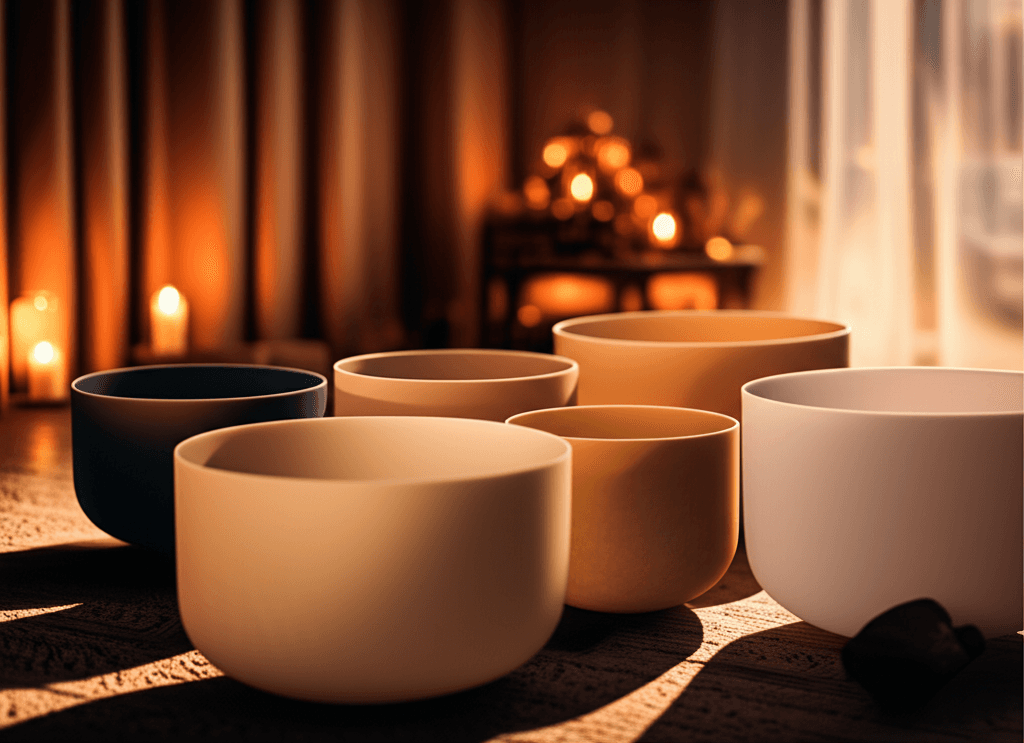
- Alchemy Crystal Singing Bowls: Made from pure quartz and infused with precious minerals, these bowls produce pure, sustained tones and powerful vibrations that resonate deeply within the body. Their frequencies are believed to harmonize with the body's energy centers.
- Symphonic Gongs: The expansive, complex overtones of gongs create a "wall of sound" that can induce profound states of relaxation, often leading to a feeling of timelessness or weightlessness, ideal for stress reduction.
- Ocean Drums and Chimes: These instruments evoke natural soundscapes, promoting a sense of peace and connection to the natural world, which can be deeply grounding for a restless mind.
- Tuning Forks: Precision-tuned forks are sometimes used near or on the body to deliver targeted vibrations, potentially stimulating specific energetic points and promoting cellular relaxation.
Under Larissa's expert guidance, the environment itself at Soul Art is transformed into a cocoon of tranquility, enhancing the efficacy of the sound experience. The intention is always to create a space free from judgment, where individuals can gently process their emotions, find moments of stillness, and reconnect with their inner resources. For those experiencing extended mourning, Soul Art offers a complementary approach to traditional support, providing a unique avenue for fostering emotional regulation, reducing stress, and nurturing profound self-compassion.
Your Next Steps: Embracing Support for Extended Mourning
Navigating prolonged grief is an arduous journey, but you don't have to walk it alone. Recognizing the need for support, whether through traditional counseling or complementary practices like sound wellness, is a powerful first step towards finding solace and rebuilding. Here are some actionable suggestions to integrate into your self-care routine:
- Acknowledge Your Feelings Without Judgment: Understand that prolonged grief is a recognized condition, and your intense, persistent feelings are valid. Giving yourself permission to feel what you feel, without shame or guilt, is crucial.
- Seek Holistic Support: While sound wellness is a powerful complementary approach, it is vital to remember it's not a substitute for professional medical or psychological care. Consider combining wellness practices with guidance from a qualified therapist or counselor specializing in grief.
- Explore Sound Wellness: Experience firsthand how the gentle vibrations of sound may support your nervous system and help quiet an overactive mind. Soul Art Dubai, founded by Larissa Steinbach, offers expertly guided sound journeys designed to create a haven of peace and facilitate emotional release.
- Practice Mindful Moments: Integrate short periods of mindfulness into your day. This could be as simple as focusing on your breath for a few minutes or consciously observing your surroundings. This helps anchor you in the present, offering a temporary respite from rumination.
- Cultivate Self-Compassion: Treat yourself with the same kindness and understanding you would offer a dear friend. Grief is exhausting, and showing yourself compassion through gentle practices, adequate rest, and nourishing activities is not a luxury, but a necessity.
Taking these steps can help lay the groundwork for a more integrated approach to managing extended mourning. If you feel drawn to explore the profound potential of sound wellness, consider connecting with Soul Art Dubai.
In Summary: Finding Resonance in Extended Mourning
Prolonged Grief Disorder (PGD), once known as Complicated Grief, represents an extended and debilitating form of mourning that significantly impacts an individual's wellbeing. Scientific research highlights its distinct neurobiological underpinnings, from specific brain activations to physiological stress responses, demonstrating that it is far more than just "taking too long" to grieve. Understanding these complexities validates the profound challenges faced by those experiencing it.
Sound wellness, as a complementary practice, offers a unique and deeply supportive path for navigating the intricate landscape of extended mourning. Through carefully curated frequencies and vibrations, it may support nervous system regulation, foster deep relaxation, and create a safe space for emotional processing. At Soul Art Dubai, Larissa Steinbach masterfully blends scientific insight with ancient wisdom, offering bespoke sound journeys that aim to soothe an agitated mind and body, providing moments of profound peace amidst persistent sorrow. Embracing such holistic wellness practices can be a vital step towards finding a gentle rhythm for healing and integrating loss into life.
Bookings Coming Soon
Soul Art is still in preparation. Session details and booking will be published here after launch.
Coming Soon
Wellness Disclaimer: This article is for educational and informational purposes only. It does not constitute medical advice, diagnosis, or treatment. Soul Art Dubai provides non-medical wellness experiences focused on relaxation, stress management, and general wellbeing. Sound wellness is a complementary practice and should not replace professional medical care.