Sound for Collective Grief: Healing Community Loss
Key Insights
Explore collective grief and how sound wellness, guided by Larissa Steinbach at Soul Art, offers a unique path to healing shared community loss.
Could the unspoken pain of an entire community be echoing through your own heart? While individual grief is widely recognized, the concept of collective grief—a profound sorrow experienced by a community due to shared loss or extreme change—often remains overlooked. This communal burden, impacting an "uprooted people" rather than just isolated individuals, warrants deeper understanding and innovative support.
At Soul Art, Dubai's premier sound wellness studio, we delve into the potent connection between sound and collective healing. We believe that acknowledging and tending to community loss is vital for individual and societal well-being. This article will explore the science behind collective grief and reveal how the ancient art and modern science of sound wellness can provide a gentle yet powerful pathway forward for communities navigating shared sorrow.
The Deep Roots of Collective Grief
Grief is not solely an individual journey; it can be a communal experience, arising when a group collectively endures extreme change or profound loss. Western psychiatry has historically focused on the individual at risk, yet scholars like Eisenbruch suggest a critical shift in attention towards entire uprooted communities. Many cultural factors, often invisible, significantly shape how grief symptoms are expressed, perceived, and documented within a community.
Research from the Global North, while foundational, has often failed to capture the multifaceted nature of grief in diverse populations. For instance, studies on Black American communities frequently highlight homicide-related loss, despite other significant forms of loss profoundly impacting these groups. Such unacknowledged losses, particularly those without warning or experienced traumatically, can lead to what is termed "traumatic bereavement," a complex state where individuals must mourn the loss while simultaneously coping with accompanying trauma.
The process of grieving in some communities, such as Black American communities, is not an acute process confined to an initial period, but rather a prolonged experience. This extended timeline may be catalyzed by either personal or collective loss, suggesting that bereavement tools need a broader influence in racialized communities disproportionately impacted by systemic inequities and mortality. Scholars advocate for an expansion of grief research to fully encompass these community-level experiences.
The Physiological Impact of Shared Loss
Collective grief is far from an abstract concept; it manifests with tangible physiological and psychological impacts. Communities enduring disproportionate rates of mortality, whether from pandemics like COVID-19 or systemic inequities, experience heightened levels of stress and complicated grief. Research indicates that Black Americans, for example, report higher levels of complicated grief and stress from traumatic circumstances like homicide compared to their White counterparts.
This prolonged exposure to shared trauma and loss can lead to chronic disturbances in mood, cognition, and behavior, sometimes extending far beyond the typical six to twelve months associated with individual grief. The constant contending with systemic consequences of widening racial disparities in morbidity and mortality becomes an overlooked source of racial burden, disenfranchisement, and discrimination. Such sustained stress and unresolved grief can keep the nervous system in a state of hyperarousal, making true healing difficult without targeted support.
The physical and emotional toll of collective grief underscores the urgent need for tailored bereavement support services. These services should specifically address the healing needs of communities, offering collective, community-focused approaches that acknowledge the inseparable nature of personal and collective grief as a singular, motivating phenomenon for expressing justifiable grievance. Further research is essential to advance clinical understanding and support similar phenomena in other communities, such as Indigenous peoples or Dalits in India.
Sound's Ancient & Modern Role in Grief Support
Long before modern science, cultures worldwide intuitively turned to sound and music to soothe sorrow, honor loss, and facilitate communal healing. Drums, flutes, chanting, and song served as universal pathways to process emotions that words alone could not express. This ancient wisdom resonates deeply with contemporary understanding of sound's capacity to touch the human spirit.
In many traditional societies, such as the Dagara people, grief tending is not a private, individual act but a necessary communal ritual for the health of the entire community. Unaddressed grief is believed to become harm that ripples through the collective, emphasizing that personal grief work is intrinsically tied to community well-being. Regular grief rituals help groups develop "coregulation"—the ability to calm each other's nervous systems during distress.
Today, research affirms what our ancestors knew: sound has the power to help us carry grief with more ease, release what feels stuck, and remember our inherent wholeness. Sound-based practices, utilizing instruments like singing bowls and gongs, have been linked to decreased pain, lowered blood pressure, calmer brain states, and deep relaxation. Music therapy, in particular, has been shown to reduce grief symptoms in children, teens, and adults experiencing complicated grief, fostering emotional regulation and connection.
"So long as grief is prolonged, injustice will be prolonged." — Dr. Tashel Bordere
This profound statement highlights the integral link between tending to grief and fostering a just, engaged community. When communities are stuck in prolonged grief, their capacity for action and participation can diminish. Sound wellness offers a unique, non-verbal approach to unlock these deep emotional states and foster a pathway towards collective healing and resilience.
How It Works in Practice
The beauty of sound wellness lies in its ability to offer a pathway beyond words, which is particularly vital when collective grief feels heavy, unyielding, or silent. When a community experiences a loss so profound it defies articulation, sound can bypass cognitive barriers, directly accessing deeper emotional and physiological spaces. It creates a gentle conduit for expression and release without the pressure to intellectualize or verbally recount the trauma.
At its core, sound wellness operates on the principle of vibrational resonance. Our bodies are composed of water and are highly receptive to vibrations. The gentle, sustained frequencies produced by instruments like gongs and singing bowls can penetrate deeply, prompting a cellular response. This interaction helps to reset the nervous system, shifting it from a state of fight-or-flight into a more restorative parasympathetic state.
This physiological shift supports emotional release and integration. As the body relaxes and the mind quiets, long-held tensions and unprocessed emotions associated with collective trauma may begin to surface gently. The enveloping frequencies can create a safe container for these feelings to be acknowledged, felt, and gradually integrated, rather than suppressed. Many people report a sense of lightness, clarity, or profound peace after a session, indicating a release of energetic blockages.
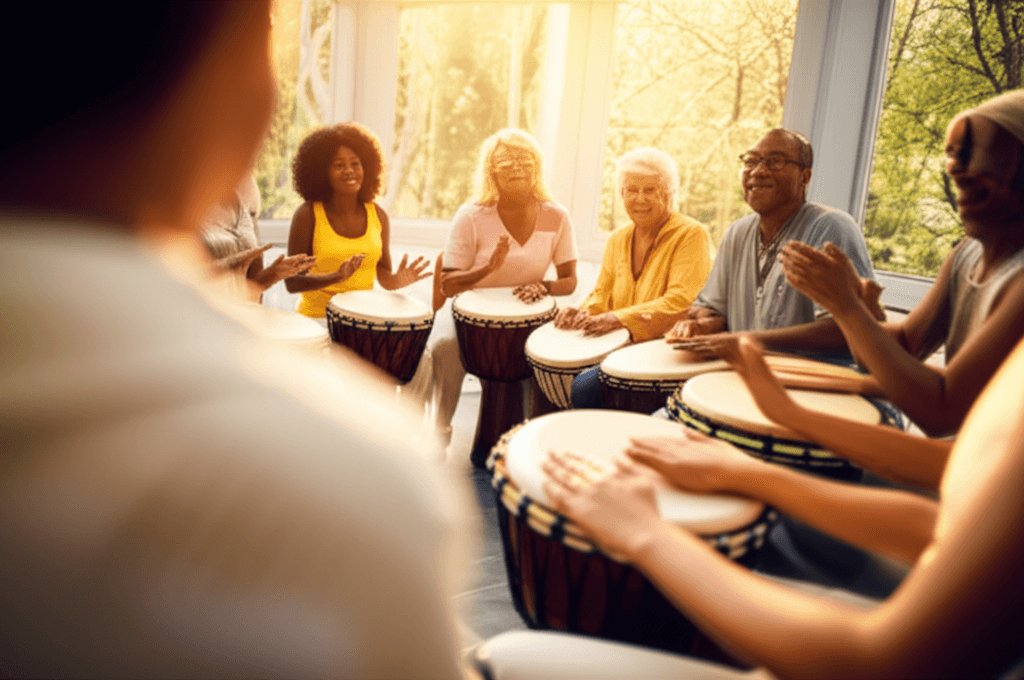
Crucially, sound wellness, especially in a group setting, also cultivates connection and co-regulation, which are vital components for healing collective grief. Grief can be profoundly isolating, yet shared sound experiences naturally draw individuals back into relationship with one another. Whether in a communal sound bath or a group intention-setting, the shared auditory journey fosters a sense of belonging and mutual support. Clinical studies confirm that group music therapy lessens grief symptoms and strengthens emotional resilience, reminding us that we don't have to walk this path alone, especially when the path is one shared by many.
The Soul Art Approach
Larissa Steinbach, the founder of Soul Art, approaches collective grief with a profound understanding of its intricate layers, blending ancient wisdom with contemporary scientific insight. Her methodology is rooted in creating a sacred, safe space where individuals can gently explore and release the burdens of shared loss. The Soul Art method is unique in its empathetic curation of sound experiences, designed to acknowledge the invisible threads of communal sorrow.
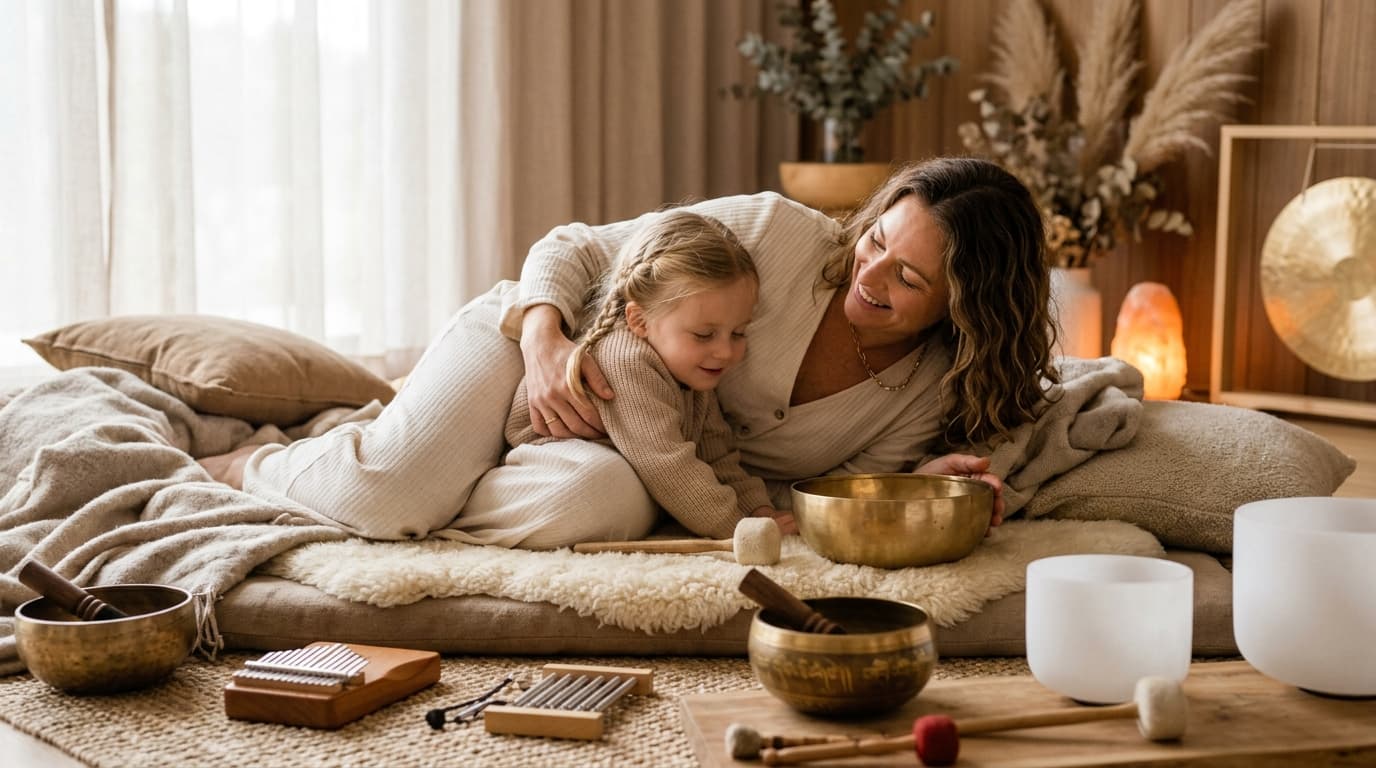
At Soul Art, Larissa utilizes a rich tapestry of instruments, each chosen for its distinct vibrational properties and ability to facilitate deep relaxation and emotional processing. Her sessions frequently feature the resonant power of gongs, the ethereal tones of crystal singing bowls, and the grounding vibrations of Himalayan singing bowls. These are often complemented by the delicate shimmer of chimes and the primal rhythm of drums, creating a multi-sensory journey that encourages introspection and release.
A cornerstone of the Soul Art approach is the intentional creation of community. Group sound baths are not merely shared experiences; they are carefully guided journeys designed to foster a sense of belonging and collective healing. Participants are invited to set intentions for themselves and their community, amplifying the healing energy within the space. Larissa's skilled facilitation ensures that each session provides a gentle yet powerful opportunity for co-regulation, allowing individuals to find solace and strength in shared presence.
Beyond the immediate session, Larissa Steinbach emphasizes the importance of integration, providing tools and reflections to help clients carry the sense of peace and connection into their daily lives. The "quiet luxury" of Soul Art is not just in its exquisite environment, but in the deep, transformative care provided, offering a unique sanctuary for the heart to remember its wholeness amidst collective change.
Your Next Steps
Navigating collective grief requires both personal tenderness and communal support. Embracing practices that acknowledge this shared experience can significantly contribute to your well-being and the resilience of your community. Consider these actionable steps to begin your journey towards deeper understanding and gentle healing:
- Acknowledge the Collective Burden: Recognize that feelings of sadness, fatigue, or disconnection may stem from a larger, shared experience of loss within your community or society. Giving a name to collective grief can be the first step towards processing it.
- Seek Communal Connection: Engage in activities that foster a sense of belonging. This could be joining a local community group, participating in collective rituals, or simply spending quality time with those who share your experiences. Group settings can provide vital co-regulation and reduce feelings of isolation.
- Integrate Mindful Sound: Incorporate calming music or soundscapes into your daily routine. Even listening to instrumental music with a gentle intention can help regulate your nervous system and create space for emotional processing.
- Explore Sound Wellness: Consider attending a group sound bath or a guided meditation with sound. These sessions, offered by experienced practitioners like Larissa Steinbach at Soul Art, provide a structured yet gentle environment to process emotions non-verbally and deeply relax your nervous system.
- Practice Self-Compassion: Understand that healing from collective grief is not a linear process and may take time. Be kind to yourself, allow space for your feelings, and prioritize self-care practices that nurture your body, mind, and spirit.
Remember, tending to collective grief is a powerful act of self-care and community care.
Bookings Coming Soon
Soul Art is still in preparation. Session details and booking will be published here after launch.
Coming Soon
In Summary
Collective grief is a profound and often unrecognized force, shaping communities through shared experiences of loss and extreme change. Unlike individual sorrow, it weaves through the fabric of society, affecting mental, emotional, and even physiological well-being. Understanding this communal burden is crucial for fostering resilience and providing appropriate support.
Sound wellness offers a scientifically grounded and deeply empathetic approach to navigating collective grief. Through vibrational resonance, sound bypasses verbal limitations, facilitating deep emotional release, nervous system regulation, and vital communal connection. Practices guided by experts like Larissa Steinbach at Soul Art blend ancient traditions with modern insights, creating powerful opportunities for healing.
Embracing sound as a tool for collective healing can transform shared sorrow into a pathway for renewed connection and resilience. At Soul Art, we invite you to experience this unique journey towards well-being, finding solace and strength within a supportive community.
Wellness Disclaimer: This article is for educational and informational purposes only. It does not constitute medical advice, diagnosis, or treatment. Soul Art Dubai provides non-medical wellness experiences focused on relaxation, stress management, and general wellbeing. Sound wellness is a complementary practice and should not replace professional medical care.