Sound's Gentle Embrace for Children's Grieving Hearts

Key Insights
Explore how sound wellness offers a compassionate, science-backed approach to support children through grief, fostering emotional well-being at Soul Art Dubai.
Grief is a universal human experience, yet it manifests uniquely in individuals, particularly in children. Imagine a child navigating the profound confusion and heartache of loss, often without the verbal tools to express their complex emotions. How do we, as caregivers and a community, offer truly supportive, understanding spaces for these young mourners?
At Soul Art, founded by Larissa Steinbach, we understand that supporting a grieving child requires a deeply empathetic and holistic approach. While traditional methods are vital, emerging wellness practices, such as sound wellness, offer a complementary pathway to emotional regulation and comfort. This article delves into the unique landscape of children's grief and explores how the gentle, non-verbal power of sound can become a soothing balm for their hearts. We will explore the science, the practice, and the distinctive approach cultivated at Soul Art to empower young individuals through their journey of loss.
Understanding the Unique Landscape of Children's Grief
The experience of grief in childhood is distinct from that of adults, shaped by developmental stages and an evolving understanding of death. It is crucial to recognize these differences to provide truly effective support. Children process loss in ways that may not always align with adult expectations, often leading to their distress being misinterpreted.
Developmental Differences in Processing Loss
Young children, specifically those between the ages of 3 and 6, tend to experience grief differently than older age groups. Research by Kranzler and colleagues (1990) found that unlike older children, young children typically do not experience guilt or feelings of responsibility for a parent's death. Instead, Christ and Christ (2006) summarized common reactions among this age group as "separation anxiety, dependency, night-time fears, regressive behaviour, irritability, and impatience."
As children grow, their understanding of death evolves. Children aged 6 to 12 begin to grasp that death signifies an end to being alive and is a natural part of life (Sherner, 2015). This developmental knowledge often sparks a natural curiosity about what happens to the body after death and feelings surrounding their own mortality. Children generally desire truthful information about the illness of a parent, wish to be included in decisions and rituals, and want to understand their loss (Søfting et al., 2016). They value support from their remaining parent, as well as from caregivers and friends.
A study by Flahaulta et al. (2018) highlighted that younger-aged children often express their feelings with greater ease than older children. The study also noted that girls tend to impute their feelings and express increased vulnerability, while boys often exteriorize their emotions. Importantly, the timeline for children expressing grief, both emotionally and behaviorally, is often longer in duration than for adults.
The Neurological Impact of Bereavement
The profound emotional stress of bereavement has a tangible impact on the brain. A study by Huang et al. (2021) hypothesized that grief fundamentally triggers global alterations in the resting-state brain networks. They found that bereavement grief impacts "the overall brain circuits and internetwork connectivity in the intrinsic resting state."
This research suggests that the effects of grieving are not limited to cognitive or emotional duties but have a broader influence on brain functioning. Understanding this neurological dimension underscores the importance of practices that may support the nervous system and promote a sense of calm and regulation. Wellness practices can offer a gentle way to introduce balance back into these affected networks.
Grief in Waves: The 'Puddle Jumping' Phenomenon
Children and teenagers often grieve in waves rather than experiencing a continuous state of sadness. Dr. Alan Wolfelt, a renowned grief counselor, describes this as the "puddle jumping" phenomenon, where children may appear fine one moment and deeply sad the next. This fluctuating emotional state can be confusing for adults who are accustomed to a more linear grieving process.
Research from the National Alliance for Grieving Children indicates that a significant 73% of parents report their children experiencing behavioral changes after a significant loss. However, many adults may misinterpret these behaviors because they do not recognize them as grief responses. Common grief reactions in children and adolescents include regression, where individuals may exhibit developmentally inappropriate behaviors, such as a toilet-trained child engaging in bedwetting (Oltjenbruns, 2001).
"Children’s grief is not a problem to be solved, but a journey to be walked with gentle presence and understanding."
The experience of childhood bereavement can also impact several areas of social-emotional functioning in the long term. This highlights the critical need for comprehensive and sustained support systems that can adapt to the evolving needs of grieving children over time.
The Gentle Resonance: Sound Wellness for Grieving Children
Given the unique nature of children's grief, including their non-verbal expressions and the neurological impacts of loss, complementary wellness approaches offer valuable support. Sound wellness, in particular, provides a gentle, accessible pathway for children to process emotions and find moments of peace.
Creating a Safe Space for Expression
Children often process grief through non-verbal means, such as play, art, and movement. A 2019 study in the Journal of Clinical Psychology found that expressive interventions significantly improved emotional regulation in grieving children. Sound wellness provides a powerful non-verbal medium, allowing emotions to surface and integrate without the pressure of finding the "right" words.
In a sound session, the gentle vibrations and tones create an immersive environment that may support a child in feeling safe and seen. This can be particularly beneficial for children who might otherwise struggle to articulate their feelings verbally. The experience may foster emotional identification and expression, offering valuable coping skills through a multi-modal means.
Harmonizing Mind and Body
Sound vibrations can deeply influence the body's physiological and neurological states. When exposed to specific frequencies, the brain's activity can shift, encouraging states of relaxation and calm. This is especially relevant given the research by Huang et al. (2021) on how grief impacts resting-state brain networks. Sound wellness practices may offer a gentle way to support the regulation of these networks.
Many people report that the soothing nature of sound helps to quiet the nervous system, potentially reducing feelings of anxiety and distress associated with grief. The consistent, rhythmic nature of certain sounds, such as those produced by singing bowls or gongs, can provide a steady anchor for children experiencing the "puddle jumping" phenomenon of grief, helping to ground them in the present moment. While further research is always recommended, preliminary studies exploring music therapy-based bereavement groups have shown promising results in supporting children's mood and behavior (Hilliard, 2007; Pubmed, 2001).
Supporting Continuing Bonds and New Rituals
Healthy grief, according to the "continuing bonds" theory supported by research from the Harvard Child Bereavement Study, involves maintaining an appropriate and evolving connection to the deceased, rather than "getting over" the loss entirely. Sound wellness can play a beautiful role in this process by helping to create new rituals that honor the loved one.
A sound session can become a dedicated space for quiet remembrance, allowing children to connect with memories in a peaceful setting. Creating new traditions that integrate sound, such as playing a particular chime in remembrance or engaging in a gentle sound journey, can provide a consistent and comforting practice. This flexible approach allows children to participate at their comfort level, balancing celebration of life with acknowledgment of grief, and maintaining structure while allowing for flexibility when grief is particularly intense.
Soul Art's Compassionate Path: Guiding Young Hearts with Sound
At Soul Art in Dubai, Larissa Steinbach has meticulously crafted an approach that centers on empathy, understanding, and the transformative power of sound. Her method recognizes the profound vulnerability of young mourners and provides a sanctuary where they can simply be with their feelings.
Larissa Steinbach's Philosophy
Larissa Steinbach's philosophy is rooted in the belief that every child’s grief journey is unique and deserves individualized attention. She emphasizes creating a deeply nurturing and inclusive environment where children feel completely safe to explore their emotions. The focus is not on 'fixing' their grief, but on offering tools and a supportive space for them to process, express, and integrate their loss in a healthy way.
Larissa's expertise lies in tailoring sound experiences to suit different age groups and developmental stages, understanding that what resonates with a 4-year-old will differ from what supports a 10-year-old. This personalized care is a cornerstone of the Soul Art method, ensuring that each session meets the child exactly where they are on their journey.
Unique Techniques and Instruments
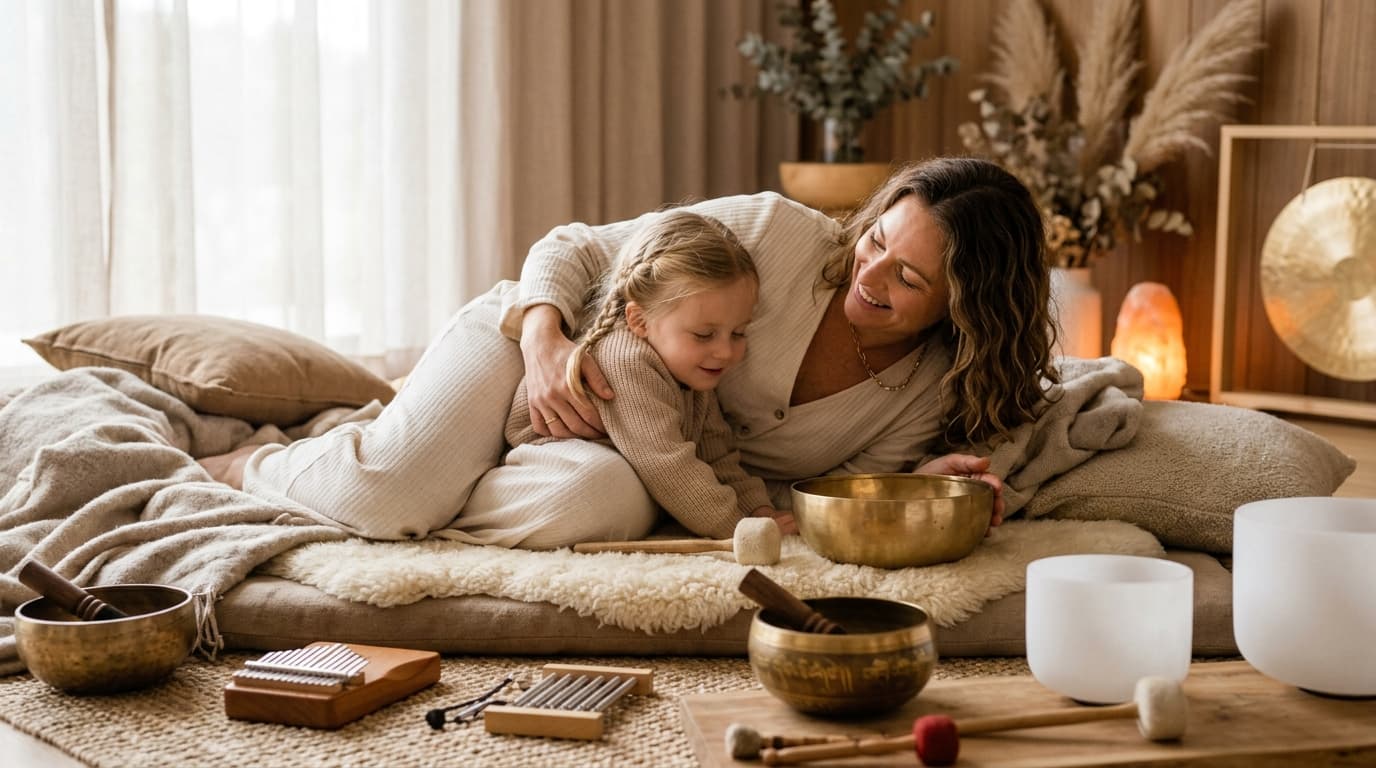
Soul Art utilizes a carefully selected array of instruments, each chosen for its unique vibrational quality and ability to create a soothing soundscape. These include the resonant tones of Himalayan singing bowls, the pure frequencies of crystal bowls, the deep, enveloping waves of gongs, and the delicate, ethereal melodies of chimes and Koshi bells.
For children, these instruments are introduced with particular gentleness. Sessions are often shorter, volumes are carefully moderated, and the experience may incorporate more interactive elements to keep children engaged. The vibrations are not overwhelming but rather create a subtle, immersive environment that encourages relaxation and introspection. Through these unique sound experiences, Soul Art aims to facilitate a non-verbal outlet for emotions, helping children move from moments of distress to feelings of calm and centeredness. Larissa Steinbach guides these sessions with an intuitive understanding, creating a space for both silent reflection and gentle, supported expression.
Empowering Young Mourners: Practical Ways to Offer Support
Supporting a grieving child is an ongoing process that requires patience, understanding, and a willingness to adapt. Beyond professional wellness practices, there are many practical steps parents and caregivers can take to empower young mourners in their daily lives.
- Be Honest and Age-Appropriate: Provide truthful information about the death, using clear language appropriate for their developmental stage. Avoid euphemisms that can be confusing or frightening.
- Include Them in Rituals: Whenever possible, include children in decisions and rituals related to the loss, such as memorial services or creating new family traditions. Allow them flexibility in their participation based on their comfort level.
- Maintain Routine with Flexibility: Keep daily routines (meal times, bedtimes, school attendance) as consistent as possible to provide a sense of security. However, allow for flexibility when grief is particularly intense, understanding their need for extra comfort or quiet time.
- Encourage Non-Verbal Expression: Recognize that children often process grief through non-verbal means. Provide opportunities for expressive activities like drawing, playing, storytelling, or engaging with gentle sound wellness practices.
- Seek Community and Support: Connect with other parents, support groups, or wellness studios like Soul Art that specialize in holistic support for grief. Knowing you're not alone can be incredibly comforting, and these resources can offer additional tools and insights.
By integrating these supportive approaches, you can help create a nurturing environment where children feel understood and have the tools they need to navigate their grief journey.
A Soothing Embrace for Grieving Hearts
Children's grief, with its unique developmental nuances and neurological impacts, requires a compassionate and multi-faceted approach. While distinct from adult bereavement, it demands equally profound attention and care. Sound wellness, as offered by Larissa Steinbach at Soul Art, emerges as a powerful, non-verbal complementary practice. It may support emotional regulation, create a safe space for expression, and foster the healthy integration of loss through the concept of continuing bonds.
Through gentle frequencies and expert guidance, Soul Art provides a sanctuary for young hearts to find comfort, process complex emotions, and build resilience. Empowering children with such holistic wellness tools is not about erasing their pain, but about equipping them to carry their memories with greater peace and understanding. We invite you to explore the soothing embrace of sound wellness for your family at Soul Art.
Bookings Coming Soon
Soul Art is still in preparation. Session details and booking will be published here after launch.
Coming Soon
Wellness Disclaimer: This article is for educational and informational purposes only. It does not constitute medical advice, diagnosis, or treatment. Soul Art Dubai provides non-medical wellness experiences focused on relaxation, stress management, and general wellbeing. Sound wellness is a complementary practice and should not replace professional medical care.