Writer's Block: Unlock Word Flow with Sound Wellness
Key Insights
Discover how specific sound frequencies and sensory input, guided by Larissa Steinbach at Soul Art, can alleviate writer's block and enhance creative flow.
Have you ever found yourself staring at a blank page, fingers hovering over the keyboard, but no words come? This isn't merely a lack of inspiration; it's a phenomenon rooted in our brain's complex interplay of frequencies and sensory input, often termed writer's block. For generations, this frustrating impasse has been dismissed as a psychological hurdle, yet modern neuroscience offers a more profound understanding.
Breakthroughs in brain imaging have delivered hard evidence that specific brainwave frequencies inhibit or facilitate distinct cognitive behaviors, including focus, creativity, and relaxation. The tension we label as writer's block may arise from an incompatibility between our current brainwave state and the desired creative activity. At Soul Art, Dubai's premier sound wellness studio, we explore how precisely calibrated soundscapes can gently guide your mind into states conducive to effortless word flow.
This article delves into the scientific underpinnings of writer's block and the surprising power of sound to dismantle it. We'll uncover how sensory engagement, particularly auditory feedback, can transform your writing process. Join us as we explore how Larissa Steinbach's unique approach at Soul Art helps individuals tap into their innate creative potential, fostering an environment where words flow freely and inspiration thrives.
The Neuroscience Behind Creative Flow and Writer's Block
Writer's block, a term coined by psychiatrist Dr. Edmund Bergler in 1947, is more than just a fleeting creative slump. From a scientific standpoint, accessing creativity can be uniquely challenging for writers due to the paradox of needing sensory stimuli to evoke and sustain the brainwave state required for creativity and innovation. The traditional tools and rituals surrounding writing often do not, in themselves, provide this crucial sensory input.
Brainwave Frequencies and Cognitive States
Our brains operate across various frequencies, each associated with different states of consciousness and cognitive function. For instance, higher frequency beta waves are linked to active, focused thinking, while lower frequency alpha waves (8–12 Hz) are associated with relaxed alertness and a gateway to deeper states of consciousness, which are often optimal for creative thought. The "tension termed writer's block" can result from an incompatibility between the prevailing brainwave state and the desired activity. If the brain is in a high-stress, high-beta state, accessing the more relaxed, expansive alpha state needed for creative flow becomes significantly harder.
Some scientists believe that under duress, stress can shift higher functions associated with writing from the cortex to the limbic system, a part of the brain linked to emotional responses. This shift can impede the nuanced cognitive processing essential for creative expression. Understanding these brainwave dynamics is fundamental to comprehending how external stimuli, particularly sound, can influence our internal creative landscape.
The Sensory Paradox of Writing
Writing is, by its very nature, a minimally sensual activity. Unlike painting, sculpting, or even cooking, which engage multiple senses, traditional writing often involves only sight and touch. This lack of diverse sensory input can make it harder for the brain to transition into the optimal creative state. The brain thrives on rich sensory experiences to stimulate neural pathways and foster idea generation.
This is precisely "the rub": while creativity demands sensory richness, the act of writing often provides very little. This scientific observation highlights why methods that reintroduce sensory engagement can be so effective in overcoming creative stagnation. Techniques that bridge this sensory gap, by engaging more parts of the brain, may support improved idea generation and cognitive flow.
The Power of Auditory Feedback
Emerging research powerfully demonstrates the profound impact of auditory feedback on cognitive performance, particularly in writing. The subtle sounds we often dismiss as mere background noise—such as the click-clack of a keyboard—can be powerful productivity tools. A 2018 study reported that typing with audio feedback improved typing speed by 12.3% and reduced errors by 7.1%, showcasing immediate, measurable benefits.
Further investigation by the University of Michigan in 2020 found that keyboard sounds significantly facilitated entry into flow states—that deeply focused state where time seems to disappear. Participants using audio feedback reported entering flow states 34% more frequently than those typing in silence. This suggests that the brain processes typing differently when it hears what it's doing, creating a more immersive and less effortful cognitive experience.
The Journal of Environmental Psychology (2023) added another layer of understanding, discovering that keyboard sounds reduced cognitive load by 31% during typing tasks. EEG monitoring revealed increased alpha wave activity (8–12 Hz), which is associated with focused attention, in participants who received audio feedback. Furthermore, a 2023 study from Stanford’s Learning Lab found that students who typed with audio feedback maintained focus 23% longer than those typing in silence. This translates to substantial real-world productivity gains, potentially adding up to 90 additional minutes of productive focus over an 8-hour workday.
The Role of Background Music
Beyond direct typing sounds, carefully selected background music may support creative output and focus. Research into the effects of background music on word-processed writing has shown varied impacts depending on the type of music. Studies indicate that low-arousal ambient instrumental tracks, typically with a tempo of 60–80 BPM, can be conducive to maintaining flow and work engagement. This type of music, often characterized by its calming and non-intrusive nature, allows the mind to settle into a focused state without distraction.
Conversely, high-arousal music, such as electronic dance music with 120–140 BPM, may disrupt neural pathways. High-tempo, complex auditory stimuli have been found to overactivate regions linked to emotional arousal and conflict monitoring, while suppressing the deactivation of the default mode network. This neural overstimulation can impede sustained attention and impair the ability to enter flow states, suggesting that not all music is beneficial for creative tasks. The choice of sound is paramount for optimal cognitive function.
Orchestrating Your Writing Environment for Optimal Flow
Connecting the scientific understanding of brainwaves and sensory input to practical application is key to overcoming writer's block. The goal is to consciously design an environment that naturally guides your brain into the desired state for creativity and sustained focus. This isn't about simply having noise; it's about curating soundscapes that resonate with your internal rhythms.
When we experience carefully composed sounds—be it the rhythmic clicking of a keyboard, the gentle hum of ambient music, or the resonant tones of singing bowls—our brain begins to entrain, or synchronize, with those frequencies. For example, sounds rich in alpha wave frequencies can encourage the brain to produce more alpha waves itself, fostering that state of relaxed alertness ideal for creative thought and problem-solving. Many people report that these intentional sound environments help them feel less overwhelmed and more connected to their work.
Consider the act of writing longhand, as some studies confirm it engages different parts of the brain than typing, potentially improving idea generation. This physical, tactile experience reintroduces a sensory element often missing in digital drafting. For those who are "die-hard techies," software solutions like OM Writer incorporate background colors and sounds into a word processing application, while Hanx Writer replicates the satisfying click-clack of keystrokes and the "ding!" of a carriage return, mimicking the sensory richness of an old manual typewriter. These tools are intuitively leveraging the power of sensory feedback.
The quality and type of sound matter immensely. Low-arousal, instrumental sounds, or even specific white or brown noise frequencies, may support reduced cognitive load and enhance focus. The brain, processing these non-intrusive auditory cues, can better allocate its resources to the creative task at hand. This proactive approach to environmental design is a complementary practice that supports overall well-being and productivity.
Larissa Steinbach's Method: Curating Soundscapes for Unleashed Creativity at Soul Art
At Soul Art, Larissa Steinbach, our founder, brings a sophisticated understanding of these scientific principles to life through bespoke sound wellness experiences. Larissa's method transcends simple background music; it involves carefully curated soundscapes designed to gently guide your brain into optimal states for creativity, focus, and deep relaxation. She understands that each individual's brainwave patterns and sensory needs are unique.
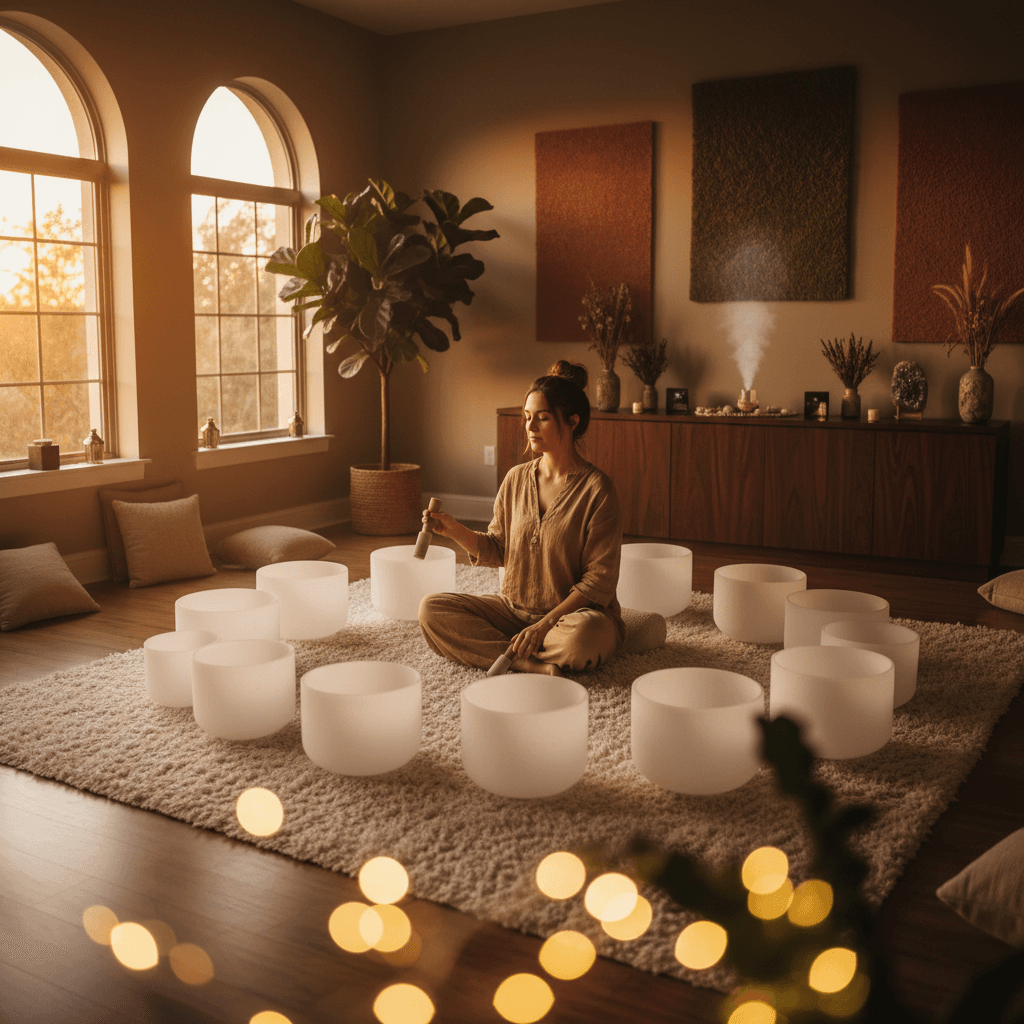
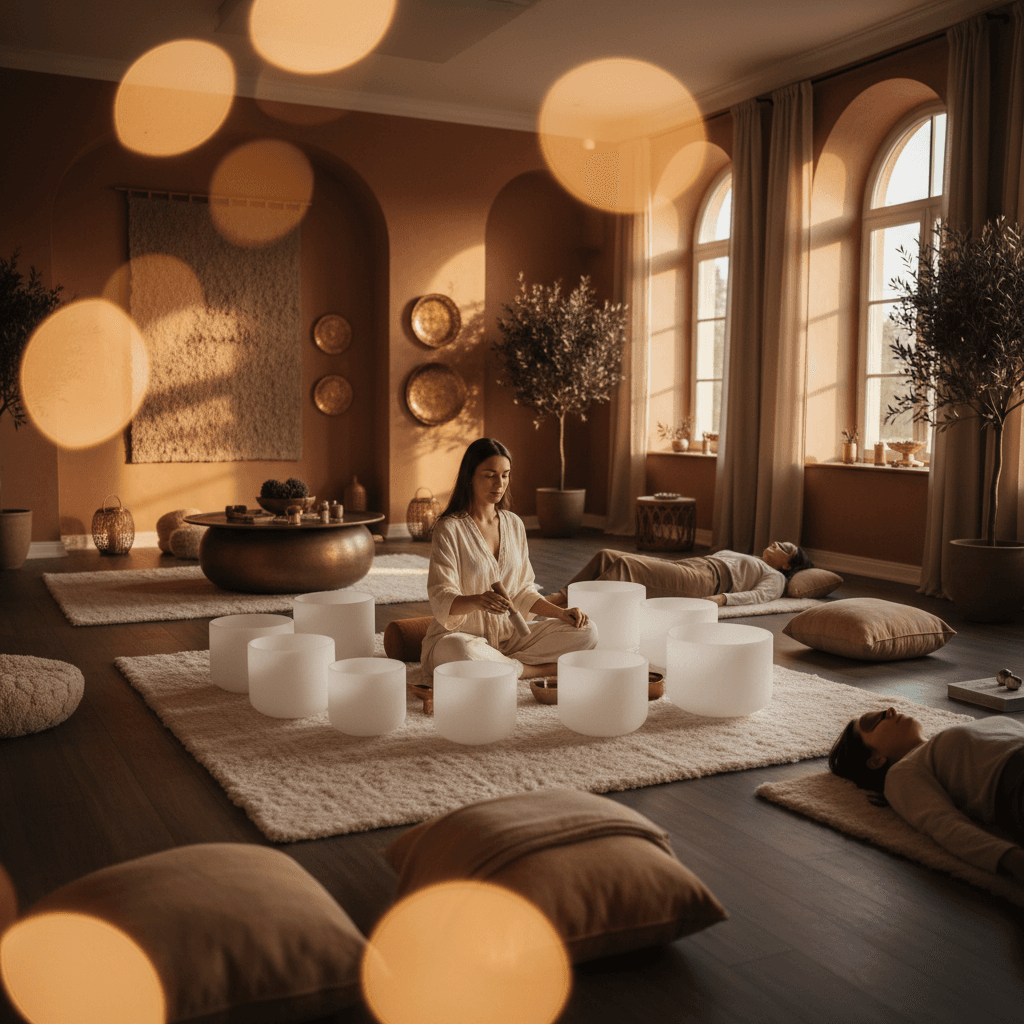
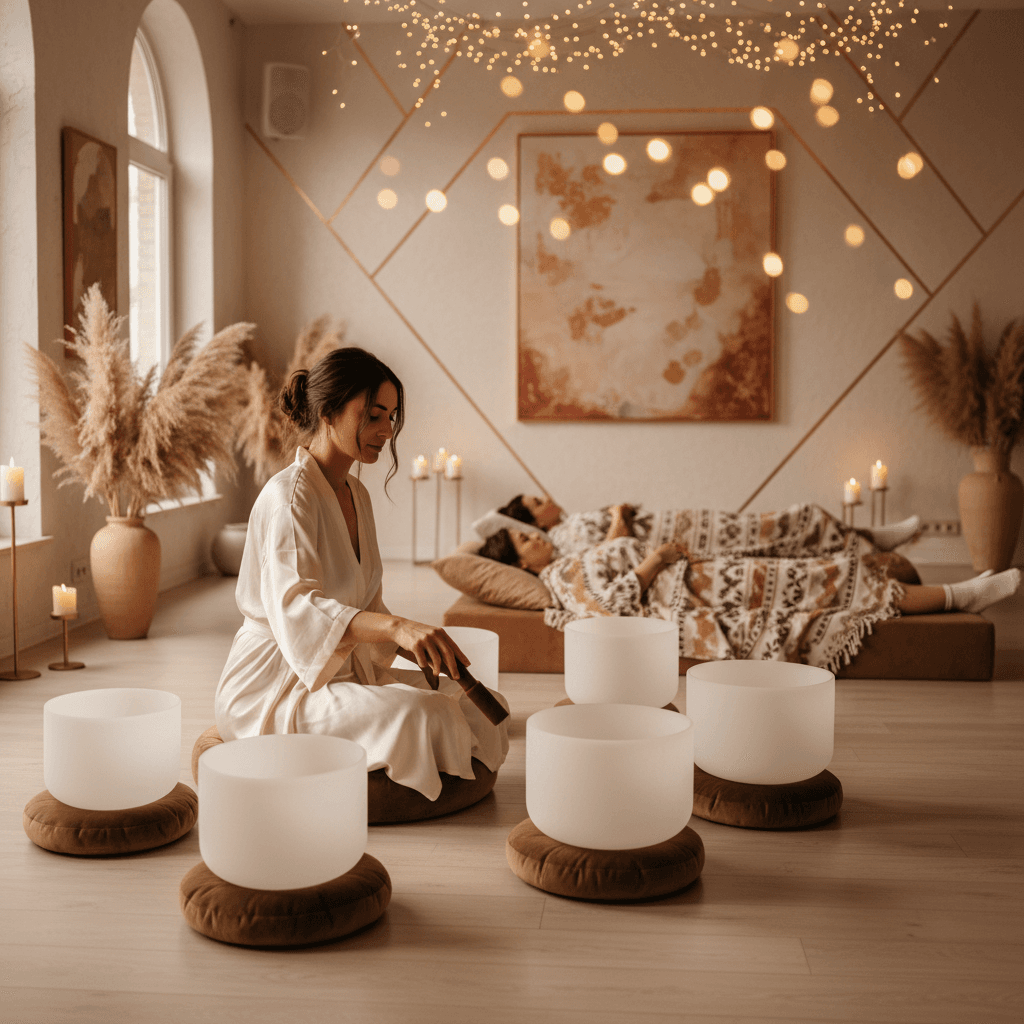
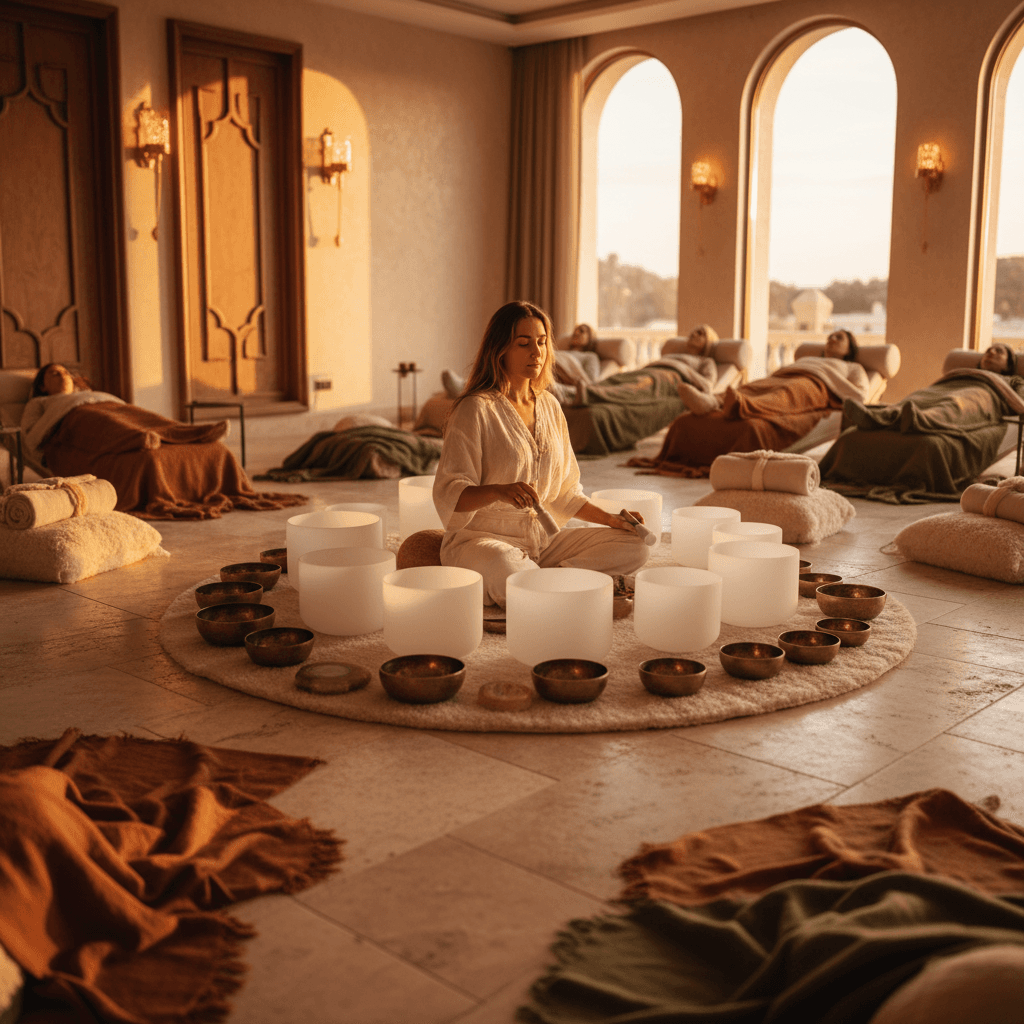
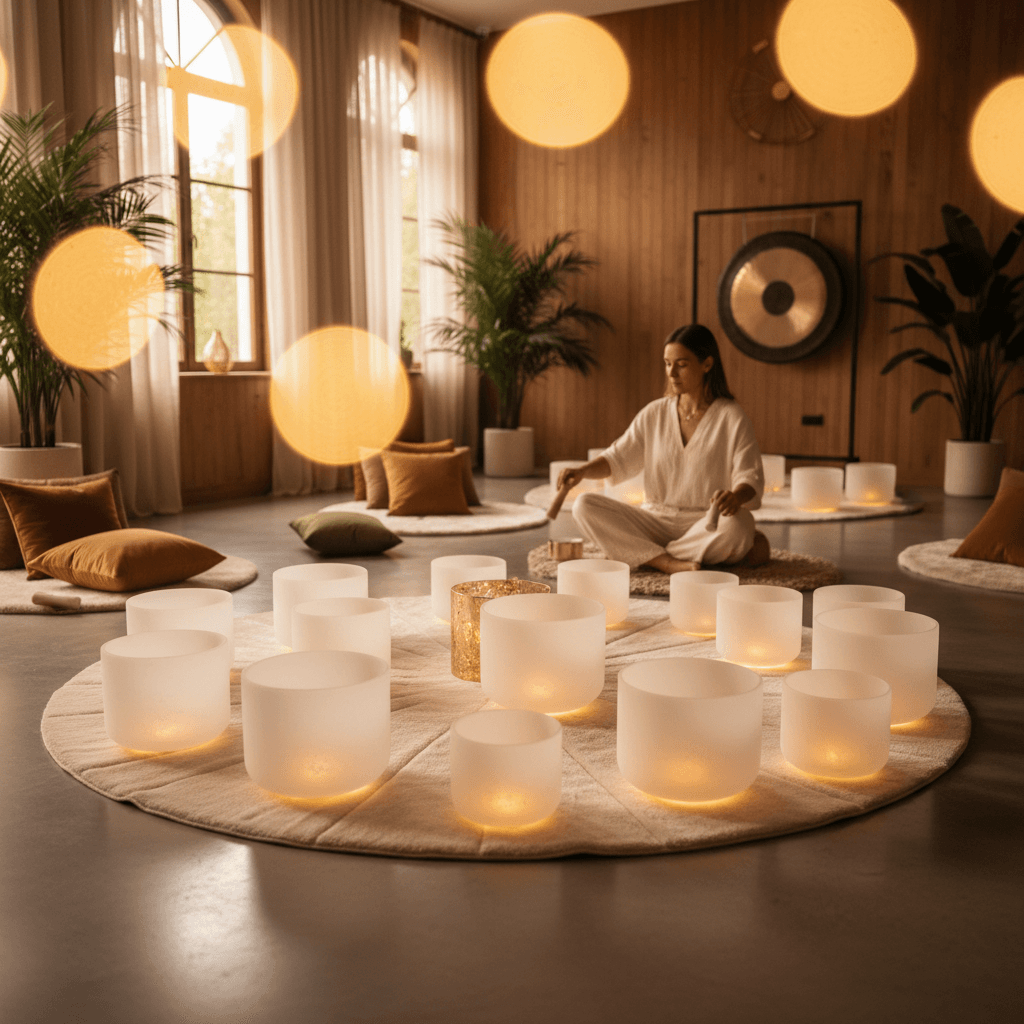
Larissa applies these principles by utilizing a range of resonant instruments, including Himalayan singing bowls, crystal bowls, gongs, chimes, and other therapeutic sound tools. These instruments produce specific frequencies and overtones that are known to promote alpha and theta brainwave states, creating an environment where the mind can release tension and access deeper levels of intuition and imagination. The Soul Art method is unique in its personalized approach, meticulously tuning sound sessions to the client's individual needs, ensuring a profound and transformative experience.
"True creative freedom emerges not from forcing ideas, but from creating a sanctuary where the mind feels safe to explore, unburdened by tension. Sound is the architect of that sanctuary." - Larissa Steinbach
At Soul Art, the experience is holistic. Clients are immersed in a sensory-rich environment that supports the mind-body connection. Beyond the profound auditory experience, the studio environment itself is designed for "quiet luxury," fostering a sense of calm and mental spaciousness conducive to creativity. Larissa's expertise lies in her ability to orchestrate these elements into a powerful wellness practice, enabling individuals to overcome mental barriers and unlock their innate creative potential. This is a complementary approach that may support stress management and foster mental clarity.
Cultivating Your Creative Sanctuary: Actionable Steps
Overcoming writer's block is an active process that involves understanding your brain's needs and creating an environment that supports your creative flow. While profound transformations can be experienced at Soul Art, there are practical steps you can implement today to begin cultivating your own creative sanctuary. These simple adjustments may support a more fluid writing process and enhance your overall well-being.
Here are some actionable steps to integrate sound and sensory awareness into your routine:
- Experiment with Auditory Feedback: If you type, consider using a mechanical keyboard or a software application that replicates keyboard sounds. Pay attention to how the tactile and auditory feedback influences your focus and typing rhythm. Many people report an improvement in their flow state when they embrace these subtle sounds.
- Curate Low-Arousal Soundscapes: Explore instrumental music, ambient tracks, or nature sounds (like gentle rain or distant waves) at 60-80 BPM. Use headphones to minimize external distractions, allowing these familiar, soothing sounds to help you settle into a focused state. Preliminary studies indicate that such choices can reduce cognitive load.
- Embrace Sensory Input Beyond Sound: Incorporate other sensory elements into your writing process. Try writing longhand to engage more of your brain, or use scented candles (aromatherapy) and natural light to create a more stimulating and calming workspace. Making drafting more sensory may support idea generation.
- Structure and Outline: Before diving into writing, create a clear outline. As highlighted by researchers, having a well-defined structure and asking specific questions can provide focus and an actionable direction, helping you stay "in the flow" and prevent overwhelming feelings that can trigger blocks. Break down large writing goals into smaller, manageable tasks.
- Mindful Breaks: When you feel tension building, step away. Engage in a brief mindfulness exercise, deep breathing, or a short walk. Allowing your mind to reset with intentional breaks, possibly with calming sounds, can prevent the reticular activating system from shifting functions to the limbic system due to stress.
By implementing these strategies, you are actively supporting your brain's natural ability to enter and sustain creative states. For a truly immersive experience designed to harmonize your brainwaves and unlock deep creative potential, consider a personalized sound wellness session.
Reclaim Your Creative Voice with Sound
Writer's block, once an enigmatic foe, is increasingly understood as a misalignment between our cognitive states and the demands of creative work. The scientific evidence is compelling: carefully introduced sensory stimuli, particularly sound, can profoundly influence brainwave activity, reducing cognitive load, enhancing focus, and facilitating the coveted flow state. From the satisfying click of a keyboard to the calming resonance of ambient music, sound is a powerful, yet often overlooked, tool for unlocking our word flow.
At Soul Art, Larissa Steinbach and her dedicated team offer a unique pathway to transcend creative barriers. Through expertly crafted sound wellness experiences, we provide a sophisticated environment where your mind can naturally align with frequencies conducive to creativity and clarity. We invite you to explore this transformative wellness practice. Reclaim your creative voice and experience the profound potential of sound to elevate your writing and enrich your life.
Bookings Coming Soon
Soul Art is still in preparation. Session details and booking will be published here after launch.
Coming Soon
Wellness Disclaimer: This article is for educational and informational purposes only. It does not constitute medical advice, diagnosis, or treatment. Soul Art Dubai provides non-medical wellness experiences focused on relaxation, stress management, and general wellbeing. Sound wellness is a complementary practice and should not replace professional medical care.