Mastering Dramatic Impact: Sound for Screenwriters

Key Insights
Unlock the subconscious power of sound in screenwriting to craft deeply emotive narratives. Learn how Soul Art leverages sonic wisdom for wellness.
Masterful Narratives: The Unseen Power of Sound in Screenwriting
Imagine a powerful scene in a film – a moment that lingers, that evokes a profound emotional response long after the credits roll. While visuals often dominate our perception, what if the true architect of that indelible feeling was something you barely noticed? For screenwriters, understanding the nuanced, often subconscious power of sound is not just an artistic advantage; it is a critical tool for crafting truly dramatic and resonant stories.
From the subtle creak of a floorboard to a soaring orchestral score, sound shapes our interpretation of character, plot, and emotional subtext. This article delves into the science behind sound’s profound impact on audiences, offering insights for screenwriters to elevate their craft. We will explore how sound can deepen narrative, influence perception, and even create the emotional "container" through which your story is truly felt. By the end, you will gain a new appreciation for sonic storytelling, understanding its integral role not just in cinema, but also in personal well-being, as championed by Larissa Steinbach and Soul Art.
The Unseen Architect: Sound's Power in Dramatic Narratives
Historically, screenwriting emerged during the ‘Silent’ era, naturally requiring scenarists to think predominantly visually. However, with the widespread introduction of sound film in the late 1920s, there was an immediate interest in deploying sound in expressive ways, extending far beyond simple spoken dialogue and music. Early screenwriting manuals, such as Tamar Lane's 1936 The New Technique of Screen Writing, explicitly urged writers to "be ever alert to the possibilities and enhancement values of sound."
Lane’s call to action highlighted the early recognition that sound held immense potential as a dramatic element in scripts. Yet, this initial enthusiasm for sound-conscious screenwriting waned over time, with many later manuals emphasizing story structure over visual or sonic thinking. Fortunately, more recent academic works on screenwriting practice have begun to recover this original interest, underscoring sound’s profound narrative capabilities.
Sound as the Unconscious of Cinema
Contemporary research suggests that "some of the most powerful emotive experiences and memorable story-telling moments are enabled through the use of sound." In this perspective, sound is often viewed as "the unconscious of cinema." While visuals carry the surface meaning and content of a story, music and sound design collaboratively create the crucial "emotional and sensory container" through which that content is mediated and deeply felt.
This analogy underscores how sound works on a level beneath conscious thought, subtly guiding audience interpretation and feeling. A skilled writer, though unable to perfectly replicate sound on the page, can certainly suggest its power. They can hint at aural ideas, paving the way for sound designers and composers to fulfill the script's sonic potential, enhancing the emotional impact of the final product.
The Neuroscience of Sonic Impact
The profound influence of sound on dramatic narratives is rooted in fundamental neurological processes. Our brains are hardwired to respond to auditory stimuli, often bypassing the conscious mind and directly impacting our limbic system, the brain's emotional control center. This means sound can evoke feelings, memories, and physiological responses almost instantaneously, before we even have time to process them logically.
- Direct Emotional Engagement: Diegetic music choices, sound effects, or even ambient sounds can intricately characterize protagonists, influencing audience perception and deepening narrative's psychological depth. These sonic elements may provide commentary on characters, shaping how we feel about them without a single word being spoken.
- Subliminal Storytelling: Sound design can offer a powerful, almost subliminal layer of storytelling. It can hint at dangers, suggest hidden truths, or foreshadow events, allowing the audience to intuit meaning rather than simply being told it. This creates a more immersive and engaging experience.
- Creating Sensory Containers: The cumulative effect of sound elements—dialogue, music, effects, and silence—builds a sensory container around the visual narrative. This container dictates the mood, tone, and emotional intensity of a scene, guiding the audience's emotional journey.
Randy Thom, a renowned sound designer, outlines numerous storytelling jobs of sound, which illustrate its versatile dramatic potential:
- Affect pace: Speeding up or slowing down the perceived rhythm of a scene.
- Indicate a geographical locale: Instantly transporting the audience to a specific setting.
- Describe the geography of a scene: Conveying the size, emptiness, or claustrophobia of a space.
- Help define a character: A character's unique sonic fingerprint (e.g., footsteps, preferred music).
- Help clarify the plot: Providing crucial auditory clues or revealing off-screen action.
- Connect ideas, characters, places, images, events: Creating associations and building thematic coherence.
- Heighten realism, or diminish it: Grounding a scene in reality or pushing it towards surrealism.
- Heighten ambiguity, or diminish it: Creating suspense or providing clarity.
- Draw attention to, or away from, a detail: Directing the audience's focus.
- Indicate a change in time or location: Seamlessly transitioning between narrative segments.
- Smooth otherwise abrupt transitions: Providing continuity between cuts.
- Emphasize a transition for dramatic effect: Highlighting a significant shift.
- Describe an acoustic space: Conveying the properties of a room or environment.
- Affect mood: From startling and scary to soothing, comedic, or mysterious.
Many sounds perform several of these functions simultaneously, creating a rich, multi-layered experience. For screenwriters, recognizing these possibilities allows for the "opening of doors" in the script, inviting a deeper, more profound engagement with the story's emotional core.
How It Works in Practice
For screenwriters, the challenge and opportunity lies in suggesting these aural ideas on the page. While a script is not a sound design blueprint, a skilled writer can articulate the desired sonic impact, guiding the production team towards their vision. This involves thinking beyond just "sound effect" and considering the emotional and thematic implications of auditory elements.
For instance, instead of merely writing "(SOUND OF DOOR CLOSING)," a more sound-conscious screenwriter might write: "The heavy oak door thuds shut, sealing off the last whisper of the bustling city. A profound silence descends, pressing in on her." Here, the sound isn't just an action; it's a dramatic punctuation, creating an immediate sense of isolation and tension that impacts the character. This allows sound to truly serve the drama.
"Indeed, sound can be seen as the unconscious of cinema, whereby visuals carry surface meaning and content, and music and sound design create the emotional and sensory container through which that content can be mediated."
The journey of sound from the page to the final film is a collaborative process, yet it begins with the writer's initial imaginative spark. By exploring different techniques for conveying sound in screenwriting prose—from evocative descriptions to specific sound cues—writers can create more sound-conscious screenplays. This approach not only widens the scope of storytelling but also ensures that the narrative's emotional resonance is maximized. The audience, in turn, experiences a deeper immersion, with sound deepening their emotional engagement, enriching character perception, and making storytelling moments more memorable.
The Soul Art Approach
At Soul Art, Dubai's premier sound wellness studio, Larissa Steinbach applies a profound understanding of sound's capacity to shape internal states, drawing parallels from its powerful role in dramatic writing. Just as screenwriters leverage sound to create emotional containers for their audiences, Soul Art harnesses specific frequencies and vibrations to cultivate rich, therapeutic "containers" for individual well-being and introspection.
Larissa Steinbach’s philosophy centers on the intrinsic ability of sound to guide emotional journeys, facilitating states of deep relaxation, mental clarity, and emotional release. Her approach recognizes that the brain and body respond instinctively to auditory stimuli, making sound an incredibly potent tool for stress management and holistic wellness.
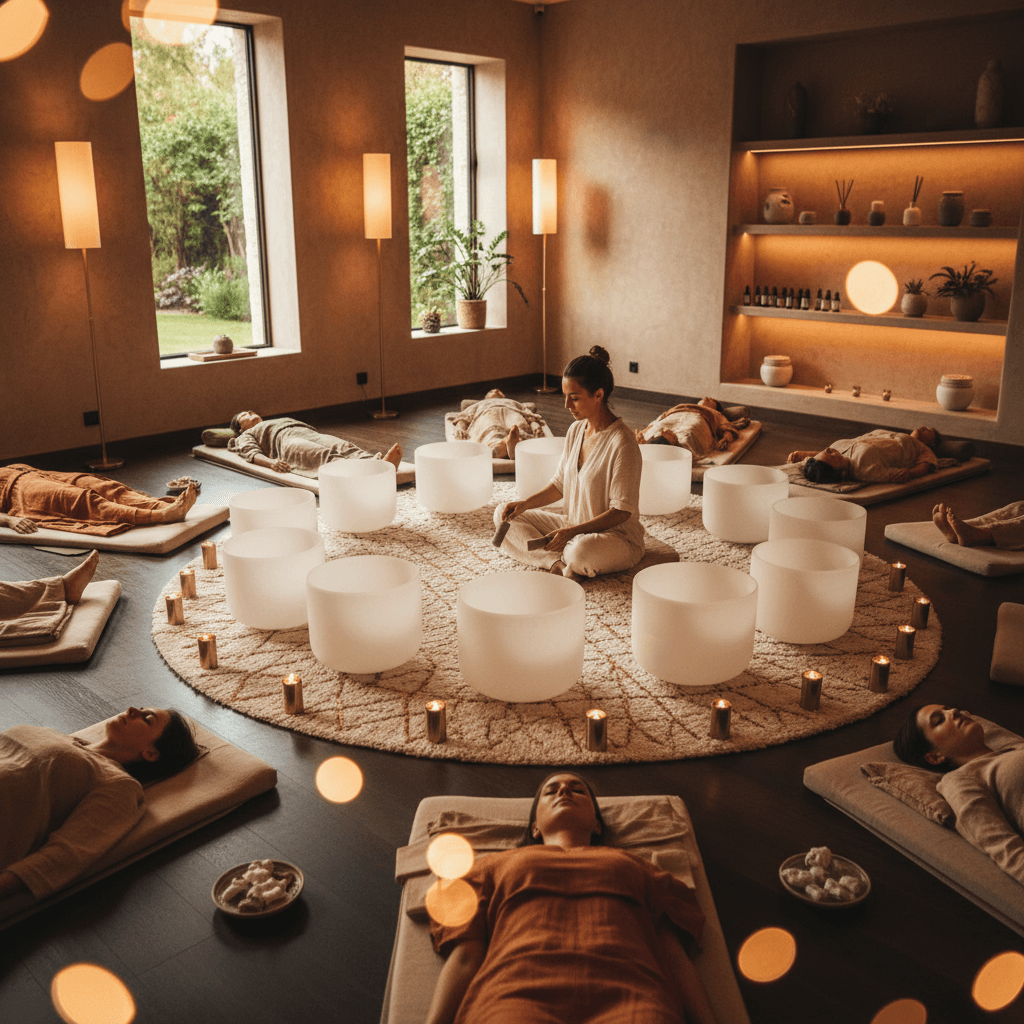
The Soul Art method is unique in its meticulously curated soundscapes. Larissa utilizes a diverse array of sacred instruments, including Himalayan singing bowls, crystal bowls, gongs, and chimes. Each session is carefully designed to encourage a dramatic shift in inner experience, moving participants from states of tension to profound tranquility. These sonic explorations offer a complementary approach to traditional self-care, allowing the body's natural healing mechanisms to be supported and activated. Through expertly guided sound immersions, Soul Art helps clients restore nervous system balance, fostering an environment where deeper self-awareness and peace may flourish.
Your Next Steps
Embracing the power of sound, whether in creative writing or personal wellness, can unlock new dimensions of experience. Here are practical steps you can take today to become more "sound-conscious" and integrate this powerful medium into your life:
- Active Listening in Film: Watch your favorite films or TV shows with a new ear. Pay close attention to the sound design, music, and ambient noise. How do these elements contribute to the mood, character development, and overall dramatic impact? Try muting the picture for a few minutes and just listening to the soundscape.
- Experiment in Your Writing: For aspiring or active screenwriters, intentionally weave sound cues into your script. Go beyond simple notations; describe the quality of the sound and its emotional effect. How can a specific sound deepen a character's internal conflict or heighten suspense?
- Curate Your Sonic Environment: Consider the sounds that surround you daily. Are they contributing to stress or calm? Experiment with creating intentional sound environments in your home or workspace, perhaps with gentle music, nature sounds, or even periods of intentional silence, to support your well-being.
- Explore Sound as Self-Care: Recognize sound's potential as a powerful tool for personal wellness. Just as carefully chosen sounds amplify dramatic narratives, specific frequencies can aid in relaxation and stress reduction.
Ready to experience the profound benefits of intentionally curated sound for your own well-being? Discover how the therapeutic power of sound can support your journey towards greater calm and clarity.
In Summary
Sound, often overlooked in the visual dominance of cinema, is a foundational element in dramatic writing, acting as the "unconscious of cinema" to create deep emotional resonance. Screenwriters who master the art of suggesting sound on the page can craft narratives that profoundly impact audiences, influencing perception and enhancing psychological depth. By understanding sound's ability to create an emotional container for storytelling, writers unlock a powerful tool for unforgettable drama. This same powerful wisdom of sound's impact is at the heart of Larissa Steinbach's Soul Art, where curated sonic journeys support personal well-being and inner harmony.
Bookings Coming Soon
Soul Art is still in preparation. Session details and booking will be published here after launch.
Coming Soon
Wellness Disclaimer: This article is for educational and informational purposes only. It does not constitute medical advice, diagnosis, or treatment. Soul Art Dubai provides non-medical wellness experiences focused on relaxation, stress management, and general wellbeing. Sound wellness is a complementary practice and should not replace professional medical care.
Related Articles
Sound for Spatial Creativity: Architects & Holistic Wellbeing

Sabbatical Sound: Unlock Creative Rest & Return with Soul Art

The Sound of Thought: UX Design, Sound, and User Well-being