Unlock Cognitive Potential: Theta Waves for Enhanced Working Memory

Key Insights
Explore the science of theta waves and their role in optimizing working memory and cognitive function for a sharper mind at Soul Art Dubai.
Have you ever wondered if there's a secret key to unlocking your brain's full cognitive potential, especially when it comes to memory and focus? Our brains are intricate orchestrators of thought, and within their complex symphony, certain rhythmic patterns, known as brainwaves, hold profound implications for how we learn, remember, and process information. Imagine a natural, scientifically-backed method to sharpen your mind, improve recall, and enhance your capacity for learning.
This article delves into the fascinating world of theta waves and their powerful connection to working memory. We will explore the compelling neuroscience behind how specific brain frequencies can significantly elevate your cognitive abilities. From groundbreaking studies to practical applications, we’ll uncover why optimizing your theta wave activity may be the refined approach you’ve been seeking for enhanced mental performance and overall wellbeing.
The Science Explained
Our brains are constantly generating electrical impulses, forming patterns known as brainwaves, which are measured in Hertz (Hz). These frequencies dictate our mental state, ranging from the high-frequency beta waves of active concentration to the slow delta waves of deep sleep. Among these, theta waves, oscillating at 4-8 Hz, emerge as a particularly intriguing frequency for cognitive enhancement.
Understanding Working Memory and Brainwaves
Working memory is the cognitive system responsible for temporarily holding and manipulating information needed for immediate tasks. It is the mental workbench where we process thoughts, solve problems, make decisions, and actively learn new concepts. A robust working memory is fundamental for everything from remembering a phone number to following complex instructions or performing mental arithmetic.
Brainwave research highlights theta waves as being intimately involved in this crucial cognitive function. While they are often associated with states of deep relaxation, meditation, and creativity, their role in active memory processing is now well-established. These rhythmic oscillations provide a neurological foundation for effective information handling within the brain.
The Pivotal Role of Theta Waves (4-8 Hz)
Neuroscientific studies have illuminated how theta waves act as a vital "gluing mechanism" for human memories. They facilitate critical communication between the hippocampus, the brain’s primary memory-forming structure, and various cortical regions responsible for information processing. This inter-regional dialogue is essential during both the encoding of new information and the retrieval of existing memories.
Researchers at the Picower Institute at MIT have even described theta waves as acting like a "radar" for boosting visual working memory. These traveling waves rhythmically sweep across the cortex, influencing when and where our attention peaks, directly impacting our ability to detect subtle visual changes and process information effectively. The stronger the theta wave's effect, the better the performance in memory tasks, especially those requiring the retention of multiple items. This orchestration of neural activity by theta waves is paramount for efficient working memory readout.
Clinical Evidence: Unlocking Memory Potential
Extensive clinical research has consistently demonstrated the profound impact of theta wave training on memory performance. Studies reveal that engaging with techniques designed to enhance theta wave activity can lead to a 20-40% improvement in memory compared to traditional learning methods. Neuroimaging studies provide objective evidence, showing measurable increases in hippocampal activity and enhanced neural connectivity within memory-processing networks. This indicates that theta wave interventions are not just perceived improvements but are backed by tangible changes in brain function.
A pivotal 2019 investigation involving 240 participants found that individuals who underwent theta wave training showed a remarkable 35% improvement in memory recall tasks. Further research focused on memory consolidation demonstrated even more compelling results: participants who engaged in 20-minute theta wave sessions before learning new information retained an impressive 42% more material after one week, compared to those using standard memorization techniques.
"The relationship between theta waves and memory represents one of neuroscience's most compelling discoveries. These rhythmic brain oscillations don't just correlate with better memory—they actively orchestrate the biological processes that transform fleeting experiences into lasting memories."
A comprehensive meta-analysis published in Nature Neuroscience, encompassing 23 studies and over 1,200 participants, found that theta wave interventions improved memory performance by an average of 31% across all age groups and memory types. The benefits are wide-ranging, extending to specific cognitive domains: episodic memory (recalling personal experiences) showed the greatest enhancement with average improvements of 45%, semantic memory (facts and concepts) improved by an average of 31%, and procedural memory (skills and habits) gains averaged 23%.
For students and academic performance, the implications are particularly significant. Research conducted at Stanford University revealed that students using theta wave neurofeedback training improved their working memory scores by 23% compared to control groups. This was particularly evident in challenging areas like mathematical problem-solving and language retention tasks. The timing of theta wave support is also crucial for academic applications, with optimal results observed when sessions occur:
- Pre-Study Preparation (15-20 minutes before studying)
- Post-Study Consolidation (within 2 hours of learning)
- Pre-Exam Review (30 minutes before testing)
Modern EEG neurofeedback systems, which detect and provide feedback on theta frequencies (4-8 Hz), have shown remarkable success. Participants can learn to increase their theta power by 25-40% within 10-15 training sessions, with corresponding improvements in working memory. During successful memory encoding tasks, studies show that theta wave amplitude can increase by 40-60%. This strong correlation explains why theta-inducing techniques consistently support recall performance. The technique's effectiveness is rooted in theta waves' crucial role in long-term potentiation, the cellular mechanism underlying memory formation, where synaptic connections strengthen more efficiently during theta oscillations.
How It Works in Practice
Translating this intricate neuroscience into practical, beneficial experiences involves harnessing various techniques designed to gently guide the brain into a theta-dominant state. These methods offer accessible pathways to enhance cognitive function and memory, making them valuable tools for anyone seeking to optimize their mental acuity.
Binaural Beats for Guided Theta Induction
One of the most accessible and popular methods for inducing theta wave activity is through binaural beats. This auditory illusion occurs when two slightly different frequency tones are presented separately to each ear. The brain perceives a third "beat" at the frequency difference between the two tones. For memory enhancement, specialized audio tracks typically use binaural beats tuned to the 4-8 Hz theta range.
Research conducted at Stanford University found that participants exposed to 6 Hz binaural beats during learning sessions showed a 23% improvement in recall accuracy compared to control groups. The optimal exposure duration has been established at 15-30 minutes prior to memory-intensive tasks, with the positive effects persisting for approximately 45 minutes post-exposure. Anecdotal evidence from medical students using theta-frequency binaural beats during anatomy memorization demonstrated 34% faster acquisition rates and maintained information retention 18% longer than traditional study methods.
The Power of Neurofeedback and Meditative States
Neurofeedback training represents a more direct approach, allowing individuals to consciously learn to regulate their own brainwave patterns. While often requiring specialized equipment, the principle is simple: real-time feedback (visual or auditory) is provided when the brain enters a desired state, gently guiding it to sustain that pattern. This iterative process strengthens neural pathways associated with theta wave generation.
Typical neurofeedback training progressions show consistent improvements:
- Sessions 1-4: Focus on baseline establishment with minimal initial memory improvement.
- Sessions 5-8: Participants begin to recognize patterns, seeing 15-20% memory improvement.
- Sessions 9-12: Conscious control improves, leading to 25-35% memory enhancement.
- Sessions 13-16: Integration practice results in 40-50% improvement.
- Sessions 17-20: Advanced application yields 50-65% memory improvement.
A longitudinal study following 127 participants over six months revealed that those who achieved consistent theta wave control maintained memory enhancement benefits for an average of 8-12 months post-training, with periodic refresher sessions extending these effects indefinitely. Beyond technology, meditation and mindfulness practices are recognized as the most accessible and scientifically validated methods for naturally inducing theta wave states. Specific meditative techniques can increase theta wave amplitude by 25-40% within just eight weeks of consistent practice, creating optimal conditions for memory consolidation and cognitive enhancement. These practices work by synchronizing neural oscillations in the hippocampus and prefrontal cortex, facilitating the transfer of information from short-term to long-term memory storage.
A Synergy of Senses
At Soul Art, the practical application of theta wave training often involves a harmonious blend of these techniques within a deeply calming environment. Clients experience carefully curated soundscapes, which may incorporate binaural beats, alongside the soothing frequencies of various instruments. This multi-sensory approach is designed to effortlessly guide the brain into a receptive theta state, fostering an environment where clarity, focus, and memory enhancement can naturally flourish. The experience is designed to be immersive, promoting a sense of ease and allowing the brain to gently adjust to beneficial frequencies without conscious effort.
The Soul Art Approach
At Soul Art, Dubai's premier sound wellness studio, the journey to enhanced cognitive function through theta wave training is both scientifically grounded and deeply personal. Founded by the visionary Larissa Steinbach, Soul Art is dedicated to empowering individuals to unlock their inner potential through transformative sound experiences.
Larissa Steinbach's Vision for Cognitive Wellness
Larissa Steinbach's philosophy centers on a holistic approach to well-being, where the mind, body, and spirit are treated as an interconnected system. She believes that by harmonizing our internal rhythms, we can not only find deep relaxation but also actively sharpen our cognitive faculties. Her vision extends beyond simple stress relief, embracing the powerful potential of sound to facilitate genuine neurological shifts that support enhanced memory, focus, and mental clarity. Soul Art’s method uniquely integrates ancient wisdom with cutting-edge neuroscience, providing a sanctuary where modern challenges meet timeless solutions.
Unique Sound Alchemy at Soul Art
The Soul Art studio is meticulously designed to be an oasis of calm and rejuvenation, a "quiet luxury" space where every detail contributes to an immersive wellness experience. Here, the art of sound is elevated to a precise science, curated to induce optimal brainwave states, including the coveted theta frequency.
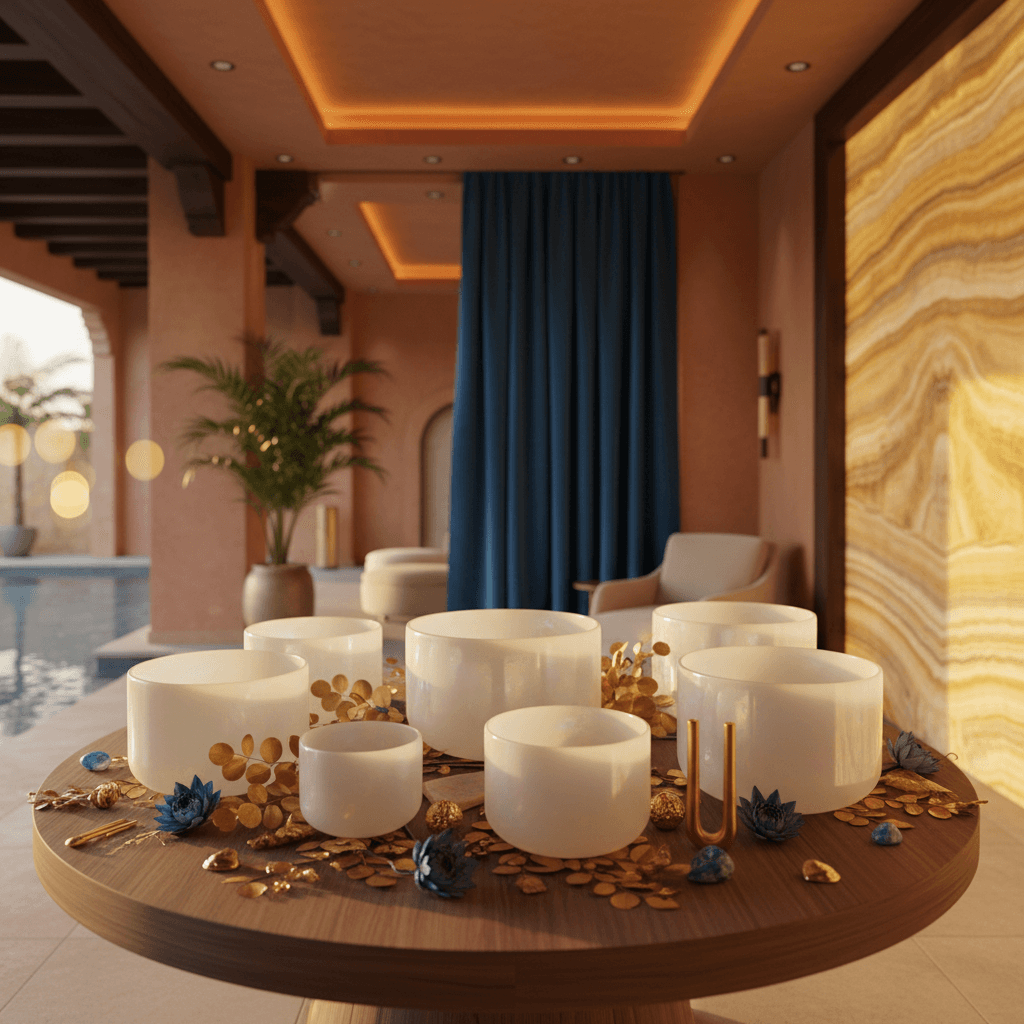
Soul Art employs a rich array of specialized instruments, each chosen for its unique vibrational qualities. Clients may experience the resonant depths of crystal singing bowls, the expansive vibrations of gongs, and the precise frequencies of tuning forks. These instruments are expertly played, often complemented by specialized audio tracks that subtly incorporate binaural beats or other neuro-acoustic technologies. The combination is carefully calibrated to gently guide the brain into the ideal theta state for memory consolidation and cognitive enhancement. The experienced facilitators at Soul Art, guided by Larissa Steinbach's expertise, tailor sessions to individual needs, ensuring a deeply personal and effective journey towards a sharper mind and a more balanced nervous system.
Your Next Steps
Embracing the potential of theta wave training for working memory enhancement is an empowering step towards optimizing your cognitive wellbeing. Integrating these principles into your daily life can yield remarkable benefits, fostering greater clarity, focus, and memory recall.
Integrating Theta Wellness into Your Life
Here are some practical steps you can take today to begin supporting your theta wave activity:
- Mindful Meditation: Dedicate 10-15 minutes each day to focused attention meditation. Even short, consistent practice can naturally increase theta wave amplitude and improve brain synchronization.
- Curated Soundscapes: Incorporate theta-frequency binaural beats or ambient soundscapes into your routine. Listen during pre-study preparation, post-learning consolidation, or simply to promote a state of relaxed alertness.
- Optimal Learning Environment: Create a calm, distraction-free space for any memory-intensive tasks. A serene environment allows your brain to more easily access and sustain beneficial brainwave states.
- Prioritize Restorative Practices: Engage in activities that promote deep relaxation and mental restoration, such as gentle yoga, nature walks, or regular sound baths. These practices inherently support healthy brainwave patterns.
- Explore Guided Sessions: Consider exploring professional guidance for sound wellness experiences. Expert-led sessions can provide a powerful and efficient way to experience optimal theta wave induction.
Ready to experience the profound benefits of theta wave training and unlock your cognitive potential? Discover how Soul Art, under the guidance of Larissa Steinbach, can help you cultivate a sharper mind and a deeper sense of well-being.
In Summary
The intricate dance of our brainwaves holds significant power over our cognitive abilities, with theta waves emerging as a particularly potent frequency for enhancing working memory. Extensive scientific research, including landmark studies and meta-analyses, consistently demonstrates that optimizing theta wave activity can lead to substantial improvements in memory recall, learning efficiency, and overall cognitive function. From facilitating communication between key brain regions to strengthening synaptic connections, theta waves are integral to how we form and retrieve memories.
At Soul Art, Larissa Steinbach and her team harness this powerful science through expertly curated sound wellness experiences. By providing a luxurious and supportive environment, Soul Art offers a complementary approach to gently guide your brain into beneficial theta states, fostering a sharper mind and a deeper sense of inner harmony. Embrace the opportunity to elevate your cognitive wellness journey.
Bookings Coming Soon
Soul Art is still in preparation. Session details and booking will be published here after launch.
Coming Soon
Wellness Disclaimer: This article is for educational and informational purposes only. It does not constitute medical advice, diagnosis, or treatment. Soul Art Dubai provides non-medical wellness experiences focused on relaxation, stress management, and general wellbeing. Sound wellness is a complementary practice and should not replace professional medical care.
Related Articles

Cluster Headaches: Unveiling Pain and the Promise of Frequencies in Wellness
Epilepsy & Sound: Safety, Serenity, and Emerging Wellness Paths
Mastering Focus: Analytical Listening & Brain Engagement at Soul Art