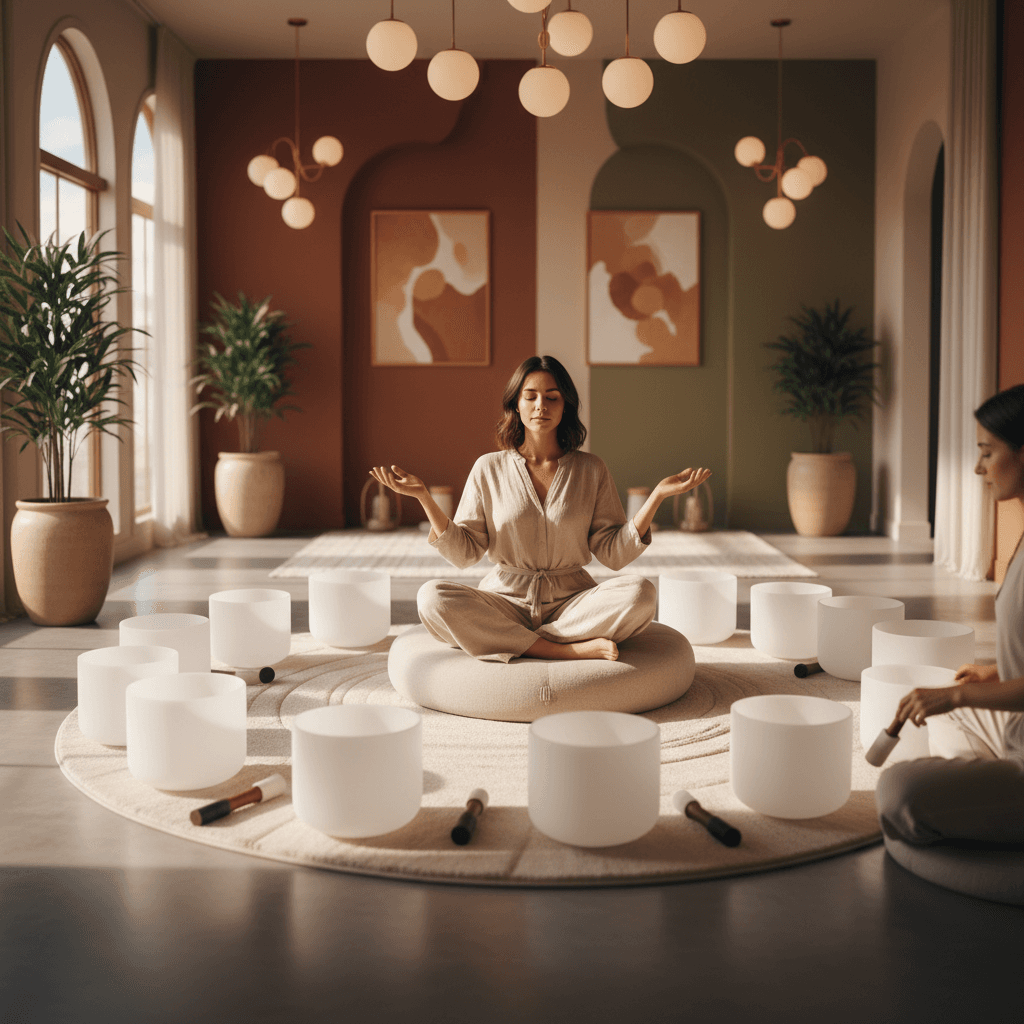
Beyond Sight: How Sound Wellness Elevates Multi-Sensory Experience for Vision Loss
Key Insights
Explore how Soul Art in Dubai, led by Larissa Steinbach, uses sound wellness to foster enhanced spatial awareness and multi-sensory integration for those with vision loss.
Compelling Introduction
Imagine a world where your spatial awareness isn't dictated solely by what you see, but by a symphony of other senses guiding your every move. For individuals experiencing vision loss, this multi-sensory reality is not only possible but can be profoundly enhanced through targeted wellness practices. Far from a limitation, vision loss often unlocks a heightened sensitivity in other modalities, particularly audition.
At Soul Art, Dubai's premier sound wellness studio, we delve into the extraordinary potential of sound to cultivate a richer, more integrated experience of the world. This article will explore the scientific underpinnings of how sound, combined with other sensory inputs, can support perceptual and cognitive development, especially for those navigating life with reduced or absent vision. We will uncover how embracing these multi-sensory pathways can deepen one's connection to their environment and enhance overall wellbeing.
This exploration matters for anyone seeking complementary approaches to holistic wellness, whether personally or for loved ones. Understanding how sound can elevate multi-sensory experience offers profound insights into fostering greater autonomy, confidence, and a renewed sense of engagement with the world.
The Science Explained
The human brain is an incredibly adaptable organ, constantly rewiring itself in response to experiences, a phenomenon known as neuroplasticity. When one sense is compromised, the brain often reallocates cortical resources, leading to enhanced processing in intact sensory modalities. This is particularly evident in individuals with vision loss, where the auditory and tactile systems can develop remarkable acuity.
Cross-Modal Plasticity and Auditory Compensation
Research consistently highlights how visual deprivation can lead to significant cross-modal plasticity, where areas of the brain typically associated with vision become engaged in processing other sensory information. For instance, studies have shown that congenitally blind individuals often exhibit enhanced early processing of peripheral visual events, despite lacking visual input. This enhancement is attributed to the brain's ability to repurpose visual cortical areas for auditory tasks, leading to what is often termed "auditory compensation."
"The brain's inherent capacity for adaptation means that when one sensory pathway is diminished, others often step forward, not just to compensate, but to redefine our sensory landscape entirely."
This compensatory mechanism is not merely about making up for a deficit; it's about the creation of a fundamentally different, yet highly effective, way of perceiving the environment. Totally blind subjects, for example, have demonstrated greater accuracy in sound localization compared to sighted individuals, suggesting a refined auditory system at play.
Multisensory Integration for Spatial Awareness
Early intervention and multisensory experiences are crucial for developing spatial abilities, particularly in children with congenital visual impairments. Training intact sensory modalities like audition and touch from a young age is essential for building a relationship with the environment and fostering social cognition. Audio-motor training activities, which integrate sound and movement, can significantly support the development of spatial skills that might otherwise be compromised by a lack of visual experience.
Studies indicate that multisensory information, especially auditory and tactile inputs, can enhance a child's motivation and ability to explore their surrounding space. This lays the groundwork for using and training other senses to support or substitute vision. Even when some residual visual function is present, visual-haptic (touch) and visual-auditory activities are highly beneficial, promoting the integration of senses and improving perceptual capabilities.
Sound Localization and Environmental Navigation
The auditory system's sensitivity to acoustic localization cues is profound, even though vision often dominates in multisensory perception for sighted individuals. However, in the absence of visual cues, the auditory system's ability to pinpoint the origin of sounds becomes paramount. Research into induced visual deprivation, such as wearing lenses that compress the visual field, demonstrates a corresponding compression of auditory localization. This suggests a deep, interconnected relationship between how our brain maps visual and auditory space.
For individuals with vision loss, this precise sound localization is vital for navigating environments and understanding the position of objects. Activities that focus on "reach on sound" – using auditory cues to locate and interact with objects – can significantly promote understanding of object permanence and spatial relationships. Sound-based wellness practices, therefore, may serve as a powerful tool to hone these critical spatial skills, enhancing independence and confidence in daily life.
How It Works in Practice
Connecting these scientific principles to real-world application, sound wellness sessions offer a unique pathway to enhance multi-sensory experience. The practices are designed to engage and stimulate the auditory system, encouraging the brain to build more robust connections and integrate information from various senses. This active engagement can lead to a deeper, more nuanced perception of one's surroundings.
Clients often begin by focusing intently on the diverse soundscape created within the studio. This isn't just passive listening; it's an active exercise in auditory attention and discrimination. The brain is prompted to identify the direction, distance, and timbre of each sound, honing the very skills critical for spatial navigation. As attention is drawn to specific frequencies and vibrations, individuals may notice a heightened awareness of their own body in space, a form of internal proprioception.
Experiential Sensory Integration
A key component of this approach involves carefully curated multi-sensory experiences. While sound is central, tactile elements are often incorporated to further enrich the practice. For example, individuals may hold specific resonating objects or feel the vibrations of singing bowls directly, linking auditory input with tactile sensation. This combination can strengthen neural pathways, enhancing the brain's ability to integrate diverse sensory information.
The environment at Soul Art is meticulously crafted to support this process. Subtle aromatherapy might be employed to engage the olfactory sense, while variations in temperature or gentle air movement might stimulate tactile receptors. This holistic approach ensures that multiple senses are gently awakened and encouraged to work in harmony, creating a richer, more comprehensive internal map of the world. Many people report a profound sense of calm and an increased feeling of presence, as their awareness shifts from visual reliance to a broader sensory engagement.
Building a Richer Internal Map
These practical applications are rooted in the concept of sensory substitution, where one sense conveys information normally received through another. While advanced devices like "The vOICe" translate visual information into auditory stimuli, simpler sound wellness practices achieve a similar goal through focused attention and sensory training. By repeatedly engaging in activities that require multi-sensory interpretation, individuals can gradually refine their internal "map" of space, becoming more adept at understanding relationships between objects and their own position within an environment.
Through consistent practice, the aim is to not only enhance existing sensory abilities but also to foster a greater sense of confidence and autonomy. The subtle shifts in perception that occur during these sessions can translate into real-world benefits, making daily navigation and interaction more intuitive and less reliant on visual cues alone.
The Soul Art Approach
At Soul Art, Larissa Steinbach has meticulously developed a sound wellness approach that embodies these scientific principles, offering a unique multi-sensory experience tailored for profound wellbeing. The Soul Art method is not merely about listening to sounds; it’s an immersive journey designed to activate and integrate an individual's complete sensory system, particularly for those navigating vision loss. Larissa's philosophy centers on leveraging the brain's inherent neuroplasticity to enhance spatial awareness, foster emotional regulation, and cultivate a deeper connection to the present moment.
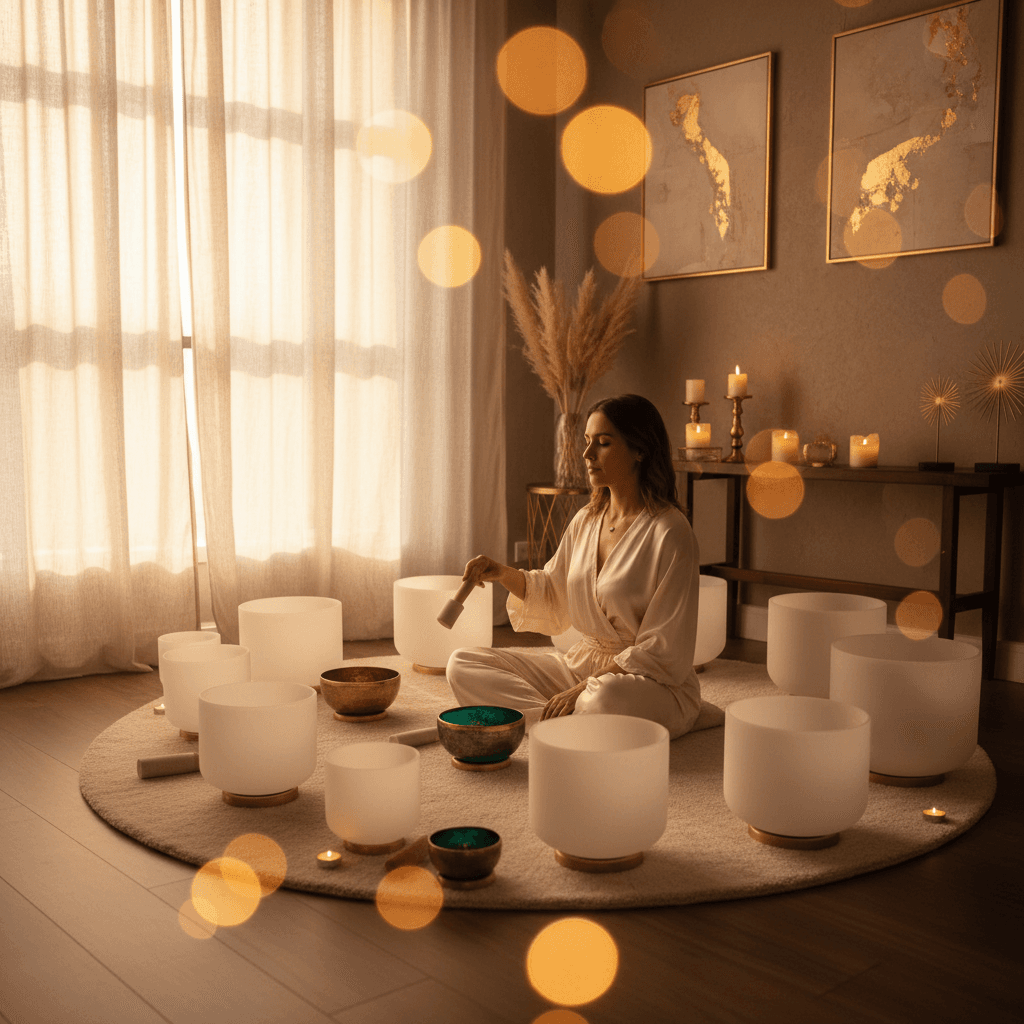
What makes the Soul Art method unique is its holistic and intuitive application of ancient wisdom combined with contemporary understanding of sensory neuroscience. Larissa Steinbach curates each session with intention, using a diverse array of instruments renowned for their pure frequencies and resonant vibrations. These instruments include Himalayan singing bowls, crystal singing bowls, gongs, chimes, and various percussive elements, each chosen for its specific energetic and sonic qualities.
Curated Soundscapes and Vibrational Immersion
During a Soul Art session, the environment is transformed into a sanctuary where sound becomes the primary guide. The careful placement and playing of instruments create a rich, three-dimensional soundscape that encourages the listener to engage actively with their auditory perception. Clients are guided to locate sounds in space, differentiate between subtle tonal shifts, and feel the physical vibrations permeating their bodies. This process naturally strengthens auditory localization skills and enhances the body's proprioceptive feedback.
Furthermore, Larissa Steinbach incorporates elements that engage other senses in a subtle yet powerful way. Gentle aromatherapy with carefully selected essential oils may stimulate the olfactory sense, while tactile experiences—such as feeling the smooth, cool surface of a crystal bowl or the soft texture of a blanket—are woven into the session. This thoughtful integration helps to reinforce multi-sensory pathways, encouraging the brain to form richer, more comprehensive sensory maps of the environment. The focus is on creating a complete sensory immersion that bypasses visual reliance, allowing individuals to experience their surroundings through an expanded sensory lens.
Facilitating Inner Harmony and Outer Awareness
The Soul Art approach extends beyond just sensory development; it aims to foster a profound sense of inner harmony. The resonant frequencies are known to gently guide the brain into states of deep relaxation, reducing stress and anxiety. This relaxed state is optimal for learning and neuroplastic change, allowing the brain to more readily adapt and enhance its sensory processing capabilities. Many people report leaving sessions feeling not only more grounded and calm but also more acutely aware of their body and its interaction with the space around them. Larissa Steinbach’s expertise ensures that each session is a supportive and transformative experience, empowering individuals to embrace their multi-sensory potential.
Your Next Steps
Embracing sound wellness as a complementary approach to enhancing multi-sensory experience is a journey of self-discovery and empowerment. Whether you're personally experiencing vision loss or supporting a loved one, incorporating sound into daily life can offer profound benefits for spatial awareness, relaxation, and overall wellbeing. Here are some actionable steps you can implement today to begin exploring this potential:
- Mindful Listening Practice: Dedicate 5-10 minutes each day to simply listen to your environment. Close your eyes and identify as many distinct sounds as possible, noting their direction, distance, and characteristics. This practice sharpens auditory discrimination and spatial mapping.
- Explore Resonant Objects: Experiment with everyday objects that produce distinct sounds or vibrations. Tap a glass, rustle leaves, or feel the vibrations of a running appliance. Pay attention to how the sound and tactile sensation combine to give you information about the object and its location.
- Integrate Sound with Movement: While walking, consciously attend to the sounds around you. Can you perceive the presence of a wall through its echo, or the direction of an approaching person by their footsteps? This helps link auditory cues with physical navigation.
- Guided Sound Meditations: Seek out high-quality guided sound meditations or relaxation tracks online. These often use specific frequencies and instruments to promote deep relaxation and can gently train your auditory focus. Many people find these particularly supportive for stress management.
- Experience a Professional Sound Wellness Session: Consider booking a session at Soul Art in Dubai. Under the guidance of Larissa Steinbach, you can experience a professionally curated multi-sensory sound journey designed to optimize these benefits in a safe and supportive environment. It’s an ideal way to explore this holistic wellness practice.
In Summary
The journey of living with vision loss does not diminish the richness of experience; rather, it often amplifies the profound capabilities of our other senses. As we have explored, scientific evidence strongly supports the notion that sound, when intentionally engaged, can dramatically enhance multi-sensory integration and spatial awareness. The brain's remarkable neuroplasticity allows it to reconfigure and strengthen auditory pathways, offering a powerful avenue for individuals to deepen their connection with their environment.
At Soul Art, Larissa Steinbach harnesses these principles to create transformative sound wellness experiences in Dubai. Through carefully curated soundscapes and multi-sensory engagement, the Soul Art method supports individuals in cultivating a more integrated perception of the world, fostering relaxation, reducing stress, and enhancing overall wellbeing. We invite you to explore the extraordinary potential of sound and discover a world beyond sight, rich with resonant possibilities.
Bookings Coming Soon
Soul Art is still in preparation. Session details and booking will be published here after launch.
Coming Soon
Wellness Disclaimer: This article is for educational and informational purposes only. It does not constitute medical advice, diagnosis, or treatment. Soul Art Dubai provides non-medical wellness experiences focused on relaxation, stress management, and general wellbeing. Sound wellness is a complementary practice and should not replace professional medical care.
Related Articles
Downsizing: Navigating Life's Big Changes with Sound Wellness
Restless Legs Relief: Sound Wellness for Deeper Nighttime Comfort
Embracing Age with Inner Peace: Sound Wellness for Acceptance