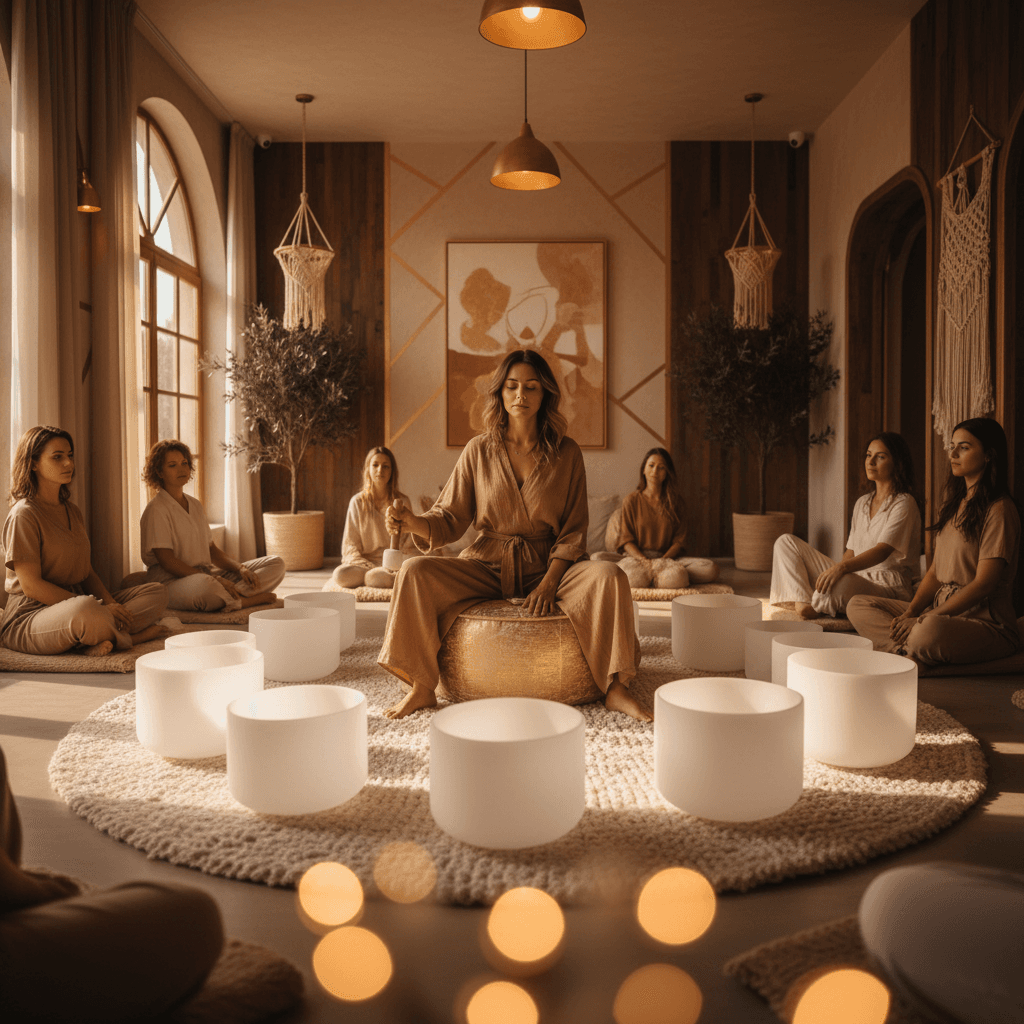
Harmonizing Growth: The Scientific Guide to Toddler Sound Play

Key Insights
Explore the profound scientific benefits of sound play for toddlers. Discover how simple instruments foster cognitive, emotional, and motor development, guided by Soul Art's insights.
Did you know that engaging your toddler with simple sound play can profoundly shape their brain development, long before they even utter their first full sentence? In our fast-paced world, it's easy to overlook the fundamental power of sensory experiences, especially sound, in nurturing young minds. Yet, a growing body of scientific evidence reveals that early musical engagement isn't just delightful; it's a critical catalyst for cognitive, emotional, and social growth.
At Soul Art, founded by Larissa Steinbach, we understand the deep, transformative impact of sound across all ages. While our renowned studio in Dubai specializes in sound wellness for adults, the principles of how sound influences our very being begin in the earliest stages of life. This article delves into the fascinating science behind toddler sound play, exploring how simple instruments and guided auditory experiences can lay a robust foundation for your child's future well-being and success. Prepare to unlock a symphony of potential.
The Science Explained: How Sound Shapes Young Minds
The human brain is remarkably plastic, especially during the early years, constantly forming new connections in response to its environment. Sound, in its myriad forms, provides a rich tapestry of stimuli that actively sculpts these neural pathways. From discerning subtle tonal differences to developing a steady beat, musical experiences are far from trivial play; they are powerful developmental tools.
Auditory Processing and Brain Development
Even before birth, babies are attuned to sounds, developing a preference for their mother's voice. As infants grow into toddlers, their auditory systems continue to mature rapidly. Research from the Institute of Learning and Brain Sciences indicates that after babies listen to music, their auditory and prefrontal cortexes show observable differences. These brain regions are crucial for processing both music and speech, highlighting music's foundational role in language acquisition. Consistent exposure to various sounds, pitches, and timbres helps children discriminate between differences, a vital skill for both musical and linguistic comprehension.
A study published in Nature revealed that children who attended musical playschool activities demonstrated faster maturation of neural sound discrimination. This included complex, musically relevant changes in melody, rhythm, tuning, and timbre. These benefits may even extend to the processing of non-musical sounds, such as phonemes, which are essential building blocks for speech.
Cognitive and Academic Foundations
The seemingly simple act of a toddler banging on a drum or shaking a maraca is a complex cognitive exercise. Studies consistently link early music engagement with enhanced cognitive development. The National Association of Music Merchants (NAMM Foundation) notes that learning to play an instrument can improve mathematical learning and even increase SAT scores later in life. This is not mere correlation; specific cognitive functions are being strengthened.
For instance, the ability to feel and express a steady beat has been found to correlate with achievement test scores in grades 1 and 2, as identified by Weikert, Schweinhart, & Larner (1987). Furthermore, a meta-analysis by Université de Montréal doctoral student Kevin Jamey, supervised by psychology professor Simone Dalla Bella, found that music training can significantly improve children's inhibition control. This refers to the critical ability to focus on a task, resist distractions, and manage impulsive reactions, with just 300 minutes of training showing promising effects.
Social-Emotional Connections and Memory
Music is inherently a social activity, fostering connection and cooperation from an early age. Unlike many toddler activities that require sharing—a skill most toddlers are still developing—music experiences often encourage parallel play. Toddlers can each contribute their unique sounds to a collective experience, like a "parade of toddlers banging instruments," promoting positive peer interactions without the pressure of direct sharing. This can form the basis of a toddler's first friendships, building vital social skills.
"Music’s gentle rhythm and varied textures provide a nurturing space where young minds can explore, connect, and thrive, laying a blueprint for lifelong harmony."
Beyond social interactions, music holds a powerful place in our memory. Research indicates that babies as young as 8 months can recognize a familiar piece of music after a two-week delay (Ilari & Polka 2006). Consistent musical experiences, such as playing the same gentle lullaby at nap time, can help young babies remember and link specific sounds with particular experiences, strengthening memory pathways.
Fine and Gross Motor Skills
Playing instruments, whether simple shakers or small drums, actively engages a toddler's physical development. Manipulating instruments requires fine motor skills, such as grasping, shaking, and tapping. Activities like banging drums or marching to a beat develop gross motor coordination, enhancing balance and rhythm. UNICEF highlights that music impacts not only literacy and numeracy but also physical development, including gross motor coordination (like running and jumping) and fine motor skills. This holistic engagement means that sound play nurtures the body as well as the mind.
How It Works in Practice: A Symphony of Development
Translating this scientific understanding into practical, everyday experiences for toddlers is both simple and profoundly effective. The beauty lies in the accessibility of sound play, which doesn't require formal musical training or expensive equipment. It's about creating opportunities for exploration and engagement, allowing children to intuitively discover the world of sound.
Imagine a child shaking a maraca, their eyes wide with curiosity as they produce a rattling sound. This seemingly simple action is a multi-sensory experience. They are not only hearing the sound but also feeling the vibrations, observing the movement, and coordinating their hand to create an effect. This direct cause-and-effect relationship is a powerful learning tool, fostering a sense of agency and discovery.
When toddlers engage in sound play, they are experimenting with fundamental elements of music:
- Pitch: As they encounter different instruments or even glasses of water filled to varying levels, they begin to notice how some sounds are higher and some are lower.
- Timbre: The unique "color" of a sound—how a drum sounds different from a shaker or a wooden block—is explored as they interact with various materials.
- Rhythm: Tapping, clapping, and moving to a beat helps them internalize tempo and patterns, building their personal tempo.
- Volume: They learn to differentiate between loud and soft, experimenting with how much force is needed to produce different intensities of sound.
The joy of sound play also extends to developing crucial life skills. Children often prefer to hear complete renditions of melodies and benefit from repetition, which aids memory and language acquisition. Singing silly songs with altered words, like "Mary had a little spider," encourages laughter and vocabulary growth through playful repetition. These experiences are not about creating future virtuosos but about fostering a love for sound and leveraging its innate power to stimulate comprehensive development.
This playful exploration doesn't demand sophisticated instruments. Simple household items can be transformed into tools for auditory discovery. The clatter of pots and pans, the gentle rustle of leaves, or the varied tones of water in glasses offer rich sensory input. The emphasis is on the process of creation and exploration, allowing toddlers to lead their auditory adventures.
The Soul Art Approach: Nurturing Foundations for Holistic Well-being
At Soul Art, Larissa Steinbach's vision extends beyond traditional sound baths. We believe in the holistic power of sound to influence well-being at every stage of life, beginning with the foundational experiences of early childhood. While our studio primarily offers deeply restorative sound wellness sessions for adults, understanding the science of how toddlers engage with sound directly informs our philosophy regarding the profound, lifelong impact of auditory experiences.
Larissa Steinbach emphasizes that sound is a fundamental language of the nervous system. By introducing toddlers to a rich and varied soundscape, we are, in essence, tuning their delicate internal instruments. The Soul Art approach, applied conceptually to early childhood, highlights the importance of intentional and mindful sound exposure. It's not just about noise; it's about curated sound experiences that stimulate growth without overwhelming the senses.
Our unique perspective focuses on the quality and intention behind sound. For toddlers, this translates into encouraging exploration with simple, natural, and resonant instruments. These might include:
- Wooden Blocks and Shakers: Promoting rhythmic awareness and fine motor skills through varied textures and tones.
- Gentle Drums (Hand Drums, Frame Drums): Allowing for experimentation with volume, beat, and the physical sensation of vibration.
- Resonant Metals (Small Chimes, Triangles): Introducing different timbres and the concept of sustained sound, aiding auditory discrimination.
- Nature-Inspired Instruments: Utilizing items like smooth stones, seed pods, or dried leaves to connect children with the organic sounds of their environment.
Larissa Steinbach advocates for an approach where the parent or caregiver acts as a facilitator, guiding the child's exploration rather than imposing structured lessons. This aligns with the understanding that children learn best through play and experimentation. By observing a child's natural inclination towards certain sounds or rhythms, caregivers can intuitively support their developmental journey. The focus is on fostering curiosity, encouraging self-expression, and building a positive relationship with sound, which can ultimately contribute to a greater capacity for relaxation and emotional regulation in later life. This early exposure to diverse, engaging sounds can help build a robust foundation for auditory processing and overall neurological wellness.
Your Next Steps: Bringing Sound Play Home
Incorporating sound play into your toddler's routine is an accessible and joyful endeavor. You don't need a music degree or a professional studio; just a willingness to explore and play. These simple, actionable steps can create a profound impact on your child's development and foster a deeper connection between you.
- Curate Simple Instruments: Start with everyday items. Pots, pans, and wooden spoons make fantastic drums. Fill empty plastic bottles with rice, beans, or pasta for homemade shakers. Gather smooth stones and sticks from nature to create varied textures of sound. This fosters creativity and resourcefulness.
- Engage in Interactive Sound Exploration: Don't just hand over instruments; play together. Tap out rhythms on different surfaces—a wooden table, a metal pot, a cushion—to demonstrate how textures alter sound. Clap, stomp, and pat out beats to nursery rhymes or simple songs, encouraging your toddler to mimic and create their own.
- Prioritize Repetition and Familiarity: Toddlers thrive on routine and repetition. Introduce a "theme song" for specific activities, like a calm melody for naptime or a cheerful tune for playtime. This helps with memory consolidation and associates sounds with experiences, as recognized in early childhood research.
- Embrace Silly Sounds and Movement: Make sound play fun! Sing familiar songs and intentionally replace words with silly ones to spark laughter and language engagement. Encourage dancing, marching, and free movement to music, helping develop gross motor skills and a sense of rhythm.
- Mindful Listening: Occasionally, take moments to simply listen. Point out the sounds of birds, rain, or even the hum of household appliances. This practice helps children develop auditory discrimination and appreciation for the soundscape around them, a foundational element of sound wellness.
By integrating these practices, you're not just playing; you're actively nurturing your child's cognitive, emotional, and physical growth. For parents seeking to deepen their own understanding of sound's therapeutic power, Larissa Steinbach and the team at Soul Art offer transformative sound wellness experiences. These can provide you with the relaxation and clarity to fully engage in the beautiful journey of parenthood.
In Summary: The Unseen Power of Early Sound
The journey through toddlerhood is a period of immense growth, where every sensory experience shapes the developing brain. From enhancing auditory discrimination and accelerating language acquisition to fostering social cooperation and improving cognitive control, engaging with sound offers unparalleled benefits. Simple instruments and playful interactions lay crucial groundwork for literacy, numeracy, and emotional intelligence. Soul Art, under the guidance of Larissa Steinbach, recognizes that nurturing a positive relationship with sound from an early age is an investment in a child's lifelong well-being. Embrace the symphony of early childhood and witness the profound impact of intentional sound play.
Bookings Coming Soon
Soul Art is still in preparation. Session details and booking will be published here after launch.
Coming Soon
Wellness Disclaimer: This article is for educational and informational purposes only. It does not constitute medical advice, diagnosis, or treatment. Soul Art Dubai provides non-medical wellness experiences focused on relaxation, stress management, and general wellbeing. Sound wellness is a complementary practice and should not replace professional medical care.
Related Articles
Moving Home: How Sound Wellness Supports Child Adaptation
Sound Wellness for Sibling Adjustment: Nurturing Family Harmony

Teen Identity & Sound: Self-Discovery for Adolescents at Soul Art Dubai