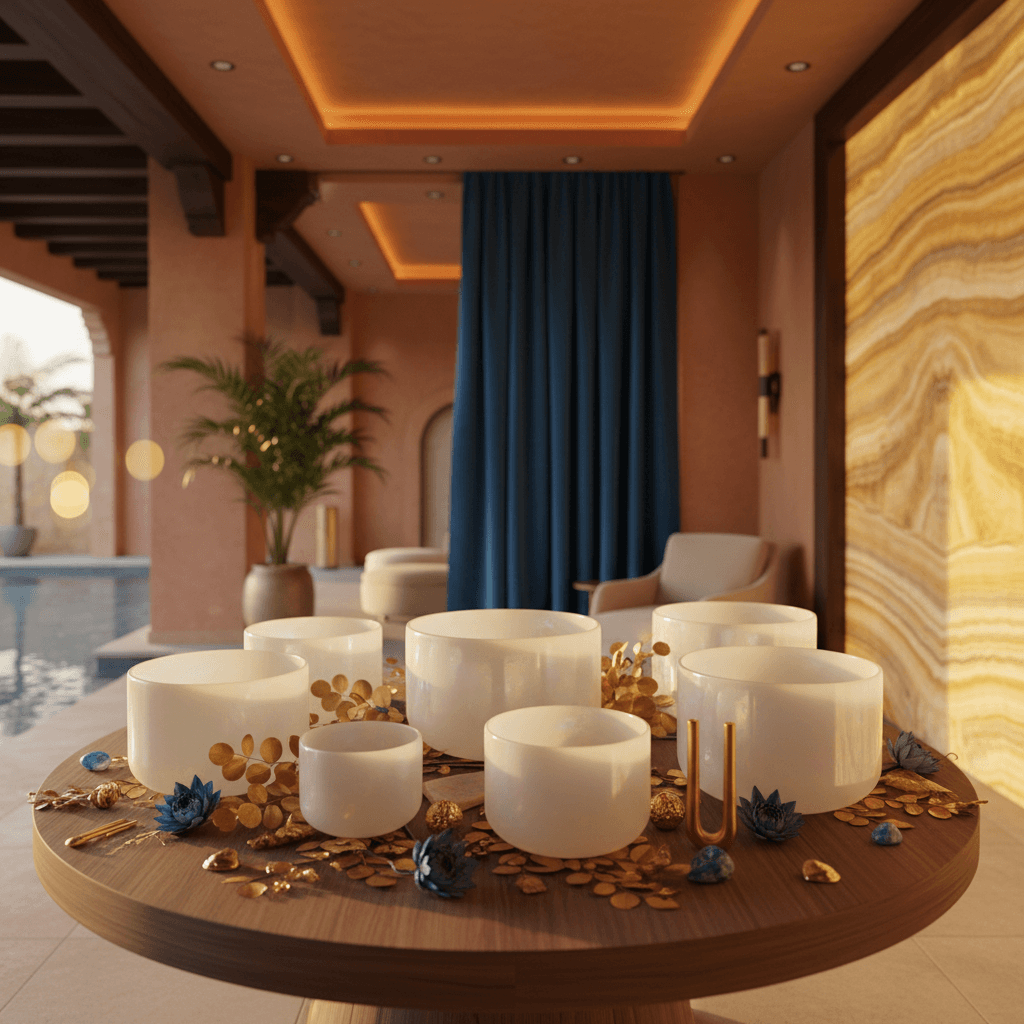
The Vagal Brake: Sound Therapy for Autonomic Balance
Key Insights
Explore how sound therapy at Soul Art supports your 'vagal brake,' enhancing autonomic balance and fostering deep relaxation for holistic wellbeing.
Have you ever wondered why certain sounds instantly calm your nervous system, while others grate on your nerves? This innate response is deeply rooted in our biology, specifically in the function of the vagus nerve – the body's master regulator of the autonomic nervous system. It holds the key to what scientists call the "vagal brake."
At Soul Art, Dubai's premier sound wellness studio, we delve into the sophisticated science behind these phenomena. We aim to empower you with an understanding of how focused sound experiences, expertly curated by Larissa Steinbach, can gently guide your system toward profound balance and resilience. This article explores the scientific underpinnings of the vagal brake and how sound therapy offers a unique pathway to enhance its efficiency for overall wellbeing.
Understanding this vital physiological mechanism is not just for scientists; it’s a profound tool for anyone seeking to navigate the stresses of modern life with greater ease and inner peace. Join us as we uncover how the rhythmic interplay of breath, heart rate, and sound can unlock your body's inherent capacity for calm.
Unveiling the Autonomic Nervous System's Master Regulator
Our bodies possess an incredible internal system for managing stress and relaxation: the autonomic nervous system (ANS). This intricate network operates largely unconsciously, overseeing vital functions like heart rate, breathing, digestion, and immune response. Within the ANS, the vagus nerve plays an extraordinarily crucial role, acting as a direct conduit between the brain and most of our major organs.
The vagus nerve, often referred to as the body’s "superhighway," is the longest cranial nerve, emerging from the brainstem and branching throughout the neck, chest, and abdomen. It contains a complex mix of afferent (sensory) and efferent (motor) fibers, meaning it both sends information from the body to the brain and transmits commands from the brain to the body. This two-way communication pathway is fundamental to maintaining internal balance, or homeostasis.
The Vagus Nerve and Its "Brake"
A core function of the vagus nerve is to regulate the "vagal brake," a mechanism that rapidly slows the heartbeat and lowers blood pressure. This action is primarily achieved through the release of acetylcholine at the sinoatrial node of the heart. A strong vagal brake provides the rapid, adjustable counter-balance to our sympathetic "fight-or-flight" drive, allowing us to quickly recover from stress and return to a state of calm.
More than a century ago, researchers Yerkes and Dodson (1908) described an "inverted-U" performance function, where arousal initially improves performance but excess stress degrades it. Modern autonomic science places the vagus nerve at the fulcrum of this curve. A robust vagal brake enables a low resting heart rate and calm cortical networks, offering physiological "headroom" to respond effectively to challenges without becoming overwhelmed.
When the vagal brake is strong, our heart rate exhibits high beat-to-beat variability (HRV), signaling an adaptable and resilient autonomic system. Conversely, chronically low HRV often indicates sympathetic dominance, fostering a state of persistent stress. The capacity to engage this vagal brake quickly, often through intentional practices, provides tactical control over our arousal levels, enhancing both mental and physical performance.
Polyvagal Theory and Vagal Efficiency
Dr. Stephen Porges' groundbreaking Polyvagal Theory offers a deeper understanding of the vagus nerve's role in our responses to safety and threat. This theory posits a hierarchical recruitment of autonomic states: first, the "social engagement system" (ventral vagal), allowing for connection and calm; then, sympathetic activation (mobilization for fight or flight); and finally, dorsal vagal shutdown (immobilization or freeze). The ability to shift smoothly between these states, particularly returning to the ventral vagal state, is crucial for resilience.
Researchers measure the efficiency of this vagal brake, termed "vagal efficiency," by analyzing the rhythmic relationship between breath and heart rate. This efficiency is often observed under dynamic conditions, such as posture adjustments, to understand how well the vagal system adapts to challenges. When vagal efficiency is compromised, it has been associated with features of dysautonomia and an increased risk for mental health challenges, including anxiety and depression. Poor vagal efficiency has also been observed in individuals with a history of trauma, underscoring its importance for emotional regulation.
While Polyvagal Theory forms a foundational understanding, the scientific community emphasizes the ongoing need for rigorous research to validate its various claims. Studies often utilize cardio-respiratory interaction, specifically respiratory sinus arrhythmia (RSA), as a physiological proxy for vagal activity. The call for comprehensive scientific reevaluation through methodologically sound studies, including randomized controlled trials (RCTs) and long-term studies, continues to ensure that interventions are effective and reliable.
The Power of Sound for Neuromodulation
Emerging research highlights the therapeutic potential of sound to influence neuroplasticity and autonomic function. Sound stimulation, by engaging the auditory system, transmits information directly to the brainstem. The brainstem, a critical control center, integrates functions such as cardiovascular regulation, breathing control, and consciousness.
This means that activating the brainstem through specific sound frequencies can directly influence the nervous system, potentially leading to positive changes in the ANS. Studies have indicated that sound stimulation may support the stability and homeostasis of the autonomic nervous system by gently stimulating the vagus nerve, even during dynamic movement. These interventions are often explored for their capacity to enhance blood pressure regulation and promote faster recovery from rapid physiological changes.
One notable application, the Safe and Sound Protocol (SSP) created by Dr. Stephen Porges, is a listening therapy rooted in Polyvagal Theory that aims to modulate the ventral vagal pathway through specially filtered music. Beyond specific protocols, there is a growing body of evidence exploring how various forms of music and sound can be used therapeutically to positively impact our neural and autonomic systems. This research suggests that sound can act as a powerful, non-invasive tool to help guide the body towards a more regulated state.
"The subtle frequencies of sound don't just reach our ears; they resonate within the very core of our nervous system, whispering to the vagus nerve to release its calming embrace."
Harmonizing Your Inner Landscape: Sound Therapy and the Vagal Brake
Connecting the scientific understanding of the vagal brake to the practical application of sound therapy reveals a fascinating synergy. Sound acts as an external stimulus, a gentle yet profound messenger, capable of engaging and toning the vagus nerve. This engagement helps to enhance the efficiency of your vagal brake, inviting your body to shift from states of stress to those of deep relaxation and safety.
During a sound wellness session, the resonant frequencies and vibrations interact with your body’s sensory pathways. These auditory cues are processed by the brainstem, which in turn influences the vagus nerve's activity. The experience can create a profound sense of calm that permeates your entire being, from your mind to your cellular level.
Clients often describe a feeling of deep resonance, as if the sounds are gently massaging internal organs and tissues. This sensory immersion helps to quiet the sympathetic nervous system, reducing the "fight or flight" response. As the body perceives a state of safety through these calming frequencies, the vagal brake is encouraged to engage, promoting a lower heart rate and increased heart rate variability (HRV).
This gentle guidance towards a regulated state is supported by the physiological impact of sound on cardio-respiratory interaction. The harmonic interplay encourages a more coherent breath-heart rhythm, often seen as an increase in respiratory sinus arrhythmia (RSA) – a key indicator of healthy vagal tone. These shifts occur naturally as your body responds to the soothing environment and the meticulously crafted soundscapes.
The goal is not to force a state but to invite it, creating an internal landscape where the nervous system feels safe enough to rest, digest, and restore. Many people report an immediate sense of peace and a lingering feeling of calm and clarity after a sound wellness session. It’s a holistic approach that acknowledges the intricate connection between our auditory input and our deepest physiological responses.
The Soul Art Signature: Larissa Steinbach's Method for Autonomic Harmony
At Soul Art, Larissa Steinbach, our founder and lead practitioner, brings a distinctive philosophy to sound wellness. Her method is a harmonious blend of profound scientific understanding and intuitive artistry, dedicated to fostering genuine autonomic balance and deep restoration. Larissa’s vision is to create a sanctuary where the sophisticated science of the vagus nerve meets the ancient wisdom of sound healing.
Larissa's approach is deeply personalized, recognizing that each individual's nervous system responds uniquely. She meticulously curates each session, whether private or group, to optimize the engagement of the vagal brake and support the body’s innate healing capabilities. This bespoke care ensures that the sound journey is not only profoundly relaxing but also therapeutically aligned with personal wellness goals.
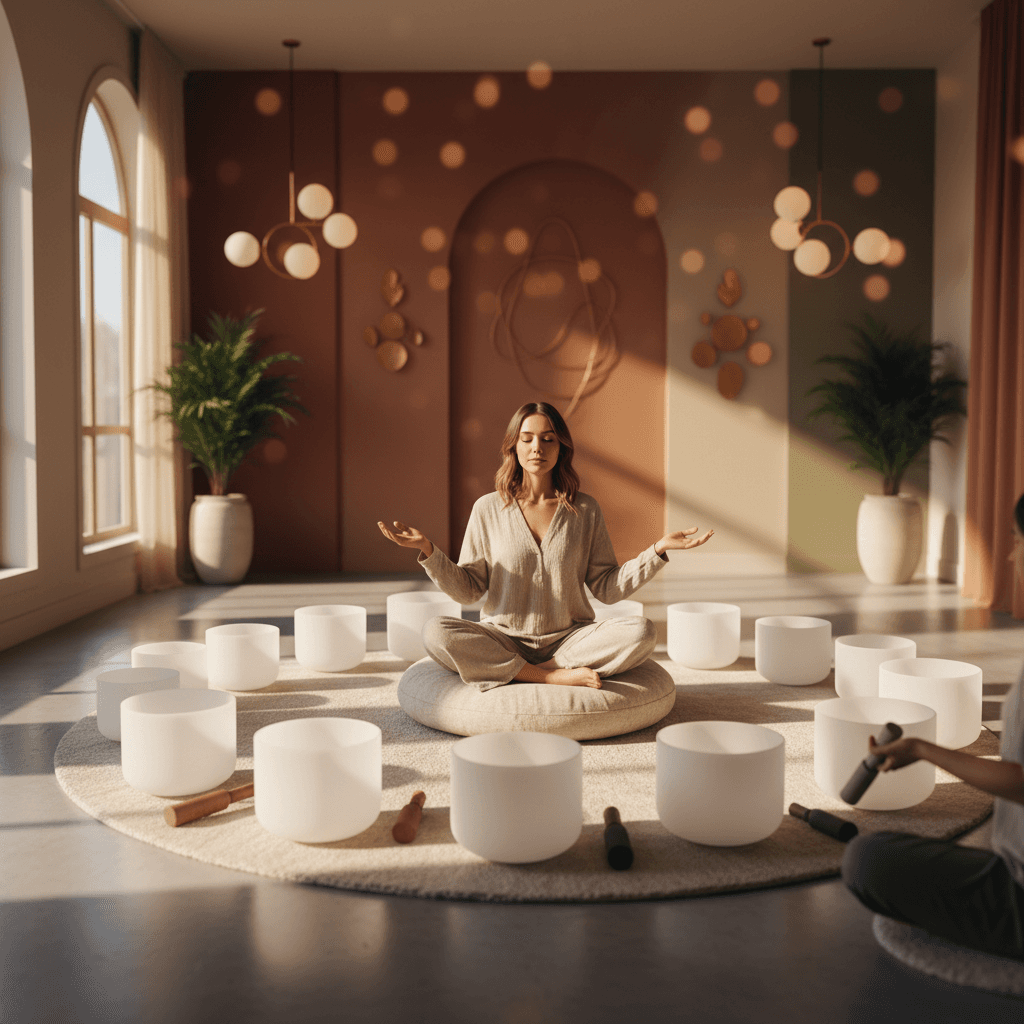
The Soul Art studio is equipped with a exquisite collection of instruments, each chosen for its specific vibrational qualities and resonance. Larissa skillfully employs crystal singing bowls, Himalayan singing bowls, precision-tuned gongs, and therapeutic tuning forks. These instruments produce a rich tapestry of frequencies and overtones that are designed to penetrate deeply, facilitating cellular resonance and nervous system recalibration.
During a session, Larissa Steinbach guides participants through an immersive sonic experience, allowing the sounds to wash over them. The vibrations from the gongs and bowls create a deeply meditative state, while the precise frequencies of tuning forks can be applied to specific areas of the body to promote localized relaxation and energetic flow. This multi-sensory engagement supports the shift into a ventral vagal state, characterized by safety, connection, and profound calm.
Larissa's expertise lies in creating an environment of profound safety and presence, essential for the nervous system to truly surrender and recalibrate. Her method is not just about listening to sounds; it’s about experiencing them on a somatic level, encouraging the body to release tension and allowing the vagal brake to operate with greater efficiency. Soul Art’s commitment is to offer a sophisticated, scientifically-informed path to enhanced well-being and inner harmony.
Cultivating Calm: Daily Practices and Your Journey with Soul Art
Empowering your vagal brake is a journey that extends beyond the wellness studio; it's about integrating mindful practices into your daily life. Small, consistent efforts can significantly enhance your autonomic resilience and overall sense of calm. These practices, combined with the profound experiences at Soul Art, can create a powerful synergy for your wellbeing.
Here are some practical steps you can implement today to support your vagal nerve and cultivate greater calm:
- Mindful Diaphragmatic Breathing: Practice slow, deep breaths that expand your belly. Inhale for a count of four, hold for four, and exhale slowly for a count of six. This activates the vagus nerve, signaling safety to your brain. Engaging in this for just a few minutes daily may support stress reduction.
- Brief Cold Exposure: Gently splashing your face with cold water or taking a brief cold shower can activate the diving reflex, a natural mechanism that engages the vagal nerve and slows heart rate. Many people report this as a quick way to quell feelings of acute stress.
- Humming or Chanting: The vibrations created by humming, singing, or chanting stimulate the vagus nerve in the throat. This simple practice can be a surprisingly effective way to promote relaxation and may contribute to a sense of inner peace.
- Gentle Movement and Yoga: Incorporating practices like gentle yoga, tai chi, or mindful walking can help release physical tension and promote a sense of groundedness. These movements, especially when combined with conscious breathing, have been associated with improved vagal tone.
- Explore Sound Wellness: Consider integrating professional sound wellness sessions into your self-care routine. The immersive, targeted frequencies offered by Soul Art can provide a deeper recalibration of your nervous system than daily practices alone.
By consistently engaging in these simple, accessible practices, you empower your body’s natural capacity for self-regulation. When you feel ready to explore a deeper level of nervous system support, Soul Art offers expertly guided sessions designed to optimize your vagal health and foster profound tranquility.
In Summary: Reclaiming Your Autonomic Resilience
The vagal brake is a pivotal component of our autonomic nervous system, directly influencing our ability to manage stress, regulate emotions, and foster overall wellbeing. When functioning optimally, it allows us to adapt gracefully to life's challenges, returning to a state of calm and connection. Poor vagal efficiency, however, has been associated with various wellness challenges, underscoring the importance of nurturing this vital system.
Sound therapy, as practiced by Larissa Steinbach at Soul Art, offers a sophisticated and deeply relaxing pathway to support and enhance vagal nerve function. By utilizing carefully selected frequencies and vibrations, these sessions gently guide the nervous system towards a state of safety and balance. This complementary approach to wellness aims to improve vagal efficiency, promote autonomic harmony, and unlock your inherent capacity for resilience and peace.
We invite you to experience the transformative power of sound and discover how Soul Art can support your journey toward a more regulated and vibrant life.
Bookings Coming Soon
Soul Art is still in preparation. Session details and booking will be published here after launch.
Coming Soon
Wellness Disclaimer: This article is for educational and informational purposes only. It does not constitute medical advice, diagnosis, or treatment. Soul Art Dubai provides non-medical wellness experiences focused on relaxation, stress management, and general wellbeing. Sound wellness is a complementary practice and should not replace professional medical care.
Related Articles
Cluster Headaches: Unveiling Pain and the Promise of Frequencies in Wellness

Epilepsy & Sound: Safety, Serenity, and Emerging Wellness Paths
Mastering Focus: Analytical Listening & Brain Engagement at Soul Art