The Thalamus: Gateway to Emotion, How Sound Reshapes Your Inner World
Key Insights
Explore how sound bypasses conscious thought, reaching the emotional brain via the thalamus. Discover deep relaxation with Soul Art Dubai.
Have you ever noticed how a particular sound – a sudden clap of thunder, a soothing melody, or even the chime of a text message – can instantly shift your mood or evoke a powerful memory, often before you've even consciously registered what it was? This isn't just a coincidence; it's a testament to the incredible, often subconscious, power of sound on our emotional landscape. At the heart of this profound connection lies a remarkable brain structure: the thalamus.
Long underestimated as a mere sensory relay station, modern neuroscience reveals the thalamus as a sophisticated gateway to the mind, deeply involved in our emotional experiences. In this article, we delve into the intricate neuroscience of how sound waves, through the thalamus, reach the emotional centers of your brain. Understanding this mechanism can unlock new pathways to profound relaxation, emotional balance, and holistic well-being, a journey expertly guided by Larissa Steinbach and the unique methodology at Soul Art Dubai.
Join us as we explore the scientific intricacies that underpin the transformative power of sound, revealing why practices like sound wellness are not just ancient traditions, but deeply effective, neurologically supported tools for modern living.
The Science Explained
For decades, scientists viewed the thalamus as a simple way-station, passively relaying sensory information to the brain's cortex. However, recent research has unveiled a far more dynamic and central role for this almond-shaped structure, positioning it as an indispensable integrator and coordinator of brain activity. It acts as a critical bridge linking perception, cognition, and our emotional responses.
The Thalamus: More Than a Relay Station
The thalamus, strategically located at the top of the brainstem, is now understood as a highly complex hub that interacts directly with nearly every part of the brain. Far from being a passive transfer point, it functions critically in attention, memory, consciousness, and the brain's overall arousal system. Indeed, some studies consider its dense loops into and out of the cortex to render it functionally a "seventh cortical layer," highlighting its deep involvement in higher-order cognitive processes.
Damage to its various nuclei can profoundly impact these mental operations, underscoring its vital, nuanced contributions. The thalamus receives and sends connections to most subcortical areas, playing a pivotal role in coordinating cortical computations. It acts as a "conductor" that prioritizes, organizes, and contextualizes vast amounts of information, shaping our understanding of the external environment and our place within it.
The Auditory Thalamus (MGN) and Emotional Processing
When sound waves enter our ears, they are converted into electrical signals that travel along a specific pathway to the brain. A crucial stop on this journey is the Medial Geniculate Nucleus (MGN), often referred to as the auditory thalamus. This specialized nucleus is exquisitely sensitive to auditory stimuli, containing "localization neurons" that are finely tuned to sound timing and intensity differences between the two ears.
The MGN doesn't merely pass this information along; it actively processes it, sending these highly detailed signals to the primary auditory cortex for further analysis. More importantly for our emotional experience, the MGN also has direct, robust connections to several key emotion-associated areas of the brain. These include the amygdala, the brain's fear and emotional response center, and the insula, which is involved in bodily sensation and emotional awareness.
Furthermore, the MGN also receives modulatory inputs, making it a critical site for the attentional gating of auditory stimuli. This means the thalamus helps decide which sounds capture our attention and which are filtered out, a foundational aspect of focus and relaxation.
The "Low Road" vs. "High Road" to Emotion
The thalamus facilitates a fascinating dual-pathway system for processing emotionally salient sounds, often referred to as the "low road" and the "high road." This dual processing explains the immediate, visceral impact of certain sounds.
- The "Low Road": This is a rapid, almost instantaneous pathway where the auditory thalamus (MGN) sends impulses directly to the amygdala, bypassing the conscious processing centers of the auditory cortex. This allows for a swift, pre-cognitive emotional response – an almost anticipated, yet quick-but-effective, defensively cautious reaction. For example, hearing a sudden, loud bang can trigger an immediate "fight-or-flight" response, increasing heart rate and blood pressure, before the auditory cortex has fully identified the sound. This pathway prioritizes speed for survival, offering emotional awareness over detailed authenticity.
- The "High Road": Simultaneously, the thalamus transmits sensory output to the primary auditory cortex. Here, the sound is more thoroughly contextualized with additional data through complex processing. This information then travels to association cortices and prefrontal cortices (PFC), allowing the stimulus to be appreciated under a larger, more deliberate umbrella. This slower, more detailed process enables top-down regulation of initial emotional responses, helping us understand, interpret, and consciously manage our feelings.
The brilliance of this system is that both pathways operate interconnectedly. The Mediodorsal (MD) nucleus of the thalamus and the PFC create a reciprocal loop that allows for such intricate regulation, ensuring we can react quickly when needed, while also having the capacity for nuanced emotional understanding.
The Thalamic Reticular Nucleus (TRN) and Attentional Gating
Another critical player within the thalamic system is the Thalamic Reticular Nucleus (TRN). This thin sheet of neurons acts like a central gatekeeper, playing a crucial role in directed attention and cognitive functions. The TRN doesn't just process auditory information; it is uniquely positioned to modulate responses from the MGN.
Neurons in the auditory TRN adapt very quickly to repeated stimuli, making them highly sensitive as "deviance detectors." This means they are excellent at noticing changes or novel sounds in our environment. By modulating the responses of the MGN to these deviant stimuli, the TRN influences which sounds gain access to our conscious awareness and which are background noise.
Furthermore, the TRN receives inputs from other sensory modalities, including visual and tactile afferents. This cross-modal integration suggests it's involved in synthesizing different sensory experiences. Behavioral experiments have shown that visual cues can, in fact, affect thalamic responses to auditory stimuli, confirming its role in integrating multisensory input and directing our attention across senses. This sophisticated gating mechanism allows the thalamus to effectively control what information is transmitted to the cortex, making it a powerful tool for focus and relaxation.
Thalamic Connections to the Emotional Brain
The thalamus is profoundly involved in creating emotional experiences, with its various nuclei connecting to a wide array of emotion-associated brain areas. Beyond the amygdala and insula, it links to different parts of the frontal cortex, which are vital for decision-making and emotional regulation. It also connects to the hippocampus, the brain structure responsible for memory formation and retrieval, from which emotional memories originate.
This widespread connectivity means the thalamus is activated by a broad spectrum of emotion-generating stimuli, both positive and negative. While some studies suggest it is rather non-specific in its general emotional activation, there are very specific functions of the thalamus in emotion that continue to be uncovered. Its deep involvement in the moral emotions, for instance, has been confirmed through various studies. Given these critical functional roles, the thalamus stands as an attractive target for intensive study into healthy and impaired cognitive functioning, including its potential links to mood disorders, as suggested by studies exploring its volumetric differences in conditions like OCD.
"The thalamus, once viewed as a mere switchboard, is now understood as the brain's chief conductor, orchestrating the symphony of our senses and emotions, guiding us from raw sensation to nuanced feeling."
How It Works in Practice
Understanding the intricate role of the thalamus provides a profound scientific foundation for the effectiveness of sound wellness practices. When you immerse yourself in a carefully crafted sound journey, you are not merely listening; you are engaging your entire neurological system in a sophisticated dance with frequency and vibration.
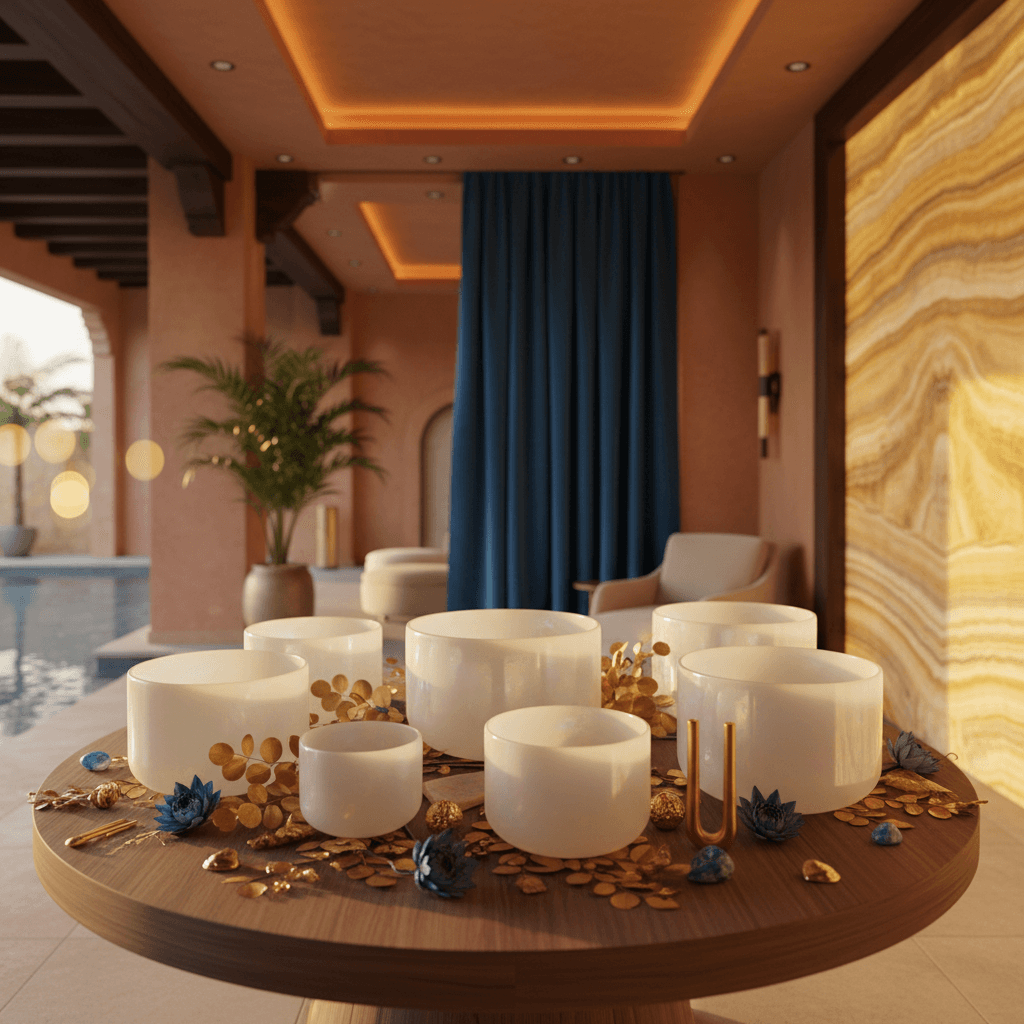
The sounds, whether from resonant gongs, singing bowls, or precise tuning forks, don't just register in your ears. They travel through the auditory thalamus (MGN), activating that rapid "low road" to the amygdala. This can trigger an immediate, pre-cognitive shift from stress to calm, bypassing the often-overthinking analytical mind. Your body's autonomic responses — heart rate, breathing, muscle tension — begin to regulate, moving away from a "fight-or-flight" state towards one of rest and digest.
As the sound continues, the more refined "high road" engages. The auditory cortex and prefrontal regions process the complex textures and harmonies, allowing for conscious appreciation and further emotional integration. The Thalamic Reticular Nucleus (TRN) plays a vital role here, acting as an attentional gatekeeper. It helps to filter out external distractions and internal mental chatter, guiding your focus inward. This intentional gating of sensory input frees your mind from its habitual preoccupations, paving the way for profound mental quietude.
Clients often describe a feeling of being "held" or "enveloped" by the sound, a sensation of safety that allows for deep surrender. The subtle vibrations reverberate through the body, engaging not just the auditory system but also tactile pathways, further stimulating the integrative functions of the thalamus. This multi-sensory engagement helps to recalibrate the nervous system, supporting emotional regulation and promoting a state where the mind can process and release stored tensions without conscious effort. It's a gentle yet powerful way to experience emotional coherence and a deep sense of inner peace.
The Soul Art Approach
At Soul Art Dubai, Larissa Steinbach meticulously crafts sound wellness experiences that leverage this profound scientific understanding of the thalamus and its role in emotional processing. Larissa’s approach is a harmonious blend of ancient wisdom and cutting-edge neuroscience, designed to guide individuals toward profound states of relaxation, emotional clarity, and holistic balance.
What makes the Soul Art method unique is its intentionality. Larissa does not simply play instruments; she curates immersive soundscapes with a deep awareness of how specific frequencies and harmonics interact with the brain's intricate pathways. She selects instruments such as Himalayan singing bowls, crystal alchemy singing bowls, gongs, chimes, and tuning forks, each chosen for its unique vibrational quality and ability to elicit specific neurological responses.
Larissa's expertise focuses on creating a resonant environment that optimizes thalamic engagement. By skillfully layering different tones and rhythms, she helps to gently modulate the brain's activity, encouraging the shift from an overactive state to one of deep calm. This supports the thalamus in its role as an attentional gate, enabling the mind to release external distractions and delve into an inner sanctuary. The carefully chosen sounds are designed to nourish both the "low road" and "high road" to emotion, facilitating a rapid yet sustained sense of peace and emotional coherence.
The Soul Art experience is more than just a sound bath; it is a meticulously designed journey into self-discovery and nervous system restoration. Larissa Steinbach’s dedication ensures that each session is not only deeply relaxing but also a scientifically informed practice that supports lasting well-being. It is a testament to the "quiet luxury" of personalized care, where every detail, from the acoustics to the intention behind each sound, is considered to foster a truly transformative experience.
Your Next Steps
Embracing the power of sound for emotional well-being doesn't require complex scientific knowledge; it simply asks for an open heart and a willingness to explore. Understanding the thalamus as your brain's emotional gateway, however, can deepen your appreciation for how truly effective sound practices can be. Here are a few practical steps you can take to begin or deepen your journey:
- Mindful Listening: Take moments each day to truly listen to your environment. Notice how different sounds — birdsong, traffic, or even the hum of your refrigerator — affect your mood and body. This simple practice heightens your auditory awareness and connection to your emotional responses.
- Curate Your Sound Environment: Be intentional about the sounds you invite into your personal space. Choose music, nature sounds, or ambient tones that promote a sense of calm and focus, rather than those that agitate or distract. Remember, your thalamus is constantly processing these inputs.
- Explore Sound Meditation: Seek out guided sound meditations or sound bath recordings online to experience the power of focused sonic immersion from the comfort of your home. Allow the sounds to wash over you, noticing any shifts in your mental or emotional state.
- Prioritize Quiet Time: In our noisy world, true silence can be a powerful balm. Dedicate regular periods to quiet reflection, allowing your auditory system and mind to reset, giving your thalamus a well-deserved break from constant input.
- Experience Professional Sound Wellness: For a truly immersive and expertly guided experience, consider exploring sound wellness sessions. Engaging with a skilled practitioner like Larissa Steinbach at Soul Art Dubai can provide a deeply restorative and transformative journey tailored to optimize your well-being.
In Summary
The thalamus, once viewed as a simple relay, is now recognized as a critical "gateway to the mind," profoundly involved in our emotional experiences and the integration of sensory information. Sound, uniquely positioned to engage this powerful brain structure via the auditory thalamus (MGN) and the Thalamic Reticular Nucleus (TRN), offers a direct pathway to our emotional brain. Through rapid "low road" connections to the amygdala and more nuanced "high road" processing through the cortex, sound can swiftly influence our emotional state, offering profound potential for regulation and well-being.
Soul Art Dubai, under the expert guidance of Larissa Steinbach, harnesses this scientific understanding to create exquisite sound wellness experiences. These sessions are meticulously designed to gently guide your brain into states of deep relaxation, fostering emotional balance and internal harmony. By intentionally engaging the thalamus, Soul Art offers a unique and sophisticated pathway to reconnect with your inner calm and restore your nervous system. Discover the transformative power of sound and unlock a deeper sense of peace and emotional resilience.
Bookings Coming Soon
Soul Art is still in preparation. Session details and booking will be published here after launch.
Coming Soon
Wellness Disclaimer: This article is for educational and informational purposes only. It does not constitute medical advice, diagnosis, or treatment. Soul Art Dubai provides non-medical wellness experiences focused on relaxation, stress management, and general wellbeing. Sound wellness is a complementary practice and should not replace professional medical care.
Related Articles

Cluster Headaches: Unveiling Pain and the Promise of Frequencies in Wellness

Epilepsy & Sound: Safety, Serenity, and Emerging Wellness Paths

Mastering Focus: Analytical Listening & Brain Engagement at Soul Art