RAS & Sound: Mastering Alertness for Mindful Living with Soul Art
Key Insights
Explore how the Reticular Activating System (RAS) filters information and regulates alertness, and how Soul Art Dubai leverages sound for focused awareness.
Unlocking Focused Awareness: The Reticular Activating System and Sound's Subtle Power
Imagine a new parent, living near a bustling airport, sleeping soundly through the roar of jet engines, yet instantly waking at the faintest whimper of their infant in the next room. What invisible mechanism allows the brain to filter out significant noise while acutely registering a subtle, crucial sound? This remarkable phenomenon is a testament to the power of your Reticular Activating System (RAS).
This intricate network, often overlooked, acts as your brain's sophisticated gatekeeper, determining what information from the overwhelming barrage of sensory input reaches your conscious awareness. It is intimately linked to your levels of alertness, focus, and even your emotional responses. Understanding the RAS offers a profound insight into how we engage with the world and manage our inner states.
At Soul Art Dubai, founded by the visionary Larissa Steinbach, we delve into the science of the RAS to harness the potent effects of sound for enhanced alertness, profound focus, and a balanced state of being. This article will unravel the mysteries of the RAS, explore its scientific underpinnings, and reveal how strategically applied sound can be a powerful ally in cultivating a more mindful and responsive life. Discover how you can gently guide your brain's natural filtering system towards greater well-being.
The Science Explained: Your Brain's Internal Gatekeeper
The Reticular Activating System (RAS) is a complex and crucial network of nerve pathways, nestled deep within your brainstem and extending into higher brain regions. Its strategic location underscores its fundamental role as a central regulator of consciousness, wakefulness, and the intricate dance of our sleep-wake cycles. Without a fully functional RAS, our ability to transition from sleep to wakefulness, or even maintain a state of sustained alertness, would be severely compromised.
Historically, the significance of the RAS was dramatically illuminated by pioneers like Moruzzi and Magoun in their seminal 1949 paper, "Brain Stem Reticular Formation and Activation of the EEG." Their research demonstrated that electrical stimulation of this brainstem region could induce arousal from sleep, while lesions led to persistent somnolence. They concluded that the RAS was responsible for generating forebrain activation and wakefulness, fundamentally altering our understanding of brain function. Modern EEG and fMRI studies continue to reinforce the association between the integrity of the RAS and our states of consciousness.
The RAS as a Selective Sensory Filter
One of the most fascinating functions of the RAS is its role as a selective filter for sensory information. Think of it as your brain's personal bouncer, sifting through the immense volume of data constantly bombarding your senses. It intelligently decides which bits are important enough to bring to your conscious attention, and which can be relegated to the background. This selective attention is vital for effective learning, interaction, and even survival in our complex environments.
For instance, when you are in a bustling coffee shop, the RAS allows you to tune into your conversation, filtering out the clatter of cups, the murmur of other voices, and the distant street noise. It's the reason why hearing your name called in a crowded room can instantly snap your attention, even amidst a cacophony of sound. The RAS constantly evaluates incoming stimuli for novelty, relevance, and potential threat, ensuring that your cognitive resources are directed efficiently.
Regulating Alertness and Consciousness
The RAS plays a pivotal role in maintaining our arousal and wakefulness. It acts as a kind of switch, helping to determine when you feel awake and alert versus when you feel drowsy or fatigued. When activated, it enhances your alertness and awareness, making you more responsive to external stimuli. Conversely, a suppressed RAS can make individuals difficult to arouse, potentially leading to disorders of consciousness or even coma in severe cases of damage.
This system's influence extends beyond mere wakefulness; it significantly contributes to our cognitive processing speed, attention, and reaction times. Research has even shown that various forms of sensory input can activate the RAS. Proprioceptive input, such as deep pressure from weighted blankets, massage, or even vigorous activity, can "turn on" the RAS, enhancing awareness and engagement. The act of chewing, by activating the trigeminal nerve, has also been linked to improved cognitive processing speed and alertness. These examples highlight how diverse sensory experiences, including auditory ones, can modulate our states of consciousness and mental acuity.
The Neurochemical Orchestra of Arousal
The activity of the RAS is intricately modulated by a diverse array of neurotransmitters and neuromodulators, which collectively regulate our arousal states, sleep-wake transitions, and cognitive functions. Acetylcholine, for example, is a principal neurotransmitter in the ascending RAS, stimulating cortical activation during both waking and REM sleep. Noradrenaline, released by neurons in the locus coeruleus, mediates alertness and sensory signal detection, with higher firing rates during active waking states.
Serotonin and dopamine also play critical roles, influencing mood, motivation, and the overall balance of arousal. This complex neurochemical interplay allows the RAS to fine-tune our brain's responsiveness, enabling us to adapt to different environmental demands, whether that means a state of heightened focus, relaxed awareness, or deep restorative sleep. Understanding this intricate system empowers us to explore non-pharmacological approaches to gently guide our own states of alertness and well-being.
How It Works in Practice: The Auditory Pathway to Alertness
The RAS's remarkable ability to filter and prioritize sensory input makes sound an incredibly potent, yet often underestimated, tool for influencing our state of alertness. Unlike visual input, which can be easily averted, sound penetrates our environment, impacting us whether we consciously attend to it or not. The brainstem, where the RAS resides, is the initial processing hub for auditory information, meaning sounds reach and potentially influence the RAS even before they fully register in our conscious mind.
"The subtle art of sound wellness lies in its capacity to speak directly to the brain's filtering mechanisms, guiding our attention and fostering a state of alertness that feels both gentle and deeply focused."
Certain frequencies, rhythms, and sound textures have a unique capacity to interact with the RAS. Imagine a sudden, sharp sound – it instantly grabs your attention, alerting the RAS to a potential change or threat in your environment. Conversely, repetitive, harmonic, and sustained sounds can signal safety and consistency, allowing the RAS to relax its vigilance, leading to a state of calm alertness rather than hyper-arousal.
In practical terms, this means that the strategic application of sound can be utilized to achieve very specific states of mind. For someone seeking to enhance focus for a demanding task, certain soundscapes might gently stimulate the RAS, helping to filter out distractions and sharpen cognitive faculties. This isn't about creating overstimulation; rather, it’s about providing the RAS with meaningful, non-threatening auditory cues that guide attention without causing stress. The aim is often to foster a state of relaxed alertness, where the mind is clear and present, yet not overwhelmed.
Clients engaging in sound wellness experiences often report a heightened sense of mental clarity and an improved ability to concentrate. The curated sounds help to reduce the "noise" of internal chatter and external distractions, allowing the RAS to direct its filtering capacity towards a desired state of focused awareness. This can be particularly beneficial for managing emotional responses, as a calmly activated RAS supports better emotional regulation, moving away from the "fight-or-flight" response often triggered by an overstimulated or stressed RAS. The sensory details of the experience — the deep resonance of gongs, the shimmering sustained tones of singing bowls, the intricate patterns of chimes — are designed to provide a rich, yet harmonizing, input for the RAS, fostering a profound sense of presence and mental acuity without mental fatigue.
The Soul Art Approach: Curating Consciousness with Sound
At Soul Art Dubai, Larissa Steinbach and her team harness a deep understanding of the Reticular Activating System to craft unparalleled sound wellness experiences. Our approach is rooted in the principle that conscious, intentional soundscapes can gently yet effectively modulate the RAS, guiding individuals toward optimal states of alertness, focus, and inner harmony. We don't just play sounds; we curate experiences designed to communicate directly with your brain's filtering system.
Larissa's method is unique in its fusion of scientific insight with intuitive artistry. She recognizes that the subtle nuances of sound—its frequency, amplitude, timbre, and rhythm—all serve as powerful cues that the RAS processes. By carefully selecting and orchestrating specific instruments, Soul Art creates environments where the RAS can either be gently stimulated for enhanced clarity and focus, or soothed into a state of deep, restorative calm, promoting a balanced and responsive nervous system.
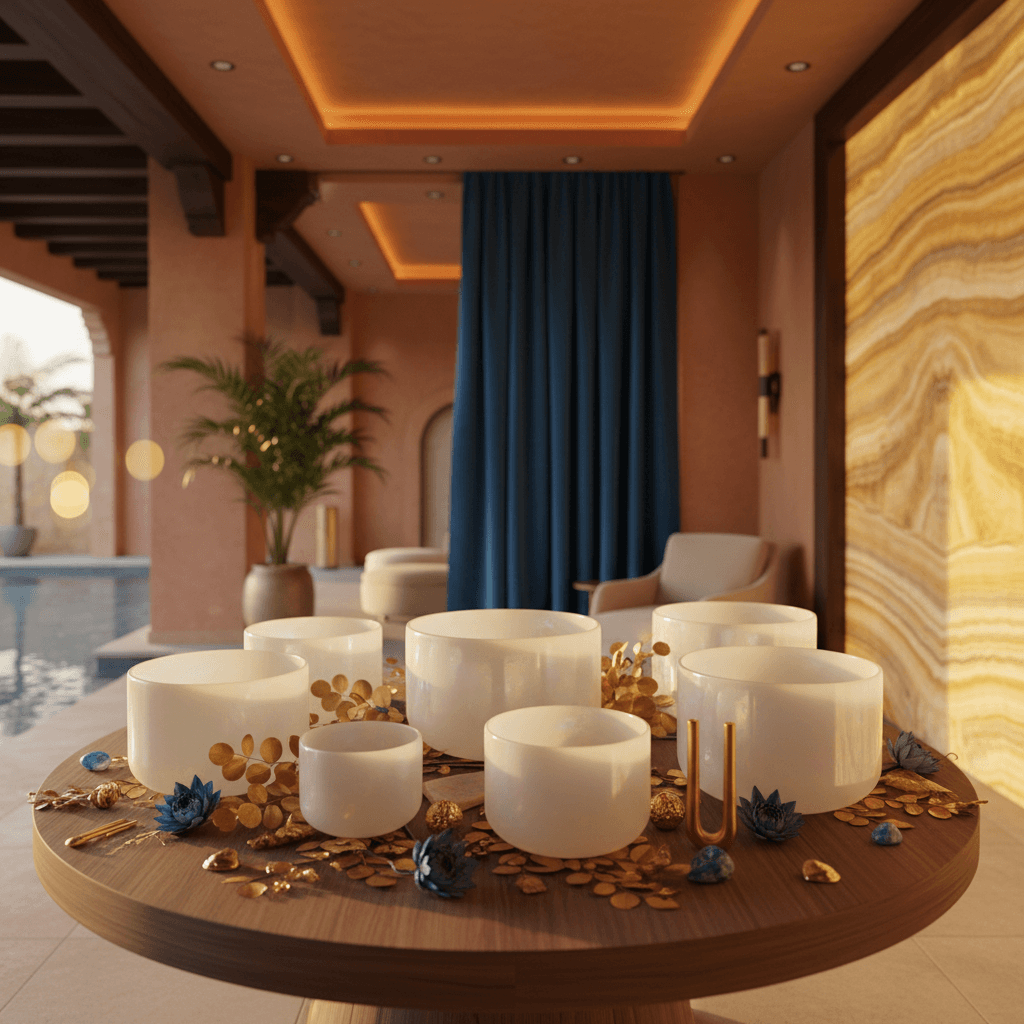
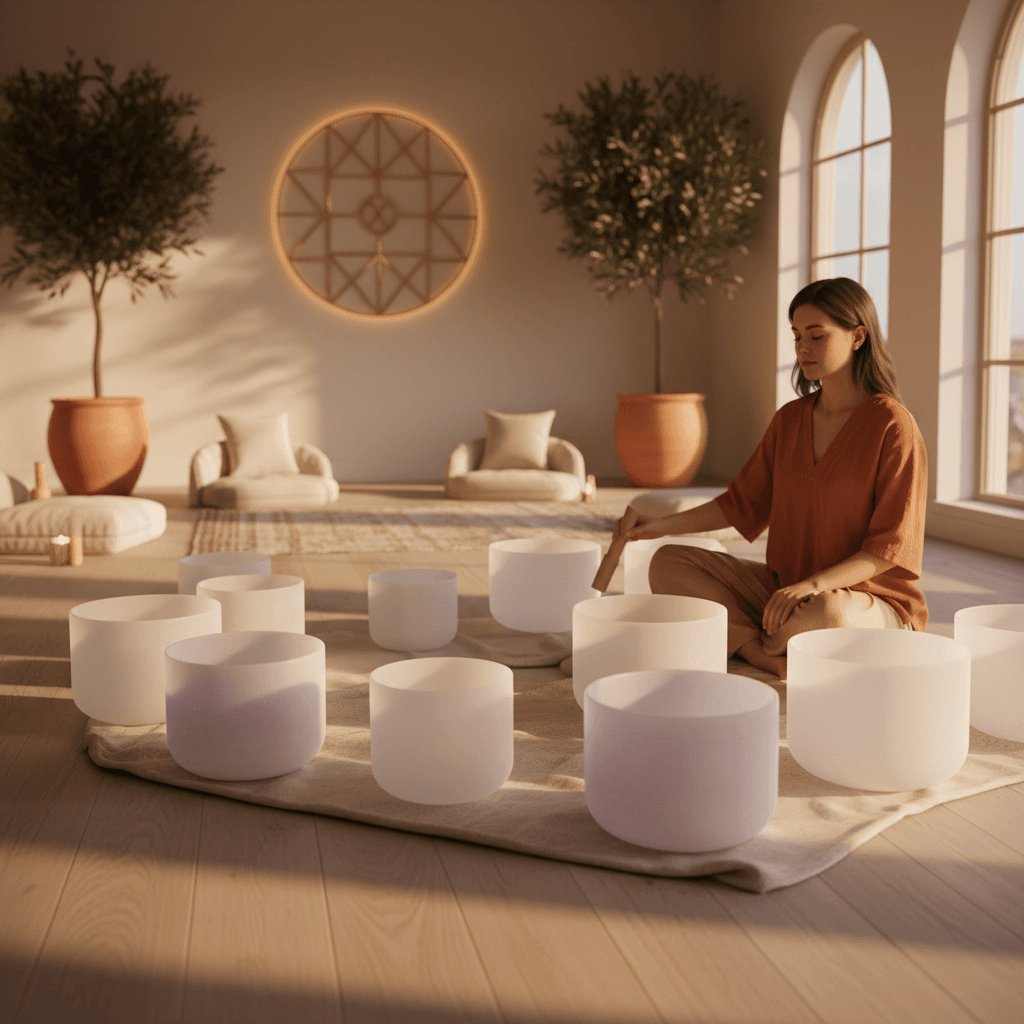
One of the hallmarks of the Soul Art method is the meticulous selection of instruments. Himalayan singing bowls, with their rich, complex overtones and sustained vibrations, are often employed to create a resonant field that helps to quiet mental chatter and anchor attention. The deep, grounding frequencies of gongs can provide a profound sensory input that both engages and settles the RAS, promoting a state of focused presence. Crystal bowls, chimes, and other therapeutic sound tools are integrated to layer the auditory experience, offering a tapestry of frequencies designed to optimize the RAS's activity.
The intention behind each Soul Art session is to provide the RAS with coherent, harmonious input that signals safety and invites gentle engagement. This contrasts sharply with the often chaotic and demanding auditory environment of daily life, which can overstimulate or deplete the RAS. By creating a sanctuary of purposeful sound, Soul Art helps clients retrain their attention, enhance their cognitive flexibility, and cultivate a more resilient state of well-being. Larissa Steinbach’s expertise ensures that each session is not merely an auditory event, but a profound journey of self-discovery and neural harmonization.
Your Next Steps: Cultivating Mindful Alertness
Understanding the Reticular Activating System empowers you to take proactive steps in managing your own states of alertness and focus. While Soul Art offers a profound, guided experience, there are daily practices you can integrate to support your RAS and enhance your overall well-being. These simple, yet effective, strategies can help you maintain a balanced state of awareness, reducing overwhelm and sharpening your mental edge.
Here are a few actionable steps you can implement today:
- Mindful Auditory Environments: Pay attention to the sounds in your environment. Can you choose calming or focusing background sounds (e.g., nature sounds, instrumental music) when working or relaxing, rather than chaotic noise? Consciously select auditory input that supports your desired state, whether it's gentle focus or serene relaxation.
- Sensory Engagement Breaks: Integrate short breaks throughout your day where you mindfully engage your senses. This could be a few minutes of deep breathing, a gentle stretch (proprioceptive input), or simply focusing on the sounds around you. This conscious engagement can help reset and gently activate your RAS.
- Structured Sound Practices: Explore guided meditations or sound bath recordings that specifically aim to cultivate focus or promote relaxation. Even 10-15 minutes of intentional listening can make a difference in directing your RAS towards a desired state.
- Prioritize Rest: Adequate, restorative sleep is crucial for a well-functioning RAS. Ensure your sleep environment is conducive to deep rest, minimizing light and disruptive sounds, allowing your RAS to regulate your sleep-wake cycle effectively.
- Hydration and Nutrition: The brain, including the RAS, thrives on proper nourishment. Staying well-hydrated and consuming a balanced diet rich in essential nutrients provides the foundation for optimal brain function and sustained alertness.
Embarking on a journey to understand and gently guide your RAS can unlock new levels of focus, calm, and responsiveness in your daily life. If you're ready to explore how expertly curated soundscapes can transform your awareness and well-being, we invite you to experience the unique methodology of Larissa Steinbach at Soul Art Dubai.
In Summary: Harmonizing Your Inner World
The Reticular Activating System (RAS) is truly your brain's unsung hero, constantly working to filter the world, regulate your consciousness, and maintain your state of alertness. Its profound influence on our focus, awareness, and emotional regulation highlights its critical role in our daily lives. By understanding how this intricate system processes sensory information, particularly sound, we gain powerful insights into managing our mental states.
At Soul Art Dubai, Larissa Steinbach masterfully leverages this scientific understanding, creating bespoke sound wellness experiences that gently guide your RAS towards desired states of focused awareness, mental clarity, and profound relaxation. Through meticulously chosen instruments and expertly crafted soundscapes, Soul Art offers a complementary approach to holistic well-being, helping you to harness your brain's natural filtering power. Discover the transformative potential of sound to bring balance and heightened presence to your life with Soul Art.
Bookings Coming Soon
Soul Art is still in preparation. Session details and booking will be published here after launch.
Coming Soon
Wellness Disclaimer: This article is for educational and informational purposes only. It does not constitute medical advice, diagnosis, or treatment. Soul Art Dubai provides non-medical wellness experiences focused on relaxation, stress management, and general wellbeing. Sound wellness is a complementary practice and should not replace professional medical care.
Related Articles
Cluster Headaches: Unveiling Pain and the Promise of Frequencies in Wellness
Epilepsy & Sound: Safety, Serenity, and Emerging Wellness Paths
Mastering Focus: Analytical Listening & Brain Engagement at Soul Art