Quiet the Mind: Understanding the Default Mode Network & Sound Meditation
Key Insights
Explore the Default Mode Network, its impact on well-being, and how sound-induced meditation at Soul Art with Larissa Steinbach can foster deep states of calm and clarity.
Have you ever found yourself lost in a swirling vortex of thoughts, endlessly replaying past conversations or rehearsing future scenarios? This persistent inner monologue, often called "mind-wandering," is a primary function of a fascinating neural network within your brain known as the Default Mode Network (DMN). Far from being a mere distraction, the DMN plays a profound role in our self-perception, emotional states, and overall mental well-being.
At Soul Art, Dubai's premier sound wellness studio, we believe in empowering you with the knowledge and tools to navigate your inner landscape more effectively. This article will delve into the intricacies of the DMN, exploring its scientific underpinnings and shedding light on how sound-induced meditation, a cornerstone of Larissa Steinbach's approach, can serve as a powerful conduit to modulate its activity, fostering states of profound calm, enhanced focus, and enduring clarity. Understanding this fundamental aspect of your brain is a vital step toward cultivating a more peaceful and present existence.
The Science Explained: Unveiling the Brain's Inner Architect
The human brain is an astonishingly complex organ, a bustling metropolis of neural activity. Among its many networks, the Default Mode Network stands out for its pivotal role in shaping our internal experience. By understanding its functions, we can begin to appreciate the transformative potential of practices like sound-induced meditation.
What is the Default Mode Network (DMN)?
The Default Mode Network is a large-scale brain network primarily active when an individual is not focused on the outside world and the brain is at "rest." This resting state, however, is far from idle. Instead, it is characterized by intense self-referential processing. Key regions of the DMN include the medial prefrontal cortex (mPFC), the posterior cingulate cortex (PCC) and precuneus, and the angular gyrus. These areas work in concert to facilitate our internal narratives.
Studies have consistently identified the DMN as the neural substrate for mind-wandering, introspection, and our ability to ponder the past, present, and future. It allows us to construct a sense of self, engage in social cognition, and even dream. However, the DMN's activity is not always beneficial for our mental state.
The DMN's Dual Nature: When Inner Reflection Becomes Rumination
While the DMN is essential for creativity, memory consolidation, and planning, its hyperactivity has been extensively correlated with various challenging mental states. Research published in PNAS and other leading journals demonstrates that an overactive DMN is frequently observed as a neural correlate of depression, anxiety, rumination, and even addiction. This indicates that an inability to disengage from self-referential thought can lead to a perpetuation of negative emotional cycles.
When the DMN becomes dominant, we may find ourselves trapped in cycles of worry or regret, struggling to focus on the present moment. Greater suppression of DMN activity, on the other hand, has been associated with fewer lapses of attention and improved memory formation, highlighting the importance of balancing its influence. This underscores the need for practices that can gently guide the brain away from excessive internal focus.
Meditation and DMN Modulation: A Path to Cognitive Control
The exciting news for those seeking mental clarity is that meditation has been extensively documented, via techniques like fMRI, to modulate DMN activity. Established research consistently reports reduced DMN activity during meditation compared to control conditions, a finding observed in both experienced meditators and meditation-naive individuals.
Experienced meditators, in particular, show consistently reduced DMN activity across various meditation types. This reduction is often accompanied by increased functional connectivity between the DMN and the Central Executive Network (CEN) – the neural signature of sustained mindful awareness. The CEN is responsible for goal-directed tasks, attention, and cognitive control. This enhanced connectivity suggests a more effective interplay between internal and external focus, allowing for greater presence and mental agility. A 2022 Scientific Reports study even found that just 31 days of mindfulness training significantly increased this crucial connectivity in individuals new to meditation. This highlights the brain's remarkable capacity for neuroplasticity.
The mechanism behind this modulation is often described as top-down attentional control. Through mindful practice, the meditator learns to intentionally redirect attention away from the DMN's self-referential loops. This repeated act of choosing where to place one's attention progressively strengthens the neural circuits that facilitate this control, making it easier to access a quieter mental state over time.
The Triple Network Model: Orchestrating Attention
Understanding the interaction between brain networks provides deeper insight into meditation's benefits. Beyond the DMN (responsible for internal processing), two other key networks are involved: the Salience Network (SN) and the Central Executive Network (CEN).
- Salience Network (SN): This network acts as a "gatekeeper," detecting and filtering salient stimuli, whether internal (like emotions or thoughts) or external (like a sound). It plays a crucial role in deciding what the brain pays attention to.
- Central Executive Network (CEN): The CEN is engaged when we perform goal-directed cognitive tasks, such as problem-solving, planning, and focused attention. It allows us to interact with the external world and maintain concentration.
Mindfulness meditation training has been shown to increase connectivity between these three networks. Specifically, the SN's ability to modulate between the DMN and CEN becomes more effective. This enhanced communication means that regular practitioners may become more adept at noticing when their mind begins to wander (a DMN activity) and can more effectively redirect their attention back to the present moment or a task (a CEN activity). This improved "switch" mechanism is a hallmark of developing sustained mindful awareness and a key to reducing rumination.
Brainwave States and Sound-Induced Entrainment
The brain operates across different frequency states, each associated with distinct conscious experiences:
- Beta Waves (13-30 Hz): Active, alert, focused thinking, often associated with daily tasks and problem-solving.
- Alpha Waves (8-12 Hz): Relaxed, reflective, awake but calm, often found during light meditation or daydreaming.
- Theta Waves (4-7 Hz): Deep relaxation, early stages of sleep, meditation, creativity, intuition. Theta states are also associated with enhanced neuroplasticity and the production of Brain-Derived Neurotrophic Factor (BDNF), which supports nerve cell growth and survival.
- Delta Waves (less than 4 Hz): Deep, dreamless sleep, deep meditation.
Sound-induced meditation leverages a documented electrophysiological phenomenon called beat-frequency auditory entrainment, or the "frequency-following response." When exposed to rhythmic auditory stimuli, the brain tends to synchronize its electrical activity with the frequency of the external sound. This means specific sounds, tones, and vibrations can gently guide the brain from faster, more active beta states to slower, more relaxed alpha and theta states, creating an optimal environment for DMN modulation and deep meditative experiences.
How It Works in Practice: The Embodied Experience of Sound
The scientific understanding of the DMN and brainwave entrainment provides the "why" behind sound meditation, but the true magic unfolds in the "how." For many, the concept of simply "clearing your mind" during meditation can feel daunting, even impossible. This is where the power of sound becomes profoundly practical and accessible.
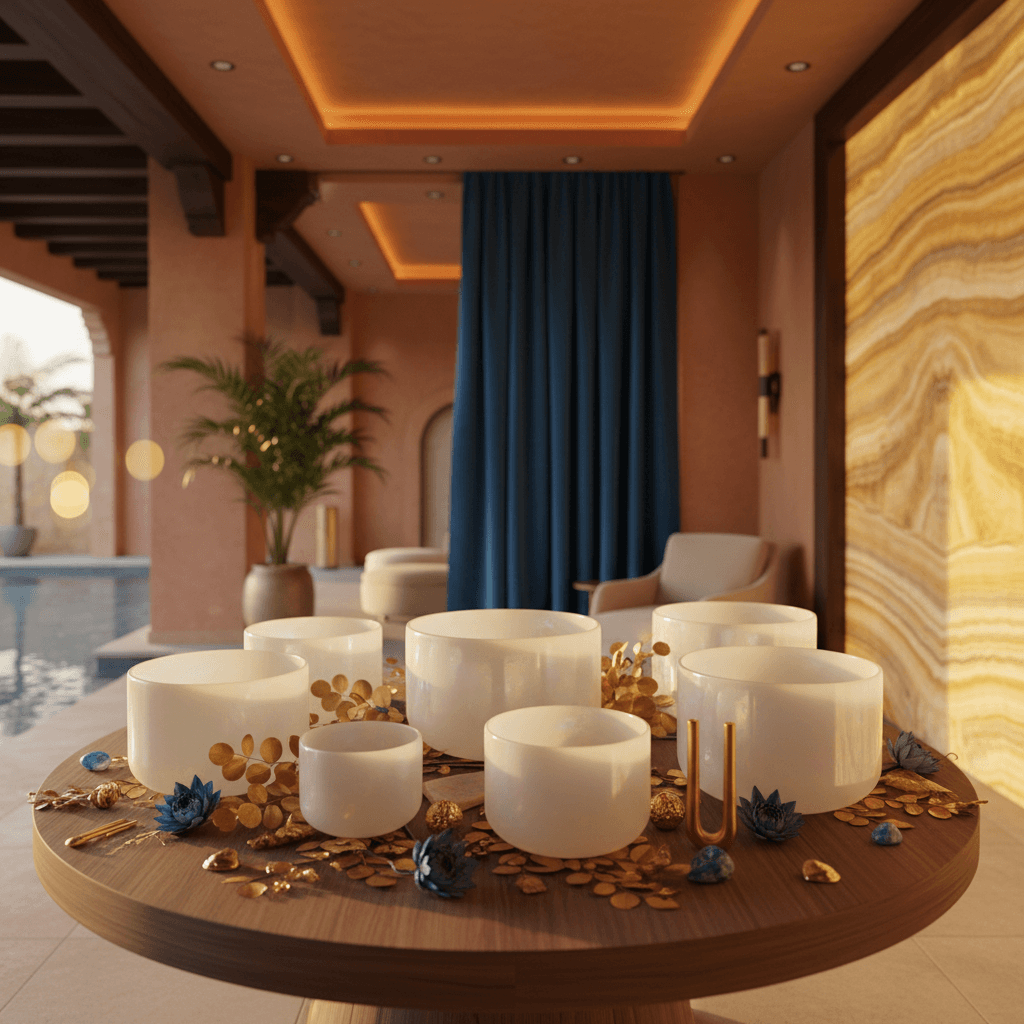
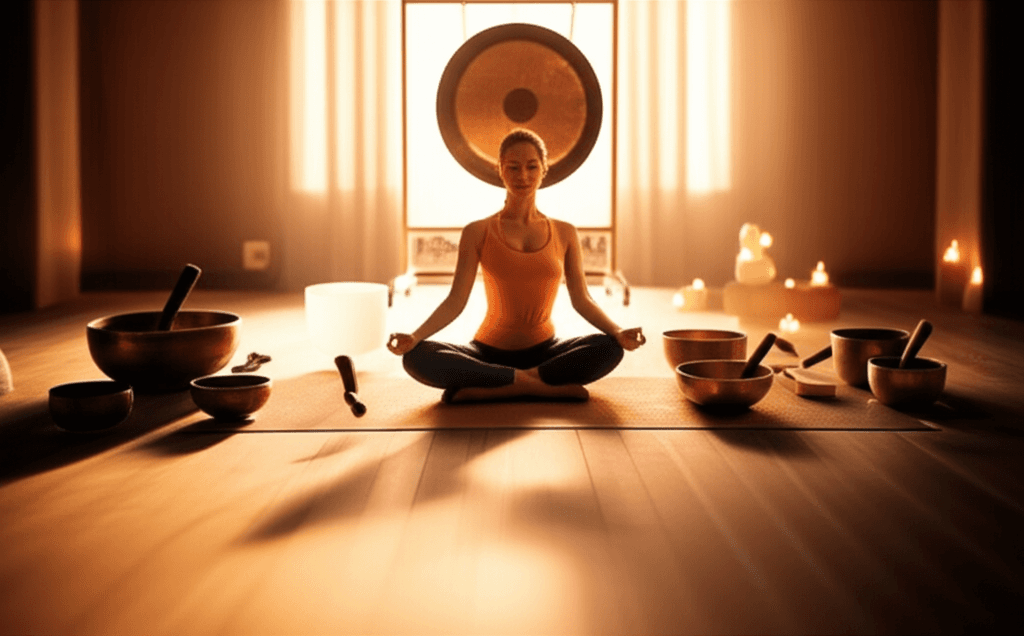
Imagine stepping into a tranquil space, a sanctuary away from the ceaseless demands of daily life. As you recline comfortably, the environment itself begins to gently usher you into a state of ease. Then, the sounds begin. It might be the resonant, earthy hum of a Himalayan singing bowl, its vibrations palpable not just in your ears but throughout your entire body. Or perhaps the crystalline purity of a quartz crystal bowl, sending shimmering waves of tone that seem to cleanse and elevate your very being.
These are not merely pleasant noises; they are carefully crafted soundscapes designed to interact with your brain's natural rhythms. As the precise frequencies and harmonic overtones wash over you, your auditory system naturally responds. The phenomenon of beat-frequency auditory entrainment means that your brain's electrical activity begins to synchronize with these external rhythms. This is not something you "try" to do; it happens organically, a primal response encoded within your nervous system.
The beauty of sound-induced meditation is its ability to bypass the often-overthinking analytical mind. While your DMN might initially attempt to cling to its usual loops of thought, the pervasive and deeply immersive nature of the sound provides a powerful, yet gentle, anchor for your attention. The vibrations physically resonate within your body, offering a tangible point of focus that naturally draws your awareness away from internal chatter and towards the present moment.
Many people report an immediate and profound sense of relaxation as the sounds unfold. The internal dialogue that often defines our waking hours begins to soften, giving way to a quiet spaciousness. This isn't forced suppression; rather, the DMN's activity naturally downregulates as the brain enters alpha and theta states. In these deeper states of consciousness, the habitual patterns of rumination and worry lose their grip. You might experience moments of pure presence, where the awareness of time dissolves, and a deep sense of peace settles within. The consistent experience of this quiet mind, cultivated through the repeated guidance of sound, strengthens the neural pathways that enable DMN modulation. In essence, the sound instrument acts as a gentle teacher, showing your nervous system what a truly quiet state feels like, again and again, until it learns to find that serenity on its own.
The Soul Art Approach: Larissa Steinbach's Vision for Sound Wellness
At Soul Art, Dubai, we believe in a holistic approach to well-being, one that gracefully bridges ancient wisdom with contemporary scientific understanding. Our founder, Larissa Steinbach, envisioned a sanctuary where individuals could reconnect with their innate sense of peace and balance, guided by the transformative power of sound. The Soul Art method is meticulously crafted to leverage the principles of the Default Mode Network and brainwave entrainment, offering an experience that is both deeply restorative and profoundly enlightening.
Larissa Steinbach's expertise lies in her intuitive yet scientifically informed approach to sound wellness. She understands that each person's journey to inner quiet is unique, and her sessions are designed to facilitate this personal exploration. The unique atmosphere at Soul Art is not just about the instruments; it's about the intentional space created for deep surrender and healing.
Our studio is equipped with a curated collection of world-class instruments, each chosen for its specific vibrational qualities and ability to promote specific brainwave states:
- Himalayan Singing Bowls: These ancient, handcrafted bowls produce rich, complex overtones and deep, grounding vibrations. Their resonance works on a cellular level, helping to release tension and anchor the mind in the present.
- Crystal Singing Bowls: Made from pure quartz, these bowls generate pure, sustained tones that resonate with incredible clarity. Their high-frequency vibrations are often associated with cleansing, uplifting energy, and accessing deeper meditative states.
- Gongs: The powerful, symphonic sounds of gongs create an immersive sonic tapestry that can lead to profound states of surrender and release. Gongs are particularly effective at facilitating delta and theta brainwave states, inviting deep relaxation and even altered states of consciousness.
- Chimes and Other Percussion: These add layers of texture and subtle intricacies to the soundscapes, enhancing the overall immersive experience and gently guiding attention.
Larissa Steinbach's approach at Soul Art goes beyond simply playing instruments. She expertly weaves these sonic elements into a cohesive and flowing experience, intuitively responding to the energy of the space and the needs of the participants. This mindful facilitation ensures that each session is a bespoke journey towards DMN modulation and a deeper connection to self. The carefully chosen frequencies and harmonics are designed to gently quiet the mind, allowing the DMN to downregulate its activity and fostering increased connectivity with the Central Executive Network. This enables participants to cultivate a state of sustained mindful awareness, even long after the session concludes. Through consistent engagement with the Soul Art method, clients learn to access these quiet, clear states more readily, transforming their relationship with their inner landscape.
Your Next Steps: Cultivating a Quieter Mind
Understanding the Default Mode Network is the first step; actively engaging with practices that help modulate its activity is the next. You don't need to be an experienced meditator to begin cultivating a calmer, more focused mind. Here are some actionable steps you can integrate into your daily life to support a healthier DMN:
- Practice Mindful Breathing: Even just five minutes of conscious, deep breathing can help anchor your attention in the present moment, offering a gentle pause from DMN activity. Focus on the sensation of your breath entering and leaving your body.
- Engage in Focused Activities: Dedicate time each day to activities that demand your full attention, whether it's creative pursuits, a challenging puzzle, or a focused task at work. These activities naturally engage the Central Executive Network and reduce DMN dominance.
- Limit Digital Distractions: Constant switching between apps and notifications can keep the DMN in a state of agitated "busy-ness." Schedule device-free periods to allow your mind to rest and reset.
- Connect with Nature: Spending time outdoors, particularly in green spaces, has been associated with reduced rumination and improved mood. The sensory input from nature can provide a gentle external focus, helping to quiet internal chatter.
- Explore Sound Wellness: Experience firsthand how sound can gently guide your brain into alpha and theta states, creating an optimal environment for DMN modulation. Many people report profound benefits from even a single sound bath session.
Soul Art is still in preparation. Session details and booking will be published here after launch.
Bookings Coming Soon
Soul Art is still in preparation. Session details and booking will be published here after launch.
Coming Soon
In Summary: Embracing Clarity and Calm
The Default Mode Network, the brain's "inner narrator," is a powerful system responsible for our sense of self and internal reflection. While vital for many cognitive functions, its unchecked hyperactivity can contribute to rumination, anxiety, and a diminished capacity for presence. Scientific research consistently shows that meditation, especially practices that utilize sound, can effectively modulate DMN activity, fostering a beneficial reduction in internal chatter and an increase in mindful awareness.
Through top-down attentional control and the profound effects of auditory entrainment, sound-induced meditation helps to strengthen the neural pathways that enable sustained calm and clarity. The harmonious interplay between the DMN, Salience Network, and Central Executive Network can be optimized, leading to enhanced focus and emotional balance. Larissa Steinbach's approach at Soul Art offers a unique and expertly guided pathway to experiencing these transformative states, providing a sanctuary where you can quiet your mind and unlock your innate capacity for peace. We invite you to explore the profound benefits of sound wellness and embark on a journey toward greater mental freedom and holistic well-being.
Wellness Disclaimer: This article is for educational and informational purposes only. It does not constitute medical advice, diagnosis, or treatment. Soul Art Dubai provides non-medical wellness experiences focused on relaxation, stress management, and general wellbeing. Sound wellness is a complementary practice and should not replace professional medical care.
Related Articles
Cluster Headaches: Unveiling Pain and the Promise of Frequencies in Wellness

Epilepsy & Sound: Safety, Serenity, and Emerging Wellness Paths
Mastering Focus: Analytical Listening & Brain Engagement at Soul Art