The Cerebellum: Your Brain's Rhythm Master for Deep Healing & Wellness

Key Insights
Explore how the cerebellum, your brain's conductor of rhythm, plays a pivotal role in processing sound, enhancing relaxation, and fostering holistic wellbeing at Soul Art Dubai.
The Cerebellum: Your Brain's Rhythm Master for Deep Healing & Wellness
What if the secret to profound relaxation and heightened well-being lay not just in your ears, but deep within a part of your brain traditionally associated with movement? For centuries, the cerebellum, nestled at the base of your skull, has been lauded primarily as the brain's motor control center, orchestrating balance, coordination, and precise movements. However, a wave of cutting-edge research is now unveiling its far more expansive and surprising role, especially in how we perceive and process rhythm.
At Soul Art, Dubai's premier sound wellness studio, we believe that understanding these intricate neural pathways can unlock deeper states of calm, focus, and overall vitality. This article will delve into the remarkable functions of the cerebellum, particularly its involvement in rhythm processing, and illuminate how this scientific understanding underpins the transformative sound experiences crafted by our founder, Larissa Steinbach. Prepare to discover how engaging your brain's hidden conductor can profoundly impact your path to holistic well-being.
The Science Explained: Unveiling the Cerebellum's Rhythmic Universe
The cerebellum, Latin for "little brain," is a marvel of neurological engineering, containing more neurons than the rest of the brain combined. While its motor control functions are well-established, an evolving body of evidence highlights its critical contribution to non-motor functions, including cognitive processes, emotional regulation, and, significantly, the nuanced perception of rhythm. This expanded understanding reframes how sound and vibration can influence our internal states.
Absolute vs. Relative Timing: The Cerebellum's Precision Play
One of the most fascinating discoveries about the cerebellum's role in rhythm processing lies in its specialization for what scientists term "absolute timing." This refers to the ability to precisely measure and compare the durations of arbitrary, non-beat intervals. Imagine listening to a series of unpredictable sounds without a discernible pulse; your cerebellum is hard at work trying to make sense of the temporal gaps between them.
Studies involving patients with cerebellar degeneration, such as spinocerebellar ataxia type 6, have shown a significant deficit in absolute timing tasks. These individuals struggle to compare the durations of two varied intervals when no consistent beat can be used as a reference. This crucial finding suggests that the cerebellum is indispensable for normal absolute timing, a process distinct from "relative timing," which involves beat-based rhythmic sequences and primarily relies on the basal ganglia and supplementary motor cortex.
"The cerebellum's specific role in processing irregular, non-beat rhythms opens a profound avenue for sound wellness, allowing us to engage the brain in ways that bypass habitual patterns and invite deep neurological recalibration."
Furthermore, neuroimaging studies support this distinction, indicating two distinct timing networks: one for relative timing (basal ganglia) and another for absolute timing (cerebellar networks). Research has shown that listening to non-beat rhythms, where absolute timing is essential, consistently activates the cerebellum. Learning irregular rhythms also increases cerebellar activity, pointing to its role in mastering the arbitrary durations that characterize complex or unconventional soundscapes.
Beyond Rhythm: Pitch, Prediction, and Perceptual Optimization
The cerebellum's auditory involvement extends beyond just timing. It plays a causal role in processing fundamental musical parameters like pitch. Transcranial Magnetic Stimulation (TMS) studies have demonstrated that temporarily suppressing activity in the right cerebellum can impair an individual's ability to discriminate pitch, but not timbre. This suggests a specific, active contribution to how we perceive and differentiate musical notes. Patients with cerebellar disorders have also shown significantly lower scores in pitch discrimination tasks and even in recognizing emotions within music, underscoring its broad impact on musical perception.
Moreover, the cerebellum appears to be crucial for the generation of sensory predictions. It constantly monitors incoming sensory events, from sight to sound, to optimize perception. This predictive capacity allows the brain to anticipate and interpret sensory information more effectively, contributing to a smoother, more coherent experience of the world. In the context of sound wellness, this might mean that the cerebellum helps the brain to better integrate and respond to the sound vibrations, leading to a more profound sense of harmony and presence.
The Musician's Brain and Cerebellar Plasticity
Intriguingly, the level of musical expertise can influence cerebellar engagement. Prior studies reveal a greater involvement of the cerebellum in rhythm perception and synchronization among musicians compared to non-musicians. Musicians exhibit enhanced abilities to detect pitch changes and rhythmic irregularities, an aptitude that may be linked to distinct cerebellar involvement. This highlights the cerebellum's plasticity—its ability to adapt and strengthen with training and experience.
However, the picture is nuanced. While musicians might show stronger activation for complex duration discrimination, non-musicians can exhibit stronger cerebellar activation for meter, tempo, and pattern discrimination when the task is novel or perceived as more complex. This suggests that the cerebellum is highly responsive to the novelty and complexity of auditory input, adapting its activity to the demands of the task, regardless of expertise. This flexibility is a powerful attribute for wellness practices that introduce new auditory stimuli.
Interconnected Networks: The Cerebellum's Holistic Reach
The cerebellum is far from an isolated processing unit; it is intricately connected to various brain regions, forming extensive networks that contribute to its diverse functions. Functional connectivity has been observed between the bilateral anterior cerebellum and the auditory cortex in the temporal lobes. This bidirectional communication is vital for integrating auditory information.
Furthermore, the cerebellum connects with the hippocampus, a region critical for memory and spatial processing. This cerebello-hippocampal interaction is necessary for appropriate spatial processing and can even influence hippocampal neuronal activity. Such extensive connectivity implies that engaging the cerebellum through sound and rhythm may have far-reaching effects on cognitive functions, emotional states, and our overall sense of embodied awareness. This holistic interconnectedness is a cornerstone of deep wellness practices.
How It Works in Practice: The Embodied Experience of Sound
Understanding the cerebellum's scientific functions lays the groundwork for appreciating the profound effects of sound wellness. When you step into the serene environment of Soul Art, you are not just passively listening; you are actively engaging a sophisticated neurological system designed to process time, rhythm, and auditory information in intricate ways. The carefully curated soundscapes become a direct conduit to this often-underestimated brain region.
Imagine yourself lying comfortably, enveloped by the deep, resonant tones of a large gong. These sounds are not linear or always beat-based; they often present a rich tapestry of non-beat rhythms and arbitrary durations. This is precisely where your cerebellum shines, diligently working to organize and interpret these complex temporal patterns. As your brain attempts to make sense of these evolving soundscapes, it moves beyond habitual thought patterns, inviting a state of deep surrender and relaxation.
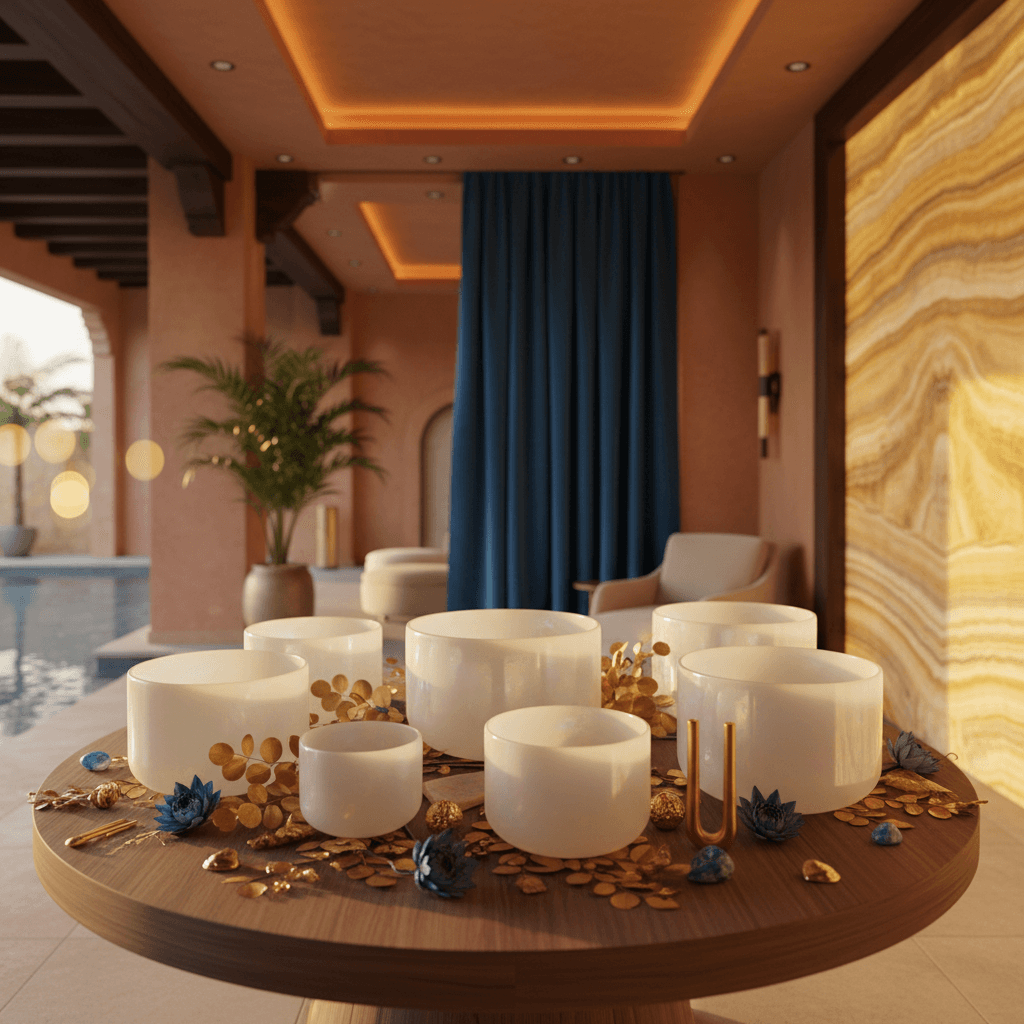
The nuanced shifts in pitch from crystal singing bowls, combined with the sustained, undulating vibrations, engage your cerebellum's capacity for pitch discrimination and sensory prediction. This engagement doesn't demand conscious effort; instead, it provides a gentle yet persistent neural workout, optimizing your auditory perception and allowing you to absorb the sound more completely. Many people report feeling these vibrations not just in their ears, but permeating their entire body, creating a profound sense of internal massage and cellular coherence.
The sounds used in a Soul Art session are intentionally diverse, ranging from rhythmic pulses to intricate, irregular sequences. This variety ensures that both your basal ganglia (for relative timing) and your cerebellum (for absolute timing) are engaged. By presenting complex and novel auditory information, we may stimulate cerebellar plasticity, gently guiding your brain toward new states of equilibrium and enhanced sensory integration. It's a journey where sound becomes a gentle architect, reshaping your internal landscape and inviting a state of deep, restorative presence.
The experience is often described as a journey into timelessness. When the cerebellum is deeply engaged in processing intricate, non-beat rhythms, the linear perception of time can dissolve, leading to a feeling of being fully immersed in the present moment. This profound state of absorption is highly conducive to stress reduction, mental clarity, and emotional release, allowing the body and mind to recalibrate and find their natural rhythm.
The Soul Art Approach: Larissa Steinbach's Symphony of Wellness
At Soul Art, Larissa Steinbach intuitively understands the profound capabilities of the cerebellum and its pivotal role in our experience of sound and well-being. Her approach is meticulously crafted, blending scientific insight with ancient wisdom, to create sound journeys that are not merely auditory experiences but powerful catalysts for internal transformation. Larissa’s methodology specifically leverages the cerebellum’s unique functions to guide clients into deeper states of relaxation and self-awareness.
Larissa's expertise lies in orchestrating resonant frequencies and complex soundscapes that gently engage the brain's rhythm processing centers. She selects instruments not just for their aesthetic beauty, but for their specific sonic characteristics that align with cerebellar function. This includes the deep, sustaining tones of symphonic gongs, which produce rich, ever-changing overtones and non-linear patterns, challenging the cerebellum to process intricate, absolute timing information. The pure, clear vibrations of crystal singing bowls, with their precise pitch and sustained resonance, further refine cerebellar engagement in pitch discrimination and sensory optimization.
What makes the Soul Art method truly unique is Larissa’s deep intention and her intuitive ability to create journeys that adapt to the energetic needs of the group. She doesn’t just play instruments; she plays the space, creating a dynamic dialogue between sound, silence, and the individual's nervous system. The sound environment is designed to be immersive, allowing the body to absorb the vibrations and the mind to release its grip on external distractions. This holistic engagement encourages the cerebellum to recalibrate its timing mechanisms, which may in turn support the regulation of internal biological rhythms, fostering a sense of inner harmony.
Larissa often incorporates varied rhythmic patterns – from slow, evolving pulses to more intricate, irregular sequences – to provide the precise kind of complex temporal information that stimulates cerebellar activity. This intentional variation is designed to promote neural flexibility and encourage the brain to let go of rigid patterns, thereby inviting states of deep meditative stillness. Through her mindful application of sound, Larissa Steinbach creates a sanctuary where the cerebellum can fully engage, allowing clients to tap into their innate capacity for self-regulation and profound relaxation. It's an art form rooted in science, delivered with an unwavering commitment to well-being.
Your Next Steps: Cultivating Your Inner Rhythm
Understanding the cerebellum's remarkable role in rhythm processing and well-being empowers you to take proactive steps in nurturing your neurological health. Integrating practices that engage your brain's rhythm master can support stress reduction, enhance focus, and foster a deeper connection to your internal self. Here are some actionable steps you can embrace today:
- Mindful Listening: Beyond just hearing, practice truly listening to music or natural sounds. Pay attention to the subtle rhythms, the shifts in pitch, and the spaces between sounds. Explore genres with complex, non-beat rhythms to gently challenge your cerebellum.
- Rhythmic Movement: Engage in activities that require rhythmic coordination, such as dancing, walking, or gentle yoga. Even simple, repetitive movements can help to synchronize your body and mind, indirectly supporting cerebellar function.
- Breathwork Practices: Consciously regulate your breathing with slow, deep, rhythmic patterns. This intentional timing of inhalation and exhalation can have a profound impact on your nervous system and may help to reinforce healthy internal rhythms.
- Embrace Novelty: Introduce new sensory experiences into your routine. Learning a new instrument, listening to unfamiliar music, or trying a new form of meditation can stimulate neural pathways and support cerebellar plasticity.
- Experience Sound Wellness: Consider immersing yourself in a professional sound wellness session. The carefully curated soundscapes at Soul Art are specifically designed to engage your cerebellum and other key brain regions, offering a unique path to deep relaxation and nervous system recalibration.
Embarking on a journey of sound wellness can be a profound way to connect with your body's innate wisdom and restore a sense of balance. Soul Art offers a tranquil space where you can explore these benefits firsthand.
Bookings Coming Soon
Soul Art is still in preparation. Session details and booking will be published here after launch.
Coming Soon
In Summary: Harmonizing Body and Mind through Rhythm
The cerebellum, once primarily understood as the brain's motor maestro, is increasingly recognized as a sophisticated conductor of rhythm, timing, and sensory processing. Its crucial role in deciphering complex, non-beat rhythms and optimizing auditory perception offers a powerful lens through which to view the benefits of sound wellness. By engaging this remarkable brain region, practices like those offered at Soul Art Dubai can gently guide the nervous system towards states of profound relaxation, enhanced focus, and holistic well-being.
Larissa Steinbach’s expert approach at Soul Art leverages this scientific understanding, creating immersive sound journeys that foster inner harmony and promote neurological recalibration. We invite you to explore how embracing the power of rhythm can unlock your innate capacity for balance and deep self-care. Discover the transformative potential of sound, and allow your cerebellum to lead you on a journey to elevated well-being with Soul Art.
Related Articles
Cluster Headaches: Unveiling Pain and the Promise of Frequencies in Wellness

Epilepsy & Sound: Safety, Serenity, and Emerging Wellness Paths

Mastering Focus: Analytical Listening & Brain Engagement at Soul Art