Sound Preparation: Easing Test Anxiety in Children
Key Insights
Discover how sound wellness, guided by Larissa Steinbach at Soul Art, offers a calming, scientifically-supported approach to reduce test anxiety in children.
Is your child among the nearly 56% of students who report feeling nervous before every test, or the 47% who experience anxiety in exam situations, as indicated by various studies? For many children, the pressure of academic assessment extends far beyond a simple measure of knowledge, evolving into a profound source of stress and worry that can significantly hinder their potential. This isn't merely about pre-exam jitters; it's a pervasive challenge impacting academic achievement, self-esteem, and overall well-being.
At Soul Art, Dubai's premier sound wellness studio, founded by the visionary Larissa Steinbach, we understand the delicate balance required for children to thrive academically and emotionally. We delve into the scientifically-backed realm of sound wellness, exploring how its unique frequencies and vibrations can offer a profound, gentle form of preparation, helping children navigate the complexities of test anxiety with greater calm and confidence. Join us as we uncover how "sound preparation" can transform a child's approach to academic challenges, fostering resilience and focus from within.
The Science Explained: Understanding Test Anxiety
Test anxiety is more than just a fleeting moment of nervousness; it's a significant psychological phenomenon with tangible impacts on a child's academic and emotional landscape. Research consistently highlights its widespread prevalence and multifaceted effects on primary school children, making it a critical area for preventative and interventive strategies. Understanding its mechanisms is the first step toward effective support.
The Pervasive Impact of Test Anxiety in Children
Studies paint a clear picture of how common test anxiety is among young learners. A DAK study revealed that 47% of students experience anxiety in exam situations, while a Statista survey from 2016 found that 56% of children start to be nervous before every test. More recently, the German School Barometer (2024) indicated that a fifth of students feel psychologically burdened, with almost a third experiencing this frequently. This data underscores that test anxiety is not an isolated issue but a prevalent challenge affecting a significant portion of the student population.
The consequences of test anxiety are far-reaching, extending beyond just academic performance. A comprehensive meta-analysis of 76 studies (N = 53,617 children) by Putwain et al. (2023) demonstrated clear negative associations between test anxiety and crucial developmental outcomes. For instance, test anxiety related negatively to academic achievement in Mathematics (r = -0.21) and Literacy (r = -0.20) in primary school children. Furthermore, a broader meta-analysis of 238 studies (von de Embse et al., 2018) confirmed this, finding a negative association with academic achievement for children in Grades 1 to 5 (k = 9, r = -0.22) and Grades 6 to 8 (k = 16, r = -0.25).
Unpacking the Physiological and Psychological Links
Test anxiety is deeply intertwined with a host of psychological variables, amplifying its impact. The Putwain et al. (2023) meta-analysis found strong positive associations between test anxiety and:
- General anxiety (r = 0.62)
- Worry (r = 0.63)
- Physiological anxiety (r = 0.57)
- Social anxiety (r = 0.57)
- Depression (r = 0.45)
These correlations indicate that children experiencing test anxiety are often contending with broader emotional and mental health challenges. Moreover, test anxiety had a negative association with academic self-concept (r = -0.41), self-esteem (r = -0.51), self-efficacy (r = -0.39), and self-regulation (r = -0.39). This means that anxiety about tests can erode a child's belief in their own abilities and their capacity to manage their learning and emotions effectively.
Interestingly, research also highlights demographic patterns. Girls tend to report higher levels of test anxiety than boys, with findings showing a difference in Grades 1 to 5 (k = 5, r = -0.21) and Grades 6 to 8 (k = 6, r = -0.16). Additionally, personality plays a role, with introverted children often more susceptible to developing anxiety due to their heightened sensitivity to external stimuli and social evaluations (Nigg, 2006). They may internalize negative thoughts more intensely, leading to increased worry before exams.
Cognitive Load and Performance: The Brain's Overload
The impact of test anxiety isn't just about feeling bad; it directly affects cognitive function. Cognitive load theory suggests that our working memory has a limited capacity for processing new information (Sweller, 1988). When a child experiences test anxiety, the associated worry and physiological responses can overwhelm this working memory system, making it incredibly difficult to retrieve and process information necessary for test performance, such as reading comprehension.
Even if a child has thoroughly prepared, anxiety can create a mental block, hindering their ability to demonstrate their knowledge. This phenomenon is particularly challenging for students with learning disabilities or ADHD, who may already struggle with attention and processing speed. The added burden of anxiety can exacerbate these difficulties, leading to a vicious cycle of poor performance and increased anxiety. The need for effective strategies to mitigate this cognitive overload is paramount.
How It Works in Practice: Sound for Calm and Focus
Understanding the science behind test anxiety provides a crucial foundation. The next step is exploring practical, evidence-informed approaches that can genuinely make a difference for children. Sound wellness, while still an emerging field, offers a unique and promising avenue for addressing the physiological and psychological components of anxiety.
Connecting Theory to Real-World Application
The core principle behind using sound wellness for test anxiety lies in its ability to influence the autonomic nervous system (ANS). Test anxiety activates the "fight-or-flight" response, part of the sympathetic nervous system, leading to increased heart rate, shallow breathing, and heightened stress hormones. Sound-based interventions aim to gently shift the ANS towards the parasympathetic dominance—the "rest-and-digest" state.
Research has shown that relaxation techniques, including progressive muscle relaxation and imagery-based methods, can significantly reduce anxiety levels in children as young as nine. A study reanalyzing a New York City Department of Education (NYCDOE) project found that a simple 1-minute silence technique could reduce anxiety and improve test scores among students with disabilities, by teaching children to relax and focus. These findings suggest that practices that encourage relaxation and mindful focus are effective, and sound offers a powerful tool for achieving these states.
The Client Experience: A Journey into Tranquility
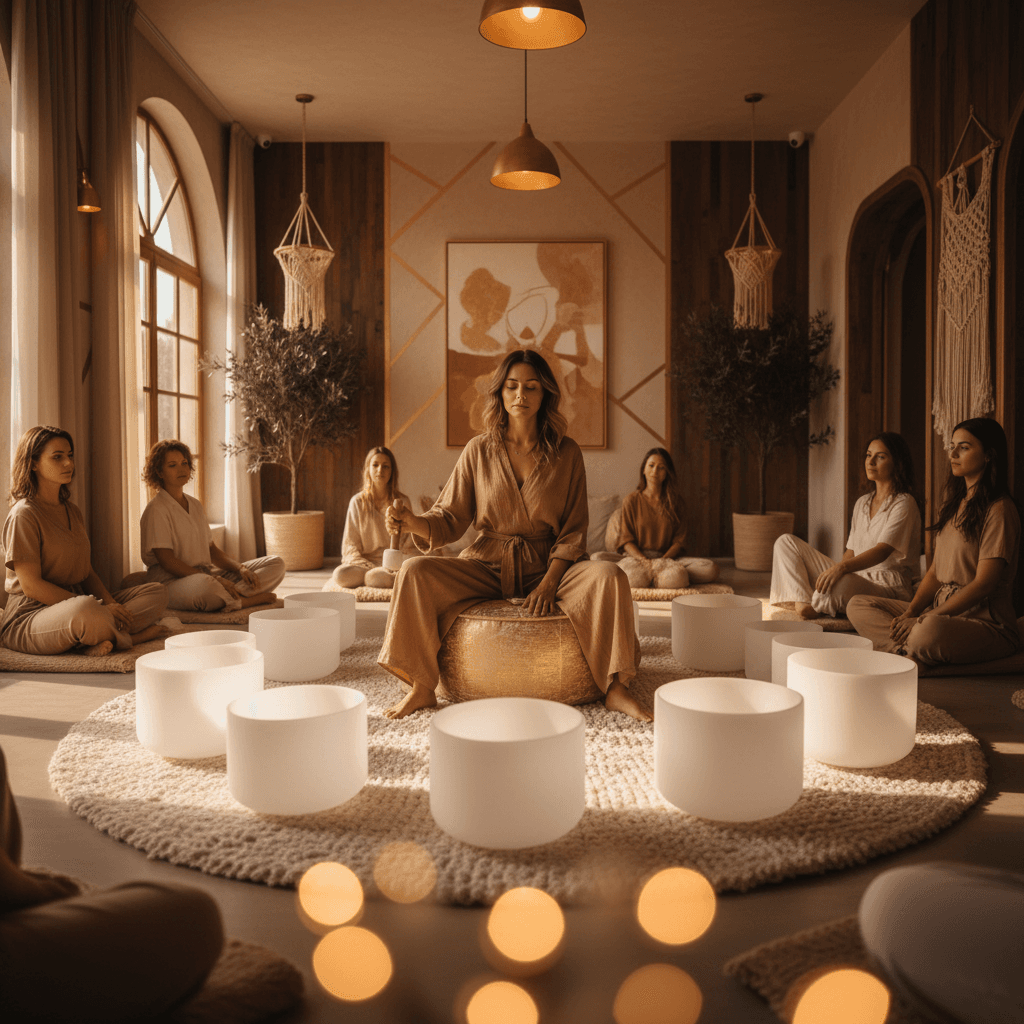
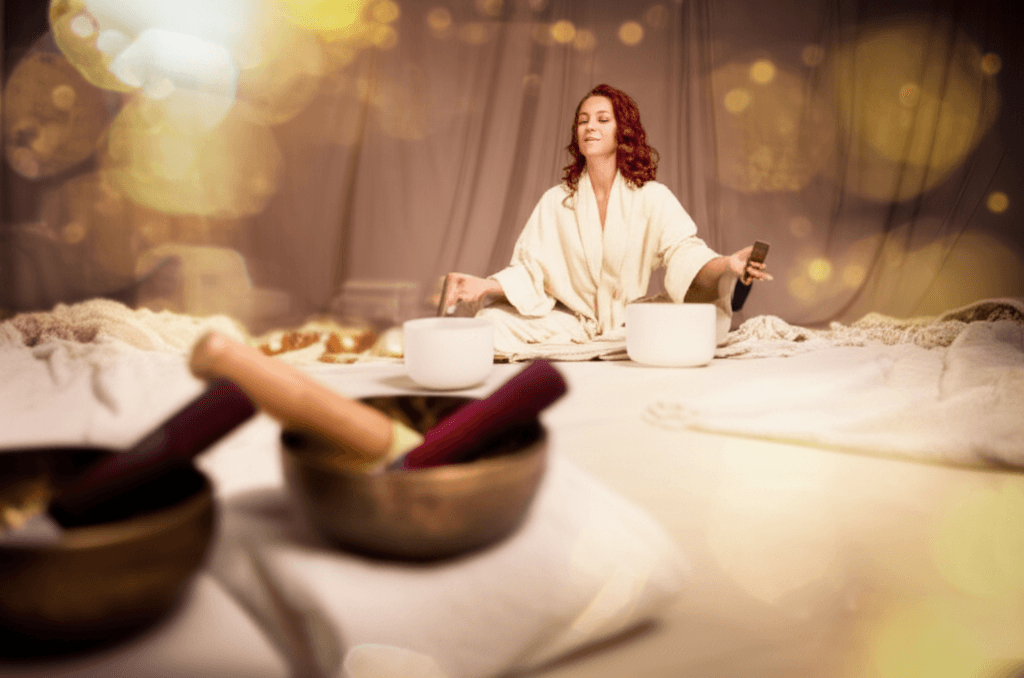
Imagine a child entering a serene space, filled with soft, natural light and a gentle, inviting aroma. As they settle into a comfortable position, perhaps nestled with a cozy blanket, the journey begins. Larissa Steinbach, or one of her trained practitioners, introduces the sounds—the resonant hum of a Himalayan singing bowl, the sustained vibration of a gong, the delicate chime of a crystal bowl.
These aren't just pleasant noises; they are carefully chosen frequencies designed to create an immersive sonic environment. The sounds begin subtly, gradually building layers of intricate overtones and harmonies. Children may be guided to simply listen, or perhaps to focus on their breath, allowing the vibrations to wash over them. The tactile experience of sound, felt as gentle vibrations throughout the body, further deepens the relaxation.
During a sound session, the brain's activity may shift from the alert beta waves, often associated with stress and active thinking, to slower alpha or theta waves, characteristic of deep relaxation, meditation, and even the edge of sleep. This shift can quiet the "inner critic" and the racing thoughts often associated with test anxiety, allowing for a profound sense of calm. Children often report feeling lighter, more grounded, and surprisingly focused after a session. They learn, experientially, what true relaxation feels like, building a valuable internal resource for managing future stressful situations.
"True preparation for a child's academic journey isn't just about what they learn, but how they feel while learning and, crucially, how they navigate moments of assessment. Cultivating inner calm through sound empowers them to access their full potential."
The beauty of sound wellness is its non-verbal nature. Children don't need to articulate their fears or understand complex techniques; they simply need to be open to the experience. This makes it particularly accessible and effective for younger children or those who struggle with traditional talk-based therapies. It's an intuitive pathway to peace, gently guiding their nervous systems back to a state of balance.
The Soul Art Approach: Larissa Steinbach's Unique Vision
At Soul Art, Larissa Steinbach has cultivated more than just a studio; she has created a sanctuary where ancient wisdom meets contemporary wellness needs. Her approach to addressing test anxiety in children is rooted in a deep understanding of sound as a powerful tool for holistic transformation, tailored specifically for the developing minds and bodies of young individuals.
Larissa Steinbach's Philosophy: Nurturing Inner Calm
Larissa Steinbach's vision for Soul Art extends beyond momentary relaxation; it aims to equip children with sustainable tools for emotional regulation and resilience. She approaches test anxiety not as a flaw, but as a signal that a child's nervous system is overwhelmed. Her methods are designed to gently guide the system back into balance, fostering an internal environment where learning can flourish without the debilitating shadows of fear and worry.
Her philosophy emphasizes creating a profoundly safe and nurturing space. For children, this means sessions are designed to be engaging yet calming, inviting curiosity rather than imposing strict rules. Larissa and her team understand that children respond best to gentle guidance and a sense of wonder, making the sound journey an exploration rather than a clinical intervention.
What Makes the Soul Art Method Unique
The Soul Art method for children facing test anxiety is distinguished by its blend of scientific understanding and empathetic, personalized care. We don't offer a one-size-fits-all solution; instead, each session is thoughtfully curated, taking into account the child's age, specific anxieties, and individual temperament. This personalized approach ensures maximum effectiveness and comfort.
A cornerstone of our uniqueness lies in the deliberate selection and orchestration of a diverse array of sound instruments. Larissa Steinbach is a master at weaving together the distinct frequencies and resonant qualities of various tools to create a rich, therapeutic soundscape. The interplay of these instruments creates a symphonic experience specifically calibrated to induce deep states of relaxation and mental clarity essential for children battling test anxiety.
Specific Instruments and Techniques Used
At Soul Art, the sound palette is extensive and intentionally utilized. Key instruments include:
- Himalayan Singing Bowls: Hand-beaten metal bowls that produce rich, sustained tones and palpable vibrations. These vibrations are particularly effective for grounding and calming the body, often felt at a cellular level.
- Crystal Singing Bowls: Crafted from pure quartz crystal, these bowls produce clear, resonant tones that are often perceived as highly pure and uplifting. Their frequencies are believed to align with different energy centers, promoting emotional balance and mental clarity.
- Gongs: Large, powerful instruments capable of generating a vast spectrum of sounds, from gentle whispers to profound, all-encompassing waves. Gongs are exceptional for facilitating deep relaxation and releasing stored tension, guiding the brain into meditative states.
- Chimes and Rainsticks: Lighter, ethereal sounds that add texture and playful elements to the soundscape. These can be particularly engaging for children, sparking their imagination while maintaining a calming atmosphere.
- Tuning Forks: Precision instruments that produce specific frequencies. These can be used directly on or around the body to target specific areas of tension or promote energetic balance.
Through a combination of intuitive playing, guided breathing exercises, and visualization techniques, Larissa Steinbach and the practitioners at Soul Art create an immersive experience. The goal is not just to distract from anxiety, but to re-educate the nervous system, helping children learn how to self-regulate and find their internal calm, preparing them not just for tests, but for life's many challenges.
Your Next Steps: Empowering Your Child
Supporting a child with test anxiety requires a holistic approach, combining practical study strategies with effective stress management techniques. Soul Art’s sound wellness practice offers a powerful complementary tool, but there are many steps parents can take daily to empower their children. Here are some actionable recommendations to help your child approach tests with greater confidence and calm.
- Foster Effective Study Habits: Encourage active study methods over passive ones. This includes reviewing specific test formats, taking practice tests, guessing potential questions and practicing answers, and identifying big themes in the material. Confidence in preparation significantly reduces anxiety.
- Teach Relaxation Techniques: Simple, accessible methods like deep belly breathing or a 1-minute silence technique (closing eyes and focusing) can be incredibly effective. Children as young as nine can learn progressive muscle relaxation, which involves tensing and relaxing different muscle groups, proving that relaxation is a learned skill.
- Prioritize Sleep and Nutrition: Ensure your child gets adequate sleep and a balanced diet, especially on test days. These foundational elements are crucial for cognitive function and emotional regulation. A well-rested and nourished brain is better equipped to handle stress.
- Validate Their Feelings, Promote a Growth Mindset: Acknowledge your child’s anxiety without dismissing it. Emphasize effort and learning over just grades. Remind them that tests are a measure of knowledge at a specific moment, not their inherent worth or intelligence. This helps build self-esteem and self-efficacy.
- Explore Complementary Wellness Practices: Consider incorporating sound wellness sessions at Soul Art. Our expertly guided experiences, tailored by Larissa Steinbach, provide a unique avenue for deep relaxation, improved emotional regulation, and enhanced focus, creating a positive association with preparation and performance.
By integrating these strategies, you can help your child build a robust toolkit for managing test anxiety, fostering resilience, and transforming their relationship with academic challenges.
Bookings Coming Soon
Soul Art is still in preparation. Session details and booking will be published here after launch.
Coming Soon
In Summary: Sound for a Brighter Academic Future
Test anxiety is a prevalent and deeply impactful challenge for many children, hindering academic performance, eroding self-esteem, and exacerbating broader emotional difficulties. Scientific research consistently demonstrates its negative correlations with achievement and positive links with general anxiety, worry, and physiological stress. Addressing this isn't just about better grades; it's about nurturing well-rounded, confident individuals.
Sound wellness offers a profound, complementary approach to support children through these challenges. By gently guiding the nervous system into a state of deep relaxation and fostering emotional regulation, practices like those at Soul Art can significantly reduce the overwhelming cognitive load and physiological responses associated with anxiety. Larissa Steinbach's unique approach at Soul Art leverages the power of diverse sound instruments and personalized care to empower children with inner calm and focus. Equip your child with the gift of tranquility and resilience; discover the transformative potential of sound preparation at Soul Art today.
Related Articles
Moving Home: How Sound Wellness Supports Child Adaptation
Sound Wellness for Sibling Adjustment: Nurturing Family Harmony

Teen Identity & Sound: Self-Discovery for Adolescents at Soul Art Dubai