Studio Sound Environment: Designing for Creativity
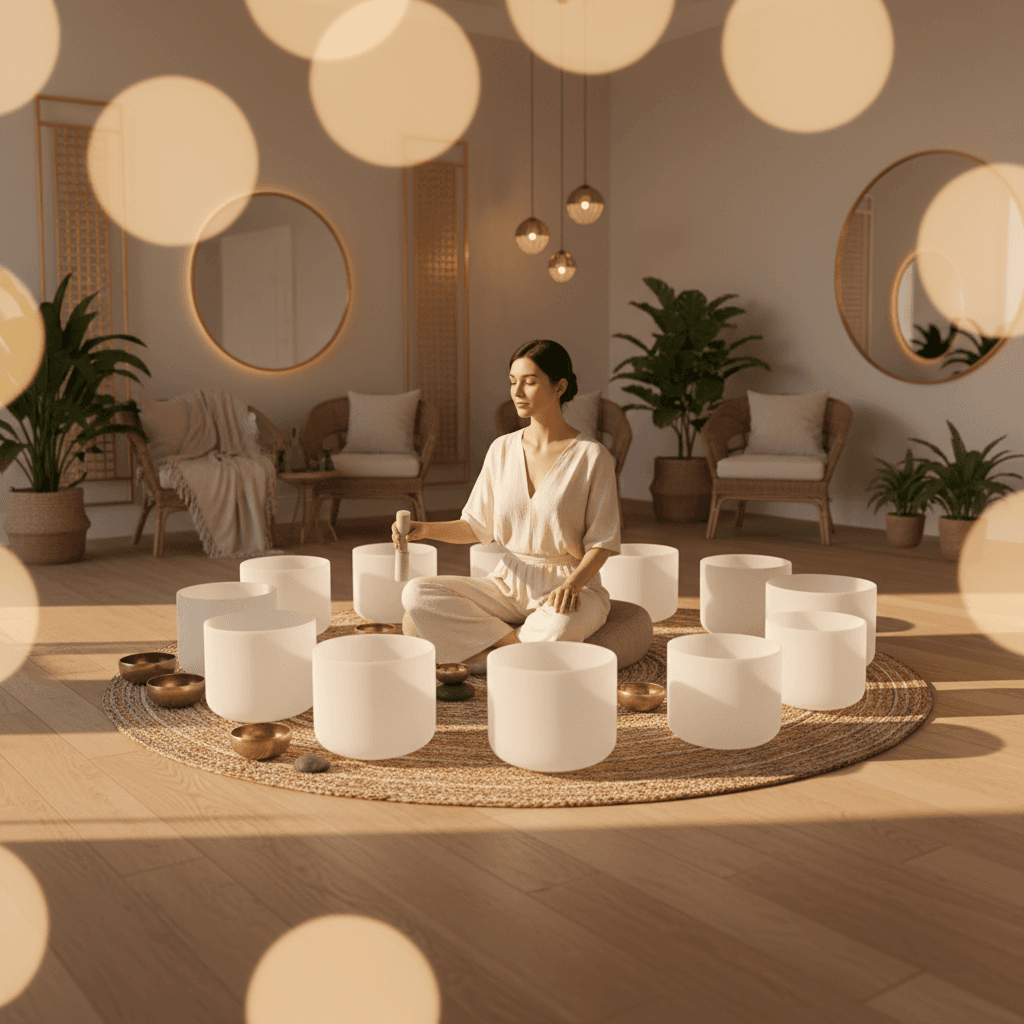
Key Insights
Discover the science of how a studio's sound environment can unlock creativity. Learn how Soul Art Dubai designs sonic ecosystems to foster flow and innovation.
Introduction
Have you ever wondered why some spaces feel instantly inspiring, while others stifle your thoughts? We often attribute creativity to a fleeting moment of genius, an unpredictable spark that arrives unannounced. But what if creativity isn't just an internal event, but a conversation between you and your environment? The emerging science of acoustics and neurobiology suggests that the spaces we inhabit—specifically, their sonic character—play a decisive role in our ability to think, innovate, and connect with our deepest insights.
This article explores the profound connection between sound, space, and the creative process. We will delve into the scientific principles that govern how our brains respond to auditory stimuli, from the calming frequencies that encourage innovative thought to the physiological shifts that dissolve creative blocks. You will learn how intentional sonic architecture can transform a simple room into a dynamic ecosystem for inspiration. Ultimately, you will discover how designing for sound is not a luxury, but a fundamental tool for nurturing your personal and professional wellbeing.
The Science Explained
Beyond the 'Aha!' Moment: Creativity as a System
For decades, creativity was viewed as the exclusive domain of the 'lone genius.' However, pioneering research by psychologists like Mihaly Csikszentmihalyi has reshaped this understanding. His work reveals that creativity is not a solitary trait but emerges from a dynamic system of interactions. This system includes an individual's biology and personality, but just as critically, their social and physical environment.
The recording studio, the artist's loft, or the writer's study are not passive backdrops; they are active participants in the creative process. A space can either introduce friction or foster flow. The interrelated forces operating on a creative individual are complex, and the built environment is a powerful modulator of these forces. This means the ability to be creative depends significantly on the harmonious interplay between our internal state and our external world.
The Brain on Sound: From Beta to Theta
Our brains operate on a spectrum of electrical frequencies, known as brainwaves, which correspond to different states of consciousness. Understanding these is key to designing a creative environment.
-
Beta Waves (13-30 Hz): This is our "default" waking state. It’s associated with active thinking, alertness, and focus. While essential for executing tasks, a prolonged, high-beta state can lead to stress and mental chatter, which are hostile to creative incubation.
-
Alpha Waves (8-13 Hz): This is the bridge to our subconscious. The alpha state is one of relaxed, quiet wakefulness. It is often linked to light meditation, daydreaming, and the free-association of ideas—the fertile ground where new connections are made.
-
Theta Waves (4-8 Hz): Deeper still, the theta state is associated with deep meditation, dreaming, and profound creativity. It's in this state that we may experience sudden insights or the "aha!" moments of illumination.
Studies show that sound wellness tools, particularly those producing harmonic overtones like singing bowls and gongs, can gently guide the brain from a stressed Beta state into the more resourceful Alpha and Theta states. This intentional shift creates the neurological conditions necessary for creativity to flourish.
The Chemistry of Calm: Cortisol and Creativity
Creativity requires a sense of psychological safety and openness. When we are stressed, our bodies release the hormone cortisol. While useful for short-term survival, chronically high cortisol levels are linked to anxiety and cognitive rigidity, effectively shutting down the brain's exploratory pathways.
This is where the physiological power of sound comes into play. Harmonic frequencies and gentle vibrations have been shown to activate the parasympathetic nervous system—our body's "rest-and-digest" mode. A 2016 study at the University of California demonstrated that even a short singing bowl meditation significantly lowered participants' cortisol levels.
By calming the nervous system, we are not just inducing relaxation; we are creating the biological and chemical landscape where creative thought is not just possible, but probable.
Furthermore, listening to pleasant, harmonic sounds has been associated with an increase in serotonin and dopamine, the brain’s natural mood-boosting chemicals. This shift away from a stress-based chemistry toward a state of calm and wellbeing is fundamental to unlocking our innate creative potential.
How It Works in Practice
Translating this science into a tangible experience is the art of aural landscape design. It's about moving beyond simple soundproofing and instead, intentionally curating every sonic element of a space to support the creative journey. A well-designed studio is not silent; it is filled with purposeful sound and vibration.
Imagine entering a space where the air itself seems to hold a gentle, resonant hum. The sharp, distracting noises of the outside world fade away, replaced by a carefully sculpted sonic environment. This is achieved through a combination of acoustic treatments that absorb chaotic noise and sound sources that introduce coherent, harmonic frequencies.
This process mirrors the work of Swiss scientist Dr. Hans Jenny on cymatics, the study of visible sound. His experiments showed how sound vibrations organize particles like sand or water into intricate, geometric patterns. Given that our bodies are over 70% water, it suggests that the sounds we are immersed in may have a profound organizing influence at a cellular level. In a studio designed for creativity, sound is used to create a coherent internal pattern, calming the chaotic "noise" of a stressed mind.
The experience is multi-sensory. It’s not just what you hear, but what you feel. The deep resonance of a gong can be felt vibrating through the floor and into your body, providing a grounding, somatic anchor. This physical sensation helps to draw you out of an overactive mind and into the present moment, a state essential for deep, focused work.
The Soul Art Approach
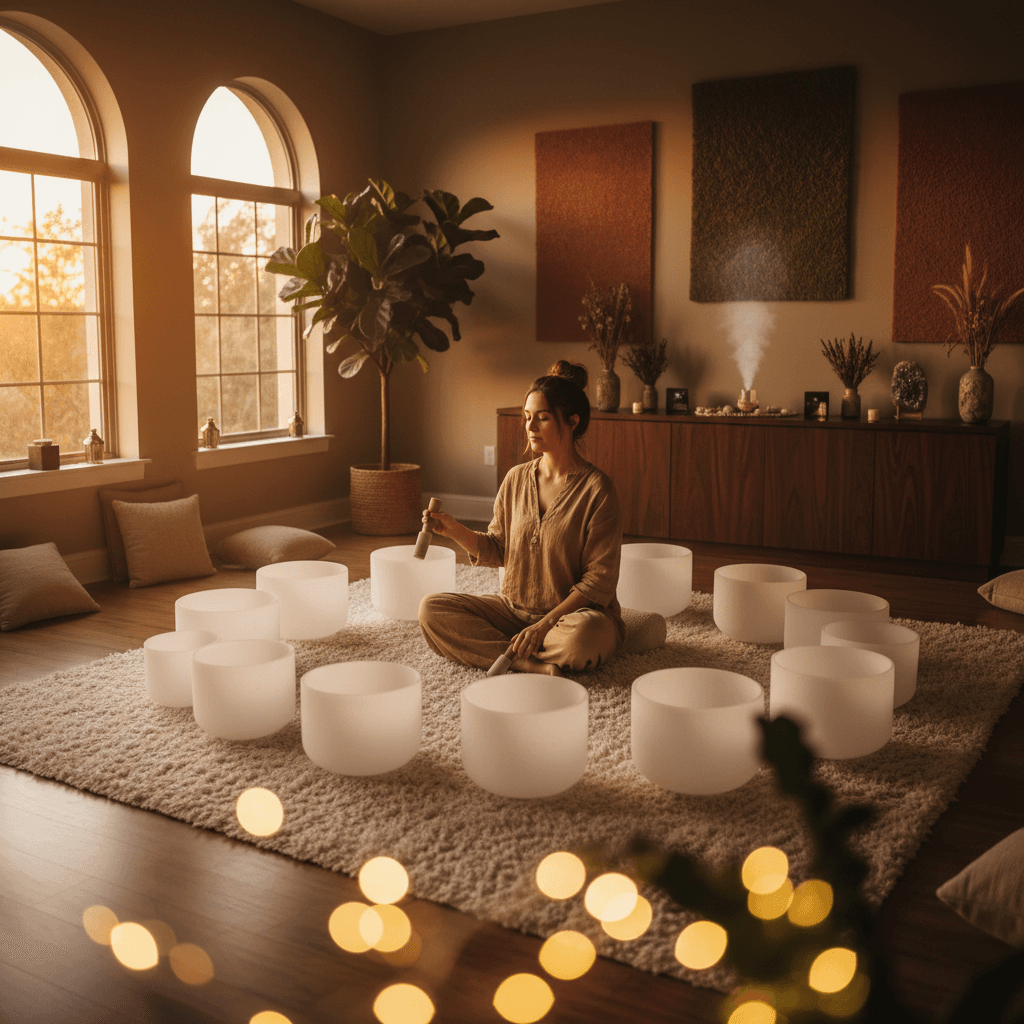
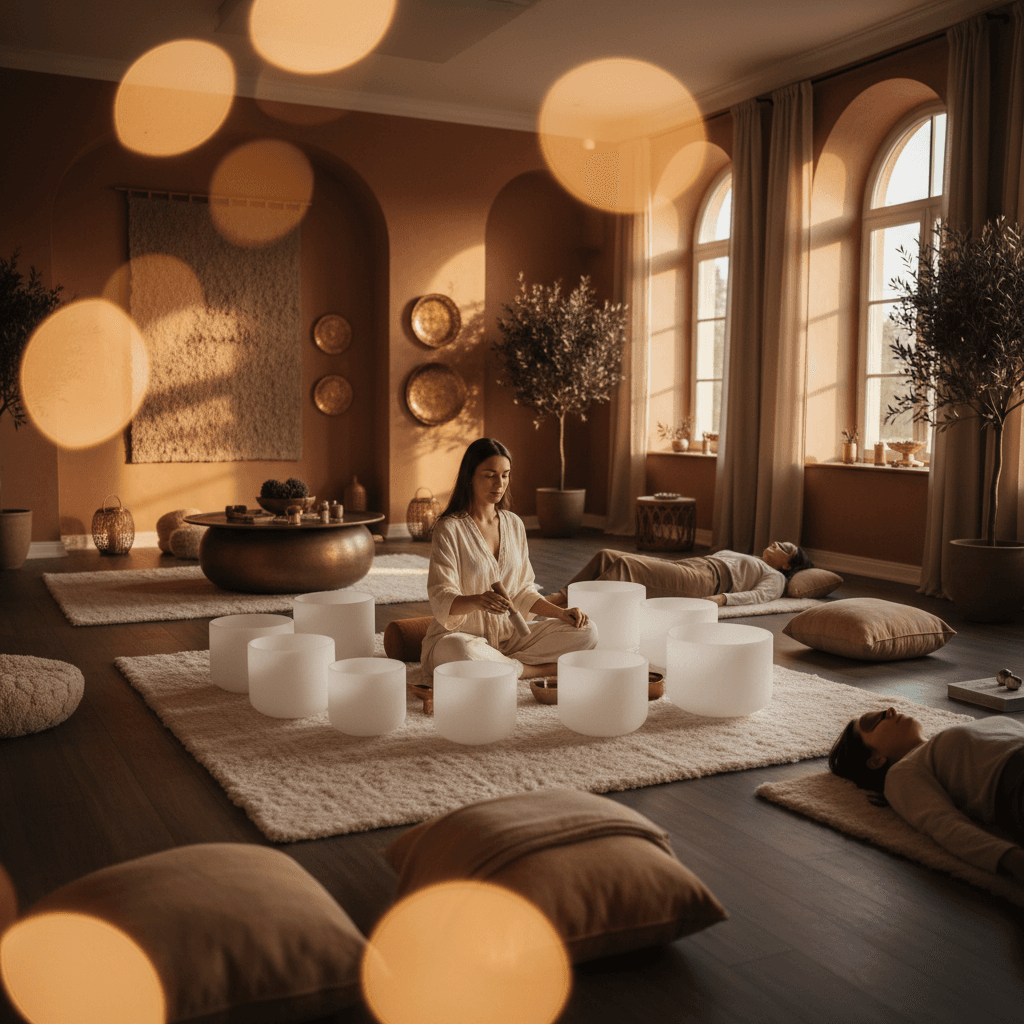
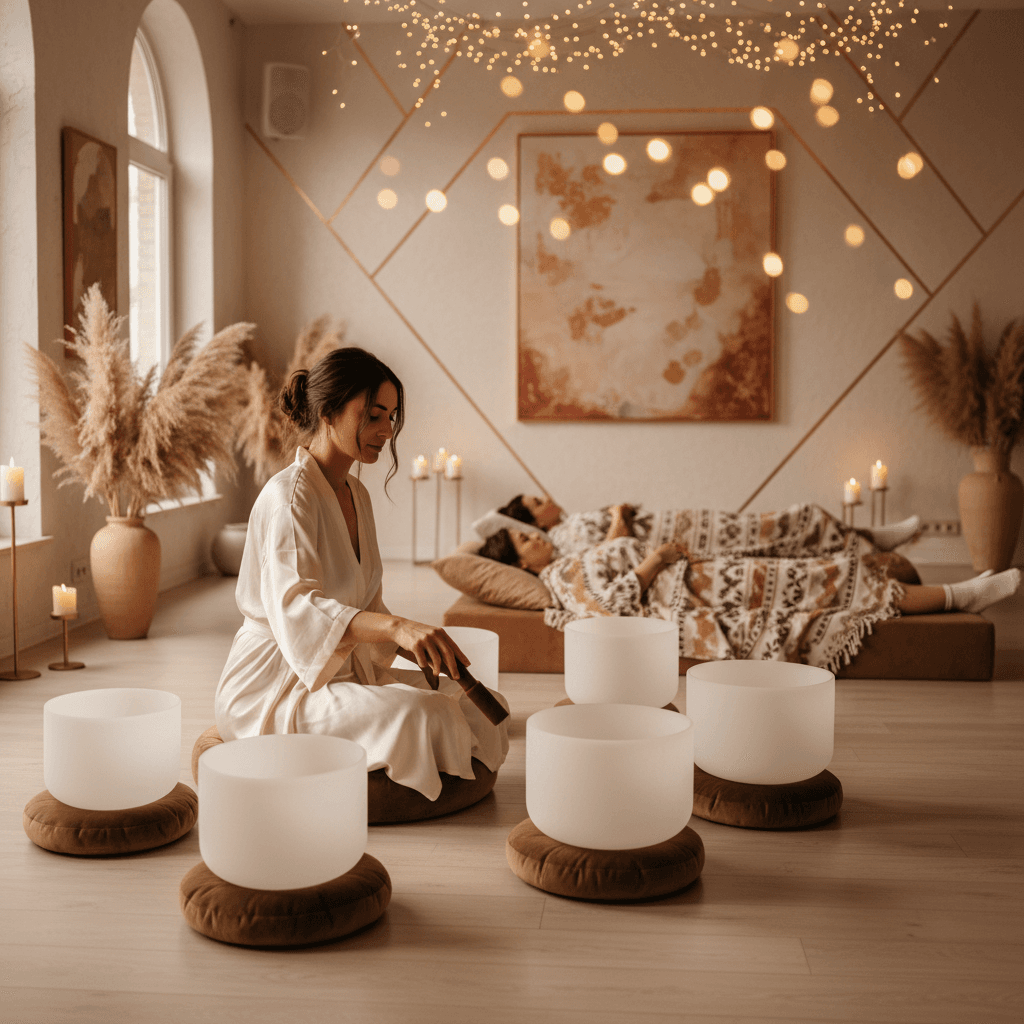
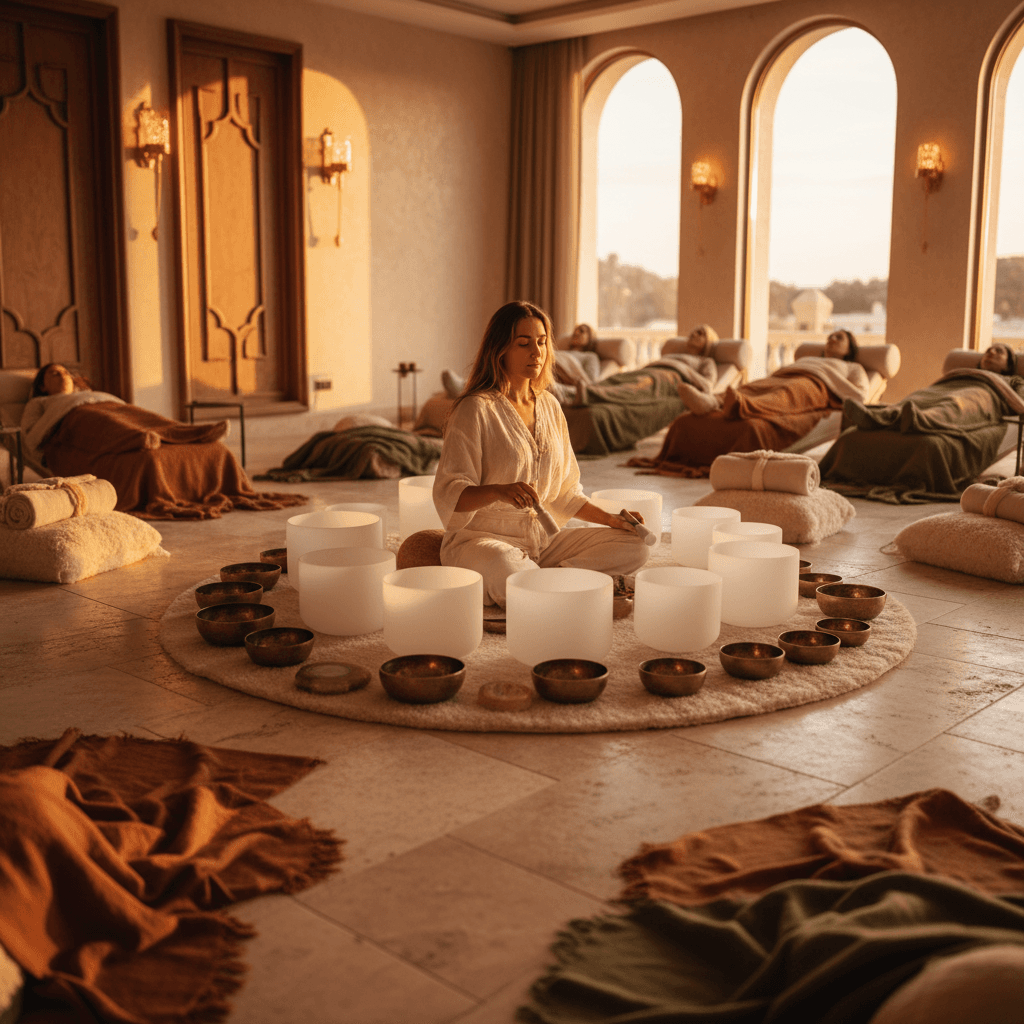
At Soul Art, we consider the studio itself to be our primary instrument. Guided by founder Larissa Steinbach, our approach is one of intentional sonic architecture. We have meticulously designed our space not merely to be quiet, but to be an active catalyst for restoration, insight, and creativity. This goes beyond the selection of high-quality instruments; it involves the very physics of the room.
We blend ancient wisdom with modern acoustic science. The placement of each instrument, the materials used on the walls, and the subtle ambient tones are all curated to support the brain's transition into Alpha and Theta states. Larissa Steinbach uses a dynamic approach, adjusting the sonic environment in real-time to respond to the energy of the individual or group.
What makes the Soul Art method unique is this view of the environment as a partner in the wellness journey. We don't just play instruments at you; we create a comprehensive soundscape that envelops and supports you. It's a holistic ecosystem where the room's resonance, the vibrational frequencies, and your own biofeedback system work in harmony. This is the difference between simply listening to sound and being held by it.
Your Next Steps
While a professionally designed environment like Soul Art offers a uniquely powerful experience, you can begin to apply these principles to cultivate your own creative sanctuary today. Here are a few practical steps to enhance your personal or professional space:
-
Curate Your Sonic Diet: Become conscious of the sounds you consume. Replace chaotic background noise like news channels with calming, non-lyrical music, biophilic soundscapes (like rain or forests), or specific frequencies like Alpha wave binaural beats to encourage a relaxed, focused state.
-
Declutter the Airwaves: Just as you would declutter a physical desk, declutter your sonic workspace. Turn off non-essential notifications on your devices. The constant pings and alerts keep your brain in a reactive Beta state, fragmenting your attention.
-
Introduce Coherent Frequencies: Incorporate a small, high-quality sound tool into your space, such as a single singing bowl or a set of chimes. Use it to mark the beginning and end of a creative session, signaling to your brain that it’s time to shift modes.
-
Embrace Strategic Silence: Don't underestimate the power of quiet. Schedule moments of intentional silence into your day to allow your mind to process information and make novel connections without constant input.
These small adjustments can begin to transform your environment from a source of distraction into a wellspring of inspiration.
In Summary
A studio designed for creativity is far more than an acoustically treated room; it is a carefully calibrated cognitive-emotional ecosystem. The science is clear: the soundscapes we inhabit directly influence our brainwave patterns, our stress chemistry, and our capacity for innovative thought. By intentionally designing our aural environment, we can move beyond passively waiting for inspiration and actively create the conditions for it to arise.
From reducing cortisol with harmonic resonance to guiding the brain into creative Alpha and Theta states, sound is a powerful, non-invasive tool for unlocking human potential. We invite you to step out of the noise and into a space designed for clarity, insight, and profound wellbeing.
Bookings Coming Soon
Soul Art is still in preparation. Session details and booking will be published here after launch.
Coming Soon