Sound Therapy in Palliative Care: Clinical Evidence for Wellbeing

Key Insights
Explore the clinical evidence supporting sound therapy in palliative care, enhancing relaxation, reducing anxiety, and improving quality of life. Discover Soul Art's approach.
Imagine a gentle wave of sound, profoundly comforting and deeply relaxing, washing over an individual at one of life's most challenging junctures. For those navigating the complexities of palliative care, the pursuit of comfort and peace becomes paramount. Sound therapy, an ancient practice now gaining significant traction in modern wellness, offers a beacon of hope in this sensitive field.
At Soul Art, Dubai's premier sound wellness studio, we are committed to exploring and sharing the robust scientific evidence behind these transformative experiences. This article delves into the clinical evidence supporting the integration of sound therapy in palliative care, focusing on its potential to enhance relaxation, alleviate distress, and significantly improve the overall quality of life. We believe in empowering individuals and their families with knowledge that can contribute to holistic wellbeing, even in the face of profound illness.
The Science Explained
The concept of using sound for healing is ancient, yet modern science is increasingly validating its efficacy, particularly in specialized areas like palliative care. Here, sound therapy, often encompassing music therapy, is emerging as a powerful complementary approach. This section explores the physiological and psychological mechanisms through which sound may support comfort and wellbeing for terminally ill individuals.
The Mind-Body Connection in Palliative Care
The human body is an intricate symphony, constantly responding to external stimuli. Sound, with its unique vibrational qualities, interacts directly with our auditory system and extends its influence far beyond. In palliative care, where physical discomfort and emotional distress are often prevalent, practices like sound therapy aim to gently recalibrate the body's internal state.
Preliminary studies indicate that engaging with therapeutic sound may trigger a profound relaxation response. This is not merely a subjective feeling but a cascade of physiological changes that benefit the entire system. Understanding these underlying mechanisms helps us appreciate the holistic impact of sound.
Physiological Pathways to Peace
Research highlights how sound therapy can induce measurable physiological changes, contributing to enhanced relaxation and wellbeing. One key area of investigation involves the autonomic nervous system (ANS), which controls involuntary bodily functions like heart rate, breathing, and digestion. The ANS comprises two main branches: the sympathetic (responsible for "fight or flight") and the parasympathetic (responsible for "rest and digest").
Clinical analyses, including those involving covariance, have shown that music therapy, a modality within sound therapy, was more effective than control treatments in promoting relaxation and subjective wellbeing (F = 13.7; p less than 0.001 and F = 6.41; p = 0.01 respectively). This effect was further supported by a significant increase in high-frequency (HF) oscillations of the heart rate (F = 8.13; p = 0.01). A greater increase in HF heart rate variability suggests enhanced parasympathetic modulation and reduced sympathetic modulation of cardiovascular activity. This shift towards parasympathetic dominance indicates a state of deep physiological relaxation.
"The subtle yet profound shift in autonomic nervous system balance demonstrates that sound therapy isn't just a pleasant experience; it's a physiological intervention with measurable benefits for stress reduction."
While physiological data can vary greatly between individuals, this trend towards increased parasympathetic activity provides a robust scientific basis for the calming effects reported by many people. Such modulation can be crucial in managing the physiological stress associated with terminal illness.
Evidence for Symptom Management
Beyond general relaxation, studies have explored the direct impact of sound therapy on specific symptoms often experienced in palliative care. While the evidence base continues to grow, several promising areas have emerged:
- Pain Reduction: The most powerful evidence exists for pain reduction (10, 14, 16, 20). Some randomized and quasi-randomized controlled trials indicate that sound therapy may support individuals in managing discomfort, though one specific analysis showed it did not differ from control treatment with respect to pain reduction (F = 0.4; p = 0.53). This suggests the need for further nuanced research but maintains a promising outlook.
- Improvement in Quality of Life: Many studies underscore an improvement in quality of life for patients receiving sound therapy (11, 13). This encompasses a broader sense of comfort, dignity, and personal contentment during a sensitive period.
- Reduction in Anxiety and Emotional State: There is preliminary evidence of efficacy in terms of a reduction in anxiety (12, 20) and an improvement in emotional state (13). Sound offers a non-invasive way to soothe distress and promote a sense of inner calm.
- Other Benefits: Further anecdotal evidence and pilot studies suggest efficacy in areas such as:
- Communication enhancement (15).
- Stress reduction (17).
- Enhanced spiritual well-being (19).
- A significant reduction in fatigue scores on the quality-of-life scale (F = 4.74; p = 0.03). This is particularly relevant given the debilitating nature of fatigue in terminal illness.
It is important to acknowledge that systematic reviews reveal many of these studies have a high risk of methodological bias (2, 3, 8, 21). However, the consistent reporting of positive outcomes across various studies encourages continued research and cautious optimism regarding sound therapy's potential as a complementary approach in palliative care. Creating an evidence base in hospice and palliative care music therapy will assist music therapy clinicians in establishing best practices in end-of-life care, despite the ethical limitations often associated with research involving the terminally ill.
How It Works in Practice
Translating scientific principles into a compassionate and effective wellness practice is at the heart of sound therapy. In palliative care settings, the application of sound is carefully tailored to meet the unique needs and sensitivities of each individual. It’s an approach centered on comfort, dignity, and personal preference, providing a gentle sanctuary for the mind and body.
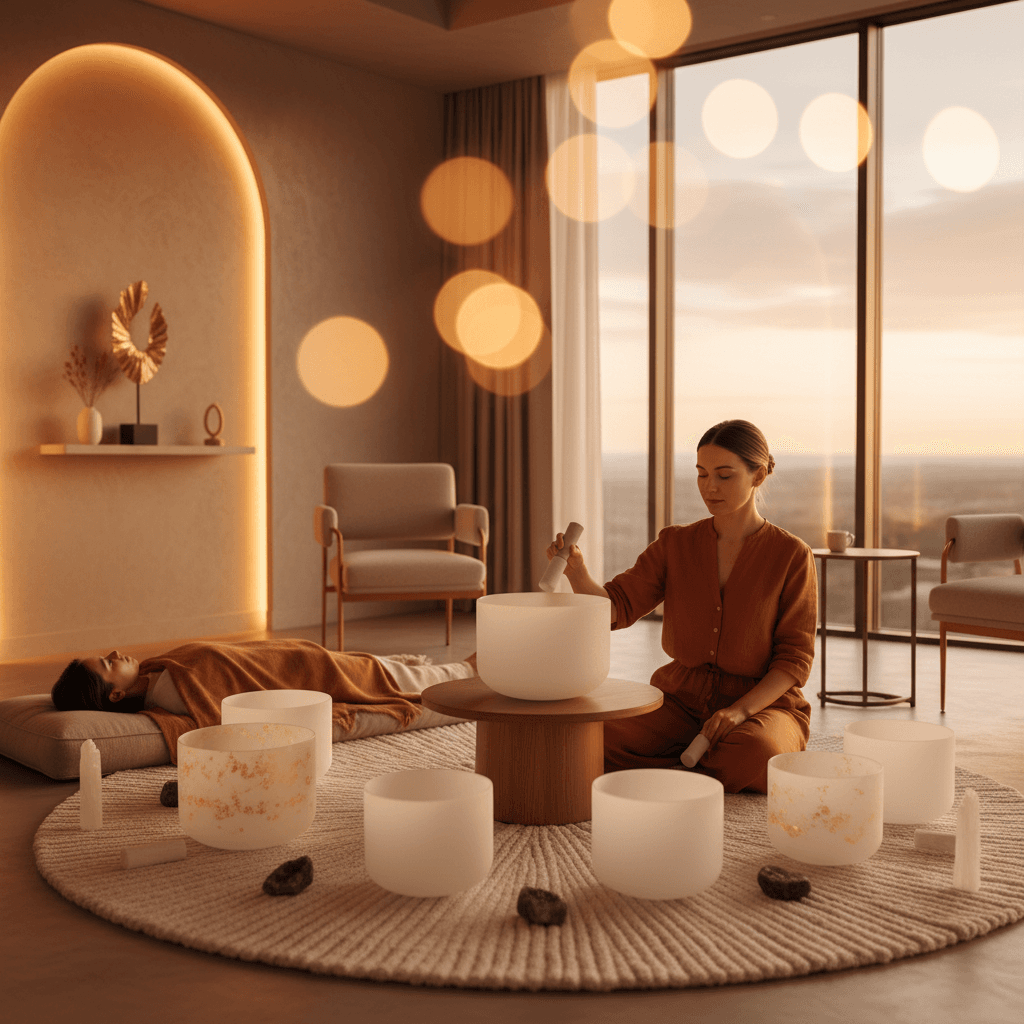
A typical sound therapy session in a palliative care context is designed to be as comforting and unobtrusive as possible. It often involves a qualified practitioner creating a resonant soundscape using various instruments chosen for their specific vibrational qualities and soothing tones. These might include gentle singing bowls, soft gongs, chimes, or even carefully selected instrumental music.
Clients remain in a comfortable position, often reclining, as the sounds unfold around them. The experience is primarily auditory, but the vibrations of the sound can be felt throughout the body, creating a full-sensory immersion. Many people report a profound sense of peace and stillness descending upon them, allowing their minds to quiet and their bodies to release tension.
The sensory details are crucial. The resonant frequencies are not merely heard but are often described as being felt deeply within the tissues and cells, promoting a subtle yet powerful internal massage. This somatic experience can be particularly beneficial for those experiencing chronic discomfort, offering a welcome distraction and a shift in focus from pain to tranquility. The gentle progression of sounds can guide the listener into a meditative or deeply relaxed state, fostering emotional release or simply a profound sense of ease.
This non-invasive nature makes sound therapy a highly adaptable complementary approach, suitable for individuals with varying levels of mobility or cognitive function. The focus is always on creating a safe, nurturing, and personally meaningful experience that respects the individual's journey and preferences. It offers a unique pathway for emotional expression and connection, often when verbal communication becomes challenging.
The Soul Art Approach
At Soul Art, under the visionary guidance of Larissa Steinbach, the principles of scientifically grounded sound wellness are meticulously applied to create transformative experiences. Our approach to sound therapy, particularly when considering its potential applications in areas like palliative care, is built on a foundation of empathy, expertise, and a deep understanding of vibrational physics. We believe in harnessing the power of sound to foster profound relaxation, emotional release, and an enhanced sense of well-being.
Larissa Steinbach’s unique method at Soul Art integrates ancient wisdom with contemporary scientific understanding. This synergy ensures that every session is not just a pleasant encounter but a carefully curated journey designed to support the body’s natural healing capabilities and mental tranquility. Our practitioners are trained to attune to the subtle needs of each individual, customizing the sound experience to resonate most effectively with their current state.
What makes the Soul Art method truly unique is its holistic perspective. We don't just play sounds; we craft immersive soundscapes that speak to the soul. This involves:
- Curated Instruments: Utilizing a diverse array of high-quality instruments, including crystal singing bowls, Himalayan singing bowls, planetary gongs, tuning forks, and chimes. Each instrument is chosen for its specific frequency and overtone qualities, known for promoting different states of relaxation and balance.
- Intentional Soundscapes: Larissa Steinbach emphasizes the intention behind the sound. Sessions are designed not only to be beautiful but also purposefully structured to guide the listener towards a desired state, whether that's deep rest, emotional release, or a sense of spiritual connection.
- Personalized Sessions: Recognizing that each individual's journey is unique, especially in sensitive contexts, Soul Art offers personalized sound experiences. This customization ensures that the sound environment is optimally conducive to the client's specific needs, preferences, and comfort levels.
- Harmonic Resonance: Our practice focuses on creating harmonic resonance within the body, aiming to synchronize brainwaves into calmer states (such as alpha and theta waves). This physiological shift, supported by the science of heart rate variability, facilitates a profound sense of peace and restoration.
Through these carefully considered techniques, the Soul Art experience aims to provide a sanctuary where individuals can find solace, reduce perceived pain, alleviate anxiety, and significantly enhance their quality of life. It’s a testament to the power of sound when delivered with intention, expertise, and a deep well of compassion.
Your Next Steps
Exploring sound therapy as a complementary wellness practice can be a profound step towards enhancing comfort and tranquility, especially for those in palliative care or their caregivers. While it’s not a medical treatment, it offers a pathway to deep relaxation and stress management. Here are some actionable steps you can consider:
- Consult with Healthcare Professionals: Always discuss any complementary wellness practices with your medical team. This ensures that sound therapy integrates seamlessly with existing medical care and is appropriate for your specific health situation.
- Research Reputable Practitioners: Seek out qualified and experienced sound wellness practitioners or studios known for their gentle and compassionate approach. Look for those with a deep understanding of the physiological and psychological effects of sound.
- Experience a Group Session: If comfortable, start with a guided group sound bath or relaxation session to gently introduce yourself to the experience. This can help you understand the sensations and benefits in a supportive environment.
- Consider Personalized Sessions: For a more tailored experience, especially in palliative care, inquire about one-on-one sessions. A practitioner like Larissa Steinbach at Soul Art can customize the soundscape to meet individual needs and sensitivities, ensuring maximum comfort.
- Incorporate Mindful Listening: Even simple acts of mindful listening to calming music or nature sounds at home can introduce elements of sound wellness into daily life, fostering a sense of peace and grounding.
Embracing sound as a tool for comfort and wellbeing can profoundly enrich the palliative care journey. It offers a gentle, non-invasive means to support the mind, body, and spirit, fostering moments of serenity amidst life's challenges.
Bookings Coming Soon
Soul Art is still in preparation. Session details and booking will be published here after launch.
Coming Soon
In Summary
The growing body of clinical evidence suggests that sound therapy, particularly music therapy, holds significant promise as a complementary wellness practice in palliative care. Research indicates its potential to promote relaxation, enhance overall well-being, reduce anxiety, and even mitigate fatigue and discomfort. While further rigorous studies are needed, the physiological shifts towards parasympathetic activation highlight its profound impact on stress reduction.
At Soul Art, Larissa Steinbach and her team are dedicated to offering expertly curated sound experiences that embody these principles, providing a sanctuary of calm and comfort. We invite you to explore the gentle yet powerful world of sound, and discover how this ancient art can support a journey of peace and enhanced quality of life.
Wellness Disclaimer: This article is for educational and informational purposes only. It does not constitute medical advice, diagnosis, or treatment. Soul Art Dubai provides non-medical wellness experiences focused on relaxation, stress management, and general wellbeing. Sound wellness is a complementary practice and should not replace professional medical care.
Related Articles

40 Hz Sensory Stimulation and Alzheimer's Research
Unlocking Wellness: The Science of Sound Healing Research Design
Unlocking Wellness: Biomarkers for Effective Sound Therapy