Unlocking Wellness: The Science of Sound Healing Research Design
Key Insights
Explore the rigorous study designs illuminating how sound impacts wellbeing, from brainwave entrainment to stress reduction, at Soul Art Dubai.
Have you ever wondered if the calming melodies and soothing vibrations of a sound bath are more than just a pleasant experience? As ancient practices meet modern scientific inquiry, researchers are meticulously designing studies to uncover the profound ways sound may influence our mental and physical well-being. Understanding the methodology behind this emerging field is key to appreciating its potential.
At Soul Art, founded by Larissa Steinbach, we believe in a holistic approach to wellness, grounded in both timeless wisdom and scientific understanding. This article delves into the intricate process of designing sound healing research, revealing the robust methods used to explore how resonant frequencies can restore balance and promote deep relaxation. Join us as we explore the scientific quest to codify the healing power of sound.
The Science Explained: Designing Rigorous Sound Healing Studies
The journey from anecdotal experience to scientific evidence in sound healing is paved with careful study design. Researchers employ a variety of methodologies to explore sound's impact, from controlled trials to feasibility studies, each contributing a unique piece to the puzzle of understanding its mechanisms. The goal is to isolate the effects of sound interventions and quantify their influence on human physiology and psychology.
Unpacking Study Designs: From Feasibility to Randomized Controlled Trials
Early explorations in any new field often begin with feasibility studies. These studies, like one examining virtual Biofield Tuning, assess if an intervention can be delivered effectively and if participants find it acceptable. Such pilot research is crucial for gathering preliminary data, which can then be used to power larger, more robust randomized controlled trials (RCTs). The virtual Biofield Tuning study, for instance, successfully demonstrated significant reductions in anxiety and stress, setting the stage for future RCTs to delve deeper into its effects.
Randomized controlled trials represent the gold standard in scientific research. A well-designed RCT typically involves a group receiving the sound intervention (the experimental group) and a control group that does not, or receives a placebo. This design helps researchers determine if any observed changes are genuinely due to the sound intervention rather than other factors. An Indian study on sound-based meditative healing, for example, utilized a randomized controlled design with 100 participants, comparing a sound-based meditation group against a control group to evaluate effects on stress, anxiety, and cortisol levels.
Measuring the Immeasurable: Physiological and Psychological Outcomes
Measuring the impact of sound healing requires a blend of objective physiological data and subjective psychological assessments. Researchers look at a range of markers to capture the multi-faceted effects of sound.
Physiological Biomarkers
One of the most compelling physiological measures is cortisol, often referred to as the "stress hormone." Studies have shown that sound-based meditation may lead to substantial decreases in cortisol levels, indicating a tangible reduction in the body's stress response. This objective measure provides strong evidence for the stress-reducing potential of sound.
Beyond hormones, brainwave activity offers a window into the mind's state. Electroencephalogram (EEG) technology is increasingly used to measure various brainwave states, including deeply meditative or trance-like states. Research has explored how different sound frequencies, such as those emitted by singing bowls, can influence brainwave patterns, moving individuals from active beta waves towards more relaxed alpha, theta, and even delta states.
Psychological Assessments
Alongside physiological markers, validated psychological questionnaires are indispensable. Researchers use tools like the Generalized Anxiety Disorder-7 (GAD-7), State-Trait Anxiety Inventory (STAI), Positive and Negative Affect Scale (PANAS), and the Perceived Stress Scale (PSS). These self-reported measures help quantify changes in anxiety, mood, and stress levels before and after sound interventions. The virtual Biofield Tuning study reported statistically significant reductions across these measures, complementing physiological findings.
The Mechanics of Sound: Resonance, Entrainment, and Cellular Response
The underlying mechanisms of how sound impacts our body and mind are a significant focus of current research. It's not just about what we hear, but what we feel.
Resonance and Frequency Alignment
Sound works on the principle of resonance, where vibrations from instruments like singing bowls or tuning forks interact with the body's own energetic fields. Given that sound waves travel through the water in the body at approximately four times the speed they travel through air, these vibrations can profoundly influence cellular and systemic functions. This direct vibrational transmission suggests a mechanism beyond auditory perception, impacting the body on a deep cellular level. Some researchers even suggest that the tiny antenna-like structures on cells, known as primary cilia, may respond to sound, influencing how cells function and communicate.
Brainwave Entrainment
A core concept in sound healing is brainwave entrainment. Our brains operate through rhythmic electrical patterns, or brainwaves, each associated with a different state of consciousness. Sound frequencies have the capacity to "entrain" the brain, gently guiding its rhythms to synchronize with external sound. This makes it easier to shift into restorative states:
- Delta waves (0.5–less than 4 Hz) are associated with deep sleep and physical repair.
- Theta waves (less than 4–8 Hz) relate to dreamlike, meditative states, fostering creativity and emotional processing.
- Alpha waves (less than 8–12 Hz) signify relaxed alertness and reduced stress.
- Beta waves (less than 12–30 Hz) are indicative of active thinking and problem-solving, often overactive in states of anxiety.
- Gamma waves (30+ Hz) are linked to integration, insight, and expanded states of awareness. By encouraging specific brainwave states, sound can help facilitate deep relaxation and mental clarity.
Nervous System and Hormonal Regulation
Sound healing directly engages the body’s regulation systems. It may activate the parasympathetic nervous system, encouraging a state of "rest and repair" rather than the "fight or flight" response. This activation is key to reducing the body’s physiological response to stress. Concurrently, sound has been associated with a reduction in cortisol, the primary stress hormone, and a boost in feel-good neurotransmitters like serotonin, dopamine, and endorphins, which enhance overall well-being and connection.
"The rigorous pursuit of how sound influences our biology and psychology transforms ancient wisdom into an accessible, evidence-informed pathway to well-being."
Addressing Limitations and Ethical Considerations in Research
Even with sophisticated designs, research in sound healing faces challenges. The "short timeline" of some studies is a common limitation, as the full benefits of consistent sound exposure may require longer observation periods. Researchers are also careful about convenience samples, striving for more diverse and representative participant groups in larger studies. Ethical considerations are paramount, with all reputable studies requiring written consent from participants and approval from Institutional Review Boards (IRB) and Institutional Ethics Committees (IEC) to ensure participant safety and well-being. Furthermore, to maintain scientific rigor, many researchers actively exclude studies on animals, participants younger than 18, and those with hearing disabilities when focusing on human sound perception.
How It Works in Practice: The Embodied Experience of Sound
Connecting the dots between complex scientific designs and the tangible experience of a sound session brings the research to life. While studies quantify specific outcomes, the practical application translates these findings into a deeply personal and transformative journey. It's about more than just listening; it's about being immersed in a vibrational field that encourages the body and mind to re-calibrate.
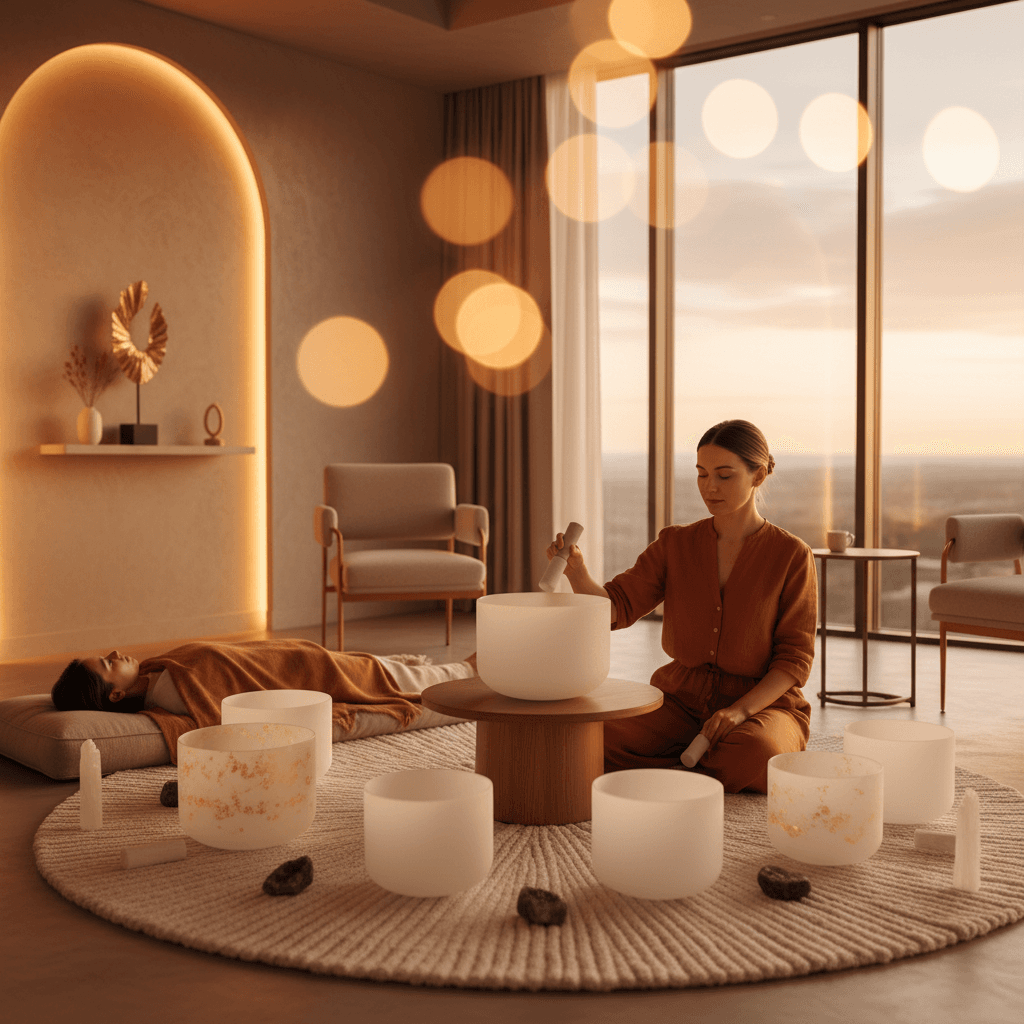
Clients often describe a sound bath as an immersive experience, a "bathing" in resonant tones. Unlike music with lyrics or a distinct rhythm that tells a story, these tones are typically long, sustained, and rich in vibration. Instruments like Tibetan singing bowls, gongs, crystal bowls, and tuning forks are played, creating a sensory landscape that allows the body to rest and reorganize its patterned responses to stress.
The immediate sensations can vary greatly. Some individuals feel a gentle tingling as the sound waves travel through the body's water content, particularly when bowls are placed directly on the body, offering a vibroacoustic effect. Others experience a profound stillness, a quieting of the often-overactive mind, as their brainwaves are gently guided into more relaxed alpha and theta states. The auditory experience itself is often described as deeply soothing, moving beyond simple hearing to a feeling of being enveloped and supported.
In practice, the aim is to facilitate a state where the nervous system can reset. Many people report a significant reduction in feelings of tension, anxiety, and emotional overwhelm during and after sessions. This aligns with research suggesting that sound interventions can lower stress hormones and activate the parasympathetic nervous system. The benefits extend beyond the session itself, with many reporting enhanced mood, improved sleep quality, and a greater sense of inner peace that lingers for hours or even days. It is a complementary approach that supports holistic well-being, helping individuals to manage stress and cultivate resilience in their daily lives.
The Soul Art Approach: Larissa Steinbach's Vision for Vibrational Wellness
At Soul Art, Larissa Steinbach has meticulously crafted an approach that harmonizes ancient wisdom with contemporary scientific understanding of sound. Her vision is to create a sanctuary where individuals can experience the profound, research-suggested benefits of vibrational wellness. Larissa's method is not merely about playing instruments; it is about curating an intentional soundscape designed to facilitate deep relaxation, mental clarity, and emotional release.
Larissa integrates insights from studies on brainwave entrainment and nervous system regulation into every session. She understands that specific frequencies and harmonic intervals can gently guide the brain into restorative states, reducing the dominance of active beta waves and encouraging the alpha and theta states associated with deep meditation and healing. This informed approach ensures that the sessions at Soul Art are not just aesthetically pleasing but also neurologically beneficial.
The Soul Art method is unique in its thoughtful selection and application of instruments. Larissa often utilizes a symphony of crystal singing bowls, each tuned to specific energetic centers, alongside powerful gongs that create expansive sound waves. Tuning forks are frequently employed for targeted vibroacoustic therapy, applying precise frequencies to specific areas of the body, much like the "acupressure" effect mentioned in research. This blend of auditory and vibrational input maximizes the potential for resonance and cellular response.
Larissa Steinbach’s dedication extends to fostering an environment of "quiet luxury" – an atmosphere of serene elegance that enhances the overall wellness journey. This meticulous attention to detail, from the acoustics of the space to the careful sequencing of sounds, underpins the effectiveness of the Soul Art experience. It’s a sophisticated self-care practice designed to support stress management and emotional balance, empowering clients to cultivate a deeper connection with their inner selves.
Your Next Steps: Integrating Sound into Your Wellness Journey
Understanding the science behind sound healing empowers you to make informed choices about your well-being. Integrating sound into your daily routine can be a powerful self-care practice, helping you navigate the stresses of modern life with greater ease. Here are some actionable steps you can take today:
- Explore Guided Sound Meditations: Start with accessible online resources or apps that offer guided sound meditations. These often incorporate binaural beats or ambient tones designed to promote relaxation and brainwave entrainment, providing a gentle introduction to the experience.
- Create Your Own Sound Sanctuary: Dedicate a quiet space in your home where you can listen to soothing sounds, whether it's calming music, nature sounds, or even specific frequency tracks. Make it a regular ritual to unwind and de-stress.
- Consider a Live Sound Session: Experience the full immersive power of live sound. A session at a dedicated studio like Soul Art offers a uniquely powerful vibrational experience that digital recordings cannot fully replicate, allowing your body to deeply resonate with the frequencies.
- Mindful Listening Practice: Beyond formal sessions, practice mindful listening in your daily life. Pay attention to the sounds around you, noticing their qualities without judgment. This simple practice can anchor you in the present moment and reduce mental clutter.
- Investigate Reputable Sources: Continue to educate yourself by reading peer-reviewed research and articles from reputable wellness institutions. A deeper understanding of the mechanisms reinforces the value of sound as a complementary approach to well-being.
Ready to explore how focused sound and vibration can support your well-being? Consider booking a session at Soul Art.
In Summary: The Symphony of Science and Wellness
The journey into understanding sound healing is a testament to the power of rigorous study design. From randomized controlled trials meticulously measuring cortisol and brainwave activity, to feasibility studies paving the way for broader research, science is steadily illuminating the mechanisms behind sound's reported benefits. We've seen how concepts like brainwave entrainment, resonance, and nervous system regulation are key to understanding how sound may support relaxation, reduce stress, and enhance mood.
At Soul Art, Larissa Steinbach masterfully translates this scientific understanding into deeply transformative wellness experiences. By combining expertly curated soundscapes with a profound respect for the body's natural sensitivity to vibration, Soul Art offers a sophisticated pathway to holistic well-being. We invite you to experience the harmonious blend of ancient practice and modern science, discovering for yourself the potential of sound to bring balance and serenity into your life.
Bookings Coming Soon
Soul Art is still in preparation. Session details and booking will be published here after launch.
Coming Soon
Wellness Disclaimer: This article is for educational and informational purposes only. It does not constitute medical advice, diagnosis, or treatment. Soul Art Dubai provides non-medical wellness experiences focused on relaxation, stress management, and general wellbeing. Sound wellness is a complementary practice and should not replace professional medical care.
Related Articles
40 Hz Sensory Stimulation and Alzheimer's Research
Unlocking Wellness: Biomarkers for Effective Sound Therapy
Bridging Inner Worlds: Objective & Subjective Measures in Wellness